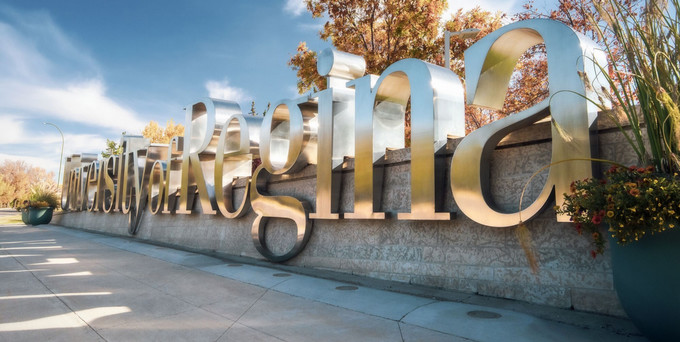
About the U of R
At the University of Regina, we believe education is about more than earning a degree. Through experiential learning, groundbreaking research, and a deep connection to our community, we empower our students to turn curiosity, knowledge, and drive into action.
Although our roots go back more than a century as Regina College, we became an independent, degree-granting university on July 1, 1974. Today's U of R, along with our federated colleges—Campion College, Luther College, and First Nations University of Canada—offers comprehensive, post-secondary education to more than 17,200 students. With over 92,000 alumni, our graduates are making a positive difference in Saskatchewan and around the globe.
21
Research Centres and Institutes
10
Faculties
9
Canada Research Chairs
200+
Academic Programs
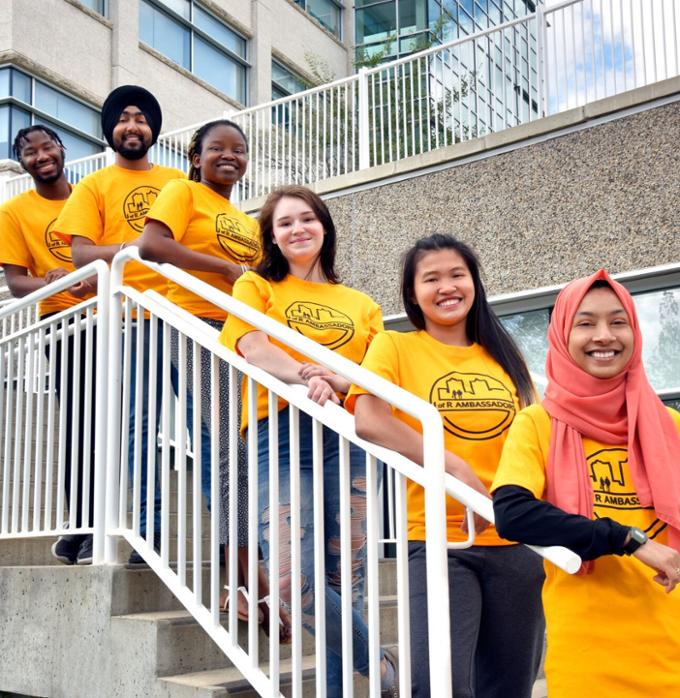
Nestled within 239 acres of Wascana Park—one of North America's largest urban parks—our main and historic College Avenue campuses offer a welcoming and inspiring environment for learning, research, and collaboration. As part of our commitment to health and well-being, our campuses are 100% smoke-free, ensuring a safe and inclusive space for students, faculty, staff, and visitors.
The University of Regina partners with institutions such as Saskatchewan Polytechnic, regional colleges, Gabriel Dumont Institute, and Yukon University to provide accessible education, including online learning opportunities. We are committed to making higher education more affordable through scholarships, awards, and bursaries that help offset tuition costs.
At the University of Regina, we’ll go far, together.
Discover Who We Are
Partners in Truth and Reconciliation
We can strengthen relationships with Indigenous peoples, communities, and institutions. We are committed to reconciliation and believe that by listening, we can learn, and by learning, we can grow. We demonstrate this commitment by incorporating Indigenous ways in our research, teaching, and learning. We aspire to walk together with our Indigenous partners so that we may build a stronger, more inclusive future.
We are honouring the past, together.
Health and Wellness
We believe that to be truly successful, one must be healthy. Our commitment to health and well-being is demonstrated through the programs we teach, the research we conduct, and the support we offer. We understand that wellness encompasses physical, mental, environmental, and spiritual well-being and provides opportunities for our students to find complete fulfillment. We are committed to building a healthier future, which we demonstrate through nationally recognized wellness programming and world-class research.
Stay well, together.
Hands-on Learning
We believe there is no better teacher than experience. This belief led us to pioneer the first cooperative education program in Western Canada more than half a century ago. Our history of providing hands-on learning opportunities has given our institution decades of insight, allowing us to fine-tune our programs and offerings so that students reap the rewards in the real world. Our students enjoy plentiful opportunities to gain experience in both paid and volunteer positions, resulting in career-ready graduates who find work fast. We know that learning happens best when you do.
Learn by doing, together.

2020-2025 Strategic Plan
All Our Relations, kahkiyaw kiwâhkômâkaninawak
The title of the University of Regina's 2020-2025 Strategic Plan, All Our Relations, is the English equivalent of a phrase familiar to most North American First Nations Peoples. It is often used to formally acknowledge the interconnectedness of family and all their relations including those that walk on two feet, those that walk on four feet, those that swim in the great waters, those that fly in the sky and those that crawl on their bellies.
Federated Colleges
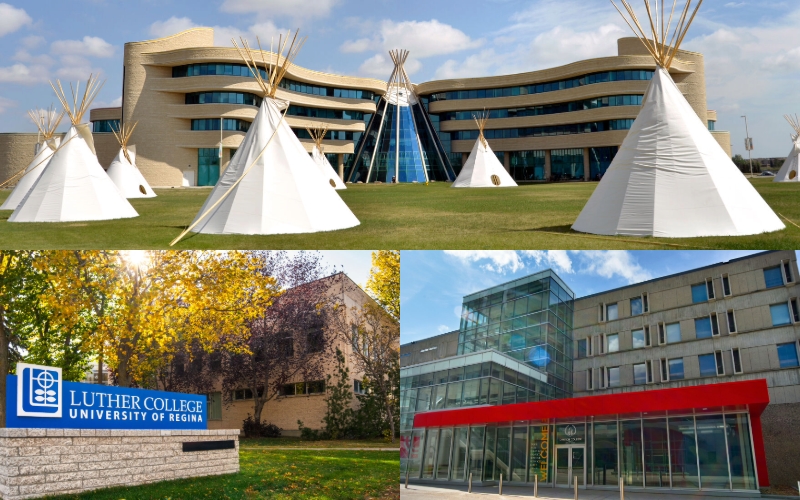
The University of Regina has three federated colleges:
- Campion College
- First Nations University of Canada
- Luther College
Our Impact and Growth
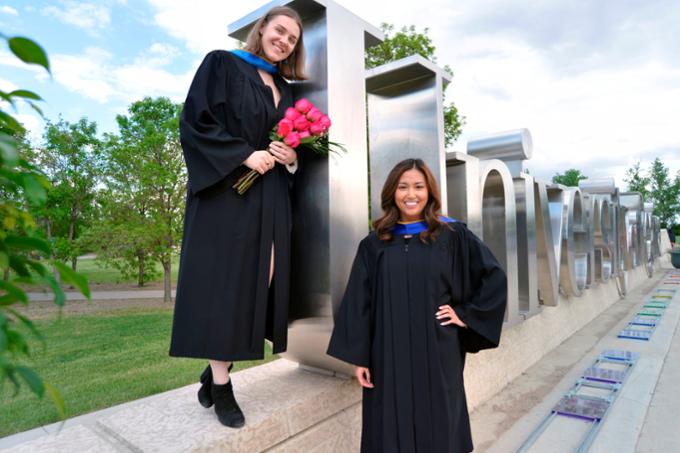
University of Regina campus growth builds on our history and commitment to academic and research excellence, student life, culture, and sustainability.
Darke Hall Re-Opening
Historic Darke Hall re-opened in May 2022 under the leadership of the Darke Hall Society, a non-profit community group which operates the venue. Originally constructed in 1929, it is a fully accessible, 475-seat theatre in Regina. It is a cultural hub and performance space for select Conservatory of Performing Arts and Music department recitals and events.
Research and Innovation Centre Wins National Design Recognition
The Research and Innovation Centre received national attention from the Royal Architectural Institute of Canada when it was profiled as an example of excellence in functional design in Award, the Magazine of Sustainable Architecture, Construction and Design.
College Avenue Campus Renewal Project
The College Avenue Campus Renewal Project – the revitalization of the architecturally and culturally significant buildings on College Avenue – also received attention for preserving Regina’s history while refurbishing a vibrant centre of learning, research and culture in the heart of downtown Regina. In August 2018, through the generous support of donors, the renewed College Building re-opened its doors to students and the community with the completion of phase one of the project. The $63.6 million restoration preserved numerous heritage elements while improving safety, accessibility, and sustainability.
University of Regina Residence – College West Re-Opening
In August 2018, the first University of Regina residence – College West – was re-opened following a major renovation to upgrade the 45-year-old building into modern, safe, inclusive, bright, and accessible housing for 274 students. The U of R’s College West, Kīšik, Paskwāw and Wakpá towers are now able to accommodate 1,575 students in on-campus housing.
- We attract thousands of students to our University from other cities, provinces, and countries every year. Many continue to live in Regina or elsewhere in Saskatchewan after graduation, making ongoing contributions to our society in their careers, families, and communities.
- We employ approximately 3,000 individuals in academic and staff positions. This does not include employees of the three federated colleges: Campion, First Nations University of Canada, and Luther College which manage their staffing processes separately.
- Our community reach is further extended through the College Avenue campus – home to the University’s Centre for Continuing Education (CCE). CCE delivers hundreds of continuing education courses and facilitates over 30,000 enrolments every year. Thirty per cent of all credit courses at the University of Regina are run through CCE in partnership with the faculties. CCE has a strong outreach centre and is home to the Lifelong Learning Centre and the Conservatory of Performing Arts offering programming for learners of all ages. CCE also operates the English as a Second Language program, offering language and cultural programs to students from 26 different countries.