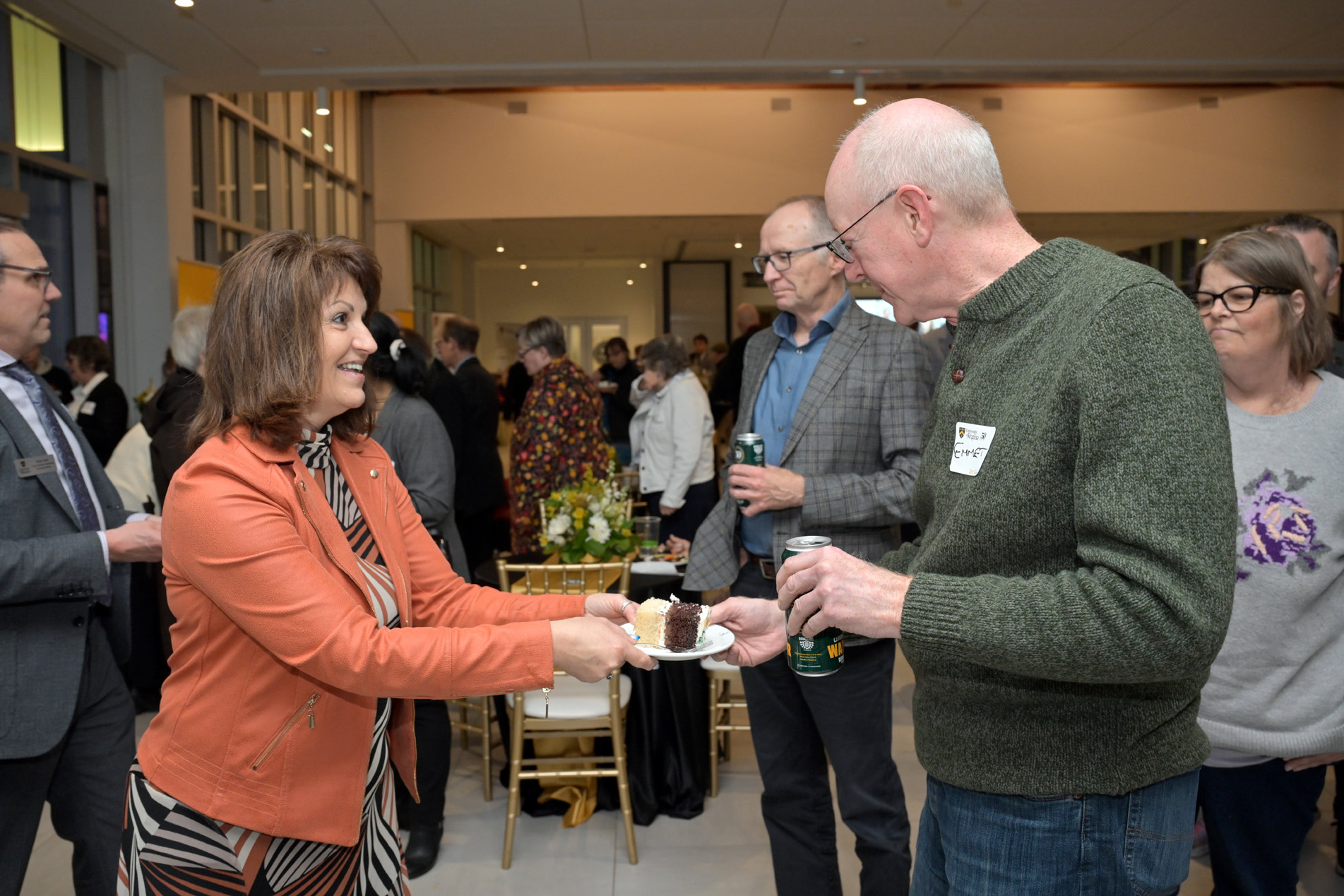
The University of Regina is a home for learning and sharing educational and cultural opportunities with the our communities. Our alumni family is more than 95,000 strong with roots in 113 countries. We pride ourselves on our connections — to our alumni family and the wider community in our city and province. We are your university, and we want to stay in touch!
Alumni
Your affiliation with the University of Regina affords you many personal benefits. As an alumnus you can access valuable services offered exclusively to you by our affinity partners - Manulife, TD Home, Auto & Small Business Insurance, and degree frames from Milburn Universal Designs. The U of R offers many opportunities for alumni and friends to keep in touch, learn, and make new connections.
Learn about all the benefits of being a U of R alum!
Giving
When you help the next generation of scientists, business leaders, engineers, health professionals and others be successful today, they can contribute fostering strong, vibrant communities in the years to come. Your donation — at any level — will help shape the world in which you want to live.
Alumni Awards & Sports Hall of Fame
Every year, the University of Regina celebrates some if its best and brightest through the Alumni Awards and the Sports Hall of Fame. These honours celebrate exceptional alumni as well as distinguished members of our athletics community for their dedication to excellence, leadership, community engagement, and for their significant contributions to the social, cultural, and economic well-being of our communities — each reflecting the University of Regina’s motto: "As One Who Serves".
This year's event will be held on September 24 at the Hotel Saskatchewan. Tickets are available now.
Alumni Stories

Open Electives Open Doors: Tanna Dietrich CPR’12 BHJ’15
With so many interesting programs, choosing a major at university can be a bit daunting for some students, but open electives can help guide the way. Such was the case for Tanna Dietrich, CPR’12 BHJ’15, and owner of Regina’s Balloon Bar YQR. Starting in the Faculty of Arts, Dietrich dove into electives like Film and Linguistics, and says she was immersed in “a new world every semester” where she would gain experiences, and develop skills that would inspire her to transition into new roles and drive her quest for life-long learning.
Master Blender: Scott Carson BSc’03
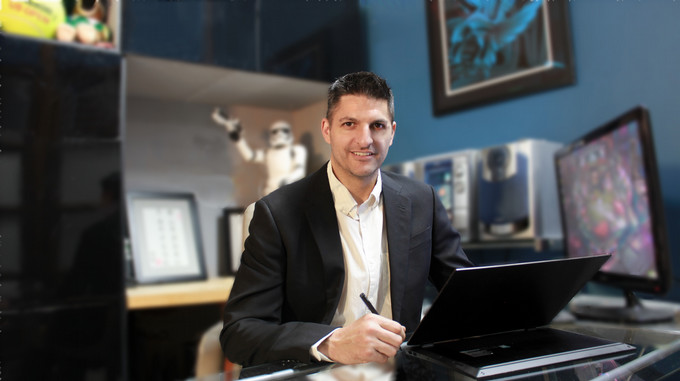
Scott Carson, BSc’03 is one of those people who knew what he wanted to do from a young age. Bitten by the computer bug as a child, Carson went on to earn his Bachelor of Science in Computer Science at the University of Regina in 2003 and opened his first business, Storm Applied Technologies, an international consulting and design software company.

Ahead for Business: Lisa McIntyre BBA’12 MAdmin’18
Lisa McIntyre, BBA'12, MAdmin'18, grew up in a business family. Around the dinner table and at family gatherings, Lisa listened to business conversations and learned the importance of customer service, treating employees with respect, and how to be resilient in the face of challenges. These lessons would serve her well as she got older and delved further into business studies at the University of Regina and began her own business at The Optical Shoppe in Regina’s Cornwall Centre.
One Who Loves: Dr. Merlin Thompson BMus‘75
After an eventful year of 50th anniversary celebrations, the University of Regina continues to recognize the golden anniversaries of our graduating classes. This month, the U of R is celebrating the Class of 1975 and its Golden Aluminaries.
Dr. Merlin Thompson BMus‘75 is a life-long musician, musical educator, and the founder of Teach Music 21C. Fifty years ago, he graduated with a Bachelor of Music from Luther College. Hailing from rural Saskatchewan, Thompson began his post-secondary education at the U of R and studied in the Department of Music and Conservatory of Performing Arts. It was here that Thompson found his biggest inspiration: his classmates.
Rooted in Love: Bill Stevenson BHJ’09, MCert‘20
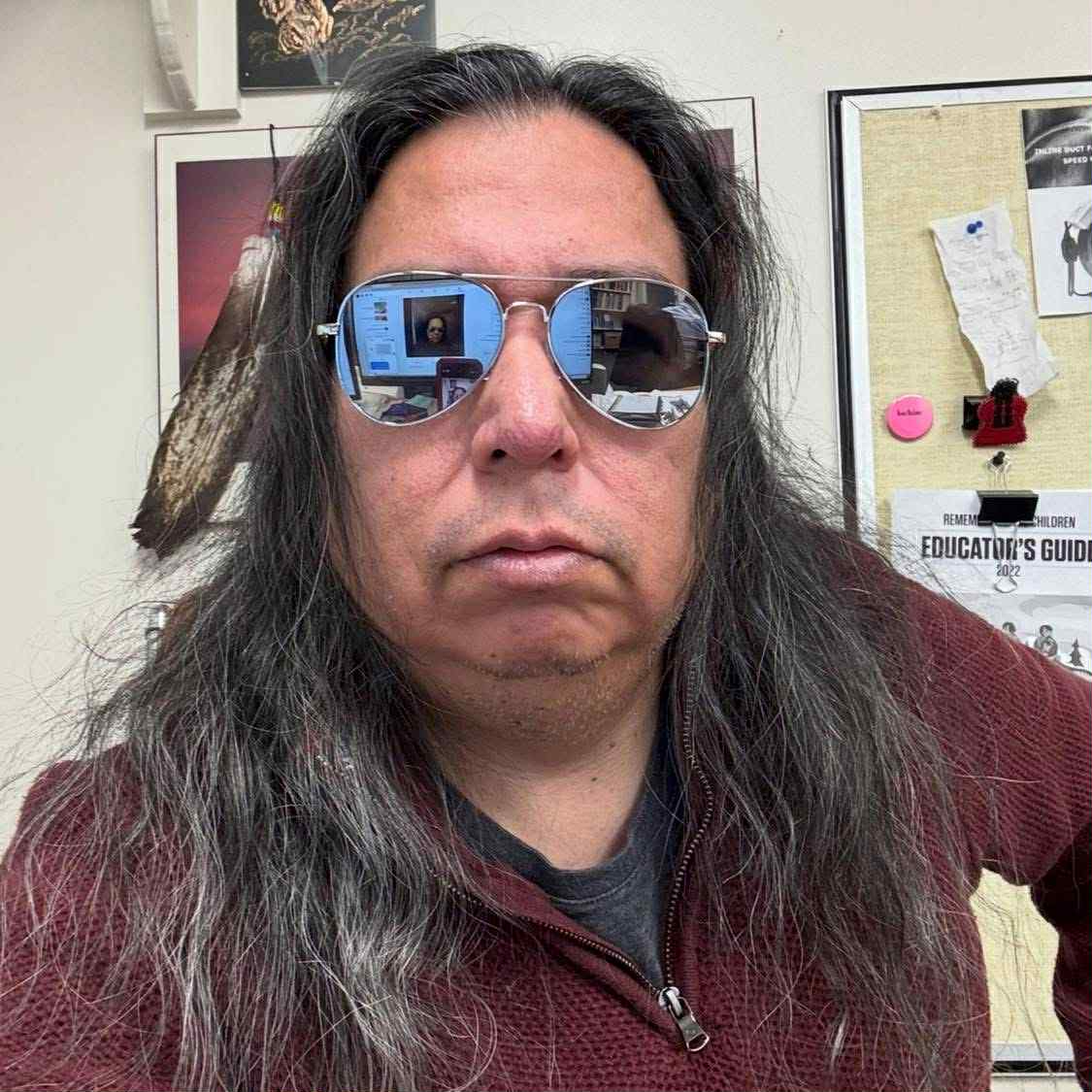
When he talks about his years at the University of Regina, Bill Stevenson, BHJ’09, MCert Public Management’19 explains that his education journey wasn’t linear. “Each step gave me tools to think critically, engage communities, and stay grounded in my values as an Indigenous person.”
His university experience gave him permission to imagine better answers and helped him believe that change isn’t just possible, it’s our responsibility.

Working it — Three Majors and a Learning Disability: Mike Abramson BSc'02
Mike Abramson BSc'02, owner of Mikey's Awards and Promotions Inc., took a rocky road toward his U of R Bachelor’s degree, switching majors three times and managing a learning disability, which, during the 1990s, was mostly a foreign concept. He’s a patient man who keeps getting up when he’s knocked down: for those of you who remember the UROC concept, Mike was one of the U of R radio heads who attempted to create the student-run radio station on campus that unfortunately never got off the ground. With supportive university professors, Mike, who has difficulty with language, was able to graduate with a Computer Science degree and went on to buy an existing Regina business that he easily turned into his own: Mikey’s Awards and Promotions. Mikey’s serves Regina with care and excitement to turn your vision into reality.

From the kitchen table to a national success: Jennifer Dubois CA '10, CCE '12. DADMN '12, CICA '12, BBA '16
Jennifer Dubois CA '10, CCE '12. DADMN '12, CICA '12, BBA '16, opens up about her humble beginnings and what she has achieved as a FNUniv graduate, an entrepreneur, and an Indigenous business owner. Her dreams came true in 2017, when she opened her very successful salon spa in Regina, Miyosiwin, a Cree word meaning “being beautiful”. Jennifer’s goal was to create meaningful change as an entrepreneur and an advocate for Indigenous excellence. Through her professional work at Miyosiwin and her passion and dedication to economic and personal growth, Jennifer strives to inspire and uplift Indigenous entrepreneurs and professionals throughout Canada.
Live and learn: Lynn Armstrong BA '94, BJAC ’96
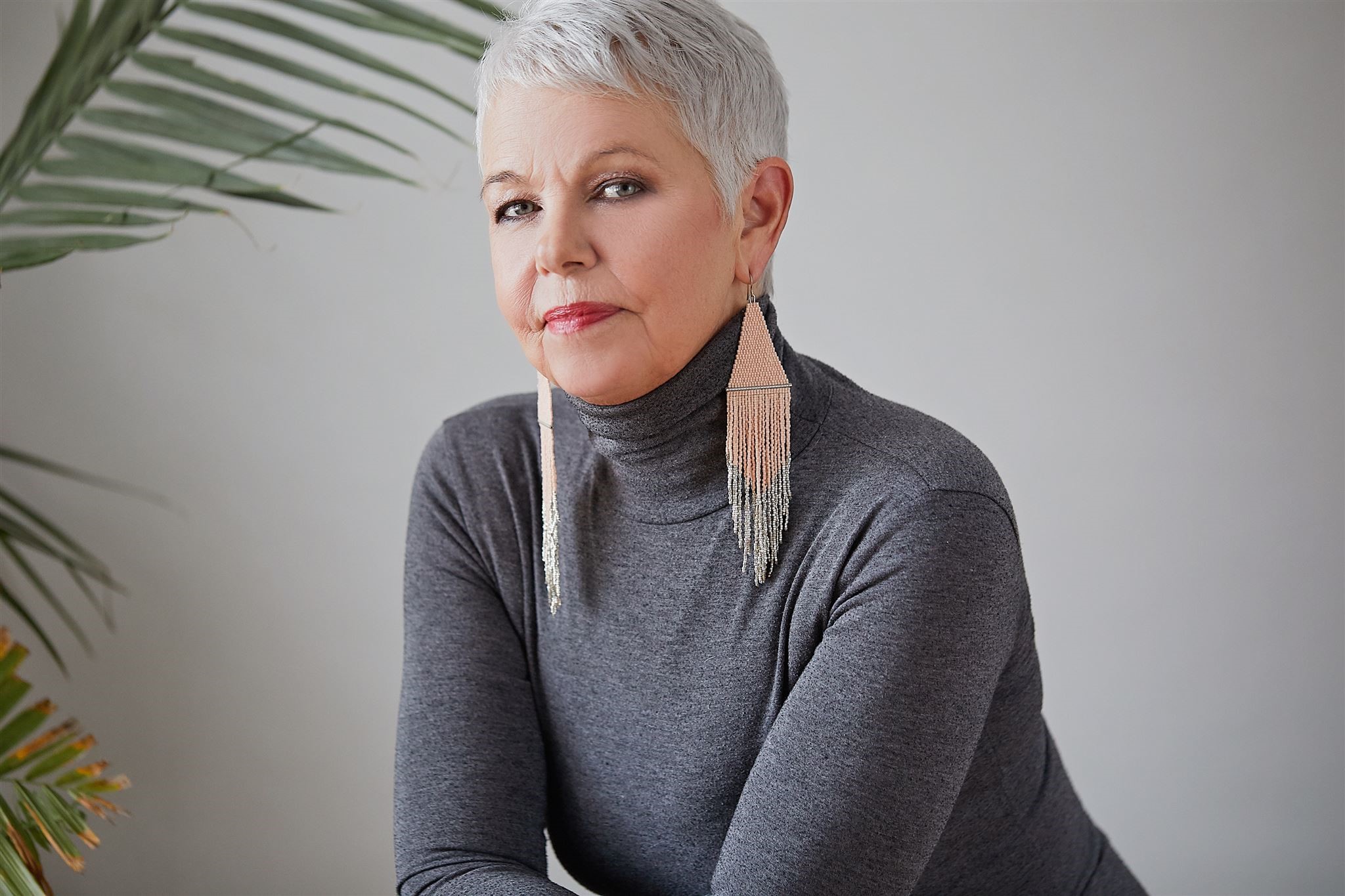
Lynn Armstrong BA ’94, BAJC ’96, is a force to be reckoned with. Since graduating from the U of R, this journalist, businessperson, and “relentless entrepreneur” has been on a continuous rinse-and-repeat cycle of learning and mastering a wide variety of things. Her never-ending energy and thirst for knowledge has garnered several communication awards including two Auditor General's Awards and the Award of Excellence in Communication four years in row from the International Association of Business Communicators. A local business owner, Lynn operates ZÖE Shoes + Objects, a women’s boutique in Regina's Cathedral neighbourhood that will soon make room for Inspiraré, an in-house yoga studio. In this Degrees article, she discusses her university experience, her communications work, and her quest to follow her own path.
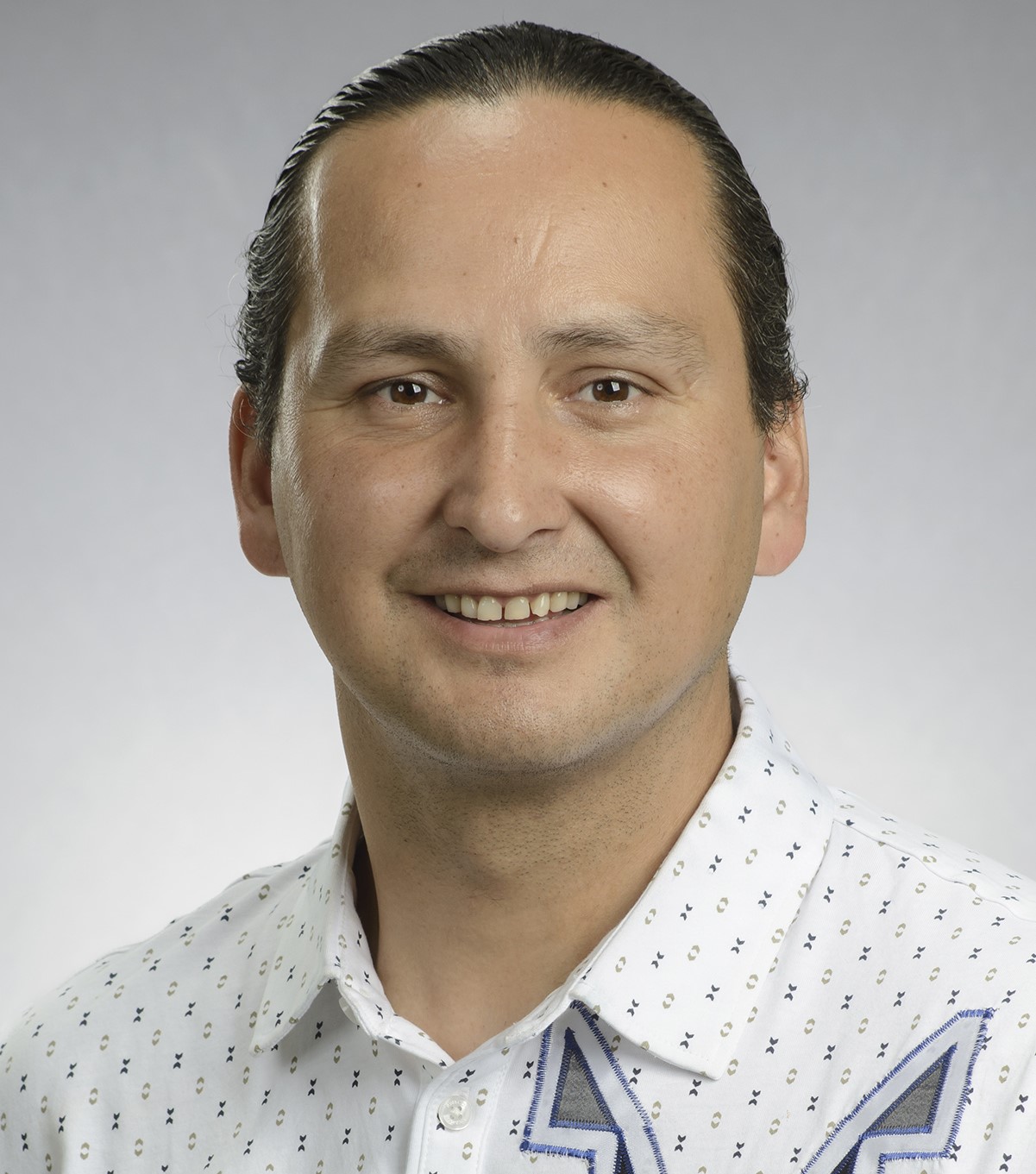
Cadmus Delorme, BAdmin'12, MPA'16 named next Chancellor
Cadmus Delorme, BAdmin'12, MPA'16, ICD.D. has been elected to serve as the University’s tenth Chancellor. His three-year term begins on July 1, 2025. Delorme has been affiliated with the University of Regina for more than 15 years in various capacities—undergraduate student (through First Nations University of Canada), Master’s student, and most recently the Chair of the Board of Governors.

Contact University Advancement - Engagement
Phone: 306-337-2921
Email: Breandan.Spruyt@uregina.ca
Phone: 306-585-4503
Phone: 306-585-4838
Email: Virginia.Carpenter@uregina.ca
Phone: 306-585-5628
Email: jacob.faith@uregina.ca
Phone: 306-551-3882
Phone: 306-585-5062
Email: Barbara.Kuzyk@uregina.ca
Phone: 306-585-5310