Inside the Tent: Dr. Kathryn Ricketts on Place, Story, and Stewardship
A luminous eight-person tent flaps in the prairie wind, nestled in the village of Val Marie on the edge of Grasslands National Park. Inside, University of Regina professor Dr. Kathryn Ricketts gathers with locals, artists, and visitors to ask deceptively simple questions: What does it mean to be at home? What does it mean to be away? And how can we learn to care for the land and for each other more deeply?
Ricketts is Research Lead on Home and Away, a multi-year project funded by the Humanities Research Institute at the University of Regina. With co-researchers and artists Diana Chabros and Knowledge Keeper Joseph Naytowhow, she blends story, painting, and movement to explore how people connect with land and place. “We all feel like visitors on this land,” she reflects. “We must learn to walk differently on it.”
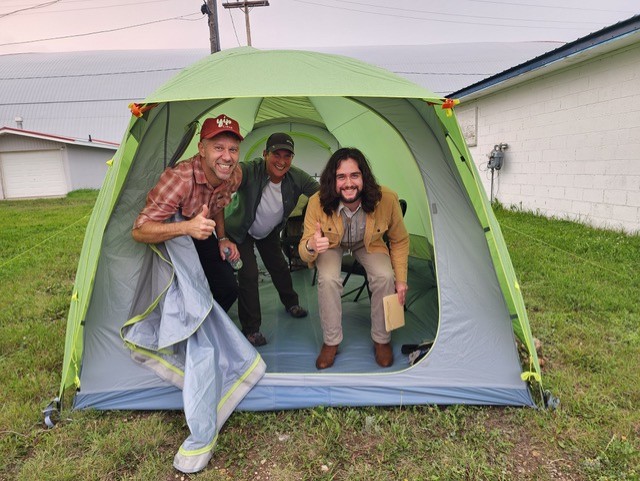
The team designed workshops in Val Marie, home to about 100 residents and gateway to Grasslands National Park, where youth, adults, and visitors engaged in storytelling, art-making, and Tent Talks.
Why the Tent? Why Val Marie?
For Ricketts, the tent itself is central. It recalls the magic of childhood intimacy and imagination. “Secrets were told. Games were invented. You heard yourself differently in that kind of space,” she says.
That atmosphere carries into her Tent Talks: short, live-broadcast conversations between two guests in lawn chairs. Playful yet profound, the format shakes people out of their usual patterns of conversation, making space for vulnerability and surprise.
Val Marie was a natural setting. As both an artist hub and a service centre for tourists bound for Grasslands, the village embodies the tensions between local life, fragile ecosystems, and waves of visitors. Ricketts wanted to explore how residents navigate those tensions and what it means to belong in such a place.
Stories from the Tent
The Tent Talks quickly filled with stories.
Longtime resident Maurice Côté and writer Madonna Hamel trace their connections to homesteads and family lineage. “My granddad filed for land in the Coriander district. It was a hard life, but they stayed,” says Côté.
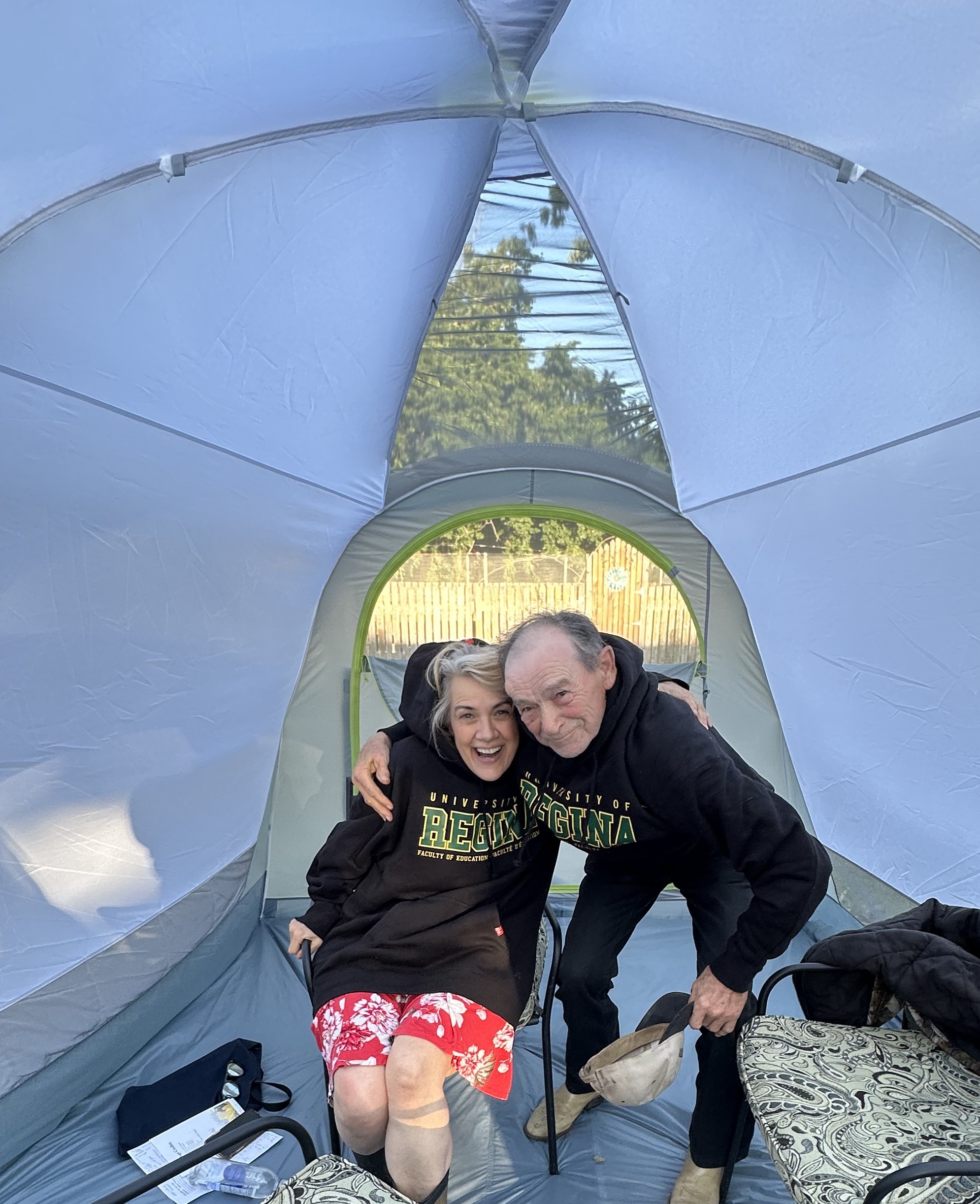
Hamel, whose mother was born in Val Marie, explains her own choice to return. “My life was hectic, full of distractions. I came here and finally slowed down, breathed. This became my grounding, my ‘itching post,’ as I call it.”
Their conversation reveals pride in lineage alongside unease at the changes brought by the park and tourism. Côté notes that fifty percent of the people in town are unfamiliar and that the community spirit has diminished over time. “Would there even be a Val Marie without the park? Some say, ‘You gained a park, we lost our neighbors.’ Yet for many of us, this is where we regained our sanity,” adds Hamel.
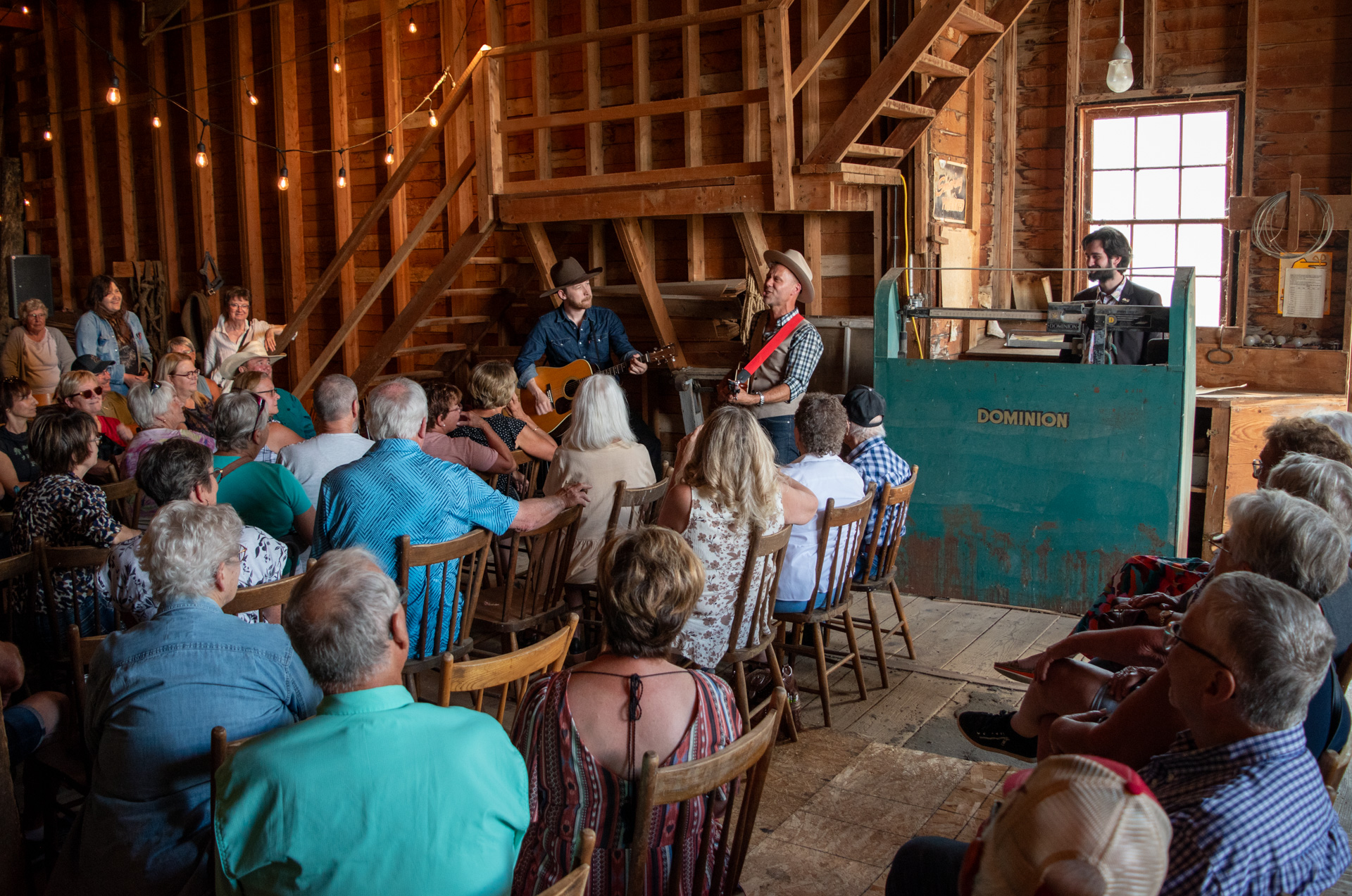
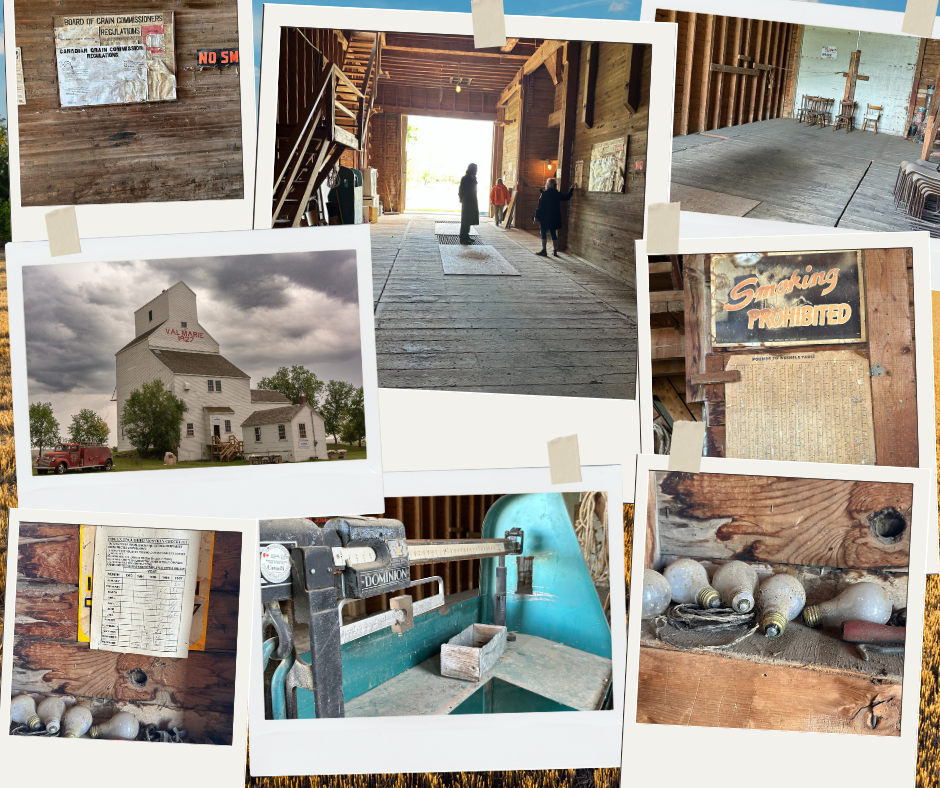
On another Tent Talk, musician Jeffery Straker and cartographer Alex McPhee reflect on grain elevators, where Straker had just performed. Originally constructed as a purely utilitarian commodity terminal, it has become, in McPhee’s words, “a storybook image of what Saskatchewan is and what rural Saskatchewan means.”
“From humble beginnings, this totally economic building has flowered into an incredible structure of attachment and narrative,” McPhee says.
Straker agreed. “Growing up in a small town, I drove a grain truck to that elevator as a kid. Yes, it was a commercial enterprise, but it was also integral to our survival. It put food on the table,” he said. “It seems only natural that generations have romanticized these buildings.”
He points out that the elevators themselves are disappearing. “In the 1950s there were roughly three thousand in Saskatchewan. Now there are fewer than one hundred and seventy. Though we romanticize them, we have to ask why we are not preserving them.”
As a touring musician, Straker has found that performing inside these historic elevators creates an atmosphere of trust and memory.
For both McPhee and Straker, the elevator has become more than an artifact. It is a living conduit for memory, a place where personal and collective histories continue to be told.
Walking with Reverence
The stories shared under canvas ask not only to be heard but to be lived.
In one workshop, Naytowhow guides twelve high school students from Val Marie through Indigenous rituals such as offering tobacco, smudging, singing, and storytelling—inviting them to listen to the land with the same care the speakers voice. Chabros leads the students through intuitive painting exercises, reflecting on their experiences and their connection to the land. Ricketts helps them integrate these reflections through movement and poetry.
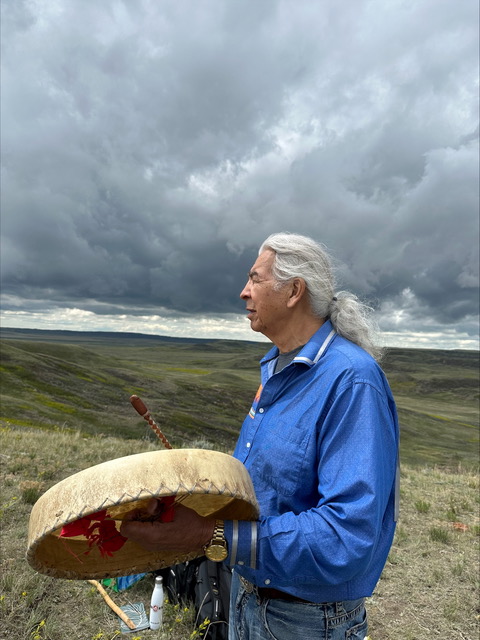
“This is a full-day workshop. The students made us lunch, and we all ate together. We spent the afternoon reflecting on the morning’s experience through paint, writing and movement. From 8:30 a.m. until 3:15 p.m., they were engaged and inspired without breaks,” Ricketts recalls. “In my history of teaching, that is unusual.”
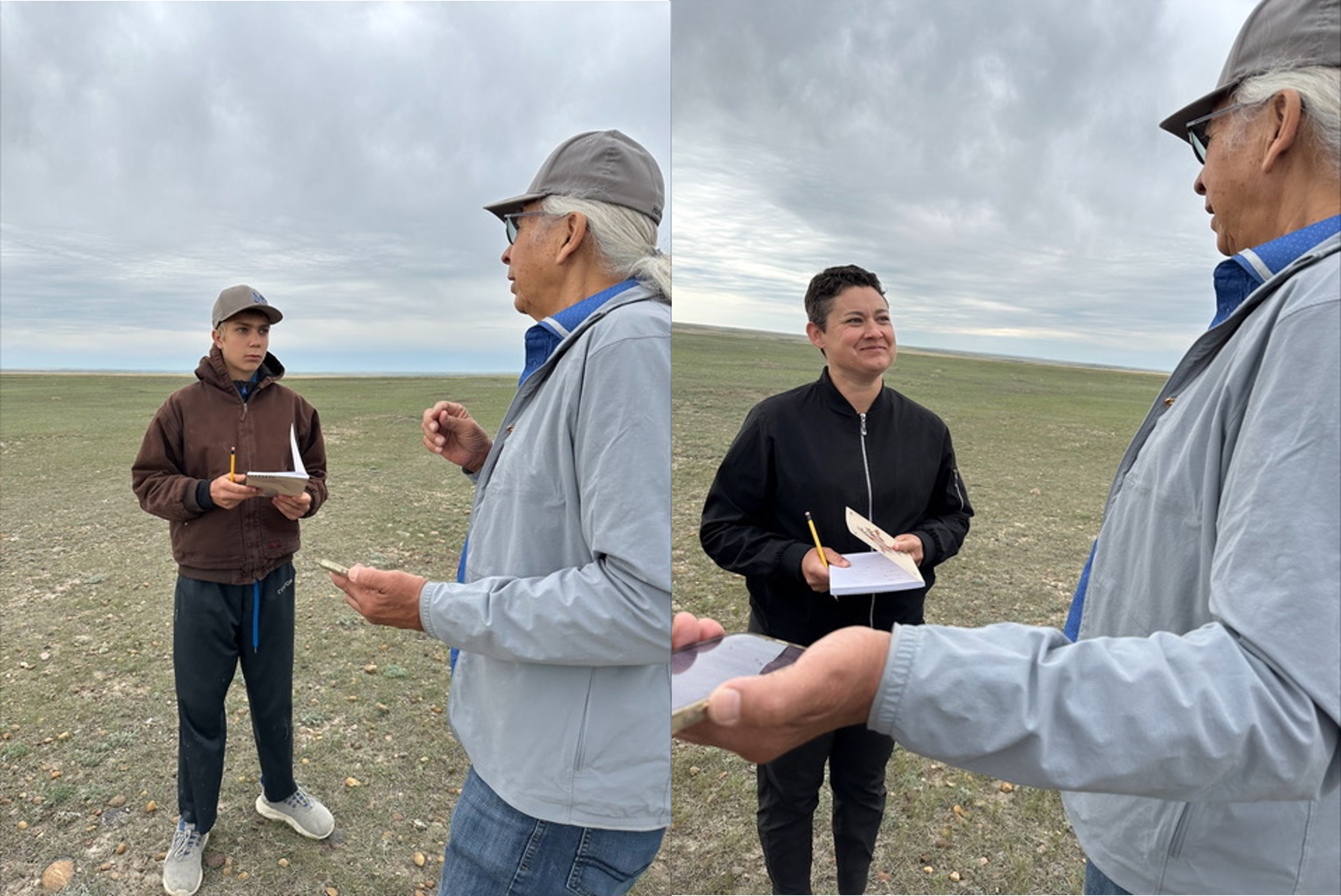
“Through these Tent Talks and workshops, we felt we were able to both connect with Val Marie and its residents on a deep level as well as broker connections with others that were visiting” Ricketts reflects.
Projects like Home and Away are central to education and highlight that place matters. Where learning happens shapes how it happens. Place is not just the backdrop for schooling but a defining part of how educators teach and how students learn. Teaching rooted in local stories, landscapes, and communities has the power to transform classrooms into sites of connection and responsibility.
Ricketts suggests that educators could adopt similar practices with their students. For instance, using storytelling walks, mapping exercises, or artworks inspired by local landscapes. These activities invite students to see themselves as both shaped by and accountable to the places they inhabit.
The tent in Val Marie may eventually fold, but the conversations it sparked ripple outward. As Ricketts puts it: “We’re all visitors on this land. If we can attend to it with sensitivity and generosity, then we can truly begin to walk differently together.”
Learn more about the programs offered by the Faculty of Education at the University of Regina and how they prepare educators to teach with creativity, care, and connection to place.