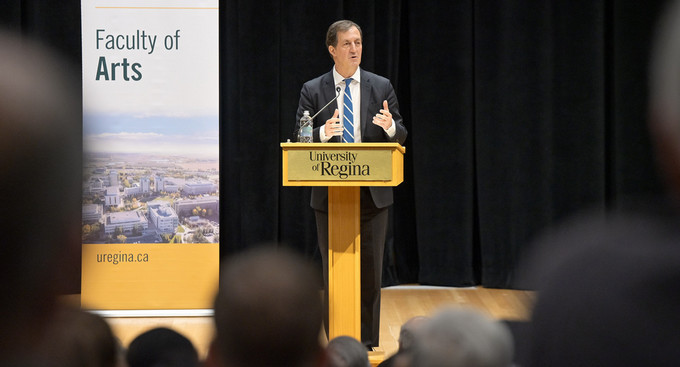
It was a homecoming five years in the making. On the evening of November 27, 2025, the School of Journalism at the University of Regina didn’t just bring back a tradition; it celebrated the return of the James M. Minifie Lecture with a full house and a renewed sense of purpose.
Nearly 800 guests, ranging from eager first-year students to long-time community partners, packed the Education Auditorium on the occasion of the 40th Minifie Lecture. Some arrived early to claim the best seats, while others stood along the walls when chairs ran out. The atmosphere was electric.
“Historically, the Minifie has been one of the best-attended and highest-profile lectures on campus, and it is wonderful to see that the lecture continues to have such relevance for the University and wider community,” said Dr. Jeff Keshen, U of R president and vice-chancellor, surveying the turnout.
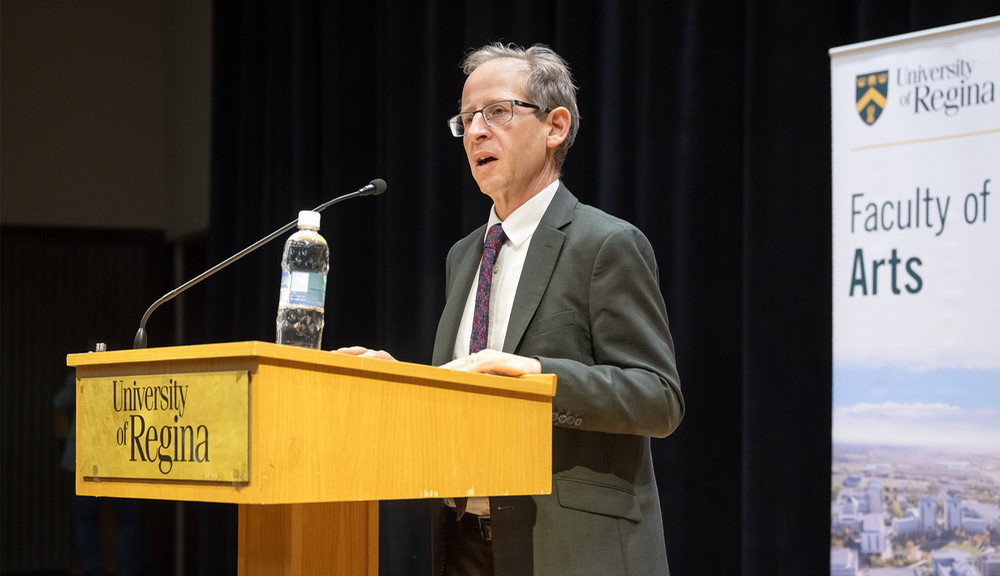
In his opening remarks, Keshen highlighted that the lecture series has hosted a “veritable who’s who” of Canadian journalism, ranging from Knowlton Nash to Chantal Hébert. He welcomed keynote speaker Andrew Coyne to this esteemed group, noting that at a time when quality, non-partisan journalism is needed more than ever, the University is proud to facilitate these critical conversations.
The case for journalism is the case for clash. Without the jumble of petty vendettas, axe-grinding, scoops and self-promotion that make up the news... something close to the accurate portrait of the times emerges. — Andrew Coyne, Columnist and Author, The Globe and Mail
A living legacy of accountability
The night was also a celebration of history, with the spirit of the past palpably present. Seated in the auditorium were members of the Minifie family, including 87-year-old Gillian Minifie Murad, who made the journey all the way from Victoria, B.C. to attend the lecture, and Harry Minifie, nephew of the lecture’s namesake.
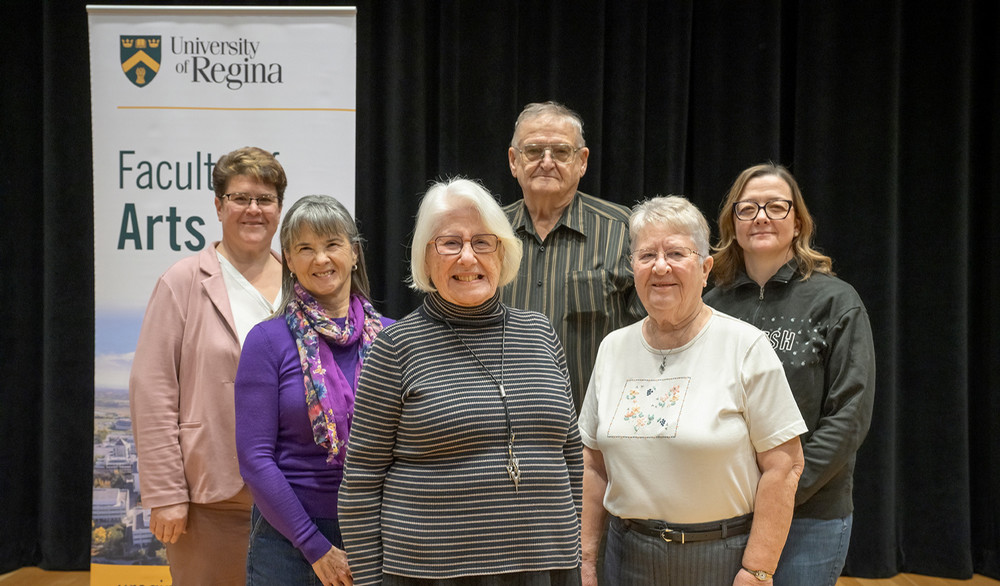
For Harry, the event was more than a public talk; it was a proud reminder of the rigorous standards his uncle set while covering the White House and global conflicts. James M. Minifie, the Saskatchewan homesteader turned legendary foreign correspondent, was known for his tenacity.
"He'd ask politicians the same question years apart and call them on it when they gave different answers," Harry recounted with a smile, beaming at the turnout. "They hated his guts for doing that. So, I think our media must get back to giving the truth, and if somebody's feeding them a line of BS, to call ‘em on it."
The crisis of trust
Andrew Coyne, distinguished columnist for The Globe and Mail with a career spanning 40 years, delivered a lecture titled “We'll Miss the Legacy Media When It's Gone (Though It's Not Going Anywhere)” He did not shy away from the hard truths facing his profession, dissecting the collapse of the traditional advertising-based business model and the rise of social media, yet the audience hung on every word.
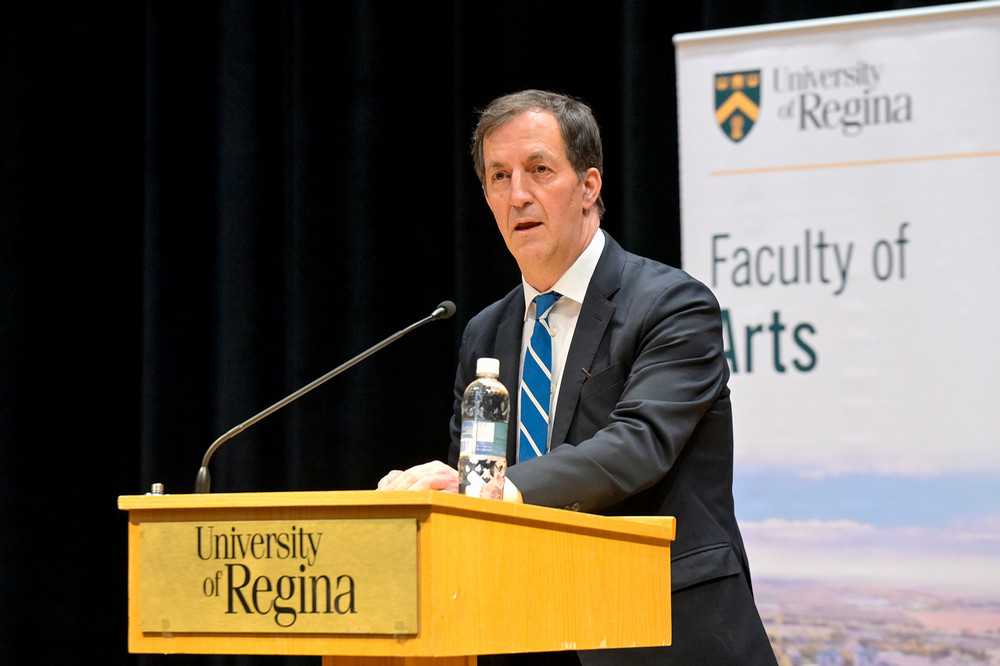
Coyne argued that the current climate is not merely a crisis of business models but an "epistemic crisis" - a situation where facts themselves are treated with contempt. He suggested that while social media has allowed voices to flourish without filtration, society has lost the valuable function of "gatekeepers" who once provided the time and space for reasonable debate.
"What we need, rather, is for social media owners to take up the mantle of the gatekeepers. Or rather, what we need is a choice of gatekeepers— a broader and better one than we have now," Coyne explained. "The demand for fake news, not the supply, is the real problem."
Despite the gravity of the topic, Coyne offered a hopeful path forward that relies not on government subsidies but on quality. He posited that a new model is emerging—one where the media sells writing directly to readers rather than selling readers to advertisers.
"The evidence shows that people will pay for quality," he told the audience, pointing to rising subscription numbers for major media outlets. "The only question is whether we'll provide it; you are either writing to be read or you are wasting your time."
The next generation of gatekeepers
The energy in the room shifted during the question-and-answer period, from lecture to dialogue. It wasn’t just students and faculty engaging with the material; members of the public, who had waited five years for this return, seized the opportunity to pose questions about the future of the CBC and the changing media landscape. The depth of the exchange made it clear that the community is already looking forward to the next edition of the series.
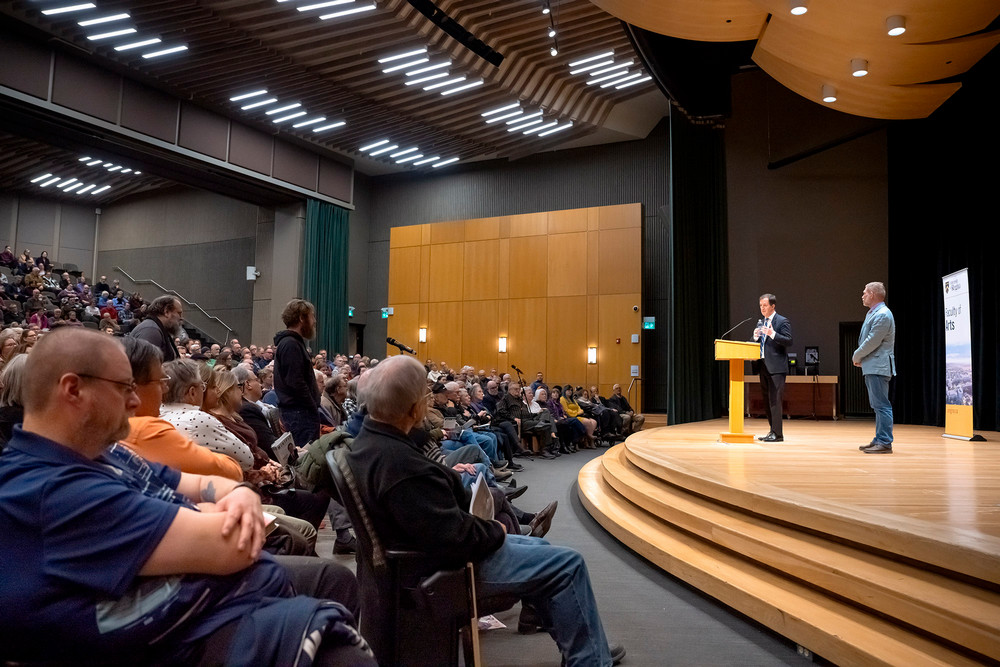
"The Minifie Lecture reminds us that journalism is rooted in sacred work: the search for truth, the commitment to tell stories that matter and the courage to speak clearly to power," noted Dr. Tobias Sperlich, interim dean of the Faculty of Arts.
This successful revival of the Minifie Lecture serves as a beacon for the U of R, reinforcing its position as a national leader in nurturing informed citizenship. But the celebration cannot end when the auditorium lights go down. The "epistemic crisis" Coyne described requires a new generation of professionals equipped to handle it—storytellers who are tenacious, ethical, and skilled in the art of verification.
For students in the School of Journalism, the evening was a masterclass in the responsibility they will soon shoulder. For the wider community, it was a reminder that while the delivery methods of news may change, the need for disciplined truth-seeking remains.
Become the Next Storyteller - Explore the Bachelor of Arts in Journalism, News Media, and Communication. Our program prepares you for a rapidly evolving digital landscape.
For those inspired by the legacy of James M. Minifie and the challenges posed by Andrew Coyne, the path forward starts here. The School of Journalism at the U of R provides the critical training ground for democracy’s next generation of watchdogs. In an era of quick takes and hot opinions, their work is as crucial as ever.
The Minifie Lecture is back, and the future is bright.
Banner photo: A legacy of critical thought. Andrew Coyne dissects the modern "epistemic crisis," challenging the audience to support the rigorous, non-partisan journalism that James M. Minifie championed. Credit: University Communication and Marketing
About the University of Regina
At the University of Regina, we believe the best way to learn is through access to world-class professors, research, and experiential learning. We are committed to the health and well-being of our more than 16,600 students and support a dynamic research community focused on evidence-based solutions to today’s most pressing challenges. Located on Treaties 4 and 6—the territories of the nêhiyawak, Anihšināpēk, Dakota, Lakota, and Nakoda peoples, and the homeland of the Michif/Métis nation —we honour our ongoing relationships with Indigenous communities and remain committed to the path of reconciliation. Our vibrant alumni community is more than 95,000 strong and enriching communities in Saskatchewan and around the globe.
Let’s go far, together.