Bringing Reproductive Mental Health Care Home to Saskatchewan
Many of us have heard of or know someone who struggles with depression or anxiety during menstruation, pregnancy, infertility, and menopause — or are experiencing it ourselves. Previously understudied and overlooked, the impact of reproductive hormones on mental health — and the use of hormone therapy to improve well-being — is increasingly in the public spotlight.
Dr. Jennifer Gordon, Canada Research Chair in Reproductive Mental Health, and Director of the Reproductive Mental Health Research Unit, at the University of Regina, has dedicated her career to studying how hormones impact women’s mental health over different stages of life. As a clinical psychologist by training, Dr. Gordon brings both biological (hormone therapy and medication) and psychological approaches to the treatment and prevention of reproductive mental health conditions like depression, anxiety, and premenstrual mood disorders.

Dr. Jennifer Gordon, Canada Research Chair in Reproductive Mental Health, and Director of the Reproductive Mental Health Research Unit, at the University of Regina, has dedicated her career to studying how hormones impact women’s mental health over different stages of life. Credit: University of Regina Photography
Her contributions to research, education, and public outreach are gaining attention internationally. She has been invited to contribute her expertise to the World Health Organization, The Menopause Society, and the Canadian Network for Mood and Anxiety Treatments, and serves as Chair of the Clinical Advisory Board for the International Association for Premenstrual Disorders.
Dr. Gordon says it’s time to bring this research — and the many evidence-based programs and treatments she and her team have developed and studied — back home to Saskatchewan and fill the critical gap in accessible, specialized expertise needed to support women’s mental health and well-being.
What ignited your interest in studying reproductive hormones at different life stages and their influence on women’s mental health?
From a very early age, I was fascinated by pregnancy, babies, and women’s bodies and what they’re capable of. I was also fascinated by psychology, which ultimately led me to become a clinical psychologist. During my graduate training, I realized there was surprisingly little research combining those interests, and I saw an opportunity to fill an important gap in reproductive mental health. If I hadn’t gone into psychology, I probably would have become an obstetrician-gynecologist, but I love being a researcher because I get to ask questions we don’t yet have answers to and create new knowledge that can ultimately improve women’s health.
What has your research revealed?
Numerous studies have shown that women are two times more likely to develop depression in their lifetime, relative to men, no matter what country or culture they come from. We see this gender divide between women and men start with the onset of hormone production in puberty. It then disappears in older age once menopause and hormone production is done, and the rate of depression in men and women becomes similar again.
For more than 11 years, my research unit has been building a critical mass of research on the influence of hormones in female reproductive mental health and developing solutions using hormonal and psychological approaches to treat and prevent mental health conditions.
For example, we have a Coping with Infertility program, a self-guided program using video and workbook resources that has been shown to be as effective as one-to-one therapy. We also have a self-directed program called Thriving with PMDs, which teaches psychological skills for women and has shown promising reductions in suicidal ideation, depression, and anxiety. PMDD, or premenstrual dysphoric disorder, is a complex condition of severe premenstrual syndrome that affects five to eight per cent of women.
I’ve also contributed to research examining how hormone therapy affects perimenopausal women’s mental health during my time at the University of North Carolina. I plan to continue research in this area, particularly to understand when hormone therapy can improve mental health and which women are most likely to benefit.
What is the situation like in Saskatchewan for supporting women’s reproductive mental health?
So many women are struggling alone mentally and physically with depression and anxiety during key reproductive changes. Every week I receive emails from people reaching out for more information about their symptoms and what they can do to alleviate their suffering for conditions such as PMDD or perimenopausal mood changes. Women are having a hard time figuring out what they’re experiencing, and their family doctors don’t know enough about how to counsel them. It doesn’t have to be this way.
Through the research we’re conducting in my unit, we’re producing guidelines, resources, and programs for the treatment of mental health problems in reproductive life stages, but we lack the capacity to bring these treatments to our communities in Saskatchewan. This lack of education for both the patients and their doctors creates a lot of distress and misdiagnoses for no reason.
We must strengthen our existing health care networks and support the development of our doctors’ knowledge and skills rather than relying on a few specialists in the province. At the same time, we need to empower women with the information they need to ensure they receive the appropriate support from their health care providers. It's my vision for creating a Centre for Reproductive Mental Health in our province.
How will this new Centre be a leader in reproductive mental health outreach and education?
The Centre for Reproductive Mental Health will provide practitioners with the latest evidence-based knowledge they need to diagnose when a woman is experiencing, say, PMDD. Just as importantly, we’ll provide women and the broader public with trustworthy, accessible information so they can better understand what they’re experiencing and know when and where to seek help. PMDD is grossly underrecognized and can take decades to diagnose. This delay is mind boggling. Through the Centre, we can provide the appropriate care and effective treatment in a timely fashion.
The Centre’s dual focus on practitioner education and community outreach and service through our evidence-based programming will make it one of a kind in Canada.
What does success look like for you with this new Centre?
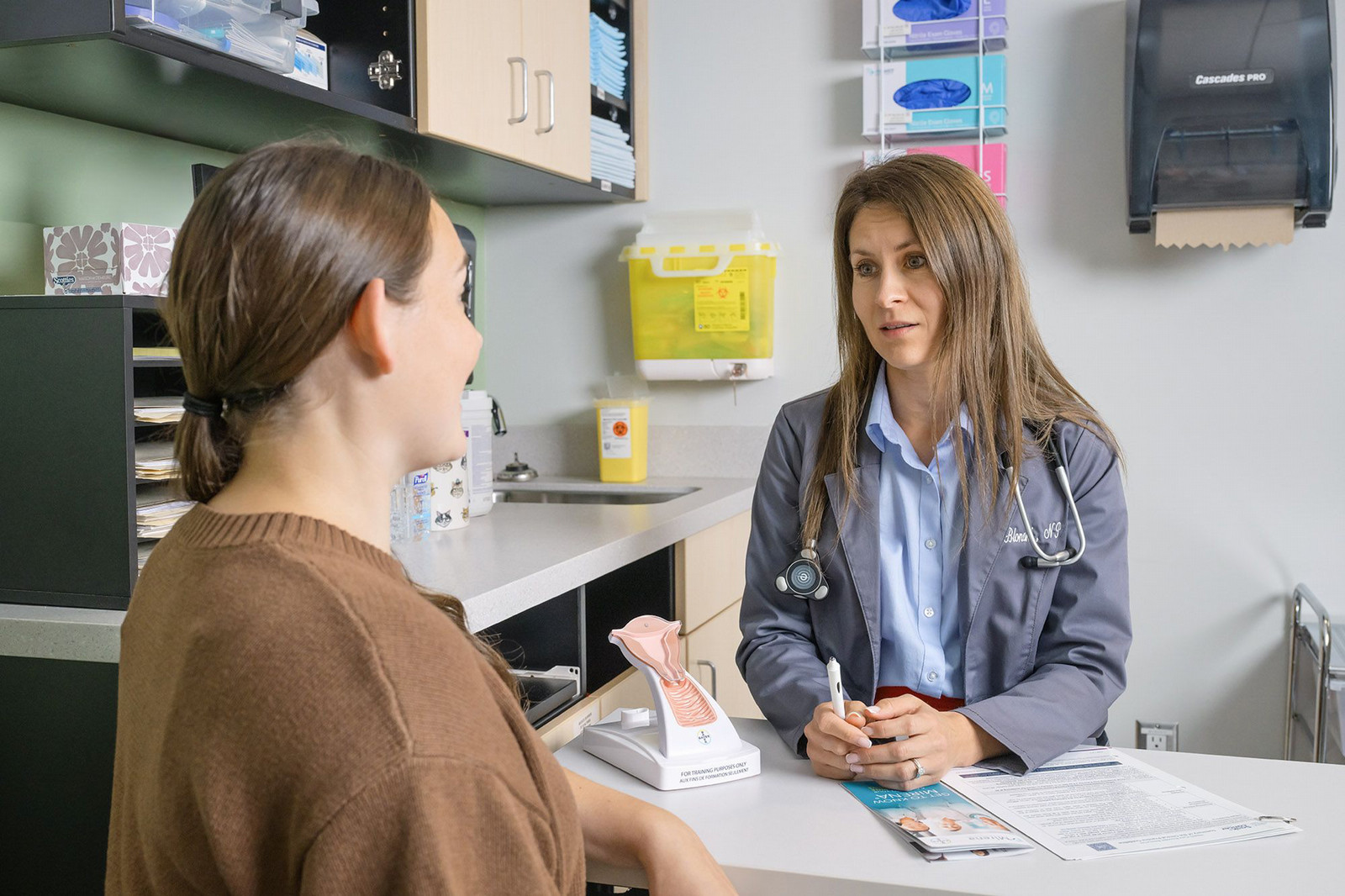
In my wildest dreams, I’d have a nurse practitioner on staff who would know all about the science underlying the influence of hormones on women’s bodies and mental health, but who could also go to remote communities. They would meet with clinicians there and teach them about the menopause transition and when hormone therapy is indicated, increasing their awareness and understanding of how to treat conditions such as PMDD and perimenopausal depression, so that we have more people who are fully educated and whose job is to make sure the information and the resources are getting to the people in need, so there is no more needless suffering.
Interested in learning more about the Centre for Reproductive Mental Health or how you can support it? Contact Samira Azzahir, Development Officer, University Advancement.
Banner image: University of Regina Photography