
Shifting the Focus of a Learning Community: Educator Well-being and Its Downstream Impacts
When Dr. Nathalie Reid reflects on what shaped her path toward trauma-informed education and teacher well-being, she returns to her fourth day as a new teacher on September 11, 2001.
Reid remembers the day vividly. While teaching in Ottawa, she learned of the attacks in New York City and watched panic spread among her students. One student went into hysterics, fearing for her mother's safety in downtown NYC. As fighter jets began circling Parliament Hill, students dove under their desks, screaming, “They’re here; we’re next.”
“I remember thinking, My B.Ed. did not prepare me for this. I looked around my classroom and realized how irrelevant my ‘fabulous’ lesson plan on literary terms was to students trying to make sense of a world that suddenly didn’t make sense,” says Reid.
That moment marked the beginning of what Reid now calls her “awakening” to trauma in schools. Over the years, through teaching, further study, and lived experience, she began to see that attending to trauma isn’t just about helping students, it’s also about caring for the educators who support them.
“During my doctoral work, the Fort McMurray wildfires broke out,” she says. “I heard from former colleagues who were struggling to ‘be trauma-sensitive’ when they themselves were barely holding it together. That was the turning point when I knew my research had to focus on educators as whole people.”
Today, as Director of the University of Regina’s Child Trauma Research Centre (CTRC), Dr. Reid is leading research that explores the connection between teacher well-being and student outcomes, what she calls the “downstream impacts” of educator wellness.
Why Teacher Well-being Matters Now
Reid’s latest project, funded by the Saskatchewan Health Research Foundation (SHRF), investigates how supporting teacher wellness can directly influence student engagement, attendance, and overall well-being.
“Teacher well-being is necessary for student well-being, but while schools are increasingly asked to address trauma and mental health in students, the well-being of teachers is often overlooked.” - Dr. Nathalie Reid
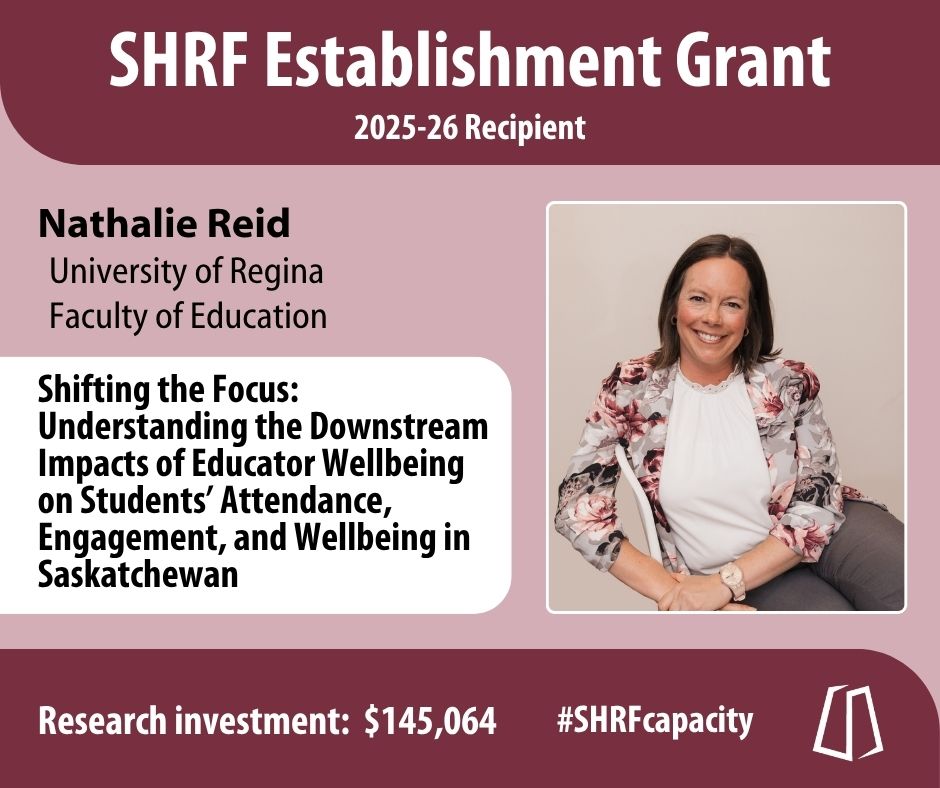
“Teacher well-being is necessary for student well-being,” Reid explains. “But while schools are increasingly asked to address trauma and mental health in students, the well-being of teachers is often overlooked.”
Research from multiple Canadian Teachers’ Federation surveys shows that teachers across Canada are experiencing alarming levels of stress and burnout. The majority of teachers report their jobs as “very stressful,” and many are struggling to cope. In Saskatchewan, a 2020 survey by the Saskatchewan Teachers’ Federation found that a significant number of educators are taking on some of the trauma their students feel, and that this emotional load affects connection and classroom climate.
“Given the current pressures teachers face, from larger class sizes to funding cuts, it’s crucial to reframe how we think about well-being in education,” says Reid. “We can’t continue to position teachers only as providers of wellness; we need to ensure they are recipients of it, too.”
Moving Beyond ‘Self-Care’
While teacher wellness is gaining attention, Reid cautions against reducing it to personal goal of self-care. “We need to move beyond the idea that individual teachers can simply ‘self-care’ their way out of systemic pressures,” she says.
Her research draws on fields like social work, which have long recognized practitioner well-being as essential to effective care. In these sectors, strategies such as mindfulness, reflective practice, self-compassion, and team collaboration are showing measurable benefits, including higher satisfaction, lower turnover, and stronger relationships.
“When teachers feel supported and connected, everyone benefits,” Reid says. “Students pick up on that. Research shows that teacher stress levels can directly influence student stress and performance.”
Resources for Educators
The Child Trauma Research Centre is helping bridge the gap between research and practice. Reid and her team are committed to getting knowledge into the hands of educators, families, service providers, front line workers, and communities in ways that are responsive, accessible, and relevant.
Educators can find a wide range of resources on the CTRC website, including:
- Pan-Canadian Knowledge Synthesis Report – A comprehensive overview of trauma-sensitive best practices in education, developed for the Saskatchewan Ministry of Education.
- Perspectives from the Field – Short, hopeful vignettes written by practitioners reflecting on their experiences with trauma-sensitive education.
- TIP Sheets (Trauma-Integrated Practices) – Concise, research-based summaries designed for quick use by teachers and schools.
- Trauma-Informed/Sensitive Pedagogies and Practices Microcertificate – A professional development opportunity co-created with the Saskatchewan Teachers’ Federation, offering practical tools and cultural insight for trauma-informed teaching.
Looking Ahead
Reid is optimistic about the growing recognition of educator well-being as a foundation for healthy learning communities.
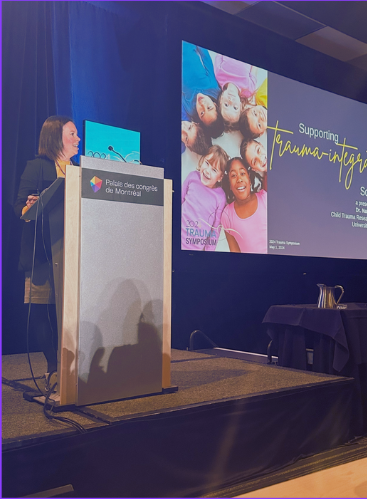
“What excites me most is seeing my work in Education, and our work at the CTRC expand into multidisciplinary research and deeper community partnerships,” she says. “There’s so much good happening across Saskatchewan, and it’s an honour to support that work.
Reid believes that the more that can be done, in good ways, to support the well-being of children, youth, and those entrusted with their care—including teachers—the closer society moves toward shaping the kind of world everyone hopes to live in.