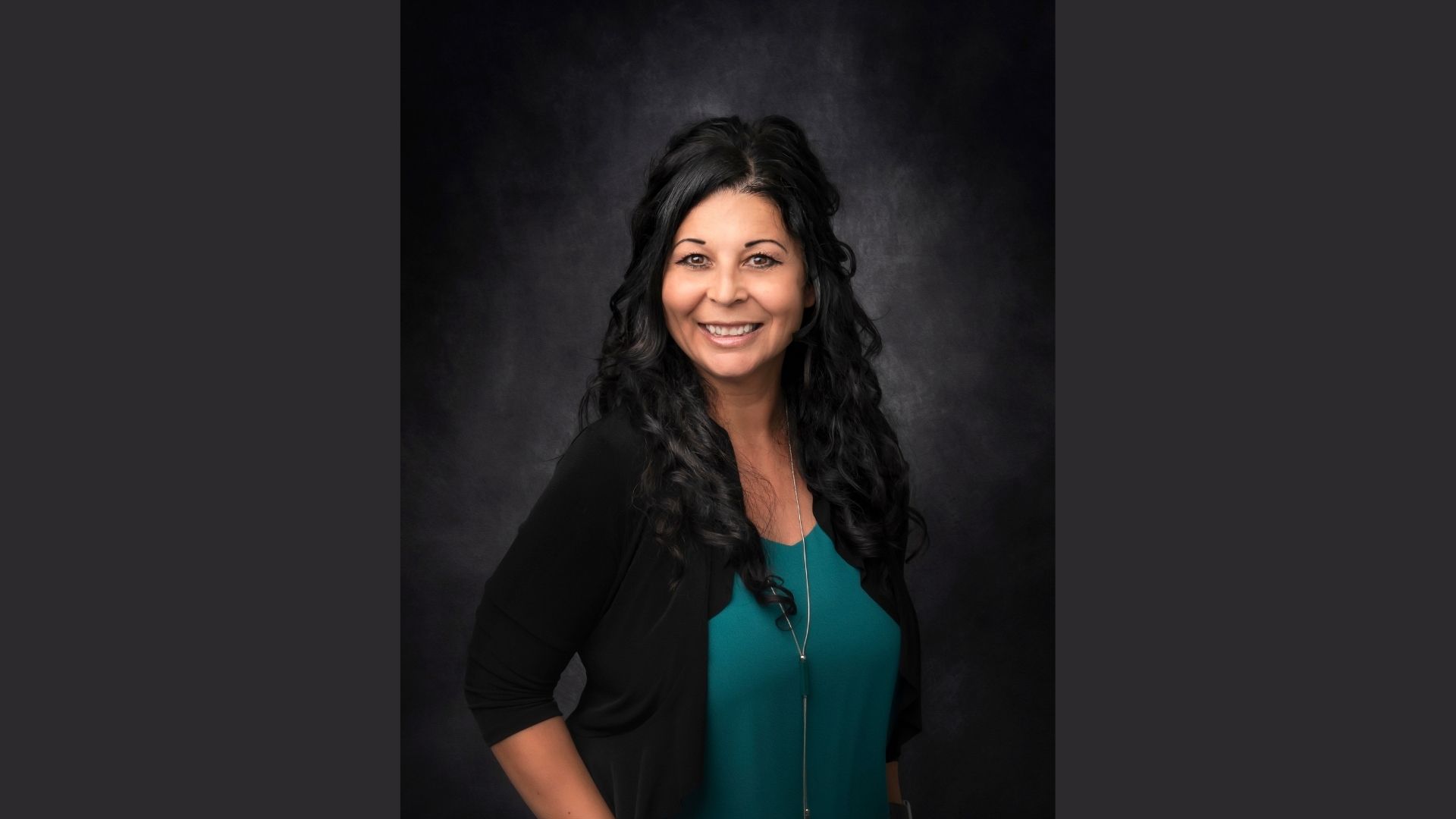
Bonnie Novotny: Leading Through Relationship, Innovation, and Indigenous Knowledge
From classrooms to post-secondary leadership, Bonnie Novotny (BEd ’99, MEd ’17) has dedicated her career to supporting learners, strengthening communities, and creating opportunities for others to succeed. Today, as Academic Chair of Digital Innovation, Arts and Sciences at Saskatchewan Polytechnic in Prince Albert, she continues to draw on the lessons, relationships, and Indigenous teachings that have shaped her journey.
Novotny began her educational path through the Saskatchewan Urban Native Teacher Education Program (SUNTEP), earning her Bachelor of Education in 1999. She later completed her Master of Education through the Gabriel Dumont Institute's Community-Based Indigenous Master of Education program, offered in partnership with the University of Regina.
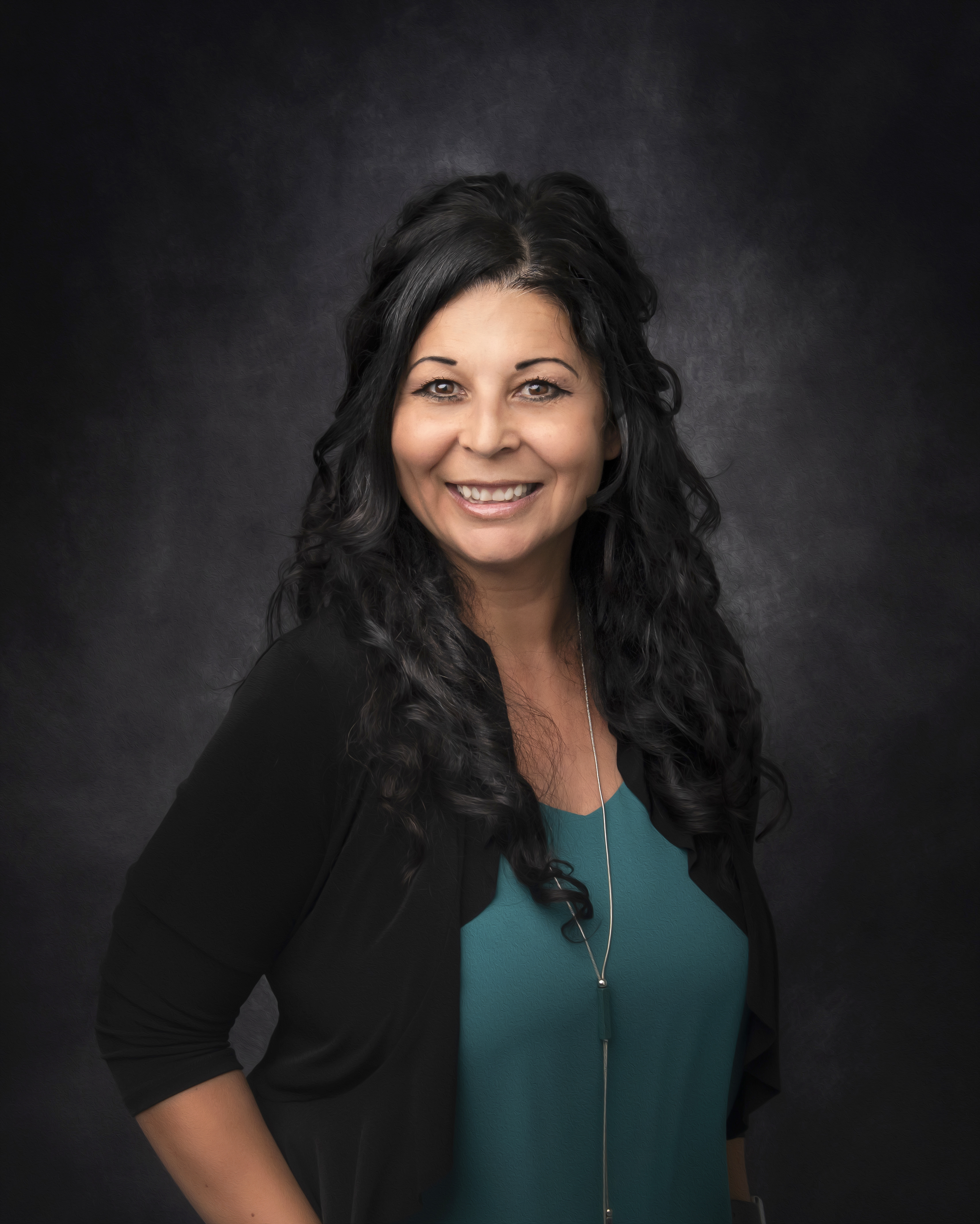
Photo courtesy of Bonnie Novotny.
Throughout her career, Novotny has worked across both K–12 and post-secondary education, supporting students, educators, and communities in a variety of roles. Today, she oversees programs spanning trades, certificates, diplomas, and degree programs, helping faculty and students navigate an ever-evolving educational landscape.
As a Métis woman, Novotny's leadership is grounded in the principle of Miyo-wâhkôhtowin—an Indigenous teaching that emphasizes good relationships, kinship, and shared responsibility. It is a philosophy that guides both her personal values and professional practice.
“Leadership is about empowering others, to create an environment where people feel seen, heard, and valued,” she says.
Growing up in Prince Albert, Novotny rarely saw Indigenous people in positions of influence within education. Without role models, it can be difficult to imagine possibilities beyond what is familiar. Her experience in SUNTEP helped change that perspective, surrounding her with Indigenous educators and leaders who demonstrated what was possible.
Leading Through Relationships
That commitment to relationships has continued throughout her career. When Novotny accepted her position at Saskatchewan Polytechnic, it was important to her to ensure a smooth transition from her previous role with SUNTEP. Support from both Saskatchewan Polytechnic and the Gabriel Dumont Institute allowed her to assist with onboarding and mentoring the incoming program head. For Novotny, this collaboration between Indigenous and non-Indigenous organizations reflects the spirit of Miyo-wâhkôhtowin in action.
She continues to seek opportunities for partnership between the organizations, including exploring innovative projects involving virtual reality, simulation, and body-swap technology to enhance learning experiences for teacher candidates.
Embracing Innovation and New Possibilities
A defining feature of Novotny's leadership is her willingness to embrace new ideas while keeping people at the centre of the process. One initiative she found particularly meaningful involved helping faculty, staff, students, and partners explore the opportunities and challenges presented by artificial intelligence in education.
Rather than approaching AI from a place of fear or restriction, she encouraged exploration, research, and open dialogue.
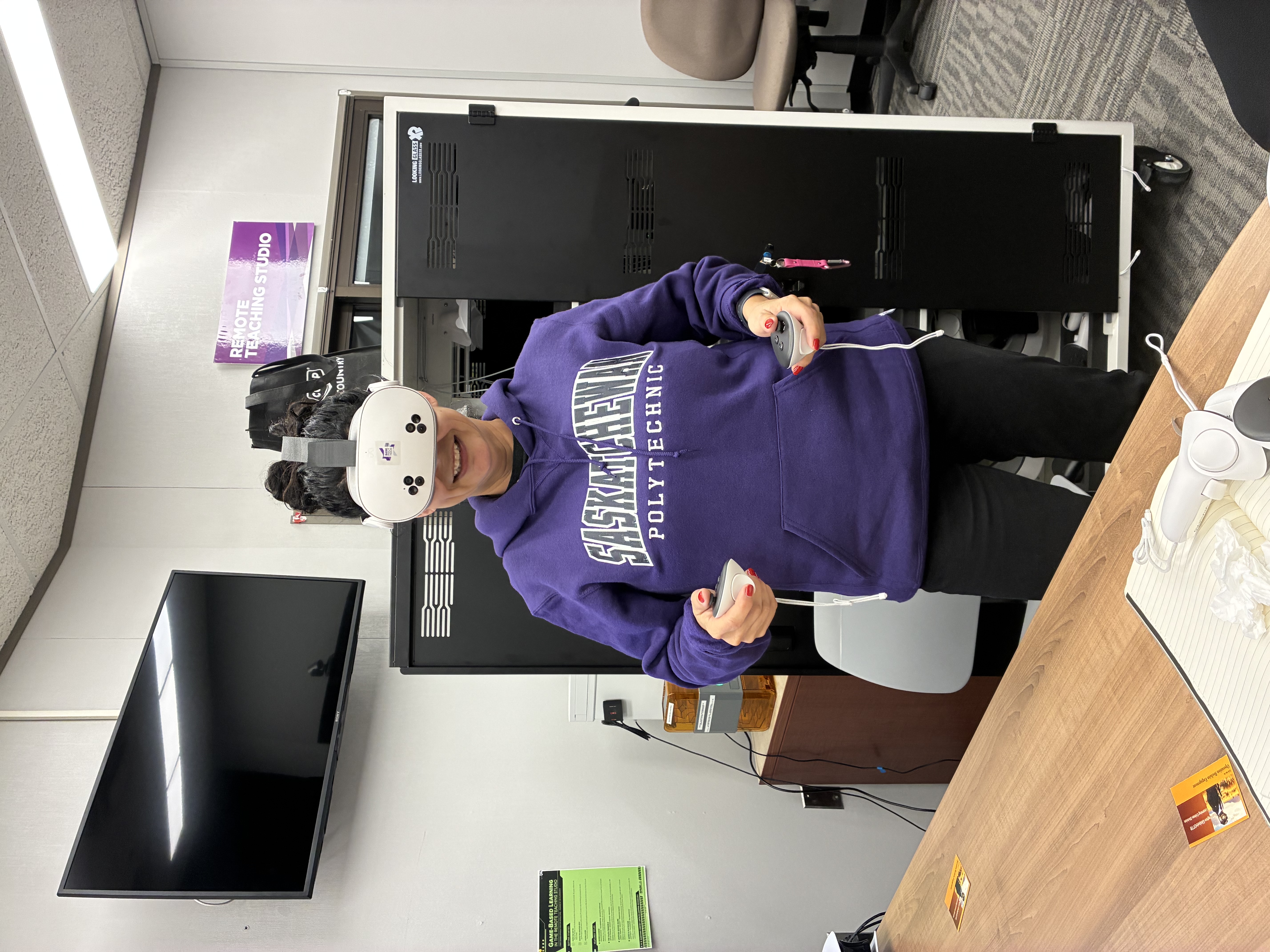
Caption: Bonnie Novotny at Saskatchewan Polytechnic, exploring how virtual reality is being used to enhance teaching and learning in arts and science programs
Photo courtesy of Bonnie Novotny
“Some of the most meaningful change happens when we are not afraid to lean into the unknown,” she says.
Through collaborative conversations and shared learning, participants developed a stronger understanding of both the possibilities and responsibilities that accompany emerging technologies. The result was a culture grounded in trust, curiosity, innovation, and ethical practice.
Strengthening Language, Culture, and Community
Another project that holds special significance for Novotny was leading the implementation of a Michif language course within the program offered through SUNTEP Prince Albert.
As a Métis educator, she understands that language is deeply connected to identity, culture, and belonging. Working alongside language speakers, Elders, faculty members, and community partners, she helped create opportunities for teacher candidates to engage with Michif as part of their educational journey.
Seeing students reconnect with language and culture while strengthening their understanding of Métis history and worldview reinforced the importance of language revitalization and culturally responsive education.
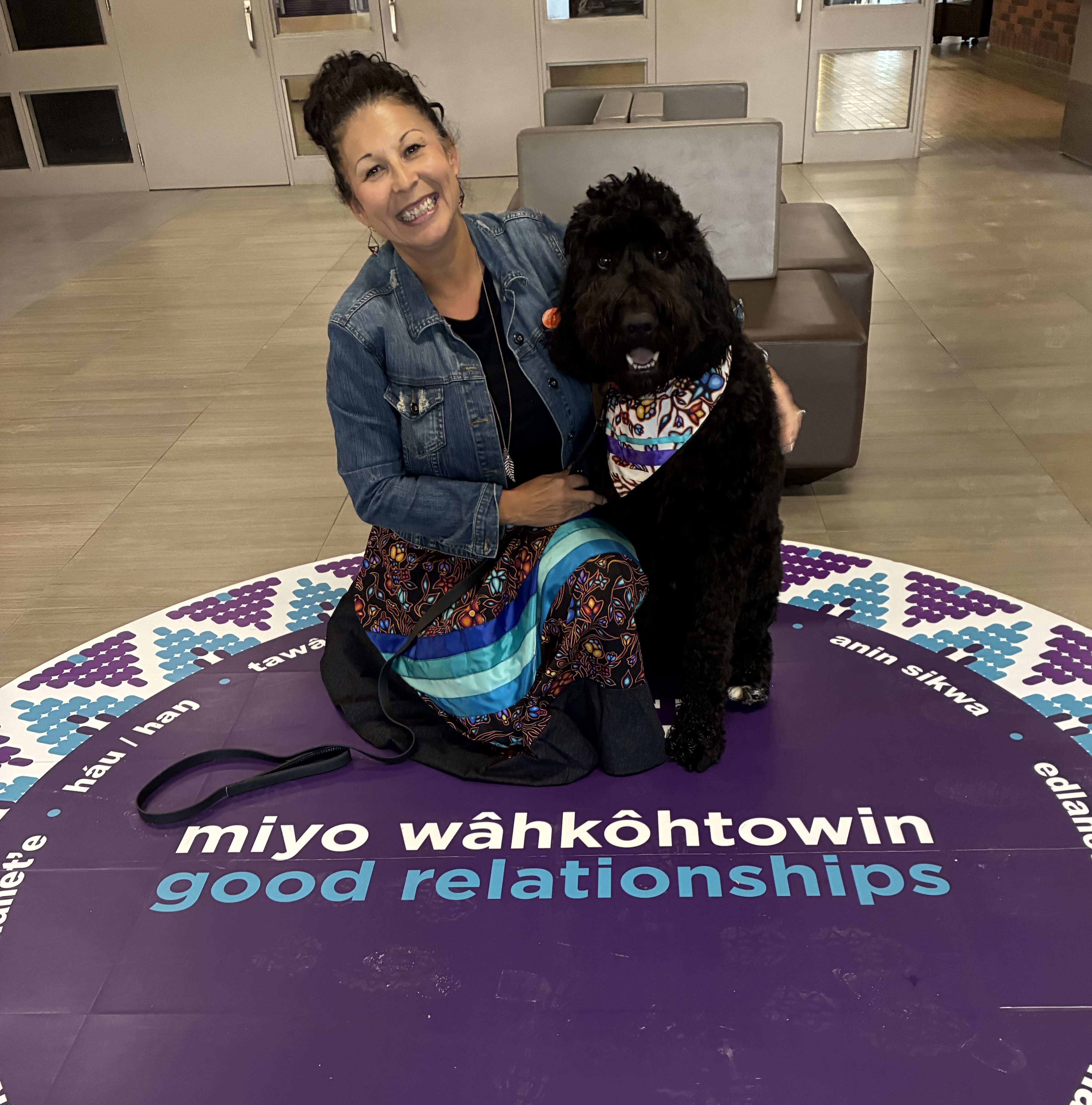
Photo courtesy of Bonnie Novotny.
Learning, Leadership, and Lasting Connections
When asked why she chose to pursue a master's degree, Novotny says the program opened new possibilities while allowing her to study close to home.
“I was looking for a change and knew that a Master of Education would create new opportunities. The opportunity to complete the program in my home community made it a much more attainable goal. Having a master's degree allowed me to enter post-secondary education.”
Novotny credits the Community-Based Indigenous Master of Education program with shaping both her leadership approach and her understanding of community.
“The cohort model created a strong sense of community, trust, and shared purpose, where learning was deeply connected to lived experience,” she says.
By centring Indigenous knowledge, leadership, and ways of knowing, the program reinforced the importance of reciprocity, accountability, and relationship-building.
Reflecting on her journey, Novotny recognizes the transformative role education has played in her life.
“Education gave me opportunities that once felt beyond my reach. Every role I have held since then is a reminder of the power of learning to change lives and the importance of ensuring others can access those same possibilities,” she says.
Learn more about Indigenous Community-Based Master of Education Program – Saskatoon and apply online: https://gdins.org/programs-and-courses/what-we-offer/graduate/