
From Classroom to Canvas: One Teacher’s Northern Arts Journey
For Nicole Gebert (BEd’21, arts education), teaching and art are not separate paths but deeply connected practices. A graduate of the University of Regina’s Arts Education program, Gebert has taught in northern Saskatchewan and the Northwest Territories while continuing to build her practice as a visual artist. Her journey reflects the power of arts education in preparing educators who are adaptable, reflective, and equipped to support student learning and well-being in diverse contexts.
“Teaching and making art go hand in hand. Engaging in the arts not only nurtures students’ learning but also supports their well-being. Following my passion for visual arts has allowed me to shape my own career while inspiring others to explore their creativity.” — Nicole Gebert
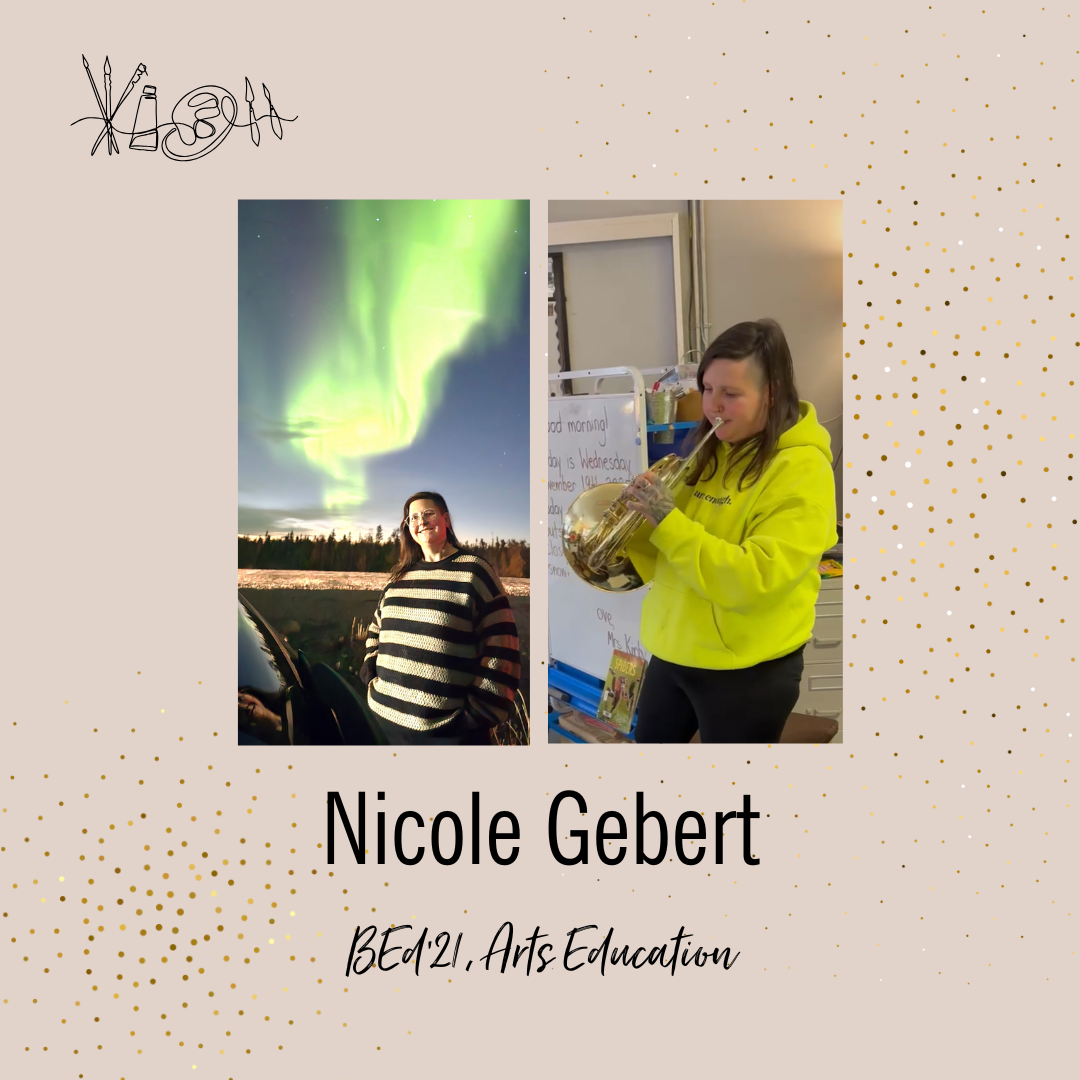
Looking back, she credits the program for shaping her teaching journey. Through hands-on, experiential learning in movement, drama, music, literature, and visual art, she learned to take creative risks and embrace uncertainty, skills that continue to guide her work today.
“We did wild, unexpected things in arts education, like turning a soup-making experience into a dance,” Gebert says. “In drama, we’d act out three news stories and one story was a lie, the class had to figure out which story was the lie. At times it was so ridiculous and being able to have that space to be both informative and silly was beneficial. Doing this kind of creative, playful work helped me become comfortable stepping into the roles that some may shy away from in addition to taking risks. These experiences made me a more confident, relaxed teacher.”
Teaching in the North: Challenge, Resilience, and Growth
After graduation, Gebert taught in southern rural Saskatchewan. She then accepted a teaching contract that brought her to northern Saskatchewan. The decision was driven by a desire for meaningful experience, professional growth, and connection beyond her familiar surroundings.
Teaching in northern communities brought both rewards and challenges. She encountered students deeply connected to their culture and community, participating in traditions, arts, and events that reflected strong cultural identities. At the same time, she witnessed how geography, history, and systemic factors shape educational experiences in the North.
“Living and working in isolated communities required adaptability beyond the classroom,” Gebert shares. “You learn tips of northern living, like how to fix a car, what tools you might need in case you get stranded, and investments you should make for emergencies such as forest fires and power outages.
After teaching in northern Saskatchewan, Gebert took a contract teaching art in a remote area in the Northwest Territories. “I wanted to see what else was out there, and teaching in northern Saskatchewan helped equip me to teach even further north,” she says. “It was scary to go further away from my roots and comfort level, but the experiences were worth it for both my professional and personal growth.”
The Arts as Expression, Healing, and Connection
Across the communities where she has taught, Gebert consistently observed the powerful role of arts in supporting student engagement and well-being.
“The community I was in is a Métis community. It is rewarding to see a culture other than your own,” Gebert reflects. “It is great to see students reconnected through traditional practices such as beading, sewing, and many other cultural arts. These experiences fostered pride, connection, and belonging.”
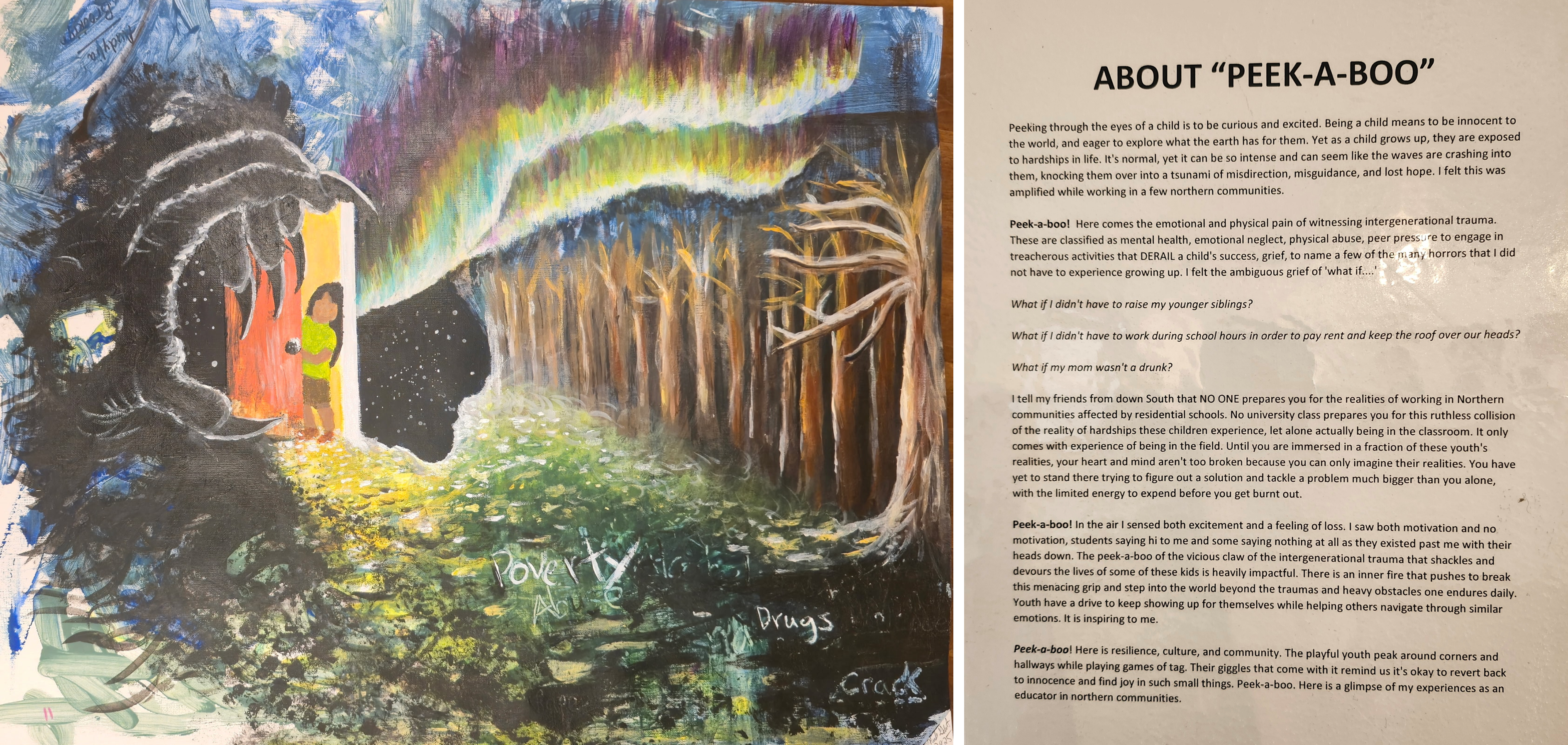
Gebert also noticed that in contexts where literacy levels were lower or where students struggled to express themselves through writing, visual art and music became vital forms of communication. Students instinctively turned to drawing, filling notebook margins with sketches that expressed ideas and emotions words could not capture. For many, art served as a meaningful outlet and a way to process experiences that existed in school and at home.
“The training I received in the Faculty of Education taught me to meet students where they are,” Gebert says. “Not all learners engage in the same way, and we learned early on how to adapt activities, offer alternatives, and participate alongside students to foster trust and engagement.”
Moving between classrooms and grade levels, Gebert has expanded her understanding of teaching practices across disciplines while remaining focused on engagement, flexibility, and relationship-building. Each experience adds to her professional toolkit and reinforces the adaptability fostered through arts education.
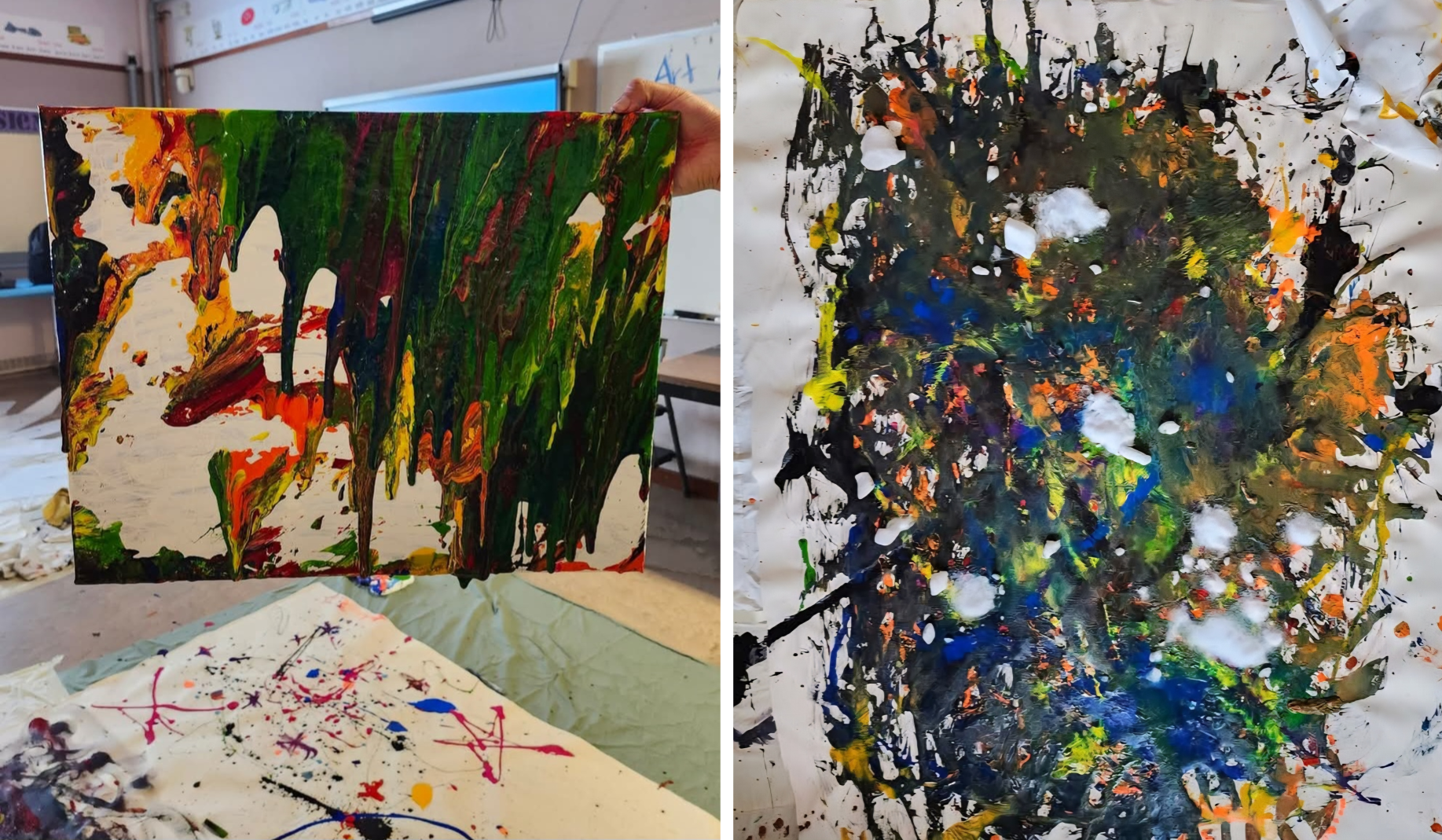
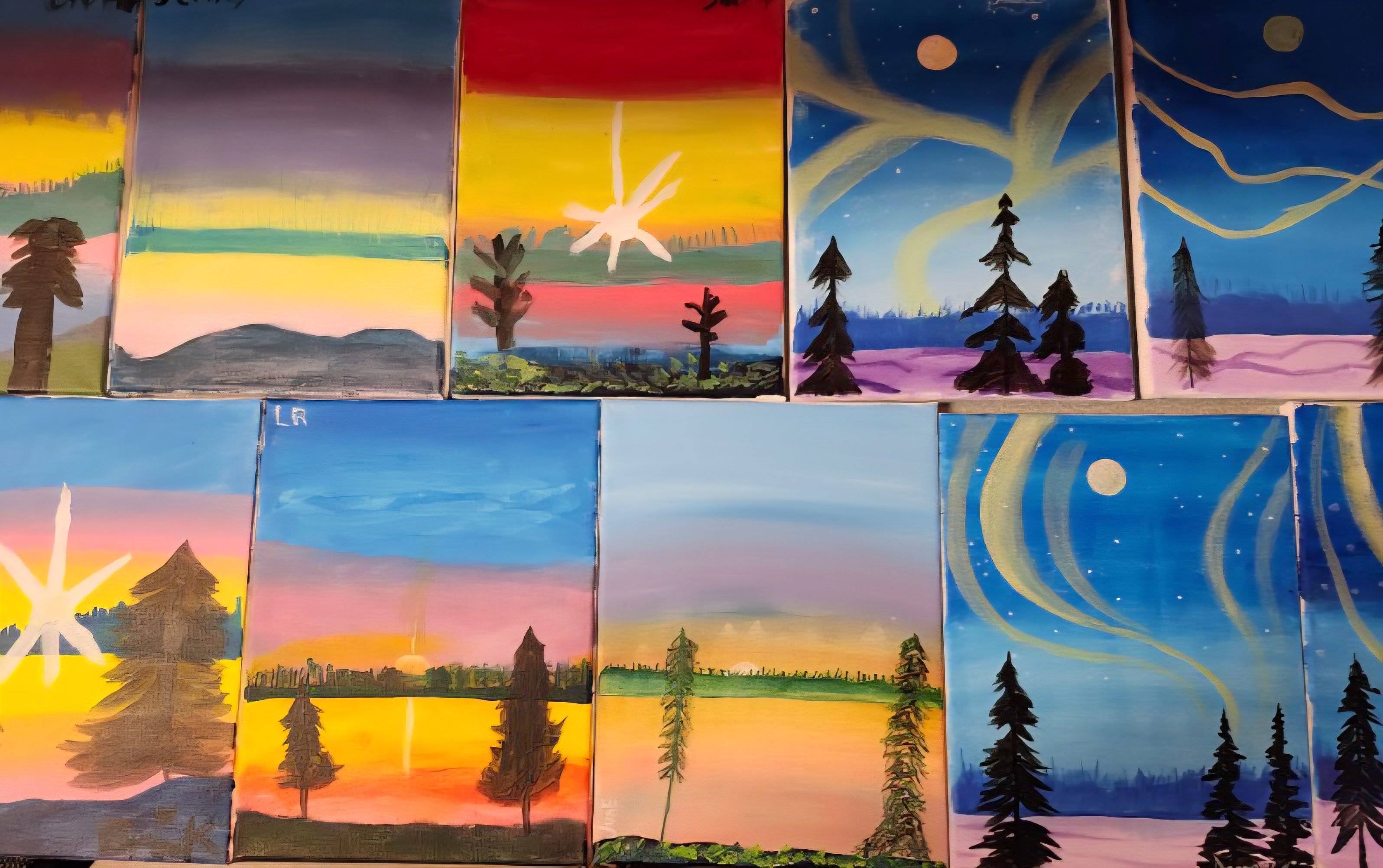
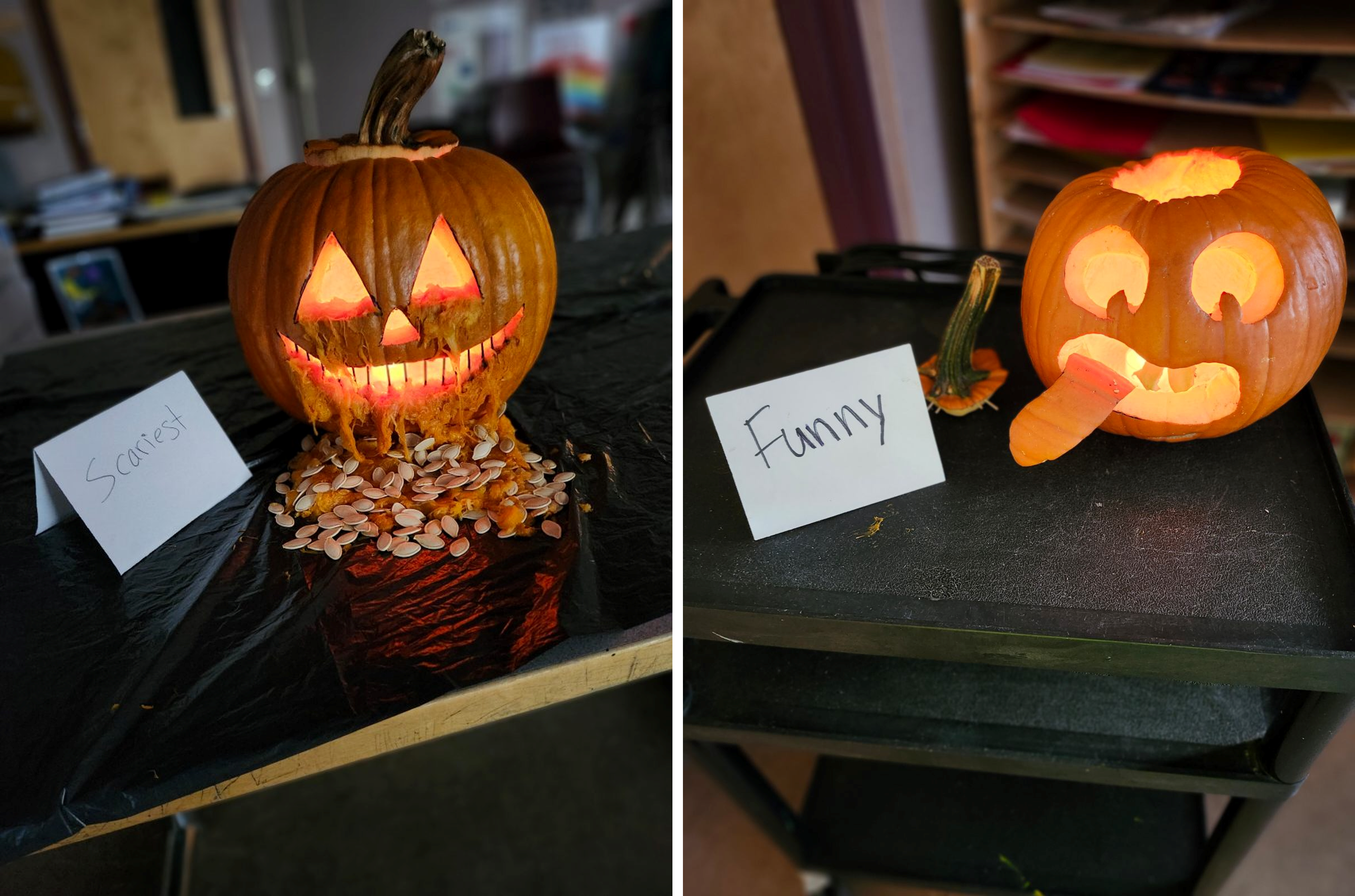
“Creative expression is not an ‘extra,’ but a necessity,” says Gebert. “Whether through painting, music, movement, or cultural arts, students benefit from spaces where they can express themselves, collaborate, and take creative risks.”
Art as Practice and Advocacy
Alongside teaching, Gebert maintains an active visual art practice, working primarily in drawing. Her work includes commissioned pieces as well as more conceptual projects inspired by her experiences teaching in northern and remote communities.
“Gebert exemplifies the qualities we aim to instill in arts education graduates: creativity, adaptability, and empathy. Her work in northern communities demonstrates how our program prepares teachers to make a real difference.” — Denise Morstad, Chair, Arts Education, Faculty of Education
“Art is a skill,” she emphasizes. “It takes practice, just like math or writing.”
Through her art, Gebert continues to reflect on what it means to teach, to learn, and to care.
She believes arts education plays a critical role in supporting students who may not thrive in traditional academic or athletic environments, offering alternative ways to build confidence and find belonging.
“Teaching and making art go hand in hand. Engaging in the arts not only nurtures students’ learning but also supports their well-being. Following my passion for visual arts has allowed me to shape my own career while inspiring others to explore their creativity,” says Gebert.
For those who aspire to pursue a pathway as arts educators, Gebert offers reassurance and encouragement: career paths do not need to be linear.
“Do what your heart is telling you to do,” she advises. “If you want to teach in the classroom, do it. If you find that you want to take a break from the classroom to explore your creative practice, do it. Your education stays with you, and the skills you build will always be relevant in your journey.”
She emphasizes that arts education values process over product, exploration over perfection, and reflection over outcome. That mindset prepares graduates not only to teach, but to adapt, evolve, and shape careers aligned with their values.
“Arts education prepares you to teach with empathy, create with purpose, and make a difference wherever your path may lead,” says Gebert.
Gebert recently made the decision to begin working as both a fine arts and general substitute teacher in Yellowknife so that she can focus more time on her visual art practice. She creates and sells prints of her art in various venues and galleries around Yellowknife.
“Gebert exemplifies the qualities we aim to instill in arts education graduates: creativity, adaptability, and empathy. Her work in northern communities demonstrates how our program prepares teachers to make a real difference,” says Denise Morstad, Chair of the Arts Education program in the Faculty of Education at the University of Regina.
Explore the Arts Education program offered by Faculty of Education.