Digitization Project
The first phase of the George F. Ledingham Herbarium digitization project involves generating an electronic database and imaging the approximately 22,000 accessions of Saskatchewan vascular plants (this includes George Ledingham's separate collection of plants from Grasslands National Park). The databasing is being performed in accordance with Darwin Core principles to be compatible with Canadensys and the Global Biodiversity Information Facility (GBIF). The database and images will be housed on a U of R server and will be accessible to the public via GBIF. A little over 4,000 scans have been completed to date.
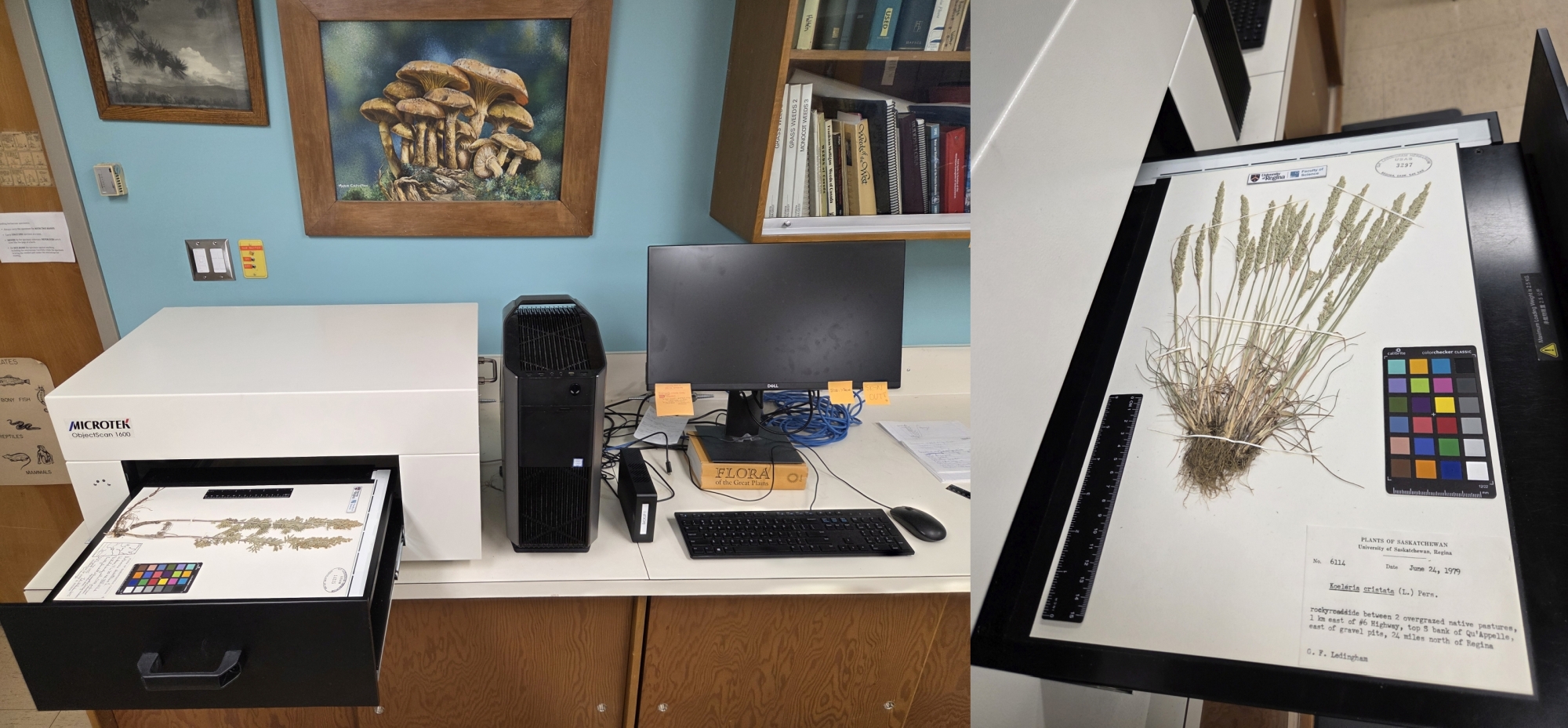
Imaging is being done via a high resolution scanner (Microtek ObjectScan 1600). Generating these high resolution images (1600 dpi) requires just over five minutes of scanning time per image, and each image is approximately 450 MB in size. In addition to the approximately five minutes needed for each scan, there is also additional time required for setting up the scans. This means that generating ten scans per hour is an efficient work rate.
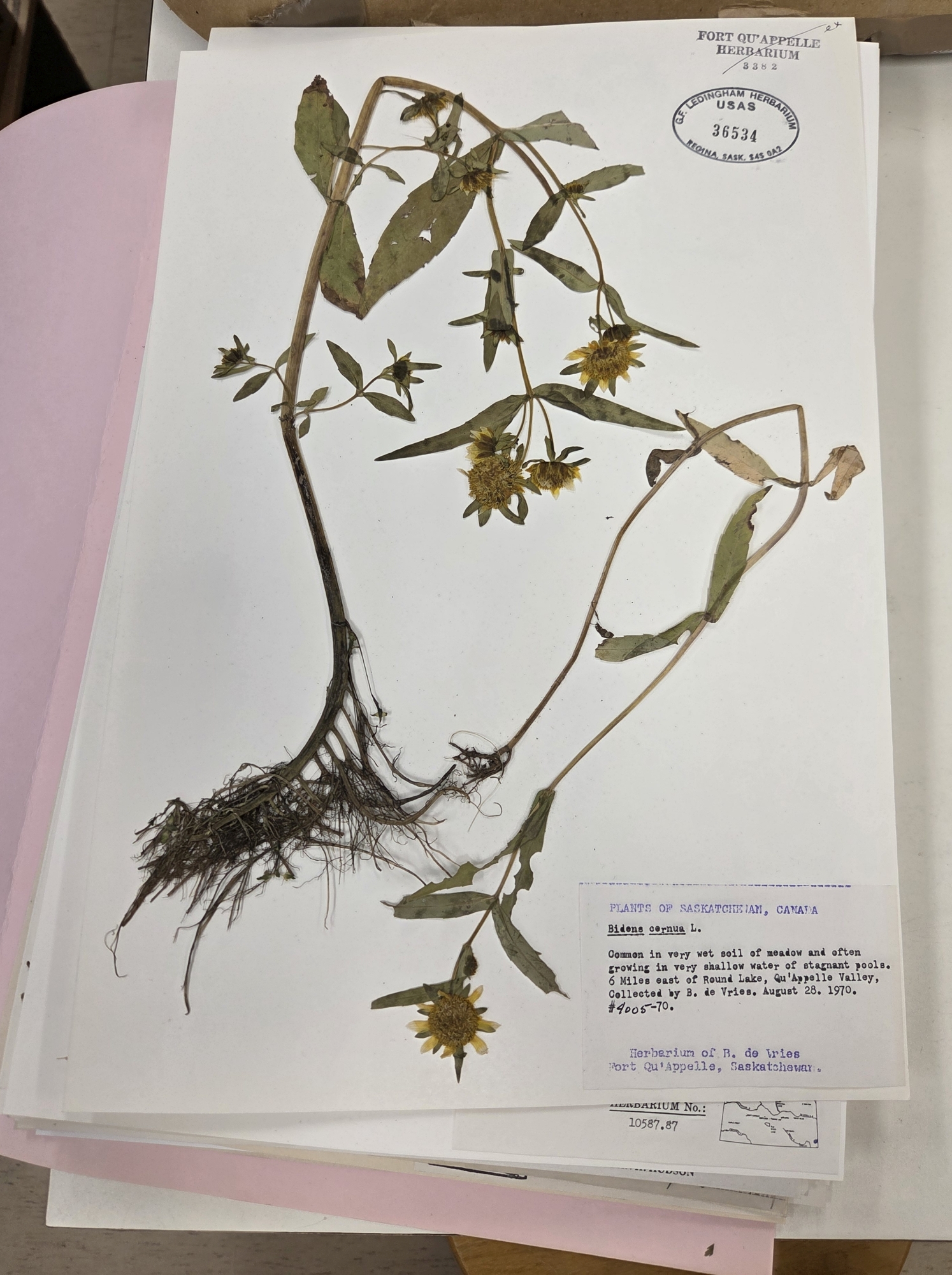
Ledingham Herbarium accession number 36534, a specimen of Bidens cernua (commonly known as nodding beggarticks). There are approximately 22,000 such accesssions that will be scanned in Phase 1 of the digitization project.
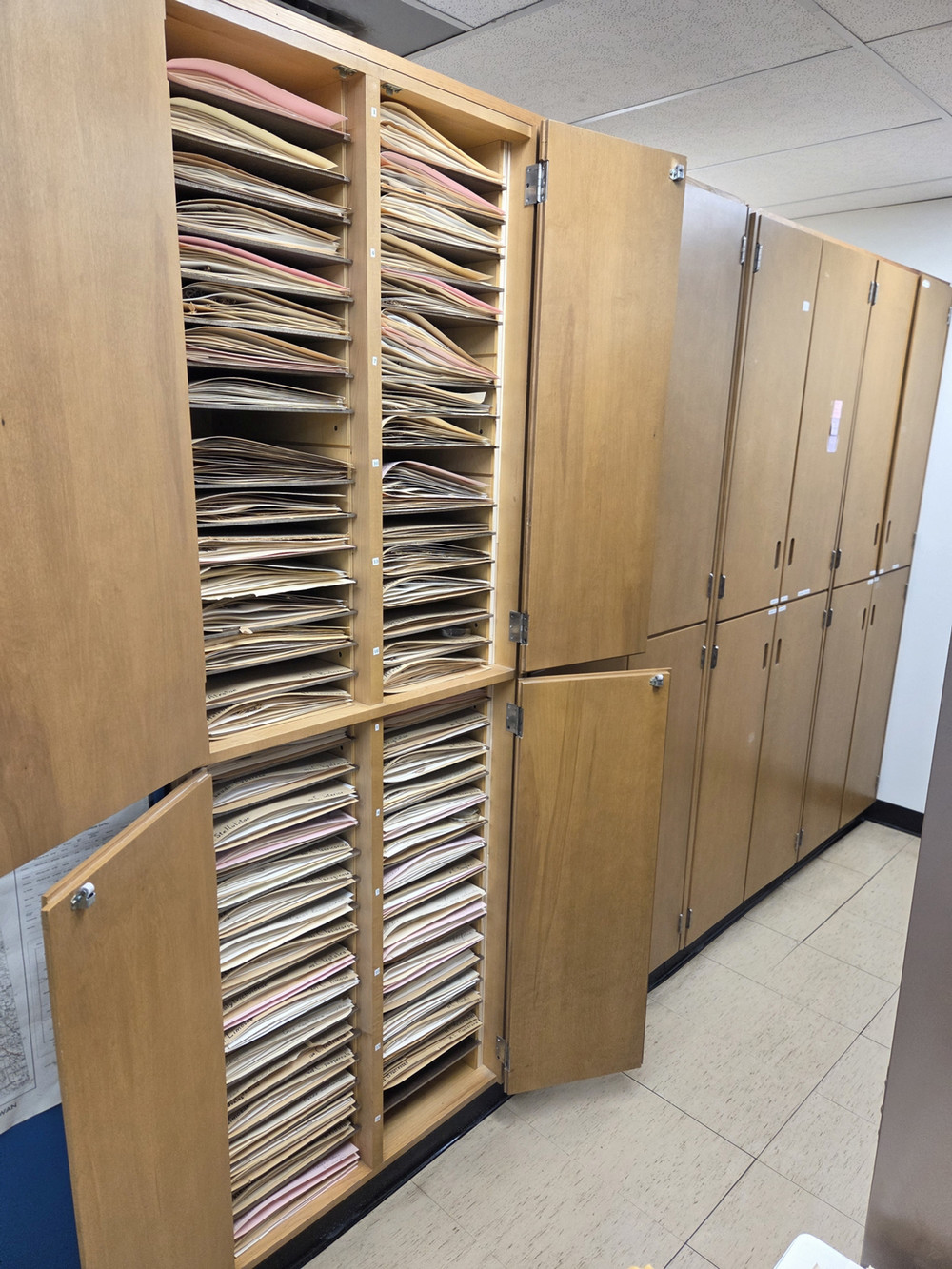
The vascular plants are stored in folders in shelves, arranged according to plant families.
Subsequent phases of the digitization project will tackle Saskatchewan lichens and bryophytes, George Ledingham's "City of Regina Collection", and also the outside-of-Saskatchewan parts of the collection (which includes several thousand international specimens).