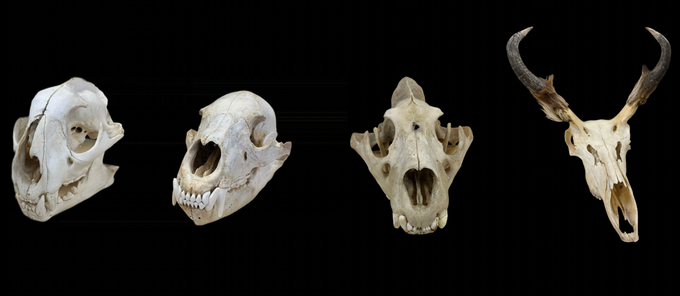
The best way to know if you truly understand something is to teach it.
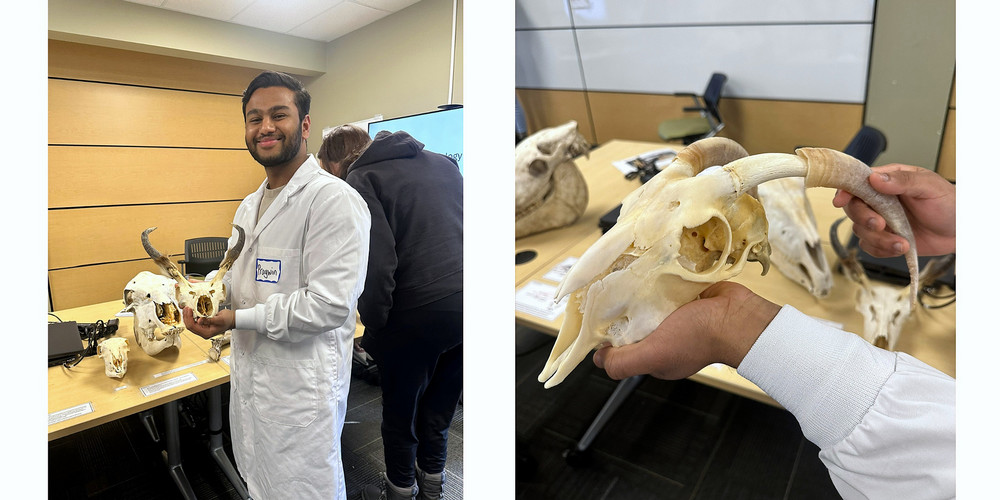
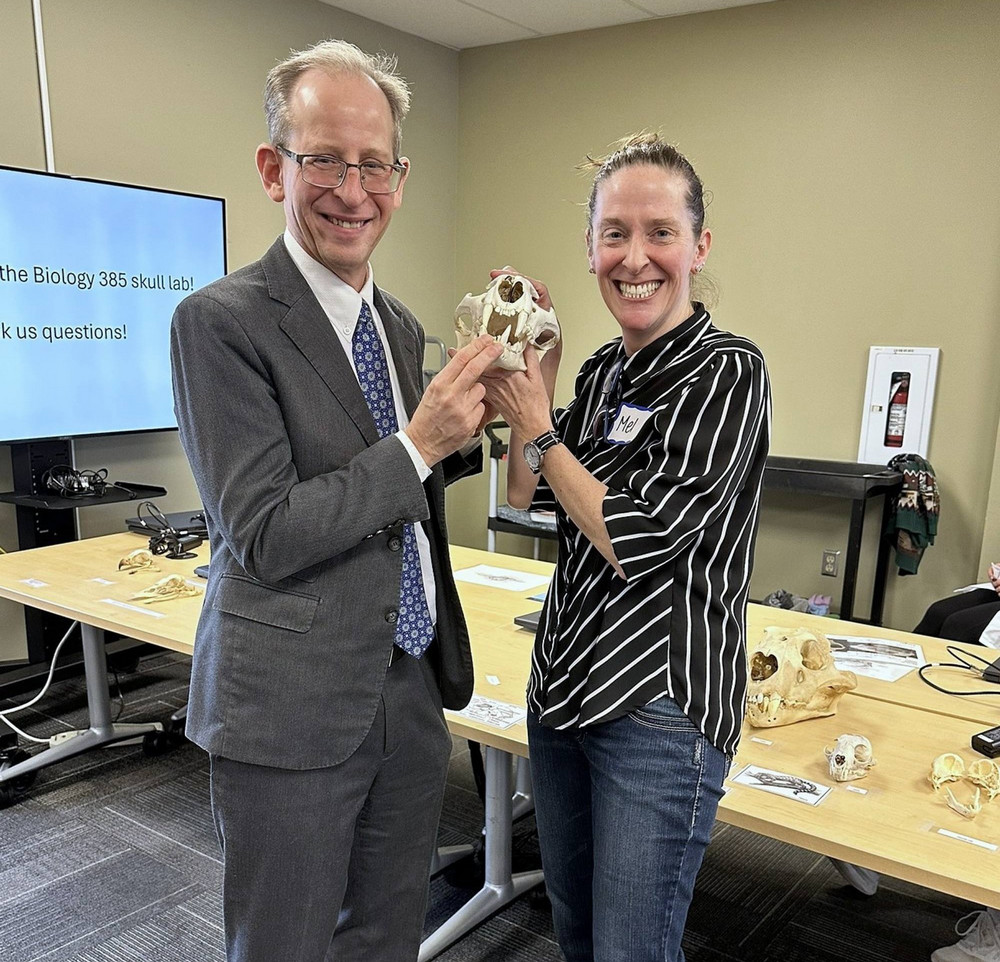
That’s the idea behind the Skull Tour, a public event taught by students in the Vertebrate 385 Biology lab in the Faculty of Science. Led by Dr. Mel Hart, Associate Dean of Science: Student Affairs, in partnership with the Dr. John Archer Library and Archives, the event gave students a hands-on opportunity to step into a teaching role and share what they’ve been learning with faculty, staff, students, and members of the University of Regina community.
“It’s an opportunity for them to connect with what they’re learning in class,” says Hart.
With midterm exams on the horizon, the Skull Tour offered students a different way to prepare. They had to think on their feet, answer unexpected questions, handle real specimens, and learn in real time with their audience.
Follow along for a Skull Tour recap and hear what students from the Vertebrate 385 Biology lab have to say about the experience.
The Skull Tour
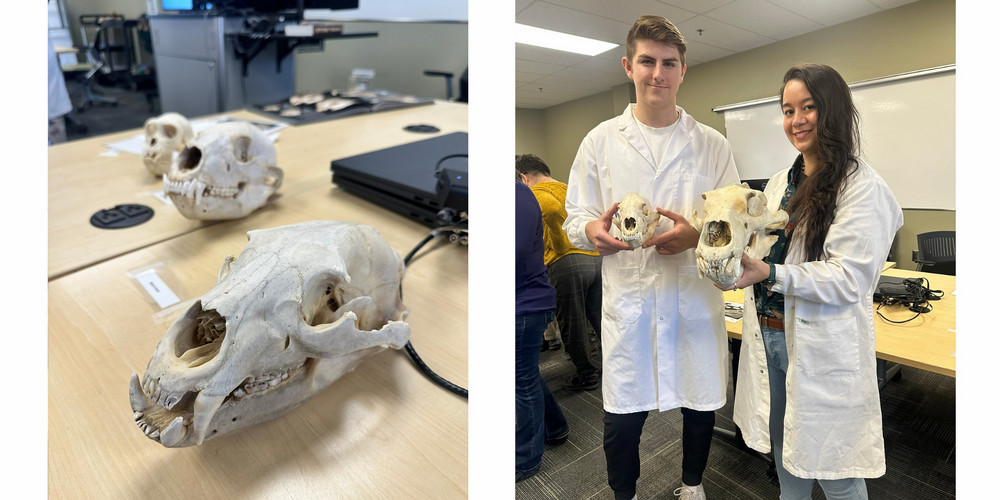
“This is a good experience for us because scientists, and people who go into science, have to work with the public. So, this was a learning experience for us too,” says biology student Abby Mutschler. “We get to work with skulls and dissect animals in class, but coming here and seeing the diversity of skulls helps our learning as well. It feels like one of those events where everyone benefits."
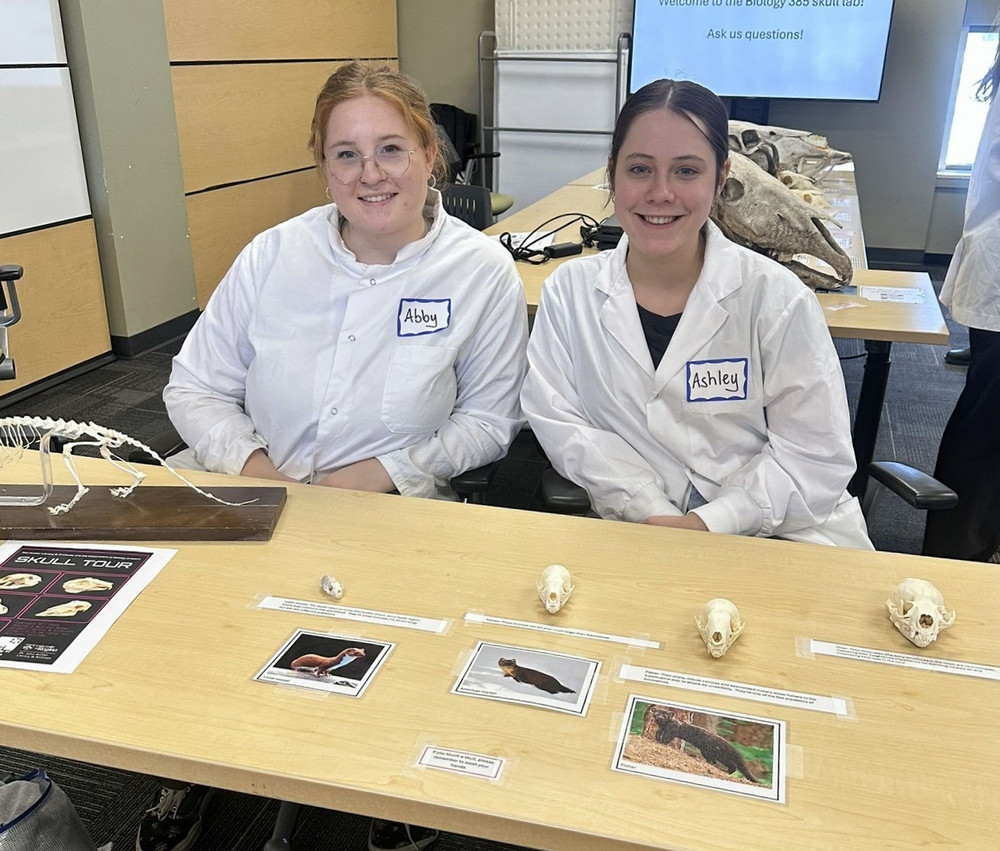
“I was nervous at first because I’m not an expert, but everyone’s been incredibly supportive. I think, how else do you learn? I’m learning today too,” says Cadence Johns.
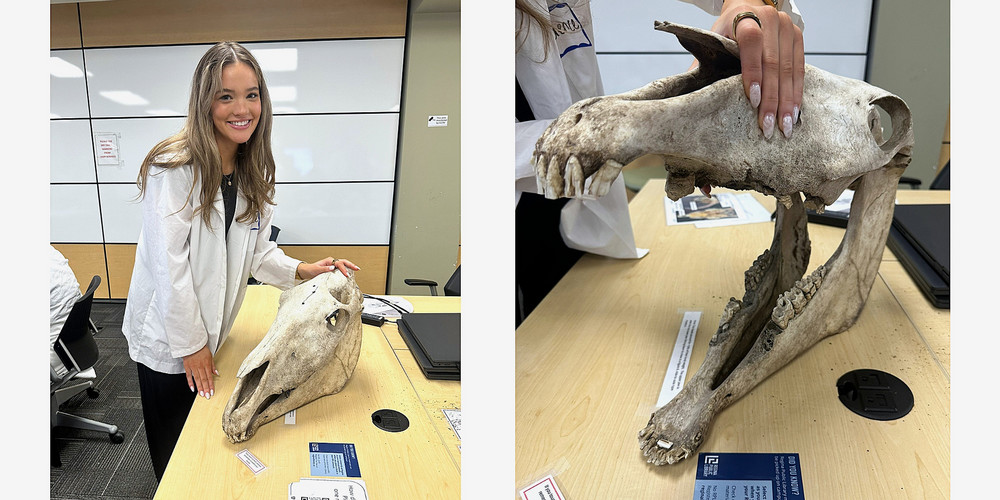
“This class is unlike any class I’ve ever taken,” says Praywin Raja. “We dissect something every week, fish and other animals. A couple of weeks ago, we even dissected a shark.”
The event also drew attention from across campus, with university leadership stopping by to support students and engage with their work.
Through the Skull Tour, Hart brings learning into shared U of R spaces. By opening the classroom, students and the wider U of R community can learn together.
Interested in hands-on learning? Learn more about the program through the Biology Department.
About the University of Regina
At the University of Regina, we believe the best way to learn is through access to world-class professors, research, and experiential learning. We are committed to the health and well-being of our more than 16,600 students and support a dynamic research community focused on evidence-based solutions to today’s most pressing challenges. Located on Treaties 4 and 6—the territories of the nêhiyawak, Anihšināpēk, Dakota, Lakota, and Nakoda peoples, and the homeland of the Michif/Métis nation —we honour our ongoing relationships with Indigenous communities and remain committed to the path of reconciliation. Our vibrant alumni community is more than 95,000 strong and enriching communities in Saskatchewan and around the globe.
Let’s go far, together.