Life On Land
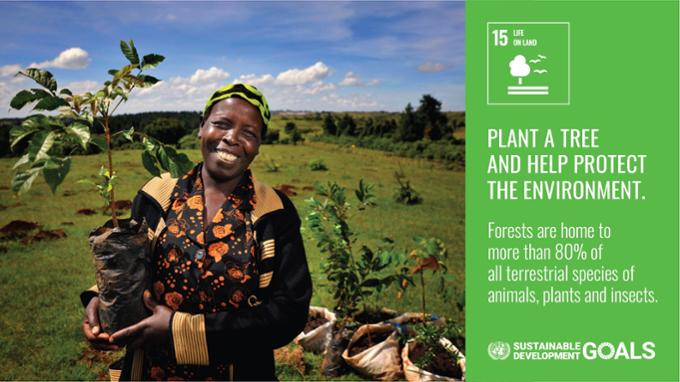
Sustainable Development Goal 15 is about conserving life on land, including to protect and restore terrestrial ecosystems, sustainably manage forests, combat desertification, and halt and reverse land degradation and stop biodiversity loss.
At the University of Regina, we organize events aimed to promote conservation and sustainable use of the land, including forests and wild spaces. We work directly to maintain and extend existing ecosystems and their biodiversity, of both plants and animals, and especially ecosystems under threat. Additionally, we include local biodiversity into planning and development process and follow land-sensitive waste disposal practices.
Related Courses
ANTH 242AO - Environmental Anthropology
Environmental anthropology is concerned with diverse ways of knowing our surroundings, including Indigenous perspectives. This course explores land-based ethics and wellbeing, as well as ways of learning with, through, and in landscapes. Students discover anthropological understandings of ecology of life, sentient ecology, architecture, design thinking, and language in landscapes.
***Prerequisite: ANTH 100 or completion of 12 credit hours or permission of the Department Head.***
ANTH 320AJ - Posthumanist Anthropology
The course will engage with non-anthropocentric human and social sciences, redefining the social as a collective of humans and non-humans, and including animals, plants, and other subjects. The course will address such topics as agency, animism, totemism, multispecism, ethics, and the dignity of the non-human.
***Prerequisite: Completion of 30 credit hours including at least 3 credit hours in ANTH, or permission of the Department Head.***
ANTH 320AL - Advanced Topics in Community Museums
Communities around the globe strive for cultural, economic and ecological sustainability. In many places, local community museums have become catalysts in this endeavour. This course provides a critical perspective on community museum with a focus on the ecomuseum movement in Saskatchewan.
***Prerequisite: Completion of 30 credit hours including at least 3 credit hours in ANTH, or permission of the Department Head.***
*Note: Students may receive credit for one of ANTH 320AL, ANTH 242AG, or IDS 290AB.*
ART 290AJ - Plants in Contemporary Art
In this course, observational studies of plant-life, in both painting and drawing, will intersect with discussion of key affective aspects of the depiction of botanics in contemporary art. Concepts such as ecology, place, cultural specificity and gender will factor heavily along with supplementary art-historical explorations.
***Prerequisites – Art 230 or Art 240***
ART 325 - Prairie Landscape Photography
The landscape is particularly resonant subject matter in the prairies and has influenced generations of artists in Saskatchewan. This intermediate level course approaches the genre of landscape with critical attention to the human altered land.
***Prerequisite: ART 323.***
ART 390AN - Landscape and Ecology in 2D Art
This class focuses on contemporary approaches to Landscape pertaining to concepts of ecology, environment, and place. Students have the choice to work with either painting or drawing media, or both.
***Prerequisites: ART 230 or ART 240 or Permission of the Instructor.***
ART 490AK - Indigenous Land/Art Practices
This course will explore Indigenous land based artistic and curatorial practice from theoretical, critical and experiential perspectives. It will include land and water engagement, gathering and working with Indigenous materials, skill-based workshops, site interventions and performances. The course will include significant time on the land.
***ARTH 100 or INAH 100 and INDG 100 or permission of Instructor***
ASTR 101 - Introduction to Astronomy
Emphasis is placed on the role of observation in the evolution of our theories about the origins of the solar system, and of the size and structure of the universe.
ASTR 119 - Astrobiology
Where could aliens live, and what might they look like? This course is an examination of the prospects for extraterrestrial life. Topics include the origin and evolution of life on Earth, the habitability of Mars and Jovian moons, the nature and habitability of exoplanets, SETI, and the Fermi paradox. ***Prerequisite: Successful completion of 12 credit hours.***
ASTR 201 - Solar System Astronomy
This course is concerned with the description of the fundamental properties of our solar system. Topics will include: planetary interiors, surface structures and atmospheres, asteriods, comets and meteorites, and the formation of planetary systems.
*** Prerequisite: ASTR 101 ***
ASTR 202 - Stars and Galaxies
This course is concerned with the properties of the stars and galaxies. Topics will include: observational methods, stellar populations, stellar evolution, galactic structure, and the large-scale structure of the universe.
*** Prerequisite: ASTR 101 ***
ASTR 300 - Astronomical Observation
This course will teach astronomical observing techniques through hands-on telescopic observations, remote telescopic observations, and data mining. It will cover various techniques of data reduction for different observational goals, as well as for astrophotography and pleasure.
***Prerequisites PHYS 111 and PHYS 112.***
ASTR 390AA - Overview of Astrophysics Topics
This course will cover several topics in astronomy through reading and discussion of classic astronomy papers, as well as lectures and problems that explain and reinforce the astrophysical concepts necessary to understand the papers. It is meant to be an astronomy course suitable for physics majors with a limited background in astronomy.
***Prerequisites: PHYS 201 and PHYS 202.***
BIOC 200 - Medicinal Plants and Culture
The course will introduce students to key indigenous bioactive (medicinal) plants, their biologically active compounds, and their importance in Indigenous culture. The class will use multidisciplinary and cross-cultural approaches to understanding plants and their medicinal properties.
*** Prerequisite: 30 credit hours and one of the following courses at the 100 level: Anthropology, Biology, Chemistry, English, Indigenous Studies, or Psychology.***
* Note: Biochemistry, Biology and Chemistry students can use this course in their program as an elective only. *
BIOC 220 - Biochemistry I - Biomolecules
This course is intended to offer an introduction to the world of Biochemistry. The course deals with the structure, properties, and significance of the major groups of biochemical compounds (amino acids, proteins, carbohydrates, nucleic acids, lipids, and vitamins). Related areas such as pH and buffers will also be discussed and typical procedures for investigation of these materials will be performed in the laboratory.
***Prerequisite: BIOL 100 and CHEM 105.***
*Note: Students may receive credit for one of BIOC 220 or BIOC 827BA.*
BIOC 221 - Biochemistry II - Metabolism
This course will present the bioenergetic principles, enzyme mechanisms and regulation of the central metabolic pathways. Topics include glycolysis, gluconeogenesis, pentose phosphate pathway, the citric acid cycle, metabolic regulation of glucose and glycogen metabolism, the urea cycle, oxidative phosphorylation and photosynthesis. The laboratory experiments will demonstrate metabolic principles.
***Prerequisite: BIOC 220 and CHEM 140***
*Note: BIOC 221 replaces BIOC 320 and students cannot receive credit for both.*
BIOC 312 - Analytical Chemisty III - Instrumental Analysis
Introduction to instrumental chemical analysis techniques including: GC, HPLC, ion chromatography, flame AAS and OES, GFAAS, capillary electrophoresis, size exclusion chromatography. Lab component: Experiments in instrumental analysis.
***Prerequisite: CHEM 210 and 215***
*Note: Students can only receive credit for one of BIOC 312 and CHEM 312.*
BIOC 321 - Biochemistry III - Macromolecules
This class examines the biochemical properties of biomacromolecules including proteins, carbohydrates, lipids and nucleic acids. The structure and functional roles of the macromolecules as well as the regulation of their bioactivities will be studied. The laboratory will deal with the isolation, characterization, and quantitative determination of macromolecules.
***Prerequisite: BIOC 221***
BIOC 330 - Enzymes
Lectures will discuss the fundamentals of enzyme chemistry: kinetics, inhibition, structure and mechanism, activity control, and protein folding and evolution.
***Prerequisite: BIOC 221***
*Note: BIOC 330 replaces BIOC 420 and students cannot receive credit for both.*
BIOC 340 - Biological Microscopy
Introductory microscopy examines the theoretical concepts and instrumentation design of optical-, electron-, and scanning probe microscopes used to probe biochemical and biological systems, while cultivating critical thinking and communication. Hands on laboratories and site visits include bright-field-, phase-contrast-, fluorescence-, scanning and transmission electron-, and atomic force microscopy.
***Prerequisite: BIOC 321 (may be taken concurrently)***
BIOC 390AE - Biochemical Basis of Toxicology
The biochemical principles, mechanisms and molecular actions underlying the toxicity will provide the foundation for the course. Selected discussion topics include acute poisoning, natural toxins, environmental toxicants, endocrine disruptors and food toxicology. The course will consist of 6 lecture modules, a project and in-class discussion/presentation.
***Prerequisite: BIOC 221***
BIOC 390AF - Drug Discovery and Development
This course surveys the drug discovery and development processes. The course focuses on drug target identification and the various drug discovery strategies. Other aspects of drug development, including preclinical and clinical development phases bringing new small molecule and biological products to the market, will also be covered.
**Corequisite: BIOC 321.**
BIOC 391 - Research Experience
This course is intended for students who wish to gain experience in biochemical research under the supervision of a Biochemistry/Chemistry faculty member or a Biochemistry professor at a Federated College. Students will carry out an independent research project, and will have an opportunity to develop an appreciation for experimental preparation, methods, analysis, and scientific report writing.
***Prerequisite: Permission of the Chemistry/Biochemistry Department Head and the faculty member***
*Note: Students can only receive credit for one of BIOC 391 and CHEM 391*
*Note: Students can use this course in their program as an elective only*
BIOC 401 - Honours Research
Honours biochemistry students will carry out independent research under the supervision of a Biochemistry/Chemistry faculty member. Students are required to present a summation of their research progress.
***Prerequisite: Permission of the Chemistry/Biochemistry Department Head and the faculty member***
*Note: Students can only receive credit for one of BIOC 401 and CHEM 401*
BIOC 402 - Honours Thesis
A continuation of the research project started in BIOC 401. Students will complete their research projects, submit a written research thesis and give an oral presentation and defence of the thesis.
***Prerequisite: BIOC 401 (minimum 70%) ***
* Note: Students can only receive credit for one of BIOC 402 and CHEM 402. *
BIOC 428AC - Mapping the Physical Interactome of Cell Envelope Proteins in Escherichia coli
This reading class is focussed on gathering lecture materials pertaining to the "Bacterial physical interactome of cell envelope proteins". The students are asked to write a chapter on this topic by gathering literature materials. Grading will be done primarily on the chapter contribution and review of literature articles.
*** Prerequisite: BIOC 321 ***
BIOC 428AD - Systems Biology and Network Medicine
This is a fourth year undergraduate level course, focused on interactive lectures and open classroom discussions on understanding how complex systems as networks can be useful in understanding protein function and disease mechanisms. The course will also cover the principles of systems and network biology to pharmacology (i.e., Network Medicine).
***Prerequisite: Any second or third year Biochemistry course (however BIOC 321 would be beneficial)***
BIOC 428AE - Advanced Microscopy with Application to Medicine
We will focus on advanced microscopic methods and laser-based technology that supports current and future medical diagnostics, and is enabling the development of new medical imaging techniques.
***Prerequisite: BIOC 340***
BIOC 428AF - Biochemistry: Mechanisms of Toxicity
Toxicology is the basic science of poisons. The course focuses on the toxicology of mammalian body system emphasizing the sites of action of major groups of chemical toxicants, biological toxins and the toxic effects of radiation. Topics include biochemical underpinning of the science, mechanisms of toxicity, cellular responses, biomarkers of exposure and modes of toxic action.
***Prerequisite: BIOC 220 and BIOC 221***
BIOC 428AG - Systems Biology and Network Medicine
The course will focus on interactive lectures and open classroom discussions on understanding how complex systems as networks can be useful in understanding protein function and disease mechanisms, as well as will cover the principles of systems and network biology. During this course, students will develop practical skills in writing and evaluating research papers as part of the course curriculum.
***Prerequisite: BIOC 321***
BIOC 428AH - Chemical Basis of Biological Systems
The course will address contemporary topics of chemical biology demonstrating the integration of chemical, biochemical and biological approaches to problems of relevance to medicine, the environment and drug design.
***Prerequisite BIOC 221***
BIOC 428AI - Selected Topics in Chemical Biology and Nanotheranostics
Selected topics in the development of theranostic nanoparticle systems will be discussed in terms of their structure, stability, and dynamics. In addition, recent developments in protein engineering, chemical genetics, ribozymes and nucleic acid aptamers will be introduced.
***Prerequisite: BIOC 330***
BIOC 428AJ - Uncovering Disease Biomarkers by Proteomics and Microscopy
This team taught class will cover the theoretical aspects of proteomics and confocal microscopy, used to discover and validate, respectively, disease biomarkers for diagnosing clinical conditions. Learning to conduct a critical analysis of research articles, based on the scientific method and our knowledge of the techniques, will be an overarching goal the class. For each of the two major topics, we will start from first principles, examine the key facets of the method, tackle sample problems, and then dive into the current literature for examples of how the two methods are used to establish and validate key biomarkers. ***Prerequisite: BIOC 321***
BIOC 428AK - Chemogenomics
This course surveys the field of chemogenomics, which analyzes biological problems at the whole-genome level using chemicals. Topics covered include: chemogenomic methodologies; applications in comprehensively studying compound-target relationships and the interdependent biological networks that respond to chemical and metabolic stress; applications in drug discovery and mode of action determination.
*** Prerequisite: BIOC 321***
BIOC 430 - Chemical Biology
Chemical biology can be defined as an interdisciplinary science where chemistry is applied to problems in biology. Topics include protein engineering/directed enzyme evolution, chemical genetics, unnatural amino acids, genomics/proteomics, catalytic antibody, ribozyme/riboswitch, combinatorial biosynthesis, metabolic engineering, DNA nanotechnology, chemical ecology/antibiotics, biosensors, etc.
***Prerequisite: BIOC 330***
BIOC 440 - Advanced Microscopy
This advanced biophysics course examines the theoretical concepts and instrumentation associated with scanning probe microscopy techniques, such as atomic force- and near-field scanning optical microscopies, that are used to address biochemical/biological questions.There will be a special focus on lipid systems, but applications to proteins, carbohydrates and whole cells will also be discussed.
*** Prerequisite: BIOC 340 ***
BIOC 800 - Comprehensive Review in Biochemistry
Students read in-depth in a selected field of biochemistry to prepare a written review and a presentation of present knowledge and current research in the topic selected. A high standard of writing is required.An oral examination will be conducted by a committee of the department. The student must consult the BIOC 800 Coordinator regarding the selection of a topic and details of this course requirement.
BIOC 801 - Research Proposals
Students are required to submit a research proposal involving an original idea for a research project that has not yet been undertaken. The topic must be approved by the BIOC 801 Coordinator and be distinct from the student’s research problem. The student is required to defend the proposal before a committee of the department.
BIOC 821 - Physical Biochemistry
This upper level course serves to introduce the student to physical biochemistry, the study of biological systems using physical techniques. We will investigate the principles that underscore each physical technique and the biological questions that each method can address. Emphasis will be placed on techniques that apply to protein systems.
BIOC 827AF - Surface Biology
This graduate level reading course will begin with a short history of scanning probe methods, followed by a detailed description of AFM and NSOM. the theoretical principles of AFM adn NSOM will be examined in detail and then used to evaluate studies from current literature.
BIOC 827AG - Chemical Biology
Chemical biology can be defined as an interdisciplinary science where chemistry is applied to problems in biology. Many topics in this fast growing field are covered including protein engineering, abzymes, chemical genetics, genomics/proteomics, ribozyme/DNAzyme, metabolic engineering, antibiotic resistance, DNA nanotechnology, and chemical ecology.
BIOC 827AH - Natural Products Biosynthesis
This course aims to provide a comprehensive and balanced introduction to natural products from a biosynthetic perspective. Applying fundamental chemical priciples, the relationships between the various structures encountered in nature will be shown to provide a rationale for the metabolic sequences leading to various natural products.
BIOC 827AM - Advanced Microscopy
This course will introduce students to physical biochemistry (biophysics). We will examine the modern physical microscopy methods that can be used to probe a range of biological systems, from proteins to whole cells, the principles that underscore each technique and the biological questions that each type of microscopy can address.
BIOC 827AO - Mitochondrial Systems Biology
This course focuses on exploring different protocols and approaches used in studying mitochondrial proteins in mammalian systems. In addition, the course aims at developing the appropriate skills of drafting a manuscript as well as choosing relevant papers as references of this topic.
BIOC 827AP - Systems Biology and Network Medicine
The course will focus on interactive lectures and open classroom discussions on understanding how complex systems as networks can be useful in understanding protein function and disease mechanisms, as well as will cover the principles of systems and network biology. During this course, students will develop practical skills in writing and evaluating research papers as part of the course curriculum.
BIOC 827AQ - Industrial Chemicals, Environmental Impact and Human Health
Hurricane Harvey presents real life chemical questions. Power is interrupted, cooling stops, chemical explosions occur and chemicals/by-products of chemical fires escape. This directed reading course will look at the movement of chemicals through the environment and the consequences of these noxious agents.
BIOC 827AR - Chemical Basis of Biological Systems
The course will address contemporary topics of chemical biology demonstrating the integration of chemical, biochemical and biological approaches to problems of relevance to medicine, the environment and drug design. The course focus may vary from year to year; the integrative approach to chemical biology will remain the course goal.
BIOC 827AS - Selected Topics in Chemical Biology and Nanotheranostics
Selected topics in the development of theranostic nanoparticle systems will be discussed in terms of their structure, stability, and dynamics. In addition, recent developments in protein engineering, chemical genetics, ribozymes and nucleic acid aptamers will be introduced.
BIOC 827AT - Uncovering disease related proteins by proteomics and microscopy
Covers theoretical aspects of proteomics and confocal microscopy, used to discover and validate, respectively, disease related proteins for diagnosing clinical conditions. Emphasis on critical analysis of research articles using two major topics.
BIOC 827AU - Chemical Ecology
Chemical Ecology integrates chemistry and biology to examine chemical interactions and their environment, and the consequence of those interactions. Topics include cellular and system responses to nutrients, drugs and xenobiotics, and the integrations of those responses.
BIOC 827AV - Chemogenomics
This course surveys the field of chemogenomics, which analyzes biological problems at the whole-genome level using chemicals. Topics covered include: chemogenomic methodologies; applications in comprehensively studying compound-target relationships and the interdependent biological networks that respond to chemical and metabolic stress; applications in drug discovery and mode of action determination.
BIOC 827AW - Advanced Microscopy with Application to Medicine
We will focus on advanced microscopic methods and laser-based methods that support current and future medical diagnostics, and enable the development of new medical imaging techniques.
BIOC 827AX - Biochemistry: Mechanisms of Toxicity
This course will address current issues of chemical biology demonstrating the integration of chemical, biochemical and biological approaches to problems of relevance to medicine, the environment and drug design. Topics include nutrients, xenobiotics, biological toxicants, and environmental toxicology.
BIOC 827AY - Advances in Antimicrobial Research: from Genomes to Drugs
This course surveys the applications of genomics techniques in antimicrobial research and antibiotic drug discovery. Topics include the use of mutant libraries, deep sequencing, and other genome-scale approaches in mapping the bacterial interactions with chemical perturbants, drug mode of action determination, and drug discovery.
BIOC 827AZ - Systems Biology and Network Medicine
The course will review how and why protein interaction networks can be used for discovery of disease-causing biological disruptions, genomic approaches to identify mutations that are the source of disease, and a broad spectrum of methodologies to survey cellular interaction networks of relevance in modern medicine.
BIOC 901 - Research
Thesis Research.
BIOL 051 - Biology Co-op Work Term I
Four-month co-op work term approved by the department and arranged by the co-op coordinator.
BIOL 052 - Biology Co-op Work Term II
Four-month co-op work term approved by the department and arranged by the co-op coordinator.
***Prerequisite: BIOL 051***
BIOL 053 - Biology Co-op Work Term III
Four-month co-op work term approved by the department and arranged by the co-op coordinator.
***Prerequisite: BIOL 052***
BIOL 054 - Biology Co-op Work Term IV
Four-month co-op work term approved by the department and arranged by the co-op coordinator.
***Prerequisite: BIOL 053***
BIOL 100 - Biology I - From Cells to Organisms
An examination of biological molecules, cell structure and fundamental cellular processes, bioenergetics, genetics, evolution, and animal and plant physiology.
*Notes: Biology 30 and Chemistry 30 are strongly recommended as background preparation. This course is designed for biology majors, pre-professional students, secondary education science students, and those wanting two semesters of biology. Students seeking a single semester introductory course are advised to take Biology 140 or 150*
BIOL 101 - Biology II - Organisms in their Environment
A comparative approach to the three Domains of life, including structure, diversity, physiology, and ecology.
*Notes: One of BIOL 100, or Biology 30 and Chemistry 30, are strongly recommended as background preparation. This course is designed for biology majors, pre-professional students, secondary education science students, and those wanting two semesters of biology. Students seeking a single semester introductory course are advised to take BIOL 140 or 150*
BIOL 110 - Human Anatomy & Physiology l
An introduction to the anatomy and normal functioning of the human body. The course takes a holistic approach to understanding and integrating anatomy and physiology in both lecture and laboratory components.
*Note: Restricted to Nursing students only*
*Note: Students will not receive credit for both KIN 261 and BIOL 110; Further, students who have credit for KIN 261 and KIN 262, or BIOL 110 and BIOL 111, cannot take for credit KIN 260, KIN 267, or KIN 268.*
BIOL 111 - Human Anatomy & Physiology ll
A continuation of BIOL 110. Further study of the anatomy and normal functioning of the human body, integrating anatomy and physiology in both lecture and laboratory components.
***Prerequisite: BIOL 110***
*Note: Restricted to Nursing students only*
*Note: Students will not receive credit for both KIN 261 and BIOL 110; Further, students who have credit for KIN 261 and KIN 262, or BIOL 110 and BIOL 111, cannot take for credit KIN 260, KIN 267, or KIN 268.*
BIOL 140 - Human Biology for Non-majors
An introductory level course covering the principles of biology with examples taken from humans.
* Note: This course is designed to apply the study of biological principles to humans. Biology majors cannot take this course for credit. Students cannot receive credit for both BIOL 140 and 150. Students who have credit for either BIOL 100 or BIOL 101 cannot subsequently receive credit for either of BIOL 140 or BIOL 150. *
BIOL 150 - Biological Principles for Non-majors
This course is a survey of basic modern biological principles. Topics will include: origin of life, basic cell structure and function, evolution, an outline of organism diversity, ecological principles, and selected functions of multicellular organisms.
*Note: Designed for students who do not intend to be biology majors and who are not in pre-professional programs. Students cannot receive credit for both BIOL 140 and 150. Students who have credit for BIOL 100 or BIOL 101 cannot subsequently receive credit for either of BIOL 140 or BIOL 150.*
BIOL 201 - Evolutionary Biology of Sex
This lecture based course will help students understand sexual reproduction in animals (including humans) in an evolutionary context. Specifically the course will deal with issues about the potential conflicts between males and females and their offspring. Topics will include evolution and natural selection in the context of the function of sex, sexual selection, mating systems, mate selection and parental investment, social behaviour, male-female and parent-offspring conflict.
*** Prerequisite: 24 credit hours ***
* Note: Any students who have taken BIOL 275 are precluded from taking this course. *
BIOL 205 - Introductory Genetics
This course covers chromosome theory of inheritance/eukaryotic transmission genetics. Topics will include: nature of genetic material, DNA replication, mechanism of mutation, natural recombination, artificial recombination, recombinant DNA technology/genetic engineering, and population genetics.
*** Prerequisite: BIOL 100 and 101, CHEM 104 ***
* Note: CHEM 104 can be taken concurrently *
BIOL 222 - Microbiology for Health Professionals
This course introduces fundamental concepts of microbiology with specific emphasis on clinically relevant microbes and their impact on human health.
*Note: Restricted to Nursing students.*
*Note: Students in a Biology program can use this course in their program as an elective only.*
BIOL 223 - Microbes and Society: Can microbes save humanity?
Microbes play a critically important role in the environment and human society. Microbiology will be used to introduce students to relevant environmental issues. Students will develop critical thinking skills for evaluating these environmental issues.
***Prerequisite: Completion of 24 credit hours***
BIOL 224 - Introductory Medical Microbiology
The intent of this course is to provide a basic introduction to pathogens and the concept of diseases. This course covers bacteria, viruses and eukaryotes, with emphasis on emergent diseases and urgent challenges for public health.
***Prerequisite: BIOL 100 and BIOL 101***
*Note: Students who have received credit for BIOL 303 may not subsequently receive credit for BIOL 224.*
BIOL 266 - Plant Physiology
This course covers the functioning of plants and their interaction with the environment. Topics will include: photosynthesis, water relations, transport processes, mineral nutrition and assimilation, hormones, and development.
*** Prerequisite: BIOL 100 and 101, CHEM 104 ***
* Note: CHEM 104 can be taken concurrently *
BIOL 275 - Ecology
This is an introductory course that covers plant, animal, and microbial ecology. Field work will be required.
*** Prerequisite: BIOL 100 and 101, CHEM 104 ***
* Note: CHEM 104 can be taken concurrently *
BIOL 276 - Environmental Biology
This course discusses the biological basis for environmental change and its impacts on human society and will review the patterns, causes and consequences of human-induced and natural environmental change. Topics will include: global warming, acid rain, ozone depletion, fisheries collapse, sustainable forestry, agriculture, biodiversity, and conservation. For Biology, Environmental Science and Environmental Studies Majors.
*** Prerequisite: BIOL 100 and 101, or BIOL 150 and ENST 200 ***
BIOL 288 - Cell Biology
This is an introductory course in cell biology covering the structure and function of cells and their organelles.
*** Prerequisite: BIOL 100 and 101, CHEM 104 ***
* Note: CHEM 104 can be taken concurrently *
BIOL 302 - Food Microbiology
Students will be introduced to the importance of microbes in foods. Topics will include: microbial ecology in food environments, survey of microbes important in food spoilage and food borne illness, food fermentations, and control and detection of detrimental microbes with special emphasis on novel or emerging techniques. ***Prerequisite: BIOL 310***
BIOL 303 - Medical Microbiology
Aetiology, pathogenesis, diagnosis, treatment and epidemiology of infectious diseases of humans, caused by bacterial, viral, fungal and parasitic organisms.
***Prerequisite: BIOL 101 and completion of 60 credit hours or completion of BIOL 224.***
BIOL 305 - Genetics
This course covers the evolution of concepts of the gene. Topics will include: bacterial and viral genetics, genetic code and translation, transcription, processing of RNA and protein molecules, structural organization of prokaryotic and eukaryotic genes, and regulation of gene expression.
*** Prerequisite: BIOL 205 and CHEM 140, and one of BIOL 288 or BIOC 220***
BIOL 310 - Microbial Diversity and Cell Function
Students will be introduced to the tremendous diversity in microbial cell structure, function, and the environments they influence. Specific topics include: Microbial physiology, microbial symbionts, extermophiles, microbial cell sensing and adaptive responses, and viral diversity.
***Prerequisite: BIOL 288 or BIOC 220***
*Note: Credit cannot be received for both BIOL 220 and BIOL 310.*
BIOL 316 - Conservation Biology
This course will examine processes that affect biodiversity. The goal of the course is to apply principles of ecology and evolution to understand the importance of biodiversity and the significance of recent human-induced changes. ***Prerequisites: BIOL 100 and 101, BIOL 275, STAT 100***
BIOL 335 - Limnology
Physical and chemical characteristics of lakes and streams. Nutrient cycling. Ecology of aquatic organisms. Food-web interactions in lakes. Human impact on freshwater ecosystems. History of lakes. Includes field work.
***Prerequisite: BIOL 275 or BIOL 276.***
BIOL 341 - Biometrics
A practical and computer-assisted approach to the design of biological experiments and to multivariate analyses of discrete and continuous variables.
*** Prerequisite: BIOL 100 and 101, STAT 100 and STAT 200.***
*Note: Students with credit for STAT 342 cannot take BIOL 341 for credit.*
BIOL 356 - Ecosystems Since Glaciation
Long-term ecosystem structure and dynamics provide the context for present day global change. This course examines ecosystem dynamics in the last 10,000 years, focusing on the last few centuries. Paleoecological methods and results of reconstructing such phenomena as acid rain, range changes, island biogeographies, and fire histories will be studied.
***Prerequisites: BIOL 275***
BIOL 365 - Vascular Plants
Morphology and reproduction of vascular plants with particular reference to the interrelationships and evolutionary history of the major groups.
*** Prerequisite: BIOL 275 ***
BIOL 366 - Advanced Plant Physiology
Environmental, physiological and biochemical regulation of photosynthesis and respiration, plant energetics, acclimation to abiotic stress, interactions between photosynthesis and stress.
***Prerequisite: BIOL 266 and BIOL 288***
*Note: Students may only receive credit for one of BIOL 366 and BIOL 399AD.*
BIOL 367 - Plant Taxonomy
This course covers plant classification and nomenclature with special emphasis on flowering plants. Techniques of identification and diagnostic features of selected groups of plants will be described.
*** Prerequisite: BIOL 275 ***
BIOL 375 - Systems Ecology
An ecosystem approach to energy flow and nutrient cycling in Saskatchewan prairies, forests and lakes.
***Prerequisite: BIOL 275 and STAT 160 or STAT 200.***
BIOL 376 - Population and Community Ecology
Explores the major processes governing population dynamics, species interactions, and community structure. Emphasizes a quantitative framework for understanding populations and communities using mathematical models and graphical analysis.
***Prerequisite: BIOL 275, CS 110, and one of MATH 111 or MATH 112.***
BIOL 378 - Animal Physiology
This course covers the general principles of animal physiology and includes discussion of the major physiological systems, including nervous, sensory, muscular, circulatory, respiratory, digestive, and reproductive systems.
*** Prerequisite: BIOL 288 or BIOC 220***
*Note: Credit cannot be held for both BIOL 265 and BIOL 378.*
BIOL 380 - Animal Behaviour
An evolutionary approach to the study of the behaviour and ecology of individual animals. Compulsory field work for one week before lectures begin.
***Prerequisite: BIOL 275 and STAT 200.***
BIOL 385 - Vertebrate Animal Biology
The anatomy, evolution, taxonomy, distribution, phylogeny and fossil history of vertebrate animals. Laboratories will involve dissections to illustrate diversity of body form and function.
***Prerequisite: BIOL 275***
BIOL 390 - Endocrinology
Principles and concepts of mammalian endocrine systems. Emphasis will be placed on the regulators of hormone synthesis and secretion, the cellular and molecular mechanisms of hormone action and their role in regulating cell and organismal physiology. Examples of human endocrine disorders will be considered.
***Prerequisite: BIOL 288***
BIOL 395 - Animal Developmental Biology
Will provide an overview of the major cellular and molecular events during early embryonic development in animals. Following discussions from fertilization to an outline of the body plan, the development of selected organ systems will be studied in greater depth. The role of gene activity in development will be considered.
*** Prerequisite: BIOL 288 ***
BIOL 396 - Independent Research in Biology
This course is intended as an introduction to independent research. Under the direct supervision of a Biology faculty member, students will undertake a well-defined research project suitable for completion in one semester. A written report with structure similar to a journal article within the discipline will be produced.
***Prerequisite: 60 credit hours and permission of course instructor.***
*Note: the written report cannot incorporate material or data derived from paid employment.*
BIOL 399AB - Entomology
An introduction to insects. The course will introduce several topics in entomology, including the evolutionary origins and relationships and their relatives, including morphology, life history strategies and an introduction to insect diversity, taxonomy and ecology.
***Prerequisite: BIOL 275 or BIOL 276, or permission of the Dept. Head***
BIOL 399AC - Terrestrial Ecosystems
This course will examine factors regulating distribution and functioning of major temperate terrestrial ecosystems, and some tropical ecosystems, as well as their ecosystem processes. Factors: climate, geology, surficial deposits, soils, microorganisms, flora, fauna. Processes: disturbances (fire, wind, anthropic), succession, productivity and biomass, carbon capture and sequestration. Field trip (2 days) on 2nd weekend of semester. Laboratories.
***Prerequisite: BIOL 275 or permission of the dept. head***
BIOL 399AD - Plant Energetics
Environmental, physiological and biochemical regulation of photosynthesis and respiration, energetic implications of acclimation to abiotic stress, interactions between photosynthesis and stress.
***Prerequisites: BIOL 266 and one of BIOL 288 or BIOC 221***
*Note: Students may only receive credit for one of BIOL 399AD and BIOL 366.*
BIOL 399AE - Ecohydrology
This course will introduce students to fundamental concepts in ecohydrology, plant-soil-water interplay and how human activities impact water balance. The course will explore the importance of vegetation modulating components of water balance and soil-water-salt dynamics. Other topics include water transport in plants and the carbon-water relationship.
***Prerequisite: CHEM 104 and BIOL 275. BIOL 275 may be taken concurrently.***
BIOL 399AF - Fundamentals of Immunology
This course explores the immune system, its components, and its role in defending the body against pathogens and diseases. It will introduce the fundamental principles of immunology, including the roles of innate and the adaptive immunity, their components, communication, and contributions to the body's natural defense response.
***Prerequisite: BIOL 100 and BIOL 101.***
BIOL 402 - Evolution
This course explores the evidence supporting evolution as a scientific theory, its role as the main unifying theory of biology, and how biologists use evolution to guide research. Topics covered include molecular evolution, phylogeny, the history of life, natural selection and adaptation, the evolution of life histories, speciation, and macroevolution. ***Prerequisite: BIOL 205 ***
BIOL 405 - Molecular Genetics
Anatomy of the genome in prokaryotes and eukaryotes, evolution of genomes, molecular phylogenies, gene expression and its regulation in pro- and eukaryotes, recombination, and modern molecular methods.
*** Prerequisite: BIOL 305 ***
BIOL 406 - Genomics and Bioinformatics
This course covers the fundamental theories and bioinformatic methodologies underlying comparative evolutionary and functional genomics with examples from bacteria, plants, animals and humans.
***Prerequisites: CS 110, BIOL 305***
*Note: Formerly numbered BIOL 490BG. Students may not receive credit for both BIOL 406 and BIOL 490BG.*
BIOL 407 - Neurophysiology
This course explores the function of the nervous system, in both health and disease. We will also cover functional anatomy of sensory systems, memory, and movement using both hands-on investigations and theoretical analysis.
***Prerequisites: One of BIOL 288, 378, PSYC 102 or 255, or permission of instructor***
BIOL 410 - Microbial Genetics and Infection
This course will examine bacterial and viral genetic systems to understand host-pathogen interactions, with a focus on: gene regulation, gene transfer, mutation, evolution of host-pathogen interactions, and epidemiology.
***Prerequisite: BIOL 305***
BIOL 425 - Ecological Methodology
A framework for research investigating ecological patterns and processes in natural populations and communities. Observational and experimental methodologies will be covered to enable the students to develop and test hypotheses.
***Prerequisite: BIOL 275 and STAT 200.***
BIOL 440 - Modelling Biological Data
A guide to contemporary statistical models for biological data. Emphasizes practical skills in using software for implementing models, testing hypotheses, and making predictions about biological and ecological systems. Prior programming experience (e.g., CS 110) is recommended.
***Prerequisites: STAT 200***
*Note: Credit cannot be received for both BIOL 440 and BIOL 490BW.*
BIOL 456 - Global Biogeochemistry
The course will present an in-depth examination of elemental cycles within the context of global change. Topics will include the biogeochemical properties of water, carbon, nitrogen, sulphur, phosphorus, and some contaminants and the ways in which anthropogenic activities have altered the behaviour and movement of these elements.
***Prerequisite: CHEM 104 and BIOL 275***
BIOL 457 - Environmental Microbiology
Course focuses on understanding the interactions of microorganisms with their environment. Topics include ecology, diversity, and biotechnological applications of microbial communities, including those from extreme and unusual environments. The use of molecular approaches to identify and characterize microbial communities will be emphasized.
***Prerequisite: BIOL 275 and BIOL 288***
BIOL 463 - Stable Isotope Ecology - Methods and Applications
This course focuses on basic methodology and applications of stable isotope analysis in ecology. Discussing the classical and current literature in the field will enable students to critically evaluate published studies and help design their own research projects.
***Prerequisite: BIOL 275***
BIOL 485 - Ornithology
Classification, anatomy, physiology, behaviour, ecology and conservation of birds. Compulsory field work will be required.
*** Prerequisite: BIOL 385 ***
BIOL 488 - Seminars in Biology
All majors and honours students in their fourth year must attend the departmental seminar series.
BIOL 490AV - Advanced Animal Behaviour
The purpose of the course will be to review and discuss a variety of issues related to avian incubation. Subtopics will include energetics, predator evasion, subdivision of labour, and nest selection.
*** Prerequisite: BIOL 380 ***
BIOL 490AW - Plant Salinity Stress
Topics include: effects of salinity on plant functioning, sodicity stress versus water stress, and especially plant adaptations to high salinity (biochemical, physiological and morphological aspects of adaptation). Lastly, the course will address prospects for employment of genetic engineering techniques to improve salinity tolerance of crop plants.
BIOL 490AX - Special Topics on Fish Ecology
Topics include: Habitat structure at the local and landscape levels; spatial and temporal patterns in stream fish distribution; ecological patterns at the population and community levels; ecological morphology; analytical approaches in analyzing ecological patterns.
BIOL 490AY - Environmental Physiology of Animals
This course will examine animal physiology in the context of evolutionary and environmental constraints. It will step beyond the whole animal and the cell and provide molecular biology insights in the mechanistic basis of adaptation.
*** Prerequisite: BIOL 100, 101, and 265 ***
BIOL 490BB - Applied Animal Behaviour
An examination of how the science of Animal Behaviour is and/or should be used to further Wildlife Conservation issues.
*** Prerequisite: BIOL 380 ***
BIOL 490BC - Phylogeography
Methods of phylogenetics applied to topics in biogeography, particularly those dealing with origin, dispersal and vicariance.
BIOL 490BD - Analytical Methods for the Measurement and Quantification of Metals
The course will examine four modern analytical chemistry methods for metal qunatification: GFAAS, ICP-MS, AES-MS and voltammetry.
BIOL 490BE - Animal Behavior and Wildlife Conservation
An examination of how the science of Animal Behaviour is and/or should be used to further Wildlife Conservation.
BIOL 490BJ - Bacterial Cell Envelope
This course will be an research focused course with a directed readings component. The subject matter will be on studying genes involved in cell envelope formation in the bacterium Rhizobium leguminosarum.
*** Prerequisite: BIOL 220 ***
BIOL 490BL - Advanced Topics in Bacterial Gene Regulation
This course will be a research focused course with a directed readings component. The subject matter will be on studying genetic regulatory pathways in Bacterial.
***Prerequisite: BIOL 310.***
BIOL 490BU - Entomology
An introduction to insects. The course will introduce several topics in Entomology, including the evolutionary origins and relationships of the insects and their relatives, morphology, life history strategies, and an introduction to insect diversity, taxonomy and ecology.
***Prerequisite: One of BIOL 275, BIOL 276, BIOL 378 or permission of the department head***
BIOL 490BV - Photosynthesis and Photoinhibition
A review of photosynthesis and the light-dependent inhibition of photosynthesis, a process known as photoinhibition. The interactions between light and environmental stresses, especially low temperature, and the induction of photoinhition.
BIOL 490BZ - Directed Studies in Bacterial Genetics
This directed studies course is a continuation of BIOL 396 directed studies into bacterial genetics. The student will conduct a literature review for a deeper understanding of the scientific results generated in BIOL 396. Experiments will test hypotheses arising from the literature review, and a final paper will conclude the project.
***Prerequisite: BIOL 396***
BIOL 490CA - Selected Topics in Plant Biology
A course that covers topical subjects in modern plant and algal biology. Potential topics include: metabolism, biochemistry, physiology and physiological ecology. ***Prerequisite: BIOL 266***
BIOL 498 - Thesis Research I
Individual student research conducted under the direction of a Biology faculty member. Students enrolling in BIOL 498 must also complete BIOL 499 which entails a continuation of the independent research, and the preparation and defence of a written thesis.
***Prerequisites: Approval by Department Head.***
BIOL 499 - Thesis Research II
Preparation and defence of a written thesis. The defence will consist of a student seminar and oral examination of the thesis by a faculty committee.
***Prerequisites: Approval by Department Head.***
BIOL 801 - Comprehensive Exam
A Departmental Committee will examine the candidate's knowledge in the area(s) of Biology related to the student's research proposal. Students will submit a comprehensive research proposal, which will serve as the basis for an oral examination. * Note: To be completed in the first 12 months of the program. *
BIOL 802 - Comprehensive Review of a Selected Topic in Biology
The student will write and present an in-depth literature review of current knowledge in an area of biology (selected in consultation with the Department Head and supervisor). At an oral examination, a departmental committee will examine the candidate's knowledge related to the review. Required of all PhD students, to be completed in the first 20 months of the program.
BIOL 803 - Scientific Research Skills for Biological Sciences Graduate Students
The focus of this course is to develop general skills and knowledge in the field of scientific research. Students will be introduced to the philosophy of science with discussions about how to identify important and feasible research topics. Students will also be taught about communicating with the media, giving clear oral presentations and posters, and will have the opportunity to do extensive writing and oral presentations which will be rigorously critiqued by a number of faculty members. *** Pre-requisite: Admission to a M.Sc. program in Biological Sciences***.
BIOL 810 - Modelling Biological Data
A guide to contemporary statistical models for biological data. Emphasizes practical skills in using software for implementing models, testing hypotheses, and making predictions about biological and ecological systems. Prior programming experience is recommended.
BIOL 820AA - Animal Development
Students and instructor will explore various topics in early animal development and/or various factors which might alter the normal developomental trajectory. Prerequisite: Permission from instructor.
BIOL 825AD - Advanced Animal Behaviour
The purpose of the course will be to review and discuss a variety of issues related to avian incubation. Subtopics will include energetics, predator evasion, subdivision of labour, and nest selection.
BIOL 825AE - Animal Behavior and Wildlife Conservation
An examination of how the science of Animal Behaviour is and/or should be used to further Wildlife Conservation issues.
BIOL 830AD - The Evolution and Development (Evo-Devo) of Plant Leaves
Topics: Morphology and development of leaves in major plant taxa; evolution of leaves; genetic determination of leaf initiation and morphogenesis.
BIOL 830AG - Topics in Molecular Genetics
A course for graduate students that will explore advanced topics in molecular genetics.
BIOL 830AH - Dark-growth of Plants
Growth and developmental responses of plants when deprived of light. Reversal upon restoration of light. Hormonal and genetic interactions with light and dark signals.
BIOL 835AG - Statistical Ecology
This course is designated to introduce you to sampling and experimental design, data collection, hypothesis testing, data analysis and presentation of ecological data. We will also discuss statistical methods that were uniquely designed for tackling ecological problems. Distribution free statistical procedures (permutation and bootstrap) and multivariate analyses will be covered.
BIOL 835AH - Stable Isotope Ecology: Methods and Applications
This course focuses on basic methodology and applications of stable isotope analysis in ecology. Discussing the classical and current literature in the field will enable students to critically evaluate published studies and help design their own research projects.
BIOL 835AI - Quaternary Ecology and Palynology
Analysis and ecological significance of Quaternary changes in biological distribution. Emphasis on study of pollen grains, spores and other microfossils in Quaternary, especially Holocene, ecology.
BIOL 835AJ - Ecology: Conservation & Wildlife Management
A graduate course for M. Sc. Students that will examine advanced concepts in Ecology and Animal Behaviour, and their application to Resource Management.
BIOL 835AK - Microbial Pathogenesis, Virulence, and Host Specificity
A course for graduate students that will explore advanced concepts in microbial pathogenesis, virulence, and host specificity, and their relationship to emerging infectious diseases.
BIOL 835AL - Principles of Applied and Environmental Microbiology
A course for graduate students that will allow students to explore various topics in applied and environmental microbiology.
BIOL 835AN - Taphonomy of Fossil Insects and Vertebrates
The course will examine physical and chemical processes that act as filters on the preservation of arthropods and vertebrates. The biases that this creates in the fossil record, and the range of techniques that can be used to observe taphonomic changes will also be examined.
BIOL 835AO - Carbon cycling in Saskatchewan
A reading course examining the global carbon cycle. We will emphasize pools and processes that are relevant in the province of Saskatchewan.
BIOL 835AP - Natural Vegetation and Ecological Processes in Riparian Ecosystems
Natural vegetation and ecological processes occurring in riparian ecosystems (temperate zone and Prairies of Canada, adjacent US) will be described and discussed. Topics: natural vegetation, occurrence (current vs. historical), disturbance and succession, C and nutrient capture, soil processes (N, P, etc.), water movement, upland and aquatic interface interactions, plantations.
BIOL 845AA - Selected Topics in Population Genetics
This course deals with population genetics theory underlying the spacial distribution of genetic variation within and among species.
BIOL 845AB - Selected Topics in Population Genetics
An advanced course examining aspects of molecular and population genetics.
BIOL 850AE - Current Topics in Microbiology
Graduate students will develop their critical thinking skills using problem based learning approaches and by formulating a research proposal. Communication skills will be developed by presenting seminars. Current topics in microbiology will be used as the source material for the assignments.
BIOL 850AF - Microbes and the Environment
Graduate Students will participate in discussions on current topics in environmental microbiology and review the literature in emerging research topics in soil microbiology, plant-microbe interactions and food microbiology.
BIOL 850AG - Microbes and the Environment
Graduate Students will participate in discussions on current topics in environmental microbiology and review the literature in emerging research topics in soil microbiology, plant-microbe interactions and food microbiology.
BIOL 850AH - Antibiotic Restistance in the Environment
A discussion and evaluation of current topics regarding dissemination of antibiotic resistance in the environment and it's relevance to pathogenic bacteria.
BIOL 855AB - Wood Anatomy of Extreme Events
This course will investigate, through literature review and lab work, the signature of extreme events (e.g. intense precipitation, high temperatures, low temperatures/freezing) in the anatomy of montane and boreal coniferous tree species. Comprehensive review and techniques papers will be produced. The lab work will focus on two species: Pseudotsuga menziesii (Douglas fir) and Pinus flexilis (Limber pine).
BIOL 880AB - Adv Quat Ecol & Palynology
A detailed consideration of techniques (palynology, dendrochronology, paleolimnology, dating, stable isotopes) used to reconstruct Quaternary environments, and an analysis of their application to the construction of models to and forecast the ecological effects of climate change. Particular emphasis will be on the reconstruction of both species and community dynamics.
BIOL 880AJ - Global Biogeochemistry
Ths course will present an in-depth examination of elemental cycles within the context of global change. Topics will include the biogeochemical properties of water, carbon, nitrogen, sulphur, phosphorus, and some contaminants and the ways in which anthropogenic activities have altered the behaviour and movement of these elements
BIOL 880AK - Genomics
This course covers the fundamental theories and bioinformatic methodologies underlying comparative evolutionary and functional genomics with examples from bacteria, plants, animals and humans.
BIOL 880AL - Wood Anatomy and Dendroecology
This course will present a comprehensive examination of the anatomy of woody stems and roots, focusing on the tree species found in western Canada. Applications to dendroecology will be explored, using examples such as slope stability, the resolution of drought events within the growing season, pest dynamics, and flooding.
BIOL 880AM - Neurophysiology
This course provides an in-depth introduction to the organization of the nervous system, in both health and disease. Here electrical and chemical properties of neurons and supportive glial cells will be studied. Comparison between different species and analytic scientific techniques will be used to construct/deconstruct the nervous system.
BIOL 880AN - Biometrics
A practical and computer-assisted approach to the design of biological experiments and to multivariate analyses of discrete and continuous variables.
BIOL 880AP - Molecular Plant Microbe Interactions
An examination of genomics tools and molecular mechanisms to study plant-microbe interactions.
BIOL 880AQ - Trends in Pathogen and Health Research
The intent of this course is to provide a comprehensive introduction to different state-of-the art analytical techniques commonly used in pathogen and health research. The course will showcase recent publications in this field, explain their applied methods as well as point out strengths and weaknesses. During this course, students will deepen skills in writing and evaluating research papers.
BIOL 880AR - Scientific Data Management
This course will develop best practices in ecology and evolution data management,including such topics as “tidy” data principles and implementation in R, algorithm-based quality assessment, metadata best practices and coding, relational databases, data versioning, geospatial and taxonomic data standards, archiving and accessing data in digital repositories, and the new FAIR principles for scientific data management.
*Note: Students may receive credit for one of BIOL 880AR or BIOL 835AS.*
BIOL 880AS - Synthesis Statistics for Ecology and Evolution
This course will train students in statistical approaches to synthesizing the highly structured, multisourced datasets that typify ecology and evolution research, including data collation, integration, analysis, and visualization, with a focus on hierarchical models, formal model integration, reducing uncertainty with prior knowledge, and updating models when new information is collected. Students will develop skills in R programming, collaborative research, reproducible workflows, data analysis, and communication.
BIOL 880AT - Scientific Collaboration
This course puts into practice recent research on effective team science, teaching skills to optimize collaboration, including: cross-discipline communication, meeting facilitation, conflict resolution, team workflow, digital collaboration, authorships and IP, and working group organization. Particular attention will be paid to participant diversity and acknowledging power imbalances, negotiating roles, and cross-cultural communication.
BIOL 880AU - Productivity and Reproducibility in Research
Students will learn how to integrate open science best practices into their individual and collaborative research workflows, and use digital platforms and tools to enable registered reports, literate programming, version control, and provenance tracking.
BIOL 887 - Research Seminar
Credit is earned by delivering a seminar in the Graduate Student Seminar Series.
BIOL 888 - Seminars in Biology
Seminars by invited speakers. All Graduate Students must register for two semester hours, but should attend each semester while in residence. This course is given in conjunction with BIOL 488 during the fall and winter semesters.
BIOL 901 - Research
Original research, required of all master's and doctoral candidates.
CHEM 051 - Chemistry Co-op Work Term
Four-month co-op work term #1 approved by the department and arranged by the co-op co-ordinator.
***Prerequisite: CHEM 104 and CHEM 140***
CHEM 052 - Chemistry Co-op Work Term #2
Four-month Co-op work term #2 approved by the department and arranged by the Co-op coordinator.
*** Prerequisite: CHEM 051 ***
CHEM 053 - Chemistry Co-op Work Term #3
Four-month co-op work term #3 approved by the department and arranged by the co-op coordinator.
*** Prerequisite: CHEM 052 ***
CHEM 054 - Chemistry Co-op Work Term #4
Four-month co-op work term #4 approved by the department and arranged by the co-op coordinator.
*** Prerequisite: CHEM 053 ***
CHEM 100 - Introductory Chemistry
An introduction to the basic principles of chemistry. This course serves as an equivalent to high school chemistry and is intended primarily for students who require it as a prerequisite for CHEM 104.
CHEM 101 - Chemistry of Food and Cooking
An introductory science course connecting chemical and biochemical principles with food and its preparation. Major components of food (lipids, proteins, carbohydrates, water) will be discussed alongside chemical foundations (atomic structure, acids and bases, enthalpy, reactivity). Traditional Knowledge of food preparation by First Nations will also be explored. Lab component: A kitchen-based food lab will highlight the scientific method. ***Prerequisites: CHEM 30 or CHEM 100 (minimum 65%), BIOL 30 (minimum 65%)***
*Note: Biochemistry and Chemistry majors can use this course in their program as an open elective only.*
CHEM 104 - General Chemistry I
An introduction to the fundamental principles of chemistry. Topics discussed will include atomic structure, bonding, stoichiometry, enthalpy, solutions, organic compounds. Lab component: Introduction to standard chemistry laboratory techniques.
***Prerequisite: CHEM 30 or CHEM 100 (minimum 65%); and Precalculus 30 or Mathematics C30 with a grade of at least 65%, or PMTH 092 with a grade of at least 70%, or MATH 102.***
*Note: Students cannot receive credit for both CHEM 102 and CHEM 104*
CHEM 105 - General Chemistry II
A continuation of CHEM 104. Topics discussed will include kinetics, equilibrium, acids and bases, buffers, plastics, entropy and free energy, electrochemistry, nuclear chemistry. Lab component: Basic experiments demonstrating principles of equilibrium, thermodynamics, electrochemistry, and acids and bases.
***Prerequisite: CHEM 104***
CHEM 140 - Organic Chemistry I
An introduction to organic chemistry. Organic functional groups, nomenclature, reactions and mechanisms. Lab component: Introduction to organic laboratory techniques.
***Prerequisite: CHEM 104***
CHEM 210 - Analytical Chemistry I
An introduction to theoretical and practical aspects of quantitative analysis. Primary analyses, error analyses, data handling; solution equilibria and acid base titrations; spectrophotometry. Lab component: An introduction to analytical laboratory techniques.
*** Prerequisite: CHEM 105 and 140, and PHYS 30 or PHYS 109 ***
CHEM 215 - Analytical Chemistry II - Spectrochemical Analysis
Spectroscopic methods for structural characterization of organic and inorganic compounds: symmetry, infrared spectroscopy, mass spectrometry, nuclear magnetic resonance, and ultraviolet-visible spectroscopy. This course will emphasize practical aspects of spectroscopic methods. Lab component: Experimental spectroscopic techniques, spectral interpretation, and compound characterization.
***Prerequisite: CHEM 210***
CHEM 230 - Inorganic Chemistry I
Properties of the elements; structure and bonding in inorganic molecules and materials; periodic trends. Descriptive chemistry of main group elements. Lab component: Synthesis and characterization of inorganic compounds.
***Prerequisite: CHEM 105***
CHEM 241 - Organic Chemistry II
Organic functional groups, reactions and mechanisms. Carbonyl compounds, aromatic compounds, heterocyclic compounds. Lab component: Synthesis and characterization of organic compounds: aromatic, heterocyclic, and carbonyl compounds.
***Prerequisite: CHEM 105 and 140***
CHEM 250 - Physical Chemistry I
Equilibrium and chemical thermodynamics. Lab component: Experiments in equilibria and thermodynamics.
***Prerequisite: CHEM 105 and MATH 110***
CHEM 251 - Physical Chemistry II
Chemical kinetics and an introduction to molecular electronic spectroscopy. Lab component: Experiments in chemical kinetics and techniques in absorption and fluorescence.
***Prerequisite: CHEM 250 and MATH 111***
CHEM 252 - Chemistry of Nanomaterials and at Surfaces
Chemistry that occurs at the nano-scale and on surfaces including heterogeneous catalysis, and thin films. Nanomaterial discussion includes: nanoparticles/nanotubes, fullerenes, quantum dots, and graphene.
***Prerequisites: CHEM 140 and CHEM 250***
**Note: Biochemistry and Chemistry majors can use this course in their program as a science elective only.**
CHEM 312 - Analytical Chemistry III - Instrumental Analysis
Introduction to instrumental chemical analysis techniques including: GC, HPLC, ion chromatography, flame AAS and OES, GFAAS, capillary electrophoresis, size exclusion chromatography. Lab component: Experiments in instrumental analysis.
***Prerequisite: CHEM 210 and 215***
*Note: Students can only receive credit for one of CHEM 312 and BIOC 312*
CHEM 330 - Inorganic Chemistry II
Chemistry of the transition metals. Coordination chemistry: structure and bonding, reactions, mechanisms, and spectroscopic properties. Organometallic chemistry. Lab component: Synthesis and characterization of coordination compounds.
***Prerequisite: CHEM 215 and 230***
CHEM 340 - Organic Chemistry III
Stereochemistry and chemical reactivity of organic compounds. Lab component: Advanced organic lab techniques.
*** Prerequisite: CHEM 241 ***
CHEM 360 - Quantum Chemistry
Fundamental principles of quantum mechanics. Application of quantum mechanics to chemical and spectroscopic problems. Introduction to computational chemistry.
***Prerequisite: CHEM 230, MATH 111, and PHYS 119 or 112***
CHEM 390AB - Chemistry of Nanomaterials and at Surfaces
Chemistry that occurs at the nano-scale and on surfaces including heterogeneous catalysis, and thin films. Nanomaterial discussion includes: nanoparticles/nanotubes, fullerenes, quantum dots, and graphene.
***Prerequisites: CHEM 140 and CHEM 250***
*Note: Biochemistry and Chemistry majors can use this course in their program as a science elective only.*
CHEM 391 - Research Experience
This course is intended for students who wish to gain experience in chemical research under the supervision of a Chemistry/Biochemistry faculty member or a Chemistry professor at a Federated College. Students will carry out an independent research project, and will have an opportunity to develop an appreciation for experimental preparation, methods, analysis, and scientific report writing.
***Prerequisite: Permission of the Chemistry/Biochemistry Department Head and the faculty member***
*Note: Students can only receive credit for one of CHEM 391 and BIOC 391*
CHEM 401 - Honours Research
Honours chemistry students will carry out independent research under the supervision of a Chemistry/Biochemistry faculty member. Students are required to present a summation of their research progress.
***Prerequisite: Permission of the Chemistry/Biochemistry Department Head and the faculty member***
*Note: Students can only receive credit for one of CHEM 401 and BIOC 401*
CHEM 402 - Honours Thesis
A continuation of the research project started in CHEM 401. Students will complete their research projects, submit a written research thesis and give an oral presentation and defence of the thesis.
***Prerequisite: CHEM 401 (minimum 70%) ***
* Note: Students can only receive credit for one of CHEM 402 and BIOC 402. *
CHEM 411 - Organic Chemical Analysis
An examination of analytical techniques applicable to analysis of organic compounds. Mainly focusing on principles of mass spectroscopy detection coupled to GC and LC chromatography techniques. Interpretation of mass spectra fragmentation patterns.
*** Prerequisite: CHEM 312 ***
CHEM 431 - Magnetic Resonance Spectroscopy in Inorganic Chemistry
Application of EPR and multinuclear NMR to the characterization of inorganic compounds and materials.
*** Prerequisite: CHEM 330 ***
CHEM 433 - Organometallic Chemistry of the Transition Metals
Basic principles of organometallic chemistry; synthesis, structure, bonding, and reactivity of organometallic compounds of the transition metals; reaction mechanisms; catalysis and metal mediated organic synthesis.
***Prerequisite: CHEM 241 and 330***
CHEM 440 - Stereocontrol in Organic Synthesis
This course will emphasize the fundamentals and applications of key concepts in stereocontrolled organic reactions. Lab component: Synthesis of compounds that are either naturally occurring or structurally interesting.
***Prerequisite: CHEM 215 and 340***
CHEM 441 - Modern Organic Synthesis
This course will discuss the concepts and strategies in synthesis of organic molecules. Lab component: Synthesis of compounds that are either naturally occurring or structurally interesting.
***Prerequisite: CHEM 215 and 340***
CHEM 444 - Photochemistry
This course will be an introduction to molecular photochemistry. The primary photophysical and photochemical processes that occur in molecular systems will be discussed. Applications of photochemistry in synthesis, sensors, biomedicine, photovoltaics, photosynthesis, and vision will be examined.
***Prerequisite: CHEM 241 and 251***
CHEM 445 - Supramolecular Chemistry
This course will be an introduction to supramolecular chemistry. The structure, stability, and dynamics of supramolecular complexes and assemblies will be discussed. Applications of supramolecular systems in biomolecular recognition, soft materials, and stimuli-responsive materials will be examined.
***Prerequisite: CHEM 241 and 250***
CHEM 461 - Computational Chemistry
Electronic structure of molecules, molecular orbital theory, semi-empirical methods, ab initio methods, molecular mechanisms, use of computer programs.
***Prerequisite: CHEM 251 and CHEM 360***
CHEM 490AF - Physical Methods and their Chemical Applications
This course will be an introduction to the principles of physical methods. Practical aspects of these methods will be examined.
CHEM 490AG - Group Theory and Electrochemical Methods
This course covers the principles of symmetry, group theory, and electrochemical methods used by chemists. Applications in chemical bonding, vibrational and electronic spectroscopy, electroanalytical chemistry, spectroelectrochemistry, electrocatalysis, energy systems, and environment and water analysis will be discussed.
**Prerequisite: CHEM 250 and CHEM 312***
CHEM 490AH - Electrochemistry and Photochemistry
This course will be an introduction to molecular photochemistry and electrochemistry. Photophysical, photochemical and electrochemical processes and their theories will be discussed. Applications of electrochemistry and photochemistry in biomedicine, catalysis, energy systems, photosynthesis, photovoltaics, sensors, synthesis, and vision will be examined.
***Prerequisite: CHEM 251***
CHEM 490AI - Selected Topics in Pure and Applied Inorganic Chemistry
Selected advanced topics in inorganic chemistry will be discussed, including spectroscopy, solid state chemistry, magnetic materials and catalysis. ***Prerequisite: CHEM 330***
CHEM 490AJ - Industrial Chemistry
Overview of industrial chemistry including business considerations and chemical evaluations, patents, and process chemistry. Agrichemicals, blends and additives, basic inorganic chemicals, oil extraction, emulsions, petrochemicals, pharmaceuticals, polymer, water issues, and Saskatchewan chemical industries will be covered. ***Prerequisites: CHEM 230, 241, and 251 (CHEM 251 may be taken concurrently***
CHEM 490AK - The Mechanics of Nuclear Magnetic Resonance Spectroscopy
This course will explore foundational aspects of nuclear magnetic resonance, including introductions to: spin operators; density matrix theory; coherences; NMR interactions; and the NMR spectrometer. Discussion of data processing, multidimensional NMR and NMR crystallography will also be provided.
***Prerequisites: CHEM 215 and CHEM 251***
CHEM 490AL - Electrochemistry
This course will be an introduction to molecular electrochemistry. Electrochemical processes and their theories will be discussed. Applications of electrochemistry in analytical chemistry, catalysis, energy systems, and synthesis will be examined.
***Prerequisite: CHEM 250 and CHEM 251.***
*Note: Students may receive credit for one of CHEM 490AL or CHEM 857AG.*
CHEM 490AM - Synthetic Methods and Applications or Aromatic Compounds
Modern synthetic methods for the construction of aromatic compounds. Introduction to the use of aromatic molecules in various applications. ***Prerequisite: CHEM 340.***
CHEM 491AB - Advanced Analytical Chemistry
The course involves a detailed study of inductively coupled plasma-mass spectrometry (ICP-MS) for detection and quantification of inorganic compounds. The course will emphasize mass spectrometer instrument design including sample introduction and sample preparation particularly for industrial and environmental applications for quantitative analysis. *** Prerequisite: CHEM 312 or BIOC 312 ***
CHEM 491AF - Main Group Chemistry
Structure, bonding and applications of compounds of the main group elements. Topics discussed will include atomic structure and periodic trends of the main group elements, noble gas chemistry, solid state chemistry, and atmospheric chemistry.
***Prerequisite: Chemistry 330***
CHEM 491AG - Mass Spectrometry in Chromatography
The course involves a detailed study of mass spectrometric (MS) detection in chromatography for confirmation of organic compound identity and quantitative analysis. The lectures will enphasize mass spectrometer instrument design and applications including gas and liquid chromatography coupled with MS and MS/MS for environmental, pharmaceutical and biochemical applications.
***Prerequisite: CHEM 312 or BIOC 312.***
CHEM 491AH - Ionic Solutions
his reading course studies Volume I (Ionics) of Modern Electrochemistry (2nd edition, print 1998, e-book 2002), by Bockris and Reddy; e-book available via our Archer Library. The student will learn more about ionic solutions: solvation structure and energies, activity coefficients, ion diffusion and conductivity, and ionic liquids.
CHEM 492AB - Advanced Topics in Supramolecular Organic Photochemistry
This course will be a research focused course with a directed reading component. This course will emphasize practical aspects of methods used in supramolecular chemistry and organic photochemistry.
**Prerequisite: CHEM 241.***
CHEM 800 - Comprehensive Review in Chemistry
Students read in-depth in a selected field of chemistry to prepare a written review and a presentation of present knowledge and current research in the topic selected. A high standard of writing is required. An oral examination will be conducted by a committee of the department. The student must consult the CHEM 800 Coordinator regarding the selection of a topic and details of this course requirement.
CHEM 801 - Research Proposals
Students are required to submit a research proposal involving an original idea for a research project that has not yet been undertaken. The topic must be approved by the CHEM 801 Coordinator and be distinct from the student’s research problem. The student is required to defend the proposal before a committee of the department.
CHEM 817AA - Mass Spectometry
This course involves a detailed study of mass spectometric (MS) detection in chromatography of organic compound identity and quantitative analysis. The lectures will emphasize mass spectometer instrument design and applications including gas and liquid chromatography coupled with MS and MS/MS for environemental, pharmaceutical and clinical applications.
CHEM 817AB - Inductively Coupled Plasma -MS
The course involves a detailed study of inductively coupled plasma - mass spectrometry (ICP-MS) detection in analysis of inorganic compounds at trace levels. Emphasis will be placed on instrument design, analytical protocal, calibration methods, and new advances in sample introduction accessories. Environmental and clinical applications will be discussed.
CHEM 837AA - Mag Res Spec in Inorg Chem
This course will involve a study of electron paramagnetic resonance (EPR) and nuclear magnetic resonance (NMR) spectroscopy as applied to transition metal complexes. The EPR portion will include fundamental aspects, isotropic and anisotropic systems. The NMR portion will be devoted to the use of coupling in inorganic chemistry.
CHEM 837AB - Organometallic Chemistry
A detailed discussion of organometallic chemistry of the transition metals will be presented. Principles including the 18-electron rule, bonding in organometallic complexes, and fluxionality will be discussed. Organometalic structures, reactions and reaction mechanisms will be presented along with practical applications of organometallic compounds, including catalysis and organic synthesis.
CHEM 837AC - Advanced Main Group Chemistry
This course will use a combined lecture/seminar format to examine in detail the chemistry of the p-block elements, including fundamental concepts of structure and bonding. Current literature will be used to discuss recent advances in p-block chemistry, industrial applications, and biological, environmental, and geological aspects of the p-block elements.
CHEM 837AD - Main Group Chemistry
Structure, bonding and applications of main group compounds. Atomic structure and periodic trends, noble gas, solid state, and atmospheric chemistry. Directed readings and a term paper will be assigned in an area of main group chemistry chosen by the student.
**Note: Permission of the Department Head is required to register**
CHEM 841 - Advanced Organic Chemistry
Advanced concepts in organic synthesis including discussions on modern strategies and synthetic methodologies.
CHEM 847AC - Organic Steroselectivity
The fundamental principles and strategies employed in achieving control in stereoselective organic reactions, and the applications of stereoselective reactions in the synthesis of select natural and/or non-natural products of biological and medicinal interests will be examined and discussed. Graduate students will attend the same Chem 490AE lectures.
CHEM 847AG - Synthetic Methods and Applications or Aromatic Compounds
Modern synthetic methods for the construction of aromatic compounds. Introduction to the use of aromatic molecules in various applications.
CHEM 847AH - Nanotheranostics
This course will be an introduction to nanotheranostics. Nanoparticle platforms used in nanomedicine will be discussed. Further, the current challenges facing nanomedicine development will be examined.
CHEM 857AB - Group Theory and Electrochemical Methods
This course covers the principles of symmetry, group theory, and electrochemical methods used by chemists. Applications in chemical bonding, vibrational and electronic spectroscopy, electroanalytical chemistry, spectroelectrochemistry, electrocatalysis, energy systems, and environment and water analysis will be discussed.
CHEM 857AC - Electrochemistry and Photochemistry
This course will be an introduction to molecular photochemistry and electrochemistry. Photophysical, photochemical and electrochemical processes and their theories will be discussed. Applications of electrochemistry and photochemistry in biomedicine, catalysis, energy systems, photosynthesis, photovoltaics, sensors, synthesis, and vision will be examined.
CHEM 857AD - Selected Topics in Pure and Applied Inorganic Chemistry
Selected advanced topics in inorganic chemistry will be discussed, including spectroscopy, solid state chemistry, magnetic materials and catalysis.
CHEM 857AE - Industrial Chemistry
Overview of industrial chemistry including business considerations and chemical evaluations, patents, and process chemistry. Agrichemicals, blends and additives, basic inorganic chemicals, oil extraction, emulsions, petrochemicals, pharmaceuticals, polymer, water issues, and Saskatchewan chemical industries will be covered.
CHEM 857AF - The Mechanics of Nuclear Magnetic Resonance Spectroscopy
This course will explore foundational aspects of nuclear magnetic resonance, including introductions to: spin operators; density matrix theory; coherences; NMR interactions; and the NMR spectrometer. Discussion of data processing, multidimensional NMR and NMR crystallography will also be provided.
CHEM 857AG - Electrochemistry
This course will be an introduction to molecular electrochemistry. Electrochemical processes and their theories will be discussed. Applications of electrochemistry in analytical chemistry, catalysis, energy systems, and synthesis will be examined.
*Note: Students may receive credit for one of CHEM 857AG or CHEM 490AL.*
CHEM 857AH - Ionic Solutions
This reading course studies Volume I (Ionics) of Modern Electrochemistry (2nd edition, print 1998, e-book 2002), by Bockris and Reddy; e-book available via our Archer Library. The student will learn more about ionic solutions: solvation structure and energies, activity coefficients, ion diffusion and conductivity, and ionic liquids.
CHEM 867AA - Advanced Theoretical Chemistry
Molecular electronic structure theory and approxiimations, Dirac notation, molecular vibration and rotation, statistical mechanics and bulk properities.
CHEM 867AB - Computational Chemistry
Electronic structure of molecules, molecular orbital theory, semi-empirical methods, ab initio methods, molecular mechanisms, use of computer programs.
*Note: Students may receive credit for one of CHEM 867AB or CHEM 461.*
CHEM 901 - Research
Thesis research.
EC&I 840 - Seminar Topics in Science and Environmental Education
Topics may include research, curriculum development, and in-service practice in science and environmental education, and will be examined in a seminar setting.
EC&I 871AN - Sustainability & Mobility: Strategies, Methods, & Engaged Practices
This interdisciplinary course is designed for graduate students interested in K-12 arts education and/or for students interested in theories and ideas for engaging as activists in public art events addressing social/environmental concerns.
EC&I 871AP - Curriculum in the Anthropocene
This is an interdisciplinary course designed for graduate students interested in contemporary encounters and theories addressing ecological concerns and activist response through art events and everyday creative practice using Mother Earth as instructive co-designer.
EC&I 871AQ - Land-Based Education and Language Pedagogy
This course will explore how land-based education can inform language pedagogy. This is a language immersion camp which will foster embodied knowing and the holistic aspect of language. Students will work with Elders and Indigenous knowledge keepers to deepen their understanding of language pedagogy and to increase their language fluency.
EC&I 871AS - Concepts of Indigenous Spirituality in Education
This course covers indigenous understandings of spirituality in education by exploring the meaning of spirituality from an indigenous world view through language, story, art and relationship to land.
Note: A portion of this course will be “on the land” and will involve ceremony. Travel will be required.
EC&I 890BU - Applications of Discourse Analysis in Environmental Education Research
This course examines applications of discourse analysis in environmental education research grounded in feminist poststructuralist socio-ecological and critial perspectives as world view.
EC&I 890DL - Natural Playscapes: Possibilities for (Re)creating School Curriculum
The directed reading course will explore how Nautural Playscapes can enrich the teaching/learning process associated with curriculum. More specifically, the course looks at how the design of Playscapes can inform the "Big" ideas related to Goals of Outdoor Education namely; experiential learning, interdisciplinary, multisensory and unique teaching/learning environments.
EC&I 890DY - Outdoor ‘Place-based’ Education (Re)creating School Curriculum
This directed reading course explores how Outdoor ‘Place-based’ Education can enrich the teaching/learning process. More specifically, the course explores traditional ways of knowing and First Nations ways of knowing and their influence on teaching and learning that transcends the boundaries of traditional classroom walls and enriches curriculum ‘experiences’.
EC&I 890EP - Land-Based Pedagogies for Forest Schools: Indigenous & Black Perspectives
This directed study course will explore ways kindergarten forest schools can learn from Indigenous and Black nature-based approaches in ways that attend to and honour difference. It will provide opportunities to explore how kindergarten forest schools might incorporate, embed, and be reshaped by educational perspectives from Indigenous and Black scholars and worldviews.
ECON 233 - Issues in Canadian Agriculture
Applies economic theory to current problems facing Canadian and world agriculture. Supply and demand conditions in world markets. Causes and effects of government support programs. Impact of WTO agreements.
***Prerequisite: 15 credit hours or ECON 100.***
ECON 273 - Environmental Economics
A study of contemporary environmental issues using economics. What are the economic costs and benefits of pollution? How do emission standards, environmental taxes, and tradable permits work in reducing pollution? What are the cost-effective ways to address environmental challenges like climate change?
***Prerequisite: 15 credit hours or ECON 100.***
ECON 274 - Ecological Economics
A study of the economy as a system embedded within earth systems. The course explores questions like: What are the key energy and material flows in the economy? Can economic activity be decoupled from environmental impact? How should we define and achieve sustainability?
***Prerequisite: ECON 100 or 15 credit Hours.***
*Note: Students may receive credit for one of ECON 274 or ECON 296AH.*
ECON 275 - Energy Economics
A study of basic economic concepts underlying energy production and consumption. Topics include: the structure of the energy sector including ownership structures and regulation; conventional and emerging energy resources; environmental impacts, economic development, and geopolitics surrounding energy production and consumption.
***Prerequisite: ECON 100 or 15 credit hours.***
*Note: Students may receive credit for one of ECON 275 or ECON 296AL.*
ECON 372 - Natural Resource Management on the Prairies
Problems in the prairie oil/gas, timber, uranium, potash, power generation and water management sectors; preservation of prairie ecosystems; application of theory to determine how best to deal with these problems.
***Prerequisite: ECON 201***
ECON 373 - Climate Change Policy
This course will explore questions such as, What policy options are available to address climate change? What climate change policies have been introduced in Canada and around the world? How do we evaluate whether climate change policy has succeeded?
***Prerequisite: ECON 201 or ECON 273.***
*Note: Students may receive credit for one of ECON 373, ECON 396AW, or GEOG 396AM.*
ELBP 215 - Indigenous Land-Based Education: Part I
The course will focus on Land-Based education, learning from the land and on the land. Students will learn activities and methods for teaching First Nations cultural customs and environmental studies for academic, personal, social and cultural growth.
*Note: Students may only receive credit for one of ELBP 215 and EIOE 215.*
*Note: $125 Accommodation Fee.*
ELBP 225 - Indigenous Land-Based Education: Part II
The course will focus on land-based education, learning from the land and on the land. Students will learn activities and methods for teaching First Nations cultural customs and environmental studies for academic, personal, social and cultural growth.
*Note: Students may only receive credit for one of ELBP 225 and EIOE 225.*
*Note: $125 Accommodation Fee.*
ENEV 862 - Environmental Decision Making
Optimization modelling for environmental management systems. Linear programming, separable and integer programming, transportation models, dynamic programming, and their application to a variety of environmental engineering problems.
ENEV 863 - Air Quality Management
Advanced topics in air pollution impact assessment, mechanisms related to air pollution problems, mitigation and adapation of air pollution effects through a number of engineering measures, design of air pollution control facilities, air quality management and pollution control planning, and air quality prediction techniques.
ENEV 864 - Petroleum Waste Management
Generation of petroleum wastes and their impacts, treatment and disposal of petroleum wastes in exploration, production, and processing processes, remediation of petroleum contaminated sites, regulation related to petroleum wastes, and modeling for petroleum waste managment systems.
ENEV 865 - Hazardous Waste Management and Site Remediation
Principles of hazardous waste management. Subsurface contamination and contaminant migration. Risk-based site investigation and assessment. Discussion on different types of in-situ and ex-situ remediation technologies, including pump and treat, soil vapor extraction, air sparging, bioremediation, permeable reactive barriers, and other innovative technologies.
ENEV 866 - Industrial Wastewater Treatment and Reuse
Current and novel industrial wastewater management strategies; treatment process design theory and approaches; and industrial water/wastewater quantity and quality requirement.
ENEV 886DI - AI Applications in Water Resources Engineering
The prediction and management of water resources are crucial aspects of water resources engineering. Over the years, AI models have been extensively developed and refined. These models can analyze historical data and current trends to forecast water availability and demand, thereby supporting more informed decision-making. In this course, we will explore and apply AI tools to address issues such as flooding, drought, risk management, and overall water resources analysis.
ENGL 480AI - Literary & Environmental Ethics: Ecocriticism, Ecology, Ecotechnics
This course examines two Canadian novels and three philosophers to ask, What is an environmental ethics? How does nature relate to the concept of environment, world, or creation? We investigate the concept of nature, guided by economic, technological, scientific, or religious thinking, to rethink humanity's dominion over plants and animals.
***Prerequisite: ENGL 100 and either ENGL 110 or the completion of 48 credit hours.***
*Note: Students may receive credit for one of ENGL 480AI or ENGL 817AI.*
*Note: This course is intended for ENGL Honours students. Students who are not ENGL Honours students require permission of the Department Head to register.*
ENVS 100 - Introduction to Indigenous Environmental Science
This course will introduce students to the conceptual framework of the environment by examining its physical, biological, and social components with Indigenous perspectives. General topics will include: ecological principles and the responses of ecosystems to disturbance, population growth, biodiversity and conservation, and environmental sustainability.
ENVS 200 - Indigenous Environmental Law
This course provides students with a comprehensive overview of environmental law, regulation and policy at the provincial and federal levels. Students will also be introduced to land use and environmental protection, natural resource development, rights associated with hunting, fishing and gathering, and approaches to Indigenous lands and resources.
***Prerequisite: 15 credit hours***
ESCI 302 - Environmental Education
Theory and practice in environmental education, including the history and philosophy of environmental education, course design (K-12), and issues investigation.
GES 100 - World Regional Geography
An introduction to the human and natural environments from a geographical perspective. The fundamental themes, of human and physical geography are examined by focusing upon global issues and regional patterns.
*Note: Students may receive credit for only one of GES 100 and GEOG 100.*
GES 120 - Human Geography
Explanation of human placement in and interaction with the natural environment; assessment of concepts, processes, and patterns as related to distribution of human phenomena, including economic activity and settlement types.
*Note: Students may receive credit for only one of GES 120, GEOG 120, or GEOG 220.*
GES 121 - Physical Geography
The physical basis of geography; climate, landforms, and the geography of water, soil, and plants. Emphasis is placed on processes that account for the earth's natural landscapes and their geographic variability.
*Note: Students may receive credit for only one of GES 121, GEOG 121, or GEOG 221.*
GES 200 - Introduction to Environmental Studies
This course focuses on environmental issues studied from a geographical perspective. It introduces students to the philosophical, socio-economic, physical, and technological foundations underlying contemporary environmental issues.
***Prerequisite: GES 120 and GES 121 or permission of the Department Head.***
*Note: Students may receive credit for only one of GES 200, ENST 200 or GEOG 226.*
GES 203 - Introduction to Geographic Information Systems
This course offers an introduction to basic concepts and techniques of geographic information systems (GIS) used for descriptive geostatistical analysis and visualization of spatial data. Operational training in GIS is included; students should be very comfortable with Windows.
***Prerequisite: Any 100-level GES course or permission of the Department Head.***
*Note: Students may only receive credit for one of GES 203 and GEOG 203.*
GES 207 - Basics of Map and Air Photo Interpretations
Introduction to the interpretation of various kinds of maps, air photos and satellite images.
***Prerequisite: Any 100-level GES course or permission of the Department Head.***
*Note: Students may receive credit for only one of GES 207 and GEOG 207.*
GES 210 - Canada
A systematic and regional geography of Canada. Elements of the natural environment; the human response in terms of territorial evolution, settlement, and economic activity. Regions, regional identities, and regionalism.
***Prerequisite: Any 100-level GES course or permission of the Department Head.***
*Note: Students may receive credit for only of GES 210 and GEOG 210.*
GES 218 - United States of America
A systematic and regional approach to the geography of the United States, emphasizing population movements and distribution, the natural environment, economic geography, and regional studies.
*** Prerequisite: Any 100-level GES course or permission of the Department Head.***
*Note: Students may receive credit for only one of GES 218, GEOG 218, or GEOG 318.*
GES 222 - Global Economies, Local Lives
An introduction to economic geography, tracing the processes of economic globalization and localization. Emphasis on the development of the global economy as it plays out in local places with particular histories and cultures. Focus on the crisis of Fordism and the restructuring of resource industries, manufacturing, services and finance.
***Prerequisite: GES 100 or GEOG 120 or permission of the Department Head.***
*Note: Students may only receive credit for one of GES 222, GEOG 222, or GEOG 322.*
GES 232 - Geography of Recreation and Tourism
Employing multiple analytical approaches, this course examines the economic, social, cultural, and environmental factors and processes of recreation and tourism, and their implications on the environment, space, and place, at a variety of geographical and temporal scales.
***Prerequisite: GES 100 or GES 120, or permission of the Department Head.***
*Note: Students may receive credit for only one of GES 232, GEOG 232, or GEOG 332.*
GES 246 - Urban Geography
The course examines cities as systems viewed at global, national, and local levels. Economic and social patterns and linkages are stressed. Special emphasis is placed on the Canadian urban system and the urban geography of Regina.
***Prerequisite: GES 100 or GES 120 or permission of the Department Head.***
*Note: Students may receive credit for only one of GES 246, GEOG 246, or GEOG 324.*
GES 255 - Geomatics Project 1
A combination of intellectual study and technical production commensurate with the course level. Projects require a review of the literature that highlights the main theme(s) or issue(s) being addressed, a discussion of the rationale for the selected data and analysis methods, detailed documentation of the applied analyses, and superior cartographic products.
*Note: Students may only receive credit for one of GES 255 or GEOG 255.*
GES 297AA - From Terrains to Taverns: The Geographies of Alcohol
An analysis of the Geographies of alcohol, including the interplay of cultural and physical forces which shape the production, distribution and consumption of alcohol at the global, regional and local scale.
*Note: Students may receive credit for only one of GES 297AA and GEOG 297AA.*
GES 297AB - Environment and Society
This course introduces students to sociological perspectives on the relationship between society and the natural environment. The course examines the environmental impact of the actions of individuals, businesses and governments. Specific topics might include climate change, environmental degradation, sustainability and environmental movements and conflicts.
***Prerequisite: Completion of 12 credit hours or GES 120 or GES 121 or permission of department head.***
*Note: Students may receive credit for one of GES 297AB or SOC 230.*
GES 303 - Geographical Information Systems and Science
Concepts and theories behind spatial data analysis using geographic information systems (GIS). Topics include: spatial models, solving spatial issues using raster and vector analysis methods, geostatistics, and geovisualization.
***Prerequisite: GES 203 or permission of the Department Head.***
*Note: Students may only receive credit for one of GES 303, GEOG 303, or GEOG 405.*
GES 307 - Digital Cartography
Introduction to digital map making: map projections, scale and generalization, methods of representing objects by symbols, map compilation, and planning of legends.
***Prerequisite: GES 207 or permission of the Department Head.***
*Note: Students may receive credit for only one of GES 307 and GEOG 307.*
GES 309 - Introduction to Remote Sensing in Geography
Basic concepts of remote sensing, a review of sensors and their images, emphasis on image interpretation and analysis, and introduction to application areas in geographic studies.
***Prerequisite: GES 203 or permission of the Department Head. GES 207 is strongly recommended.***
*Note: Students may only receive credit for one of GES 309, GEOG 309, GEOG 331, or GEOG 391AB.*
GES 310 - Geography of Saskatchewan
A systematic and regional approach to the geography of Saskatchewan, emphasizing climate, natural resources, population, settlement, economy and changes in the same.
***Prerequisite: 30 credit hours including GEOG 100 or GEOG 120, or permission of Department Head.***
*Note: Students may receive credit for only one of GES 310, GEOG 310, GEOG 320, GEOG 396AC, and GEOG 490AE.*
GES 316 - Geography of the Third World
The so-called "Third World" is examined from a spatial perspective. Topics of investigation include imperialism, population growth, political boundaries, and economic transition.
***Prerequisite: 30 credit hours including one of GES 100 or GES 120, or permission of the Department Head.***
*Note: Students may receive credit for only one of GES 316 and GEOG 316.*
GES 321 - Meteorology
The basic principles of meteorology with special attention to weather conditions on the Canadian prairies.
***Prerequisite: 30 credit hours including GES 121, or permission of the Department Head.***
*Note:Students may receive credit for only one of GES 321 and GEOG 321.*
GES 323 - Geomorphology
The study of landforms and the processes which create and modify them. Emphasis on the mechanics of geomorphic processes and how they relate to properties of earth materials.
***Prerequisite: 30 credit hours including GES 121 or permission of Department Head.***
*Note: Students may only receive credit for one of GES 323 or GEOG 323.*
GES 325 - Biogeography
An examination of the geographic distributions of plants and animals and the historical, geologic, and contemporary processes underlying those distributions. The course will include study of the influence of climate change, continental drift, and human activity on spatial distribution of flora/fauna.
***Prerequisite: 30 credit hours including GES 121, or permission of the Department Head.***
*Note: Students may receive credit for only one of GES 325 and GEOG 325.*
GES 326 - Environment and Resource Management
A systematic analysis of geographical aspects of theory and methods of natural resource management. Focus is on the geographer's role in resource analysis and policy decisions with examples from agriculture, forestry, wildlife, energy, and parks.
***Prerequisite: 30 credit hours, including GES 100 or GES 120, or permission of the Department Head.***
*Note: Students may receive credit for only one of GES 326 and GEOG 326.*
GES 327 - Hydrology
Basic principles of hydrology and the geography of water. Emphasis on the surface components of the hydrological cycle, and on the collection and analysis of hydrometric data.
***Prerequisite: 30 credit hours including GES 121 or permission of the Department Head.***
*Note: Students may receive credit for only one of GES 327 and GEOG 327.*
GES 329 - Soil Geography
Introduction to the properties and classification of soil. The geography of soil at local, regional, and global scales. Relationship of soil to geomorphology, climate, water, vegetation, and environmental change.
***Prerequisite: 30 credit hours including GES 121 or permission of the Department Head.***
*Note: Students may receive credit for only one of GES 329, GEOG 329 or GEOL 329.*
GES 330 - Political Geography
The effect of political action on present-day geography, and of geography on political problems.
***Prerequisite: 30 credit hours including GES 100 or GES 120, or permission of the Department Head.***
*Note: Students may receive credit for only one of GES 330 and GEOG 330.*
GES 333 - Natural Hazards
Characteristics and human impacts of selected natural hazards. Risk evaluation and responses. General and case study approaches, with emphasis on atmospheric and geomorphic hazards in Canada and the developing world.
***Prerequisite: 30 credit hours including GES 120 or GEOG 121, or permission of the Department Head.***
*Note: Students may receive credit for only one of GES 333 and GEOG 333.*
GES 336 - Cultural Geography
A survey of the sub-field of cultural geography, and its evolution over the last century. Core themes include the interpretation of cultural landscapes, representation, expressions of culture, and cultural politics. Emphasis is placed on works written after the “cultural turn” of the late 20th century.
***Prerequisite: 30 credit hours, including GES 100 or GES 120, or permission of the Department Head.***
*Note: Students may receive credit for only one of GES 336 and GEOG 336.*
GES 338 - Geography of Identities and Power
An examination and comparison of the fe/male use and perception of space and place by time-period, and culture, age, gender, race, ethnicity, class and sexuality: in homes, neighbourhoods, cities, rural areas, recreation, travel, environment, and politics, race, education and ethnicity.
***Prerequisite: 30 credit hours, including GES 100 or 9 credit hours in GES, including GES 120, or permission of Department Head.***
*Note: Students may receive credit for only one of GES 338, GEOG 338, GEOG 396AA, and WGST 362.*
GES 346 - Urban Planning
This course examines the classical roots of modern urban planning, the core concepts of planning theory, and the land-use plan. Emphasis is placed on urban planning in Canada and especially in Regina.
***Prerequisite: GES 100 or GES 120 or permission of the Department Head.***
*Note: Students may only receive credit for one of GES 346. GEOG 346, or GEOG 424.*
GES 355 - Geomatics Project 2
A combination of intellectual study and technical production commensurate with the course level. Projects require a review of the literature that highlights the main theme(s) or issue(s) being addressed, a discussion of the rationale for the selected data and analysis methods, detailed documentation of the applied analyses, and superior cartographic products. The topic for this project must be distinct from the project completed in GES 255.
*Note: Students may only receive credit for one of GES 355 and GEOG 355.*
GES 372 - Climate Change Policy
This course will explore questions such as: What policy options are available to address climate change? What climate change policies have been introduced in Canada and around the world? How do we evaluate whether climate change policy has succeeded?
***Prerequisite: GES 200.***
*Note: Students may receive credit for one of GES 372, ECON 373, ECON 396AW, GEOG 396AM, and GES 396AM.*
GES 391AA - Environmental and Applied Geomorphology
The course is designed around a series of field techniques and lab exercises. Particular emphasis is placed on the influence of varying environmental conditions on landscape development. Techniques for surveying, mapping, and interpretation of environmental conditions and landforms will be introduced.
***Prerequisite: GES 121 or permission of the Department Head.***
*Note: Students may receive credit for only one of GES 391AA and GEOG 391AA.*
GES 396AF - Meteorological Instrumentation
The gathering and manipulation of meteorological data are examined. Theory and practice in designing and operating instruments is addressed. Climatic dataset manipulation and analysis is included.
*Note: Students may only receive credit for one of GES 396AF and GEOG 396AF.*
GES 396AI - Geographies of Mining and Extraction
Examination of environmental, social, political and economic aspects of mining and resource extraction in particular sites and transnational spaces. Issues considered include: How does extraction shape local communities and environments? How have indigenous claims and resistance influenced corporate strategies and vice versa? Is resource wealth a blessing or a curse?
***Prerequisite: 30 credit hours including one of GES 120 or GES 100.***
*Note: Students may receive credit for only one of GES 396AI, IS 390AF, or GEOG 396AI.*
GES 396AT - (De)constructing Berlin: An Exploration of Urban Place and Time
This course offers a multidisciplinary approach to the history and human/urban geography of Berlin, Germany. Emphasis is placed on selected themes in the physical, historical, cultural, political, and economic development of the city. The course includes a field trip to Berlin, Germany.
***Prerequisite: Permission of the Department Head is required to register.***
*Note: Students may only receive credit for one of GES 396AT and GEOG 396AT.*
*Additional Fee: $1700.*
GES 400 - Environmental Impact Assessment
This course gives students an opportunity to develop their skills in effectively analyzing, managing, and resolving natural resource conflicts. Students will be required to carry out a substantial piece of research work independently, develop knowledge of special interests, and build upon the experience gained.
***Prerequisite: 30 credit hours and GES 200.***
*Note: Students may receive credit for only one of GES 400 and ENST 400.*
GES 409 - Advanced Spatial Analysis and Visualization (GIS)
Advanced topics in geomatics exploring the coupling and integration of computer-assisted cartography, geostatistics and analysis, GIS, and remote sensing. Students will work in small groups to design geomatics solutions addressing selected planning, environmental management or research problems.
***Prerequisite: GES 303, GES 307, and GES 309 or permission of the Department Head.***
*Note: Students may only receive credit for one of GES 409 and GEOG 409.*
GES 411 - Field Techniques in Physical Geography
Techniques for the acquisition and analysis of field data used in physical geographical research.
***Prerequisite: GES 121, and one of GES 321, GES 323, GES 325, GES 327 or GES 333 or permission of the Department Head.***
*Note: Students may receive credit for only one of GES 411 and GEOG 411.*
GES 421 - Topics in Climatology and Meteorology
Weather and human activities. Response to weather hazards: hurricanes, thunderstorms, droughts. World climate regions. Climate change. Human impact of weather, weather forecasting and climatological information. Anthropogenic effects on the atmosphere.
***Prerequisite: GES 321 or permission of the Department Head.***
*Note: Students may receive credit for only one of GES 421 and GEOG 421.*
GES 423 - Advanced Geomorphology
An advanced course in landforms and the processes that create and modify them. Topics include glacial, periglacial and theoretical geomorphology, and the relationship between geomorphology and environmental change.
***Prerequisite: GES 323 or permission of the Department Head.***
*Note: Students may receive credit for only one of GES 423, GEOG 423, or GEOG 423AB.*
GES 429 - Glacial and Periglacial Geomorphology
An advanced course relating to cold environments and their geomorphic processes. Topics cover glacial and periglacial processes and their resulting landforms. Special attention will be paid to the Canadian Arctic environment and the history of glaciation in Canada, particularly during the last glacial episode during the Wisconsin advance and retreat.
***Prerequisite: GES 323 or permission of the Department Head.***
*Note: Students may only receive credit for one of GES 429, GEOG 429, GEOG 423AA, or GEOL 429.*
GES 431 - Climate Change Impacts, Adaptation and Vulnerability
This course focuses on the impacts of climate change on biophysical and and social systems, and the adjustments to policies and practices that will be required to minimize the negative impacts. It is intended for advanced undergraduates and graduate students with an interest in this emerging and important field of study.
***Prerequisite: GES 120 and GES 121.***
*Note: Students may receive credit for only one of GES 431, GEOG 431, GEOG 831, or GEOG 491AB.*
GES 455 - Geomatics Project 3
A combination of intellectual study and technical production commensurate with the course level. Projects require a review of the literature that highlights the main theme(s) or issue(s) being addressed, a discussion of the rationale for the selected data and analysis methods, detailed documentation of the applied analyses, and superior cartographic products. The topic for this project must be distinct from the project completed in GES 255 and GES 355.
***Prerequisite: GES 355***
*Note: Students may receive credit for only one of GES 455 and GEOG 455.*
GES 491AD - Advanced Hydrology
A survey of advanced topics in hydrology, the study of water, with a specific focus on the surface water balance of the prairies and the impacts of climate change and variability.
**Permission of the Department Head is required to register.**
*Note: Students may only receive credit for one of GES 491AD and GEOG 491AD.*
GES 491AE - Environmental Geomorphology
Presentation of up-to-date research findings and the latest theories from geomorphology and environmental change researchers. The role of geomorphological research in real world applications by using case studies and data sets.
***Prerequisite: GES 305 and GES 323.***
*Note: Students may only receive credit for one of GES 491AE and GEOG 491AE.*
GES 491AF - Hydrology II: Surface Water
The course explores the physical processes of lakes and rivers and associated landforms. The lakes and rivers of Saskatchewan, and of Canada more generally, are emphasized.
***Prerequisite: GES 327 or permission of the Department Head.***
*Note: Students may only receive credit for one of GES 491AF and GEOG 491AF.*
GES 496AE - Urban Heritage
This course examines the construction of heritage in Canadian urban settings. Focus is placed on the goals and objectives of the various stakeholders involved in the process of heritage management and the tensions that can ensue.
***Prerequisite: GES 246 or GES 346, or permission of the Department Head.***
*Note: Students may receive credit for only one of GES 496AE and GEOG 496AE.*
GES 499AA - Honours Thesis - First Half
An exposition of a topic approved by the department. The thesis should draw some original conclusions on the topic concerned.
**Permission of the department head is required to register.**
*Note: Students may only receive credit for one of GES 499AA, GEOG 499AA, GES 499AC, or GEOG 499AC.*
GES 499AB - Honours Thesis - Second Half
An exposition of a topic approved by the department. The thesis should draw some original conclusions on the topic concerned.
**Permission of the department head is required to register.**
*Note: Students may receive credit for only one of GES 499AB, GEOG 499AB, GES 499AC, or GEOG 499AC.*
GES 499AC - Honours Thesis
An exposition of a topic approved by the department. The thesis should draw some original conclusions on the topic concerned.
**Permission of department head is required to register.**
*Note: Students may only receive credit for one of GES 499AC, GEOG 499AC, GES 499AB, GEOG 499AB, GES 499AA, or GEOG 499AA.*
IDS 290AB - Ecomuseums: Community Engagement for Sustainability
An ecomuseum is constructed when a community comes together to explore, interpret and preserve its heritage in a multifaceted and dynamic way, to promote sustainable development. Ecomuseums exist throughout the world, and this course will study and participate in the development of an emerging ecomuseum in central Saskatchewan.
***Prerequisite: Completion of 15 credit hours, or permission of the Department Head.***
*Note: Students may receive credit for one of IDS 290AB or NSLI 390AD.*