Zero Hunger
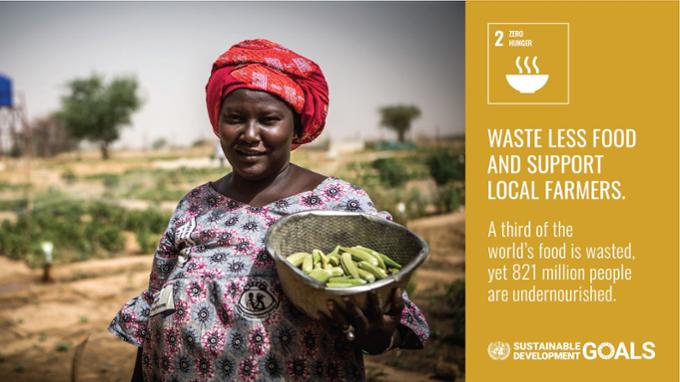
Hunger and food insecurity, fueled by a complex interplay of factors, demands coordinated global efforts to address this critical humanitarian challenge. Research conducted on university campuses has indicated that approximately 40% of post-secondary students in Canada are affected by food insecurity.
The University has taken steps to address food insecurity through various programs, events and research. Below is a list of related campus and community-based organizations in Regina. To access these supports, or lend a hand as a volunteer, visit the webpages below.
Past News and Events
- U of R researchers awarded nearly $600,000 through Agriculture Development Fund (2021)
- U of R Researchers Actively Engaged in Projects that Positively Impact Agriculture Sector (2020)
- Earth Day webinar - Change and Resistance: Agriculture and the Environment (2020)
- A bountiful harvest: RPIRG Green Patch Garden puts nutritious food on the table for all (2020)
- U of R researchers highlight ag research that hits home at this year's Canadian Western Agribition (2019)
- UofR Controlled Environment Agriculture Symposium (2024)
Related Courses
BIOC 390AE - Biochemical Basis of Toxicology
The biochemical principles, mechanisms and molecular actions underlying the toxicity will provide the foundation for the course. Selected discussion topics include acute poisoning, natural toxins, environmental toxicants, endocrine disruptors and food toxicology. The course will consist of 6 lecture modules, a project and in-class discussion/presentation.
***Prerequisite: BIOC 221***
BIOL 302 - Food Microbiology
Students will be introduced to the importance of microbes in foods. Topics will include: microbial ecology in food environments, survey of microbes important in food spoilage and food borne illness, food fermentations, and control and detection of detrimental microbes with special emphasis on novel or emerging techniques. ***Prerequisite: BIOL 310***
BIOL 850AF - Microbes and the Environment
Graduate Students will participate in discussions on current topics in environmental microbiology and review the literature in emerging research topics in soil microbiology, plant-microbe interactions and food microbiology.
BIOL 850AG - Microbes and the Environment
Graduate Students will participate in discussions on current topics in environmental microbiology and review the literature in emerging research topics in soil microbiology, plant-microbe interactions and food microbiology.
CHEM 101 - Chemistry of Food and Cooking
An introductory science course connecting chemical and biochemical principles with food and its preparation. Major components of food (lipids, proteins, carbohydrates, water) will be discussed alongside chemical foundations (atomic structure, acids and bases, enthalpy, reactivity). Traditional Knowledge of food preparation by First Nations will also be explored. Lab component: A kitchen-based food lab will highlight the scientific method. ***Prerequisites: CHEM 30 or CHEM 100 (minimum 65%), BIOL 30 (minimum 65%)***
*Note: Biochemistry and Chemistry majors can use this course in their program as an open elective only.*
CNUR 203 - Alterations in Health and Advanced Assessment l
This course will focus on alterations in health of adults, and the associated nursing care, using selected scenarios. Learners will integrate nursing knowledge, critical thinking and principles of holistic assessment, pathophysiology, pharmacology, microbiology, nutrition and health education.
***Prerequisite: CNUR 101, CNUR 107 and BIOL 222.***
*Note: BIOL 222 can be taken concurrently.*
CNUR 204 - Alterations in Health and Advanced Assessment ll
This course will continue the focus on alterations in health of adults, and the associated nursing care, using selected scenarios and research. Learners will integrate nursing knowledge, critical inquiry and principles of holistic assessment, pathophysiology, pharmacology, microbiology, nutrition, and health education.
***Prerequisite: CNUR 203 or CNUR 211.***
EC&I 890BJ - A Review and Analysis of Critical Theory: Understanding Food Choice in Iqaluit
The objective of this course is to explore critical theory and apply these concepts to a critique of the Food Choice Process Model and Critical Population Health Framework in Iqaluit.
ECON 211 - Development Economics
Problems and challenges facing developing countries in their attempts to improve living standards.
*** Prerequisite: 15 credit hours or ECON 100 ***
ECON 233 - Issues in Canadian Agriculture
Applies economic theory to current problems facing Canadian and world agriculture. Supply and demand conditions in world markets. Causes and effects of government support programs. Impact of WTO agreements.
***Prerequisite: 15 credit hours or ECON 100.***
ECON 311 - Economics of Developing Countries
Comparative case studies of attempts by Third World countries to improve their living standards. Introduction to theories of how economies develop.
***Prerequisite: ECON 202 or ECON 211***
ED 870AO - Social Justice/Globalisation
Explores the research and classroom practice of themes within International Development including health and nutrition, basic education, child protection, gender equality, infrastructure services, human rights, democracy and good governance, citizenship, private sector development, and environment; considers the implications of integrating these themes into the mainstream curriculum.
EHE 258 - Personal and Community Health
The course focuses on basic background and content in health education, covering major areas such as environment, drugs, sex, consumer health, safety, mental health, nutrition, fitness, and aging.
* Note: Normally offered in winter only. *
ENGL 342AF - Early Modern Medicine
This course explores the interrelationship of medicine, culture, and English literature during the medical "revolution" of the long seventeenth century. Focusing on digestion, we will examine such topics as the relationship between diet and health, belly and mind, and intersections of medical discourse with discourses of gender, ethnicity, and class.
***Prerequisite of ENGL 100 and either ENGL 110 or completion of 48 credit hours.***
FRN 220AB - Le français dans votre assiette! French in your plate!
Cours de langue et de cultures francophones qui porte sur la gastronomie, fait un survol de l’histoire de la cuisine (certains aliments, mouvements), des habitudes et des traditions alimentaires de quelques pays de la francophonie. Ce cours comporte aussi un aspect expérientiel et quelques cours auront lieu dans une cuisine.
***Prerequisite: FRN 200 with a minimum grade of 60%, Grade 12 French and permission based on assessment test, or permission of Department Head***
INHS 101 - Introduction to Indigenous Health Studies II
Introduction to health science emphasizing Indigenous perspectives. Topics: organization of health services, mental health, nutrition, fitness, sexuality, human relationships, substance abuse, communicable and chronic disease, aging, environmental health, ethical issues.
***Prerequisite: INHS 100.***
KHS 867AO - social Psychology of Food Choices
This course is designed to explore, in-depth, the relevant social psychological literature regarding food choices. The student will examine various models and theories exploring the individual and social factors related to eating behaviours.
KHS 867BC - Issues in Food Labeling and Consumerism
It will provide an introduction to different contexts, populations and topics typically studied; research designs suitable for exploring questions regarding food labeling; ethical issues to be addressed by researchers working with the consumer population; and the relationship between research, practice and policy involving food labeling.
KHS 887BI - Directed Readings in Nutrition, Exercise and Physiology
This course will focus on advanced readings in the scientific and clinical literature in nutrition, exercise, and physiology. Topics will be arm's length from the student's research topic.
KIN 275 - Introduction to Nutrition
This course introduces students to the macro and micro nutrients vital to health, and well-being with specific reference to the Dietary Reference Intakes. Emphasis will be on the the functions, metabolism and dietary sources of nutrients. The important role that nutrition plays in disease, sport, recreation, and athletic performance will be introduced.
***Prerequisite: KIN 160 or BIOL 100, BIOL 101 and CHEM 104.***
PHIL 290AN - Ethical Eating
Should we all be vegetarians? Should we eat only organic food? Only local food? Only food produced in a sustainable way? Should we worry about "cultural appropriation" of foods? This course will explore these and other such questions from a philosophical perspective.
***Prerequisite: PHIL 100 or completion of 15 credit hours***
SOC 355 - The Global Food System
A sociological lens on processes of food production, distribution, and consumption on a global scale. The course traces the historical development of the global food system and examines contemporary conflicts driving social change.
***Prerequisite: Completion of 30 credit hours, including completion of one 200 level SOC course, or permission of the Department Head.***
SOC 890AT - Food, Agriculture, and Environment in the Global Economy
This course examines the political economy of agriculture and food at the global scale. Topics will include the theoretical foundations of agri-food studies, the agrarian question, the ecology of agri-food systems, and agrarian and food movements.
SOC 890AV - The Sociology of Alternative Food Networks
This course examines alternative food networks (AFNs) as sites of economic and social exchange, identity formation, and social practice. A particular emphasis is placed on AFNs as sites of ‘green’ or ‘ethical’ production-consumption, and the motivations of actors participating in these networks.
SOST 890AG - Animals & Society
This course critically examines social relations between human and other animals. Key theoretical perspectives, including animal rights, animal welfare, and political economy approaches, will provide an interdisciplinary framework for understanding the complex role of animals in human society, including humans' use of animals for pets, food, clothing, research, entertainment, and other uses.
SOST 890AH - Applied Social Research in Gender and Food Security
This course is an exploration of the intersection of food (in)security and gender. Operating at three levels of inquiry (macro, meso, micro), the course examines international trade and other policy determinants of food (in)security with links to gender dimensions at the household level. The course involves an applied research component focused on food and gender issues in the province of Saskatchewan.