Energy Systems Engineering (MASc, MEng, PhD)
Energy Systems Engineering graduate programs focus on teaching and research in Sustainable Energy Engineering and Energy Transportation and Storage.
The U of R offers the following graduate programs in Energy Systems Engineering (ERSE):
- Doctor of Philosophy (PhD)
- Master of Applied Science (MASc)
- Master of Engineering (MEng)
You will explore clean energy technologies such as solar, wind, hydro, geothermal, biomass and nuclear energy, and deepen your knowledge of transporting and storing CO₂, hydrogen, and natural gas–hydrogen blends safely and efficiently.
ERSE programs provide in-depth knowledge of specialized energy topics and train you in research skills to advance your academic and professional career.What is Energy Systems Engineering?
Energy Systems Engineering introduces the technologies that are committed to climate action by developing renewable energy resources such as solar, wind, hydro, geothermal, biomass and nuclear energy. Sustainable energy systems generate, convert, distribute, store, and utilize energy in exhaustively mitigating greenhouse gas emissions. The curriculum provides fundamental knowledge and hands-on experiences in designing, developing, and managing sustainable energy systems.
You also have the option to focus on Energy Transportation and Storage, developing expertise in energy distribution, conversion, and storage systems critical to meeting growing energy demands. This option covers CO₂, hydrogen, and natural gas–hydrogen blend transportation, piping design and materials, pipeline integrity management, pressure vessel design, and materials for energy conversion and storage. The curriculum also integrates machine learning for energy systems and materials optimization, supported by advanced computing and automation.
You will gain specialized expertise with course options such as:
ENER/ENGG 829 – Nuclear Energy Engineering
This course will cover a broad range of engineering aspects related to a range of nuclear power plant designs, including: reactor nutronics, reactor operations, radiation protection, criticality safety, thermal hydraulics, nuclear fuel cycle, and radioactive waste management
ENER/ENGG 832 - Reinforced Machine Learning for Material Optimization
Reinforced machine learning (RML) has become a revolutionary tool within material science research and reshapes the understanding of materials allowing the precise analysis of complicated material properties and predicting material properties suitable for engineering applications. This course will start with introducing the broad spectrum of machine learning techniques before narrowing down to RML techniques and their application in material property prediction, structure-property relationship, process optimization, and data-driven material discovery.
ENER/ENGG 823 – Multiscale Modelling (MSM) of Materials Design
The course presents the material structures and their influence on material design in conjunction with various time and length scales. Topics like continuum mechanics, finite element analysis & molecular dynamics will be covered. The students learn the methods for coupling different length scales and develop a comprehensive knowledge of MSM
ENIN 880CM - Renewable Energy Technology
Introduction of renewable energy technologies for energy-production. Course topics include basic fossil-fuel-based technology, biomass technology, solar-based technology, hydro technology, geothermal technology, wind and tidal-based technology.
ENPE 827 - Fundamentals of Geothermal Engineering
This course covers fundamental and advanced aspects of geothermal engineering on various topics, including coupling of fluid flow and thermal process in porous medium, geothermal reservoir modeling, software application, geothermal technology using closed-loop and enhanced geothermal system (EGS), and systematic usage of geothermal energy and its relationship with other renewable energy.
ENGG 814 - Advanced Thermodynamics
Basic concepts and definitions; Laws of TD; General TD equations and relations; Energy analysis; TD equations of state; TD properties; Irreversible TD; Applications of TD to various systems; Gibbs-Duhem equation; Gibbs phase rule, stability theories and general equations of equilibrium; Multiphase and multi-component systems; Transport processes in continuous systems; Irreversible TD of Fluid Flowers and Forces (Onsager's Law); Chemical reactive systems and their chemical potential.
Quick Facts
Connect with us
Engineering and Applied Science Meet Your Faculty
Why Study Energy Systems Engineering at the University of Regina?
Commitment to Climate
The ERSE graduate programs demonstrate the U of R’s commitment to climate action through development and research initiatives, as well as ecological and economic sustainability through responsive stewardship of the land and resources.Gain Hands-on Experience
If you enrol as a MASc or MEng Co-op student, you can complete either two 4-month or one 8-month co-op work placements during your program, with salaries typically ranging from $12,000 to $14,000 per semester. You’ll explore different career paths, work environments, and locations, all while building the practical experience that will help you launch your career after graduation.Research Experience
The ERSE programs give you opportunities to participate in research addressing the complex challenges of the energy industry. Students often work with supervisors and faculty on projects that respond to industry requests, contribute to senior researchers’ portfolios, or explore other innovative initiatives. These experiences are supported by federal and provincial governments as well as industry partners, helping you develop the skills and expertise to advance your academic and professional career.Industry and Global Collaborations
The University of Regina partners with Atomic Energy of Canada Limited, Canadian Nuclear Laboratories (CNL), and many other organizations, including SaskPower, SaskEnergy, SaskWater, Stantec, the Petroleum Technology Research Center, the Saskatchewan Research Council, and the Carbon Capture & Storage Knowledge Center. The program contributes to major initiatives like the IEA GHG Weyburn-Midale CO₂ Monitoring and Storage Project and has received funding from NSERC, PTRC, Mitacs, and energy companies worldwide, giving students exposure to research with real-world and global impact.Special Facilities, Labs, and Equipment
- Small modular reactor fuel corrosion lab (SMR-FCL)
- Thermal spray coating and Electrospinning systems
- GUNT ET250 (Solar Module Measurements)
- GUNT ET264 (Geothermal Energy with Two-Well System)
- TecQuipment AE1005V (Wind Turbine Dynamics)
- Marcraft GT-3000 (Fuel Cells Technology).
- LC Systems Custom Glovebox
- SP-200 and VSP-300 Potentiostats
- High temperature high pressure DBR PVT cell;
- Axisymmetirc drop shape analysis apparatus/Spinning drop interfacial tension apparatus;
- Rising-bubble apparatus (commercial scale);
- Kinetic reactor;
- High speed Beckman Coulter Centrifuge Avanti J30I;
- Gas chromatography/HPLC/FTIR/UV-VIS, etc;
- High resolution microscopy;
- Micromodel etching system;
- And other advanced tools and equipment
Career-Ready
The ERSE graduate programs equip you with the technical expertise, practical experience, and research skills to excel as an engineer in the rapidly evolving national and global energy sector. You’ll gain in-depth knowledge of sustainable energy production, transportation, and storage, focusing on safety, efficiency, cost-effectiveness, and environmental responsibility. Through hands-on projects, co-op placements, and research opportunities, you’ll develop the skills to innovate and implement new technologies and strategies that address real-world energy challenges. Graduates will leave prepared to make meaningful contributions across industry, government, and research organizations.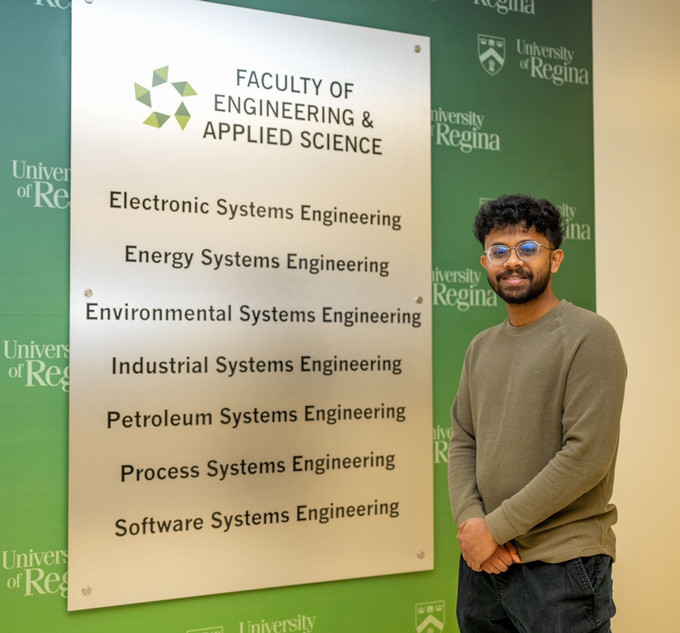
My research on nuclear energy and safety focuses on the corrosion of fuel cladding compositions and the characterization of these cladding surfaces using neutron reflectometry. Academically, I found that ideas on their own were not enough for me as a physics undergrad; I wanted more. Energy Systems Engineering is a field that gives you a very broad skillset, which is especially useful in the forever-relevant energy industry.
Energy Systems Engineering Frequently Asked Questions
See Graduate Studies and Research Eligibility Requirements.
Please note that international students may not be eligible for Master’s Certificate programs because of Visa and Study Permit regulations.You may be eligible for scholarships, financial aid, or other funding opportunities.
Scholarships:
- Graduate students are encouraged to explore available scholarships and funding options.
Financial aid:
- Canadian citizens, permanent residents, and designated protected persons may qualify for Canada Student Financial Aid, which provides loans and grants to help cover education costs.
- International students on a study permit should explore financial aid options available in their home country or consider loan opportunities through local banks.
What Can You Do with an Energy Systems Engineering Graduate Degree?
As a graduate of the Energy Systems Engineering program, you'll gain advanced knowledge in sustainable energy technologies and the transportation of energy and wastes from energy production. You’ll be prepared for a dynamic career in cutting-edge industries with the ability to lead the optimization of the energy production landscape in the era of energy transition. Employers seek graduates with a strong understanding of modern manufacturing methods and energy systems, along with the skills to apply emerging technologies. You will be recognized for your extensive internship experience, project management, problem solving skills, and high accountability.
Possible career paths include:- Renewable Energy Systems Designer
- Energy Efficiency & Optimization Engineer
- Power Systems & Electrical Grid Analyst
- Climate Policy & Environmental Impact Analyst
- Clean Energy Researcher
- Nuclear Scientist
- Nuclear Commissioning, Regulation, and Standards Specialist
- Design and Operation Consultant
Related Programs