Hands-On, Minds-On: Inside Cameron Wiest’s Technology-Rich Classroom
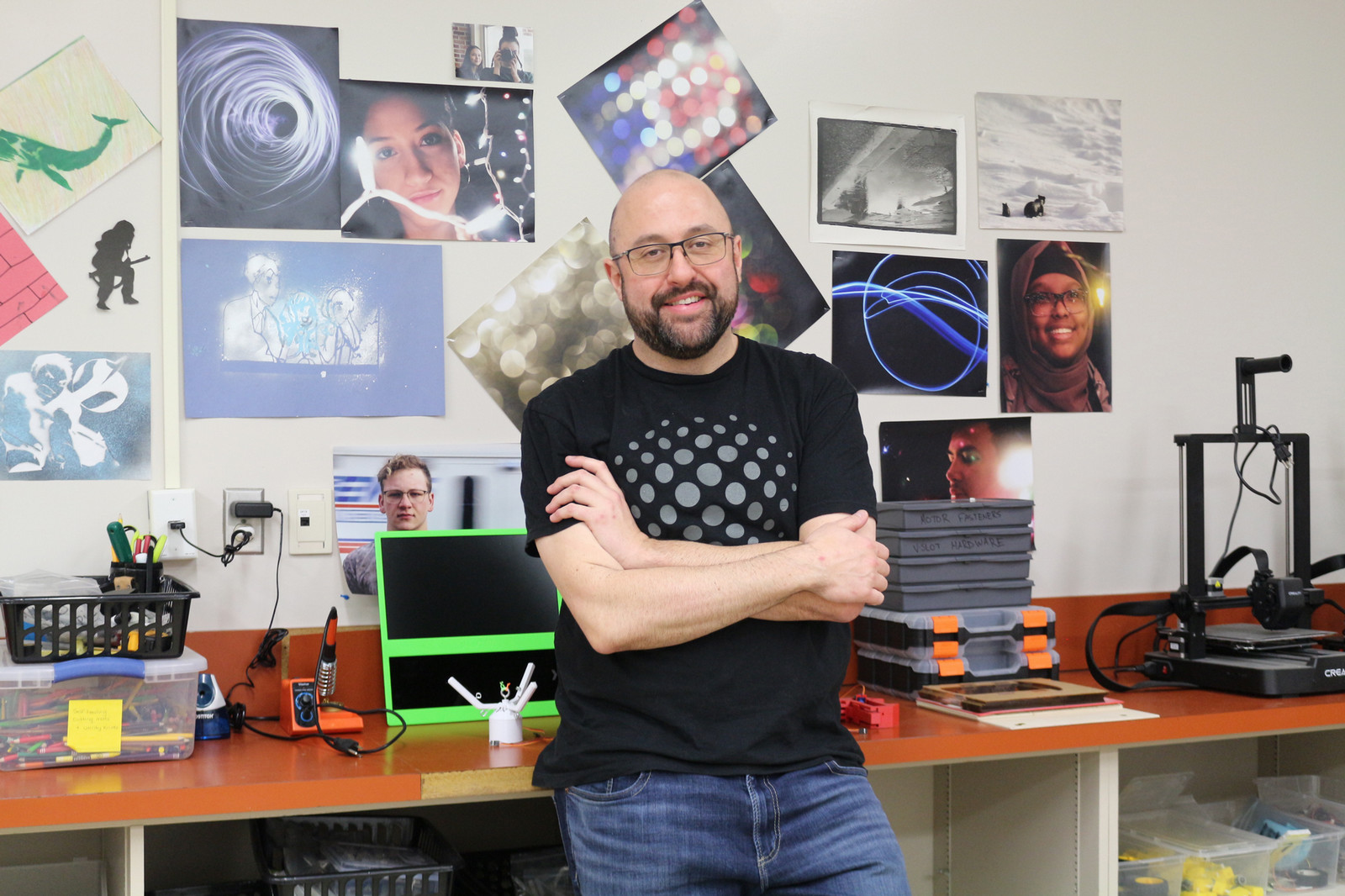
Cameron Wiest (BEd’18) is a founding teacher at Regina Public School’s STEAM (Science, Technology, Engineering, Art, and Math) Academy at F.W. Johnson Collegiate, where he sparks curiosity and confidence through hands-on, design-based learning. His journey reflects both the transformative potential of arts education and the versatility of education graduates in today’s innovation-driven classrooms.
“The Arts Education program opened doors for me to combine creativity with technology in the classroom. At the STEAM Academy, I get to guide students through hands-on projects that blend music, design, robotics, and innovation. Seeing students explore, experiment, and create reminds me that arts education empowers not just artistic expression, but problem-solving, collaboration, and curiosity, skills that last a lifetime,” says Wiest.
A Creative Foundation, Reimagined
Wiest’s creative roots run deep. Before attending the University of Regina, he completed studies in Sound Design for Visual Media at the Vancouver Film School, where he cultivated a passion for experimental electronic and house music.
Seeking a career that could unite his sound design interests with a purposeful professional path, Cameron chose the Arts Education program at Faculty of Education in the University of Regina. There, he found a community that valued creative inquiry and interdisciplinary practice. The program emphasizes not only traditional arts disciplines, such as dance, drama, literature, music, and visual arts, but also critical thinking, problem-solving, and innovative thinking through artistic processes.
One formative experience came during a music education course with instructor Denise Morstad, who introduced Orff-based activities designed to ensure students of all musical backgrounds felt capable and successful. For Wiest, it was a powerful lesson in the impact of intentional learning design.
“She put an instrument in everyone’s hand and created an activity where everyone felt a little bit like a musician,” Wiest recalls. “It taught me that design matters in learning. It’s not about making things easy, but about creating opportunities where students feel competent.”
Finding Purpose in STEAM
After graduating in 2018, Wiest spent several months as a substitute teacher before securing his first full-time position teaching photography and communication media at Balfour Collegiate. That experience, combined with his creative background, eventually led to a unique opportunity: helping to launch the STEAM Academy at F.W. Johnson Collegiate.
The Academy was envisioned as a space where students could engage in hands-on, interdisciplinary projects that reflect real-world challenges. While early planning focused on STEM disciplines, Wiest strongly advocated for including the “A”, arts, recognizing how creative practices build student confidence when working with complex technologies. By embedding arts into STEM, the STEAM Academy now uses creativity, design, and hands-on making to help students approach science, technology, engineering, and math in innovative and accessible ways.
For Wiest, arts provide familiar entry point into unfamiliar territory. Building with cardboard to painting, storytelling, or music can anchor a project that also involves robotics, coding, 3D design, or electronics.
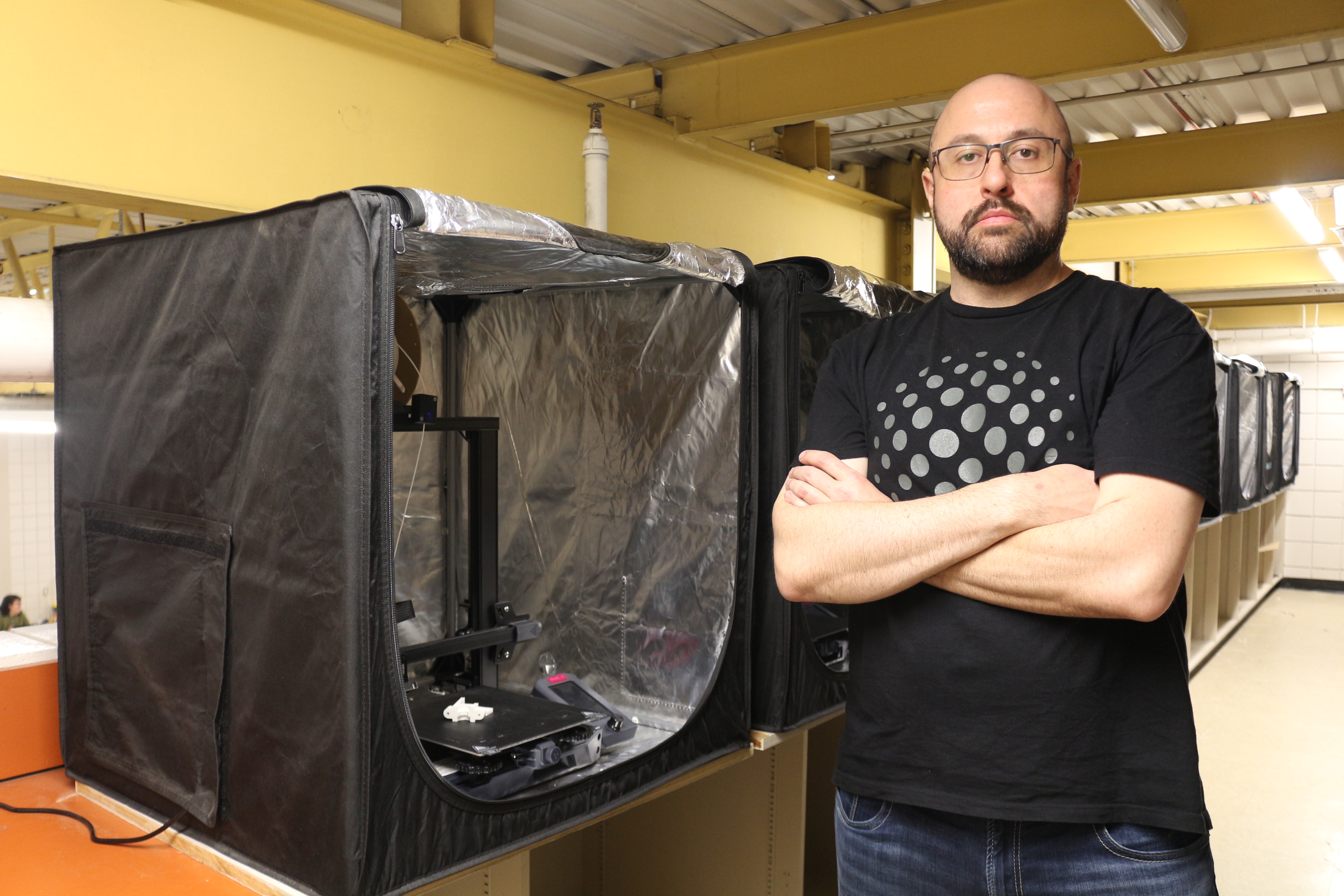
Photo credit: Faculty of Education
“When you give students familiar materials and make things like 3D designs approachable through creativity, they can focus on problem-solving and learning new skills with confidence rather than fear,” he explains.
Inside an Innovative Classroom
A walk through Wiest’s classroom may appear simple at first glance, but beneath the surface lies a deep commitment to student-centered learning and exploration. Projects are grounded in real-world problems and emphasize the design process, collaboration, and reflection.
Selected student projects include:
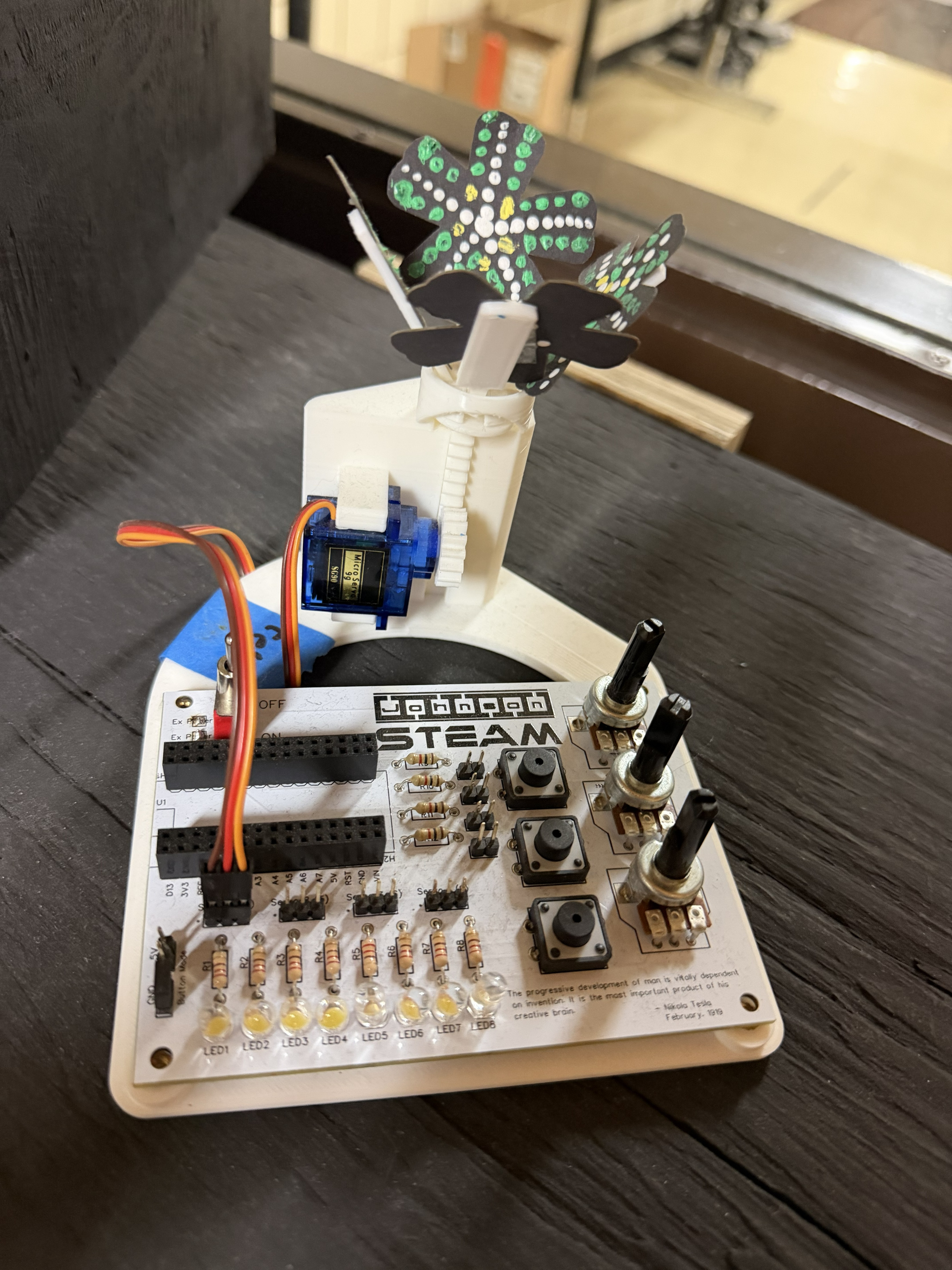
Robot Flowers
Video Wall Installation

Interactive Installations
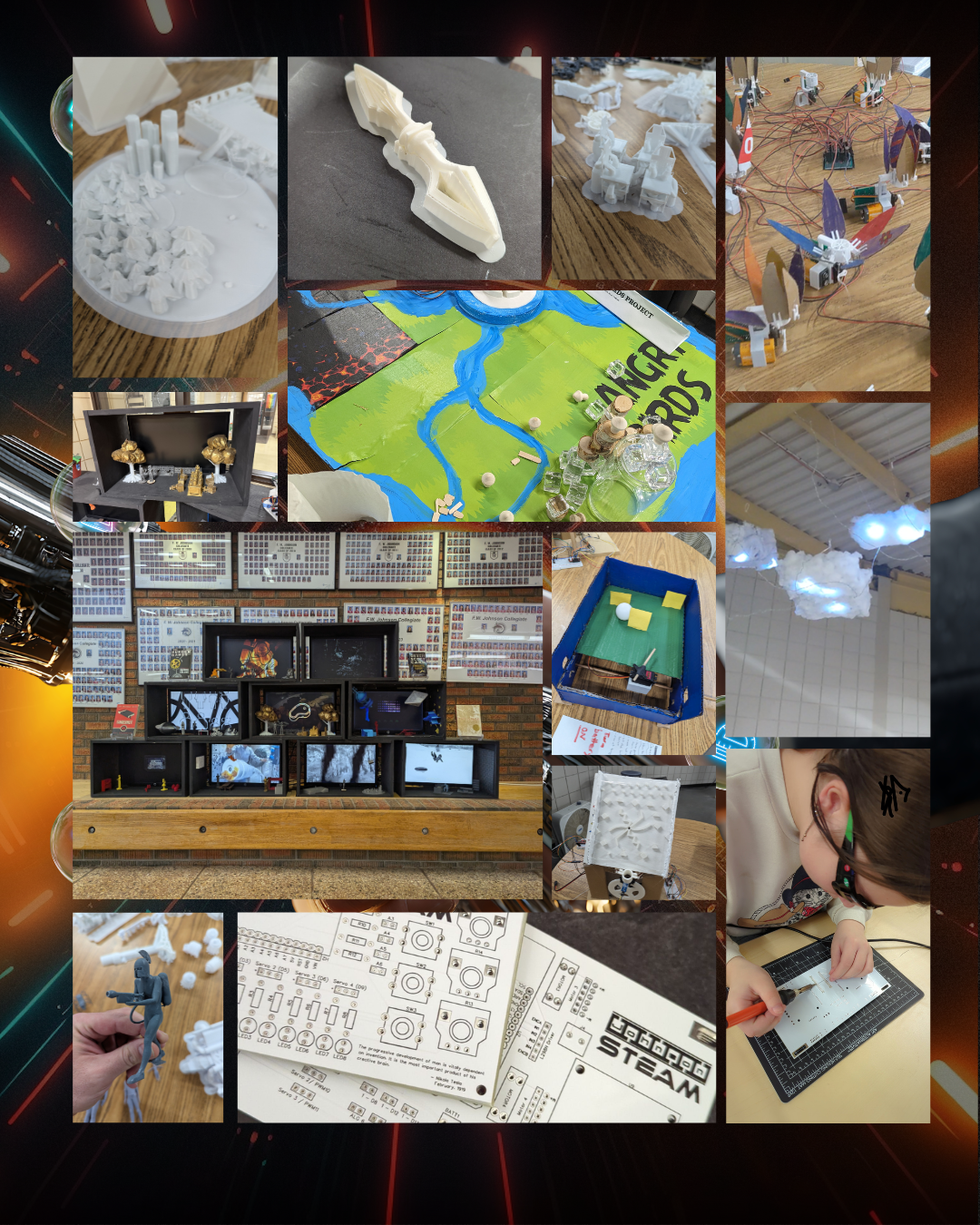
While the outcomes are often visually striking, Wiest assesses students on their understanding of tools and processes, as well as their ability to iterate and articulate their design thinking.
“I’m not marking them on how beautiful or expressive the artwork is,” he says. “I’m marking them on whether they understand how to use the tools, follow procedures, and explain their design decisions.”
The STEAM Academy attracts a diverse group of learners from Grade 9 to 12 who are seeking an alternative to traditional classroom models. Some students are drawn by interest in sciences, engineering, multimedia, or design; others are looking for a more hands-on, creative learning environment.
Although the Academy is still young and its first cohort has yet to complete all grade levels, Wiest is already noticing patterns in student aspirations. Many express interest in pathways such as computer science, engineering, and applied design.
Advice for Aspiring Educators
When asked about what it takes to teach at the intersection of creativity and technology, Wiest emphasizes the importance of personal mastery.
“If you want to teach technology, you need to understand it well enough to help students troubleshoot, experiment, and learn from mistakes,” he says. “That requires dedication—not just in the classroom, but in your own practice.”
He encourages educators to regularly engage with tools such as robotics, coding, video editing, photography, or design software in their own time. This commitment allows teachers to guide students with confidence.
This philosophy extends across arts education more broadly: educators benefit from remaining active practitioners, whether through making music, creating visual art, or engaging in movement and performance practices.
Beyond teaching and research, Cameron maintains an active creative and entrepreneurial practice. He designs electronic music instruments and collaborates with businesses to design projects that extend beyond education. He also continues to create electronic music and practice photography, personal pursuits that fuel his creativity and inform his work as an educator.
“Wiest’s path, from creative professional to arts education graduate to STEAM innovator, illustrates the breadth of opportunities a degree in Arts Education can unlock. His story affirms that arts education is not only about creative expression but also about empowering learners to think critically, solve problems, and navigate a world where technology and creativity increasingly intersect,” says Denise Morstad, chair of the Arts Education program in the Faculty of Education at the University of Regina.
To learn more about how arts education prepares future teachers and innovators, visit the Faculty of Education and explore the range of programs that support creative, reflective, and impactful teaching.
Explore the Arts Education program offered by Faculty of Education.