
Community,
Research,
Teaching & Learning
With each kilometer that slips beneath the wheels of his motorcycle, Tracy Nicholas can feel himself relax. Letting go of the images, the sounds, the “horrible things” he experienced as a member of the Canadian Armed Forces, and which haunt him still 19 years after his retirement from service.
“When I ride my bike, I have to concentrate on what I’m doing. It’s just me listening to the bike, looking at what’s ahead, looking at the scenery,” says Nicholas. “Riding just consumes you to the point where the outside world melts away. It’s a good feeling for a guy who’s always on guard, who doesn’t trust people.”
For Nicholas and dozens of other military veterans in southern Saskatchewan, the Comrades Forever club and peer support group has been a lifesaver. Originally created in 2018, Comrades Forever supports Canadian and allied military veterans living with post-traumatic stress injuries from service-related activities. Recently, the club has found new community partners and received vital support for its programming from the University of Regina and Veterans Affairs Canada.
Riding just consumes you to the point where the outside world melts away. It’s a good feeling for a guy who’s always on guard, who doesn’t trust people. — Tracy Nicholas, Canadian Veteran and President of Comrades Forever
The University of Regina has partnered with Comrades Forever to coordinate the delivery of mental health first-aid programming for veterans in Saskatchewan, help the group administer their activities, and create a welcoming, stable, and supportive environment for the veterans who have dedicated their lives to serving Canadians.
“Thanks to Veterans Affairs Canada, we are honoured to support the Comrades Forever program,” says Dr. Jeff Keshen, President and Vice-Chancellor. “The University’s proven leadership and innovative programming in mental health and well-being, together with our ongoing participation in the Canadian Military, Veteran and Family Connected Campus Consortium, make the unique Comrades Forever program a perfect fit.”
New funding from Veterans Affairs Canada of more than $769,000 through the Government of Canada’s Veteran and Family Well-Being Fund is helping to expand the programming provided through Comrades Forever to support veterans’ families, strengthen mental health initiatives, and reach out to more veterans and allies.
“Recovery and well-being are strengthened through connection, and programs like Comrades Forever help ensure Veterans and their families have the support they need along the way,” said The Honourable Jill McKnight, Minister of Veterans Affairs and Associate Minister of National Defence. “By bringing people together through shared experiences, this partnership is helping build understanding, reduce isolation, and foster hope. We are proud to invest in partnerships that help Veterans and their families find support, community and hope.”

Tracy Nicholas finds freedom from PTSD riding on his motorcycle with Comrades Forever. Photo courtesy of Tracy Nicholas.
The struggle to belong
The road to well-being has not been easy for Nicholas. When he retired from the military in 2007 after serving 25 years, first in the infantry and then as an engine technician, Nicholas struggled to find his way back into community in Canada.
“Before Comrades Forever, I was pretty much lost,” Nicholas shrugs. “I tried joining all kinds of different clubs—snowmobile clubs, softball, just trying to fit in. But I was always the third wheel that couldn’t break into society at all. Veterans don’t have the same daily living experiences that someone else has who didn’t serve. It’s hard to describe—normies (civilians) just don’t get it.”
Unknown to him when he retired from duty, Nicholas was suffering from posttraumatic stress disorder or PTSD. The fallout in his life was widespread. His relationship with his spouse and family collapsed; old friendships fell apart; it felt like the world was against him.
“There were all kinds of different things that had happened during my years of service, and I just kind of chalked them up to well, that’s kind of normal,” says Nicholas. “But these experiences, watching friends dying, were stacking up high. When I left, all this stuff started bubbling up in my civilian life, and eventually my cheese slipped off my cracker.”
It wasn’t until he saw a counsellor almost 15 years into retirement that he learned about PTSD and the connection to his difficulty trying to live as a civilian again.
“I was shocked,” says Nicholas. “A lot of veterans have the same feeling—they didn’t know that they had PTSD until someone pointed it out.”
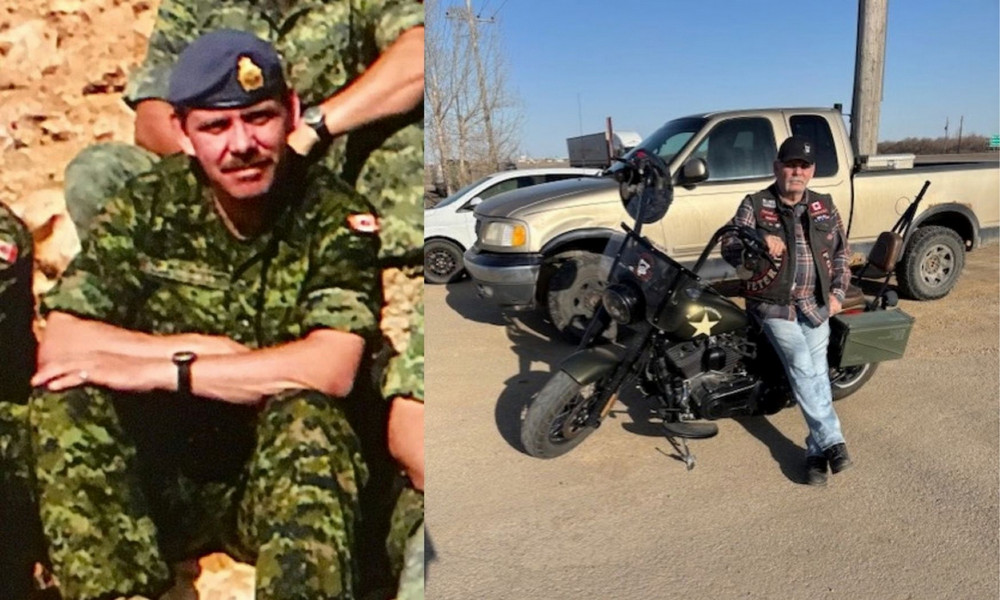
Tracy Nicholas served 25 years in the Canadian Armed Forces, first in the infantry and then as an engine technician. He now serves as president of the Moose Jaw chapter of the Comrades Forever club. Photos courtesy of Tracy Nicholas.
Finding community
Inspired by a military veteran in Moose Jaw who had experience with motorcycle clubs as a way to build community, Nicholas helped form Comrades Forever, with clubhouses in Moose Jaw and Swift Current. The program is modeled on mental health clubhouse principles, with weekly virtual or in-person check-ins, monthly group gatherings and rides, annual retreats, and family-focused camp events.
“We check in as a club every day,” says Nicholas, “through a group chat called the Line App. If you see a guy who’s not there for like more than two or three mornings and he’s not checking in, we’ll pick up the phone and say, hey, what’s going on? Where’s your head at? What are you doing? These guys are a godsend.”
Membership has more than doubled over the past year-and-a-half from seven members in 2025 to nearly 20 in 2026. The veterans—with their lived experience—are at the forefront of program design, delivery, and operational decisions.
Dr. Cheryl Pollard, a psychiatric nurse and professor in the Faculty of Nursing at the University of Regina, is helping to administer the club's mental health programming and is working closely with the veterans to organize a mental health first aid workshop for the club this winter.
“Through the Comrades Forever program, we’re committed to helping our veterans live their best lives and support the mental health needs of both the veterans and their families,” says Pollard, whose spouse is a Canadian Armed Forces veteran.
Expanding the net of support
Until recently, Comrades Forever has had to narrow its focus on getting established so that veterans and their families could find a dedicated space to gather and host events, rather than meeting in members’ garages.
“The support from Veterans Affairs has made it possible for us to have a place to call home,” says Nicholas. “We hold a lot of gatherings and everybody’s welcome—family, friends, veterans. The club has always wanted to reach out and help other veterans. But let's face it, with a handful of guys, we can't reach that far on our own. Now, we can open up support to the community around us.”
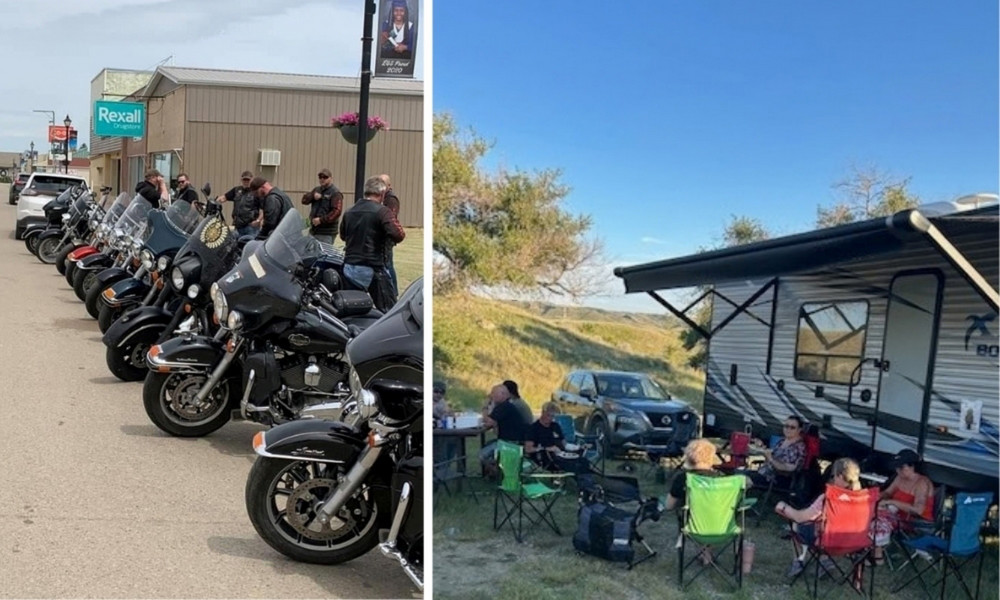
Comrades Forever is modeled on mental health clubhouse principles, with weekly check-ins, monthly group gatherings and rides, and family-focused camp events. Photos courtesy of Tracy Nicholas.
With the funding provided, Comrades Forever will be able to help veterans’ partners and families, too.
“We asked for this funding because our families also suffer from the effects of our PTSD,” says Nicholas. “It will be great for our partners to be able to talk to somebody and get some help.”
Looking ahead, the club will focus on reaching out to more veterans and their families and getting them involved in the community.
Learn more about the University of Regina’s participation in the Canadian Military, Veteran and Family Connected Campus Consortium.
“Comrades Forever is probably one of the best things that’s ever happened to me,” says Nicholas. “It’s a great place to build relationships with other serving or ex-serving military service members. It fills the gap that therapy doesn’t fill. That medication doesn’t fill.”
Next spring, the club will be hitting the road again on their motorcycles. Veterans, their families, and allies together, a symbol of community, opening the door to others.
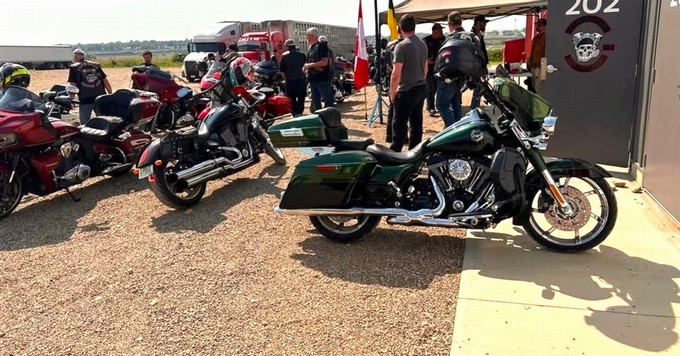
Banner image: The Comrades Forever club creates a community of friends, support, and mental health programming for veterans of the Canadian Armed Forces and their families. Photo courtesy of Tracy Nicholas.
About the University of Regina
At the University of Regina, we believe the best way to learn is through access to world-class professors, research, and experiential learning. We are committed to the health and well-being of our more than 16,400 students and support a dynamic research community focused on evidence-based solutions to today’s most pressing challenges. Located on Treaties 4 and 6—the territories of the nêhiyawak, Anihšināpēk, Dakota, Lakota, and Nakoda peoples, and the homeland of the Michif/Métis nation —we honour our ongoing relationships with Indigenous communities and remain committed to the path of reconciliation. Our vibrant alumni community is over 98,000 strong and enriching communities in Saskatchewan and around the globe.
Let’s go far, together.
Related Posts
Campus Life,
Community,
Teaching & Learning
U of R Celebrates the Achievements of 1,132 Graduates at Fall Convocation
Community,
Campus Life,
Teaching & Learning
Pam Klein and Ruth Smillie Receive University of Regina Honorary Degrees
Arts,
Truth & Reconciliation,
Community