

Teaching & Learning
When University of Regina psychology student Sidi Wang enrolled in a computer game design course during the final year of her degree, she was looking for something outside her comfort zone.
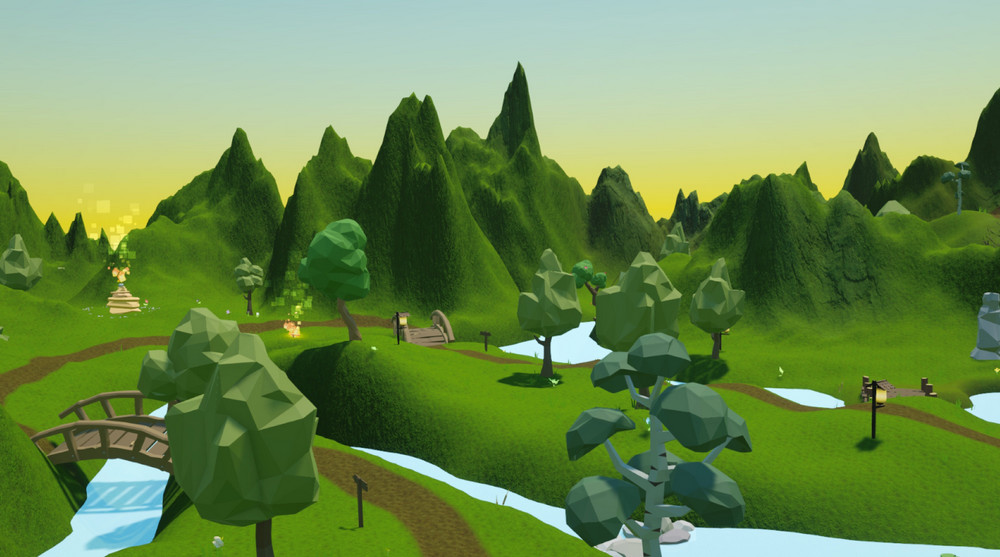
By the end of the semester, she had created Summer Sanctuary, an interactive game that combines digital storytelling with concepts drawn from her psychology experience, encouraging players to explore their thoughts, practice mindfulness, and reflect on their emotional well-being.
Set in a peaceful landscape where it is always summer, the game invites players to explore at their own pace, collect written reflections, meditate, and keep a personal journal.
“I wanted to create an exploration game that could make people feel relaxed,” says Wang, who recently graduated with a Bachelor of Arts in Psychology. “As I brainstormed, step by step, I realized that I could incorporate my background in psychology and my personal experience into the design.”
It’s not only about the knowledge and skills, it’s also how we approach problems we might never have seen before. — Sidi Wang, University of Regina psychology student
For her instructor, Maria Azam, the project demonstrated what happens when students bring knowledge from different disciplines into the classroom.
“It was such a beautiful game. Technically, it was so well done. Visually, it was stunning,” recalls Azam, a lab instructor in the Faculty of Media, Art, and Performance.
The experience illustrates the possibilities emerging through the University’s new Certificate in Video Game Design, which brings together creative expression, digital technology, storytelling, and critical thinking.
For Azam, who teaches animation, computer game design, and digital storytelling, the program is about more than preparing students for the gaming industry. It’s about developing the skills to imagine, design, and build experiences that have meaning beyond the computer screen.
Students in her introductory game design course begin with card games and board games before moving into computer programming and digital design. They learn to develop ideas, test their creations, respond to feedback, and solve problems. By the end of the course, each has produced a playable computer game.
“We do a lot of learning through creating,” says Azam.
The courses attract students from across the University, including those studying computer science, software systems, biology, and nursing. That diversity encourages students to approach problems from different perspectives and discover applications for digital technology beyond entertainment.
It’s an approach that speaks directly to Together, We Learn, one of five priorities in the University of Regina’s new 10-year strategic plan, Together, We Serve.
A university education for a changing world
For Provost and Vice-President (Academic) Dr. Ellyn Lyle, the certificate in video game design exemplifies how universities can respond to emerging opportunities while preserving the intellectual foundations of higher education.
“Our ambition is not simply to add new programs in response to emerging industries,” says Lyle. “It is to develop academic offerings that anticipate possibilities, cultivate creativity, and equip students to shape the fields in which they will work.”

The University has been expanding its academic offerings across numerous disciplines. Among programs that have recently been approved are a Bachelor of Arts in Criminology, Bachelor of Arts in Indigenous Language Reclamation, Data Science Internship Program, and a Certificate in Indigenous Business Communications.
New academic programs are shaped by evolving student interests, emerging areas of knowledge, workforce demands, and community needs. Opportunities for interdisciplinary learning and alignment with the University’s teaching and research strengths also influence their development.
For Lyle, responding to these demands is central to Together, We Learn. Equally important is encouraging students to look beyond the boundaries of their chosen disciplines.
Challenges such as climate change, public health, technological transformation, and social inequality rarely fit within a single field of study. Addressing them requires collaboration, intellectual curiosity, and different perspectives.
Bringing learning to life
The University’s longstanding commitment to experiential learning provides a foundation for that ambition.
Through cooperative education, community-based projects, research opportunities, and hands-on learning, students are already connecting classroom knowledge with practical experience.
Over the next decade, Together, We Learn aims to strengthen those connections and make them a more integrated part of the student experience.
“We don’t have to choose between academic rigour and practical relevance. In fact, each strengthens the other,” says Lyle.
She envisions students working across disciplines, collaborating with researchers, and engaging with communities to investigate meaningful challenges. Saskatchewan’s industries, communities, and Indigenous peoples offer distinctive opportunities to connect academic inquiry with the world beyond campus.
Realizing that vision also means ensuring students have the support they need to succeed.
The University, under the auspices of the Provost’s Office, has begun a cross-unit review of student success, examining academic advising, wellness, accessibility, career development, and student transition programs. The initiative will identify opportunities to better coordinate support throughout a student’s academic journey.
“Our responsibility simply isn’t to admit students, but it’s to create the conditions in which they can thrive,” says Lyle.
The strategic plan also emphasizes investment in faculty development, innovative teaching practices, and the learning environments and technologies that support academic excellence.
More than a degree
For Wang, the lessons from creating Summer Sanctuary extended far beyond learning a new programming language or mastering the technical challenges of game development.
During her time at the University, she worked as a co-op student with the Centre for Continuing Education’s instructional design team, gaining experience with digital learning tools and web design. But creating a computer game required her to develop an entirely new set of skills.
She discovered that the most important lesson wasn’t necessarily how to solve a particular problem, but how to approach challenges she had never encountered before.
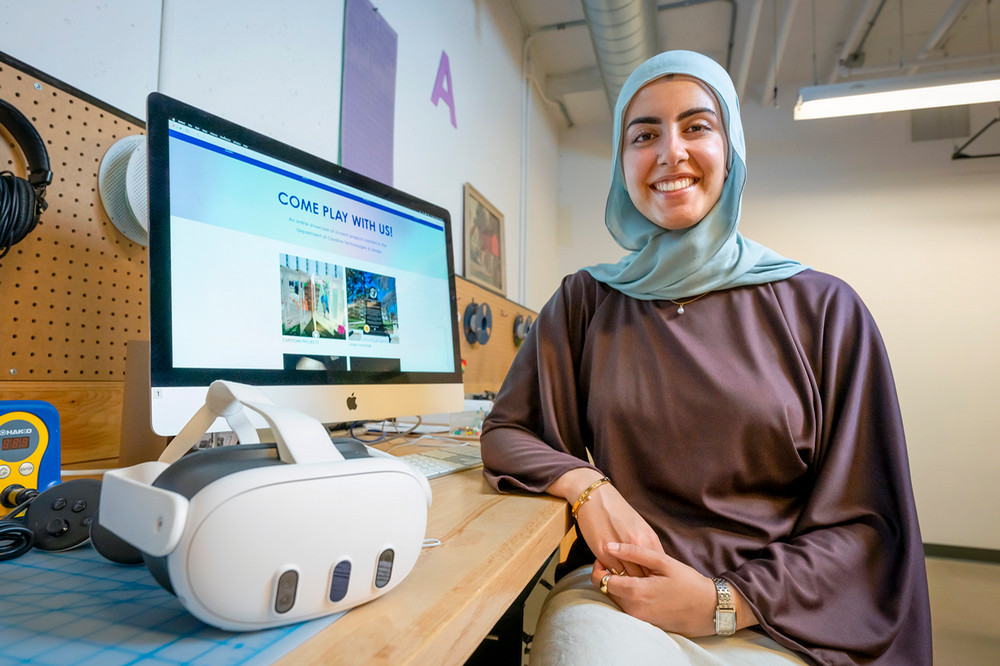
“It’s not only about the knowledge and skills,” says Wang. “It’s also how we approach problems we might never have seen before.”
For Wang, the experience reinforced the importance of curiosity, persistence, and lifelong learning.
Looking back on her undergraduate years, she believes the greatest benefit of her education was something that cannot be measured by grades or credentials alone.
“The university experience was a very empowering one for me,” she says. “It’s more than a parchment or a record of my transcript. It’s far more. It’s about the ability, the confidence, and the belief in myself that I can do what I may have thought I couldn’t before.”
It’s precisely the kind of transformation Lyle hopes will define the University of Regina graduate of 2035.
When she imagines that graduate, three words come to mind – innovation, agility, and service.
Learn more about the University's committment to education excellence in its strategic plan priority area, Together, We Learn.
She hopes graduates will have the confidence to question assumptions, the ability to navigate uncertainty, and a commitment to contributing to something larger than themselves.
“That is what I hope Together, We Learn will mean by 2035 – not simply that our students have received an excellent education, but that their education has expanded what they believe is possible for themselves and for the world they will help shape.”
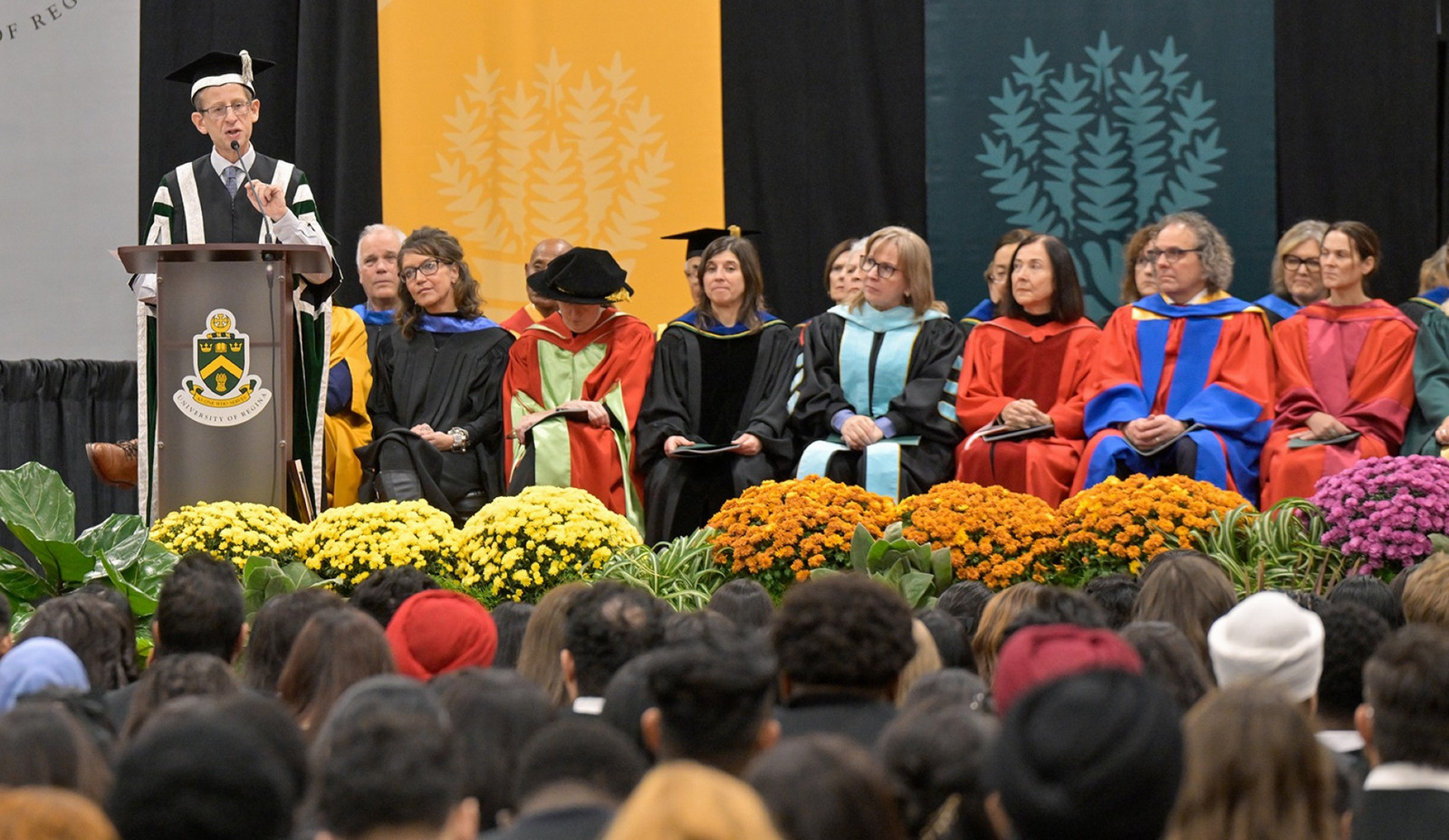
Banner image: Students are major benefactors of the priorities set out in the U of R’s recent Strategic Plan, Together, We Serve. Photo credit: University Communications and Marketing.
About the University of Regina
At the University of Regina, we believe the best way to learn is through access to world-class professors, research, and experiential learning. We are committed to the health and well-being of our more than 16,400 students and support a dynamic research community focused on evidence-based solutions to today’s most pressing challenges. Located on Treaties 4 and 6—the territories of the nêhiyawak, Anihšināpēk, Dakota, Lakota, and Nakoda peoples, and the homeland of the Michif/Métis nation —we honour our ongoing relationships with Indigenous communities and remain committed to the path of reconciliation. Our vibrant alumni community is over 98,000 strong and enriching communities in Saskatchewan and around the globe.
Let’s go far, together.
Related Posts
Teaching & Learning
U of R Educators Recognized for Transformative Teaching and Innovation
Campus Life,
Community,
Teaching & Learning
U of R Celebrates the Achievements of 1,132 Graduates at Fall Convocation
Community,
Campus Life,
Teaching & Learning