Teaching & Learning
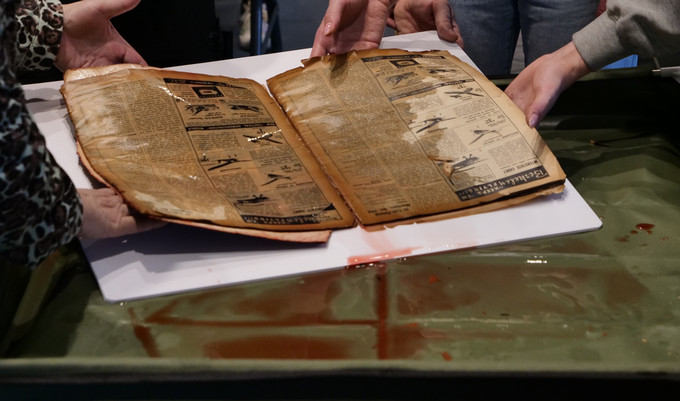
Dozens of students, archivists, and conservators surrounded small pools filled with things like books, newspapers, dolls and regalia that had suffered damage at the hands of simulated disasters. Their goal was anything but simple – salvage the material.
And while the damage was simulated, the recovery skills they put to the test were the result of hands-on training workshop at the University’s College Avenue campus.
Put on in partnership between the University of Regina and BC Heritage Emergency Response Network (BC HERN), the Collections Salvage and Emergency Response workshop was designed to support museums, libraries and archives across Saskatchewan by building networks and teaching a valuable set of skills. The two-day learning experience saw archivists, conservators, and students from across Canada coming to the U of R to learn how to save all kinds of materials from the effects of natural disasters.
I think it's really important for people in all facets of a museum space to be that person who can step up in an emergency, because we are all kind of stewards for not only our community, but any community's history .— Drew Josvanger, fourth year Bachelor of History student, University of Regina.
Attendees had the opportunity to learn about everything that goes into the response and salvage of the various items typically found in museums, galleries and archives.
The workshop also served as an opportunity for members of different museums and galleries to connect and strengthen Saskatchewan's local emergency response community.
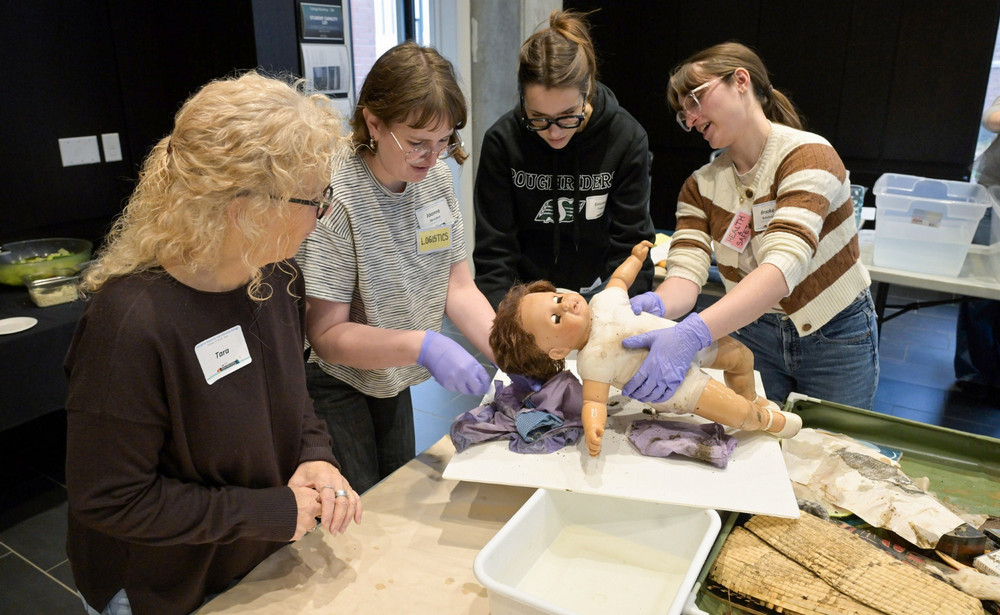
Attendees clean a baby doll. Photo credit: University Communications and Marketing
That aspect of community is even more important for the many museums, archives and galleries located in remote areas.
"This isn't just about the larger institutions in whatever city it is," says Heidi Swierenga, Member of BC HERN and Senior Conservator, Museum of Anthropology, University of British Columbia. "There is heritage spread all across the country, and a lot of it is in remote, hard-to-access locations".
Saskatchewan's network of smaller museums and archives in particular benefits from building these connections.
“I think we have a unique situation in Saskatchewan, too, where we have many small museums, galleries, and archives where there may only be one or two staff members,” Says Robin Canham, Sessional Instructor, Department of History, University of Regina. Canham, along with Victoria Kablys-Nielsen from the Royal Saskatchewan Museum, was part of the team who recognized the need for a more coordinated approach to preparing for and recovering from disasters in gallery and archive spaces and organized the workshop with BC HERN. “We can’t possibly do everything, so being able to partner, it spreads the work out, it spreads the budgets out, and makes it easier to respond when collection emergencies happen."
Disasters are often unpredictable and outside of human control, but being proactive can help limit damage or prevent emergencies entirely. With these workshops, attendees are learning about an important part of conservation that can be difficult to prepare for.
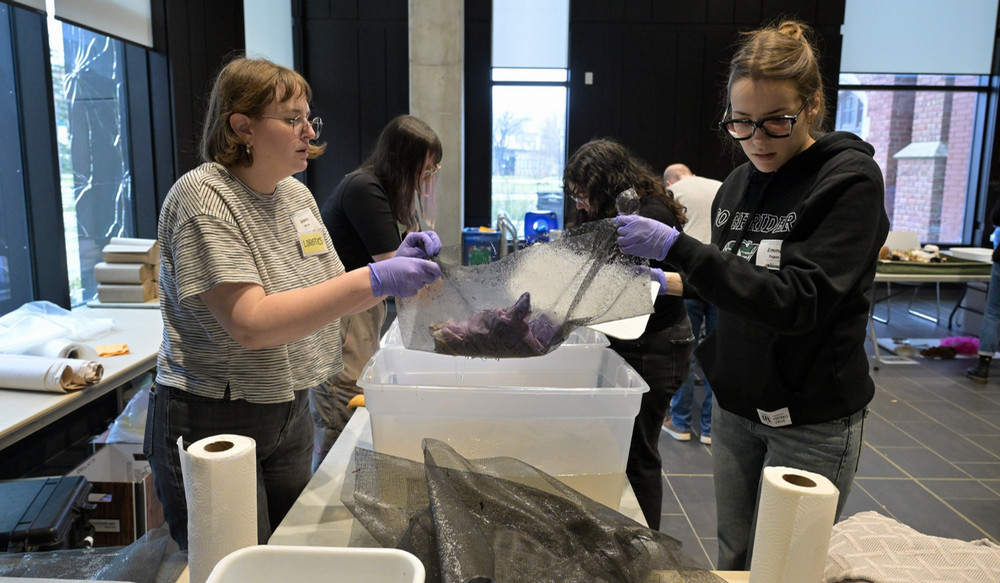
Attendees go through the steps of washing dirty fabrics. Photo credit: University Communications and Marketing
For those from the U of R who attended the workshop, being prepared for a disaster means protecting one-of-a-kind pieces of history, like the David Thauberger and Victor Cicansky collections.
"We want to be prepared for an emergency if it were to happen. Because our collections are rare, one of a kind, and important to the history of the university and we don't want to lose it," says Catherine Folnovic, an Archives Assistant for University Records at University of Regina, who participated in the session.
For students, it means being prepared to respond to an emergency in whatever kind of environment their conservation journey takes them and taking their learning beyond the classroom.
"The workshop gives us a great opportunity to network and to learn the basics of emergency conservation - which matters the most when you're kind of just a floater," says Drew Josvanger, fourth year Bachelor of History student, University of Regina. "I think it's really important for people in all facets of a museum space to be that person who can step up in an emergency, because we are all sort of stewards, not only for our community, but any community's history."
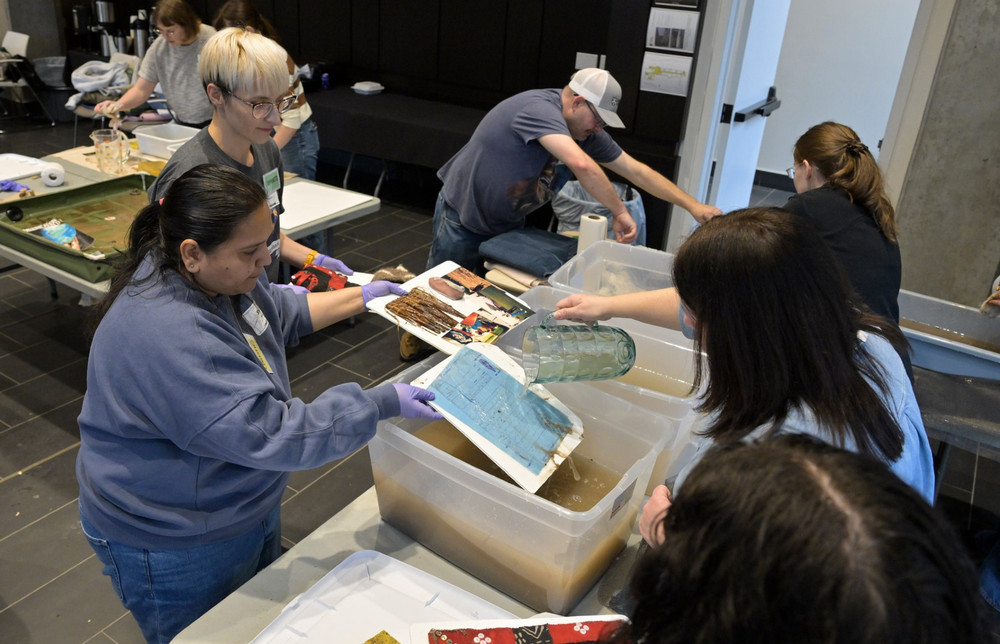
Participants clean documents with water. Photo credit: University Communications and Marketing
Armed with new skills, understanding and a network of peers, participants will continue to support the galleries, libraries, archives, and museums in their communities across Saskatchewan.
"It showcases what can be done and what we should be doing, and hopefully students and everyone who participated kind of came away from the exercise thinking about 'how can I help in my community?'" says Canham.
Banner photo: Participants rescue a book from water damage. Photo credit: University Communications and Marketing
About the University of Regina
At the University of Regina, we believe the best way to learn is through access to world-class professors, research, and experiential learning. We are committed to the health and well-being of our more than 16,400 students and support a dynamic research community focused on evidence-based solutions to today’s most pressing challenges. Located on Treaties 4 and 6—the territories of the nêhiyawak, Anihšināpēk, Dakota, Lakota, and Nakoda peoples, and the homeland of the Michif/Métis nation —we honour our ongoing relationships with Indigenous communities and remain committed to the path of reconciliation. Our vibrant alumni community is over 98,000 strong and enriching communities in Saskatchewan and around the globe.
Let’s go far, together.
Related Posts
Campus Life,
Community,
Teaching & Learning
U of R Celebrates the Achievements of 1,132 Graduates at Fall Convocation
Community,
Campus Life,
Teaching & Learning
Pam Klein and Ruth Smillie Receive University of Regina Honorary Degrees
Community,
Teaching & Learning,
Research