Research,
Teaching & Learning
We left Paris in the grey dawn of June 12th.
Those words were written by the remarkable journalist Gladys Arnold in her memoir One Woman’s War: A Canadian Reporter with the Free French. She was recalling her daring escape from Paris as Nazi forces advanced on the city in June 1940.
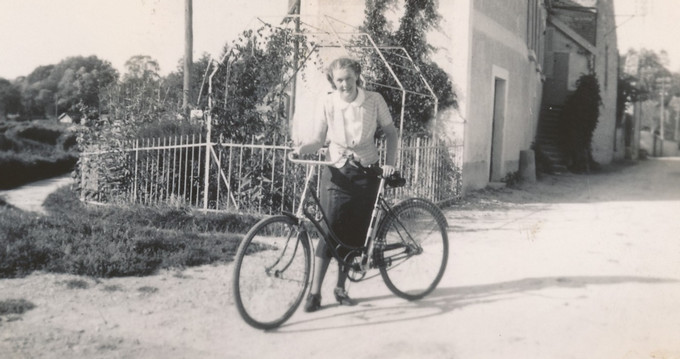
Born in Macoun, Saskatchewan, Arnold went from teaching in rural classrooms, to working her way up from a secretary to a reporter with the Leader-Post, to reporting from a continent on the brink of war, even interviewing French General Charles de Gaulle along the way.
Seeking adventure, Arnold arrived in Europe in 1935, learned French, built a network of contacts, and became Canadian Press’s full-time Paris correspondent. Even as she fled France, five years later, she continued interviewing people, taking notes, and recording the human cost of war.
Arnold’s personal and professional record is now in the care of the University of Regina’s Archives and Special Collections. A project is underway to share some of it online to help a new generation discover Arnold’s amazing story.
Watch a short video about Gladys Arnold, whose exploits in pre-war Europe were nothing short of sensational:
Arnold began donating materials to the archives in 1989. Further donations came from her family after her death in 2002. Today, the collection includes correspondence, journals, daily planners, published writing, and photographs.
Emily Reid, a fifth-year U of R student completing honours programs in English and history, has been working with Arnold’s archival materials. In her role as a student assistant, she helps digitize documents, process records, and prepare materials for online access.
Not only has the time that she has spent with the Arnold collection satisfied Reid’s academic interests and fascination with the Second World War that she cultivated in high school, but at the same time it has afforded her the opportunity to get to know the real Arnold through the private moments preserved in the collection’s holdings.
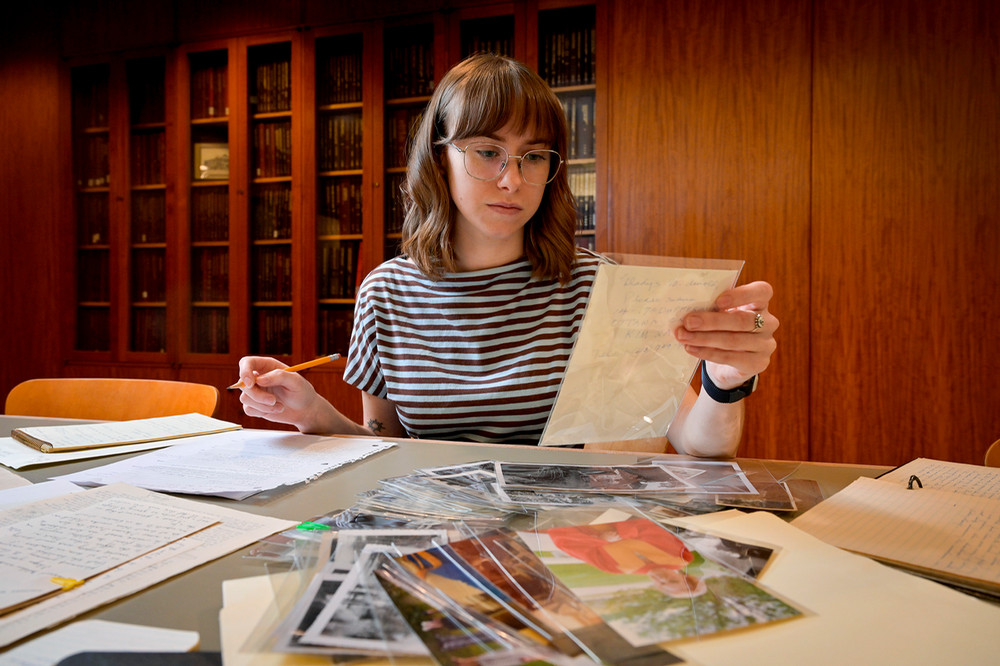
“I definitely do feel like I’ve gotten a sense of who Gladys was,” says Reid. “That comes a lot from looking beyond just her journal articles, and getting to see the diary entries, daily planners, and correspondence.”
The Arnold collection is just one collection preserved in the U of R Archives, a repository so vast, that, if its contents were placed end-to-end, its holdings would stretch more than four kilometres.
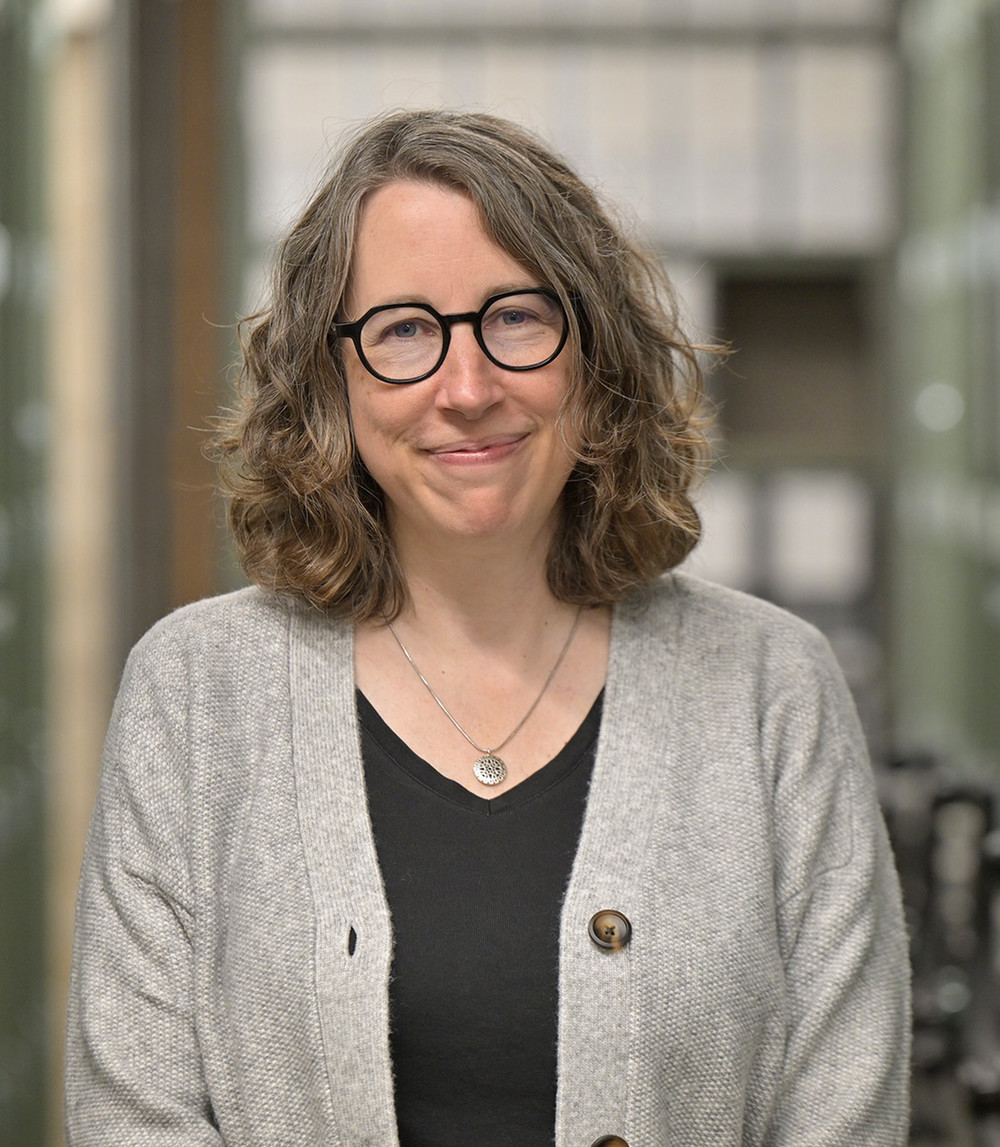
For Crista Bradley, University Records and Information Management Archivist, the archives preserves records that often don’t exist anywhere else. The holdings document the history of the University and its people back to its Regina College days, and include extensive private records collections related to journalism, visual arts, literature, the environment, and social activism.
“Archives have a really important role in the documenting, capturing, and preserving the recorded memory of people, events, places, and programs,” says Bradley.
Arnold’s collection is a compelling example of how preserved memory can open a window into both a historical period and an individual’s life. Researchers can examine her letters and journals to explore what she understood and felt as events before her unfolded. The collection’s more than 1,000 photographs and personal correspondence reveal friendships, family ties, and everyday experiences.
Bradley describes the collection as the record of “an ordinary Saskatchewan woman who did extraordinary things.”
One letter to Arnold’s mother stands out to her – sent in 1938 as a reply to her mother’s urging to come home from an increasingly dangerous Europe. Arnold acknowledges her mother’s concern but emphasizes her responsibility as a journalist.
At this moment, I do not speak of sentiment because I dare not. I think only of my duty as a journalist. On the other hand, that does not make it easier to bear the despair I feel at being forced to refuse your prayer to come home. I can hardly write to you to tell you in what a state I feel – far worse about that than any fear of war. I know what war is and I know that it is a great sacrifice I am asking you to make to ask you to pray for me, but to accept my decision and to love me more than ever and realize that not for the world would I have had this happen, but I feel honour bound to remain until I am recalled.
“It just projects emotion, humanity, passion, and courage,” says Bradley of the letter. “The letters home to her family, photos of her out and about, being a young woman in the 1930s and ‘40s. To me, that’s pretty rich stuff,” she says of the collection.
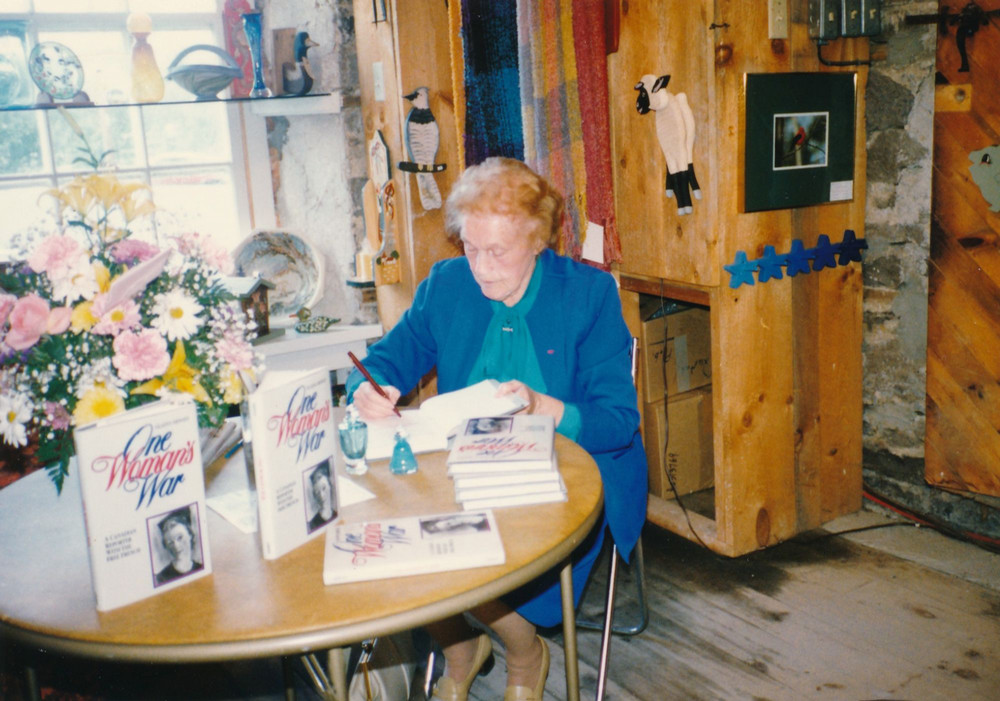
Historian and University of Alberta professor emerita, Pat Prestwich, extensively examined Arnold’s collection for a collaborative research project on Arnold’s involvement in the Free French Information Service in Canada movement.
“It’s a wonderful collection,” says Prestwich. “It’s absolutely wonderful, a historian’s dream. Gladys knew what she was doing.”
The correspondence reveals Arnold’s struggles, her views of France, and a network of women whose political and social activities opens further avenues for research. Prestwich was also struck by how Arnold built her journalism career, learning French, making connections, and recognizing the significance of events unfolding around her.
“She was in the right spot at the right time, and she had great instincts for a story,” says Prestwich.
For Prestwich, Arnold’s accounts reveal how individuals, particularly women, coped with the upheaval of war.
“History is made up of great movements,” she says, “but it’s made up of human beings, and how they act in trying times.”
Arnold’s changing response to the threat of war also drew historian Robert J. Young, Professor Emeritus of History at the University of Winnipeg, to the collection. His research became the basis for his 2011 article, From Pacifist to Warrior: Gladys Arnold and the European Years, 1935–40, published in the Canadian Journal of History.
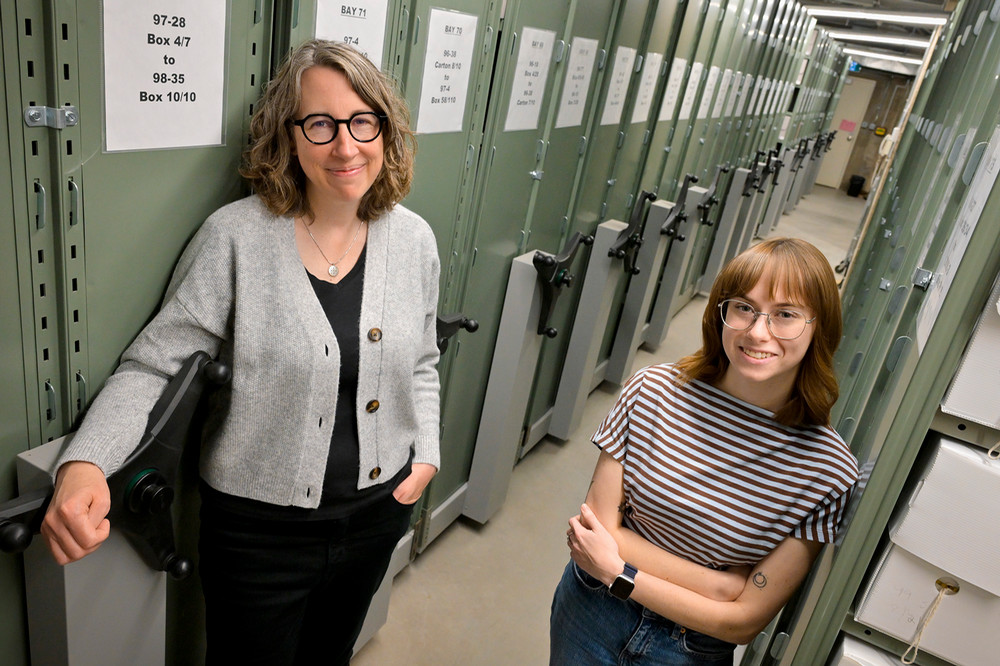
Young, whose research explored French foreign and military policy, found that Arnold’s papers enriched his understanding of the period while drawing him into her own life and career.
As Young points out, three years after arriving in France, Arnold had concluded that some things were worth fighting for. As she wrote: “Before I left Canada I was a complete and outright pacifist, I’m not anymore.”
Young cautions that this was a partial shift.
“Never did she abandon the values beneath pacifism,” he says.
For Young, the collection also illustrates the importance of the institutions that preserve such records.
“Archives have played an enormous role in my research life, and in my personal life,” he says. “I was thoroughly pleased and impressed by the U of R archives. Friendly and helpful staff.”
When considering options to digitize a portion of the Arnold collection, Caitlin Bakker, the Digital Technologies Librarian at the Dr. John Archer Library & Archives, encouraged the archives team to dream big. In order to make some of the scans full-text searchable, they created a project to upload them to Zooniverse, an online platform that connects unique collections like Arnold’s with volunteer transcribers from around the world.
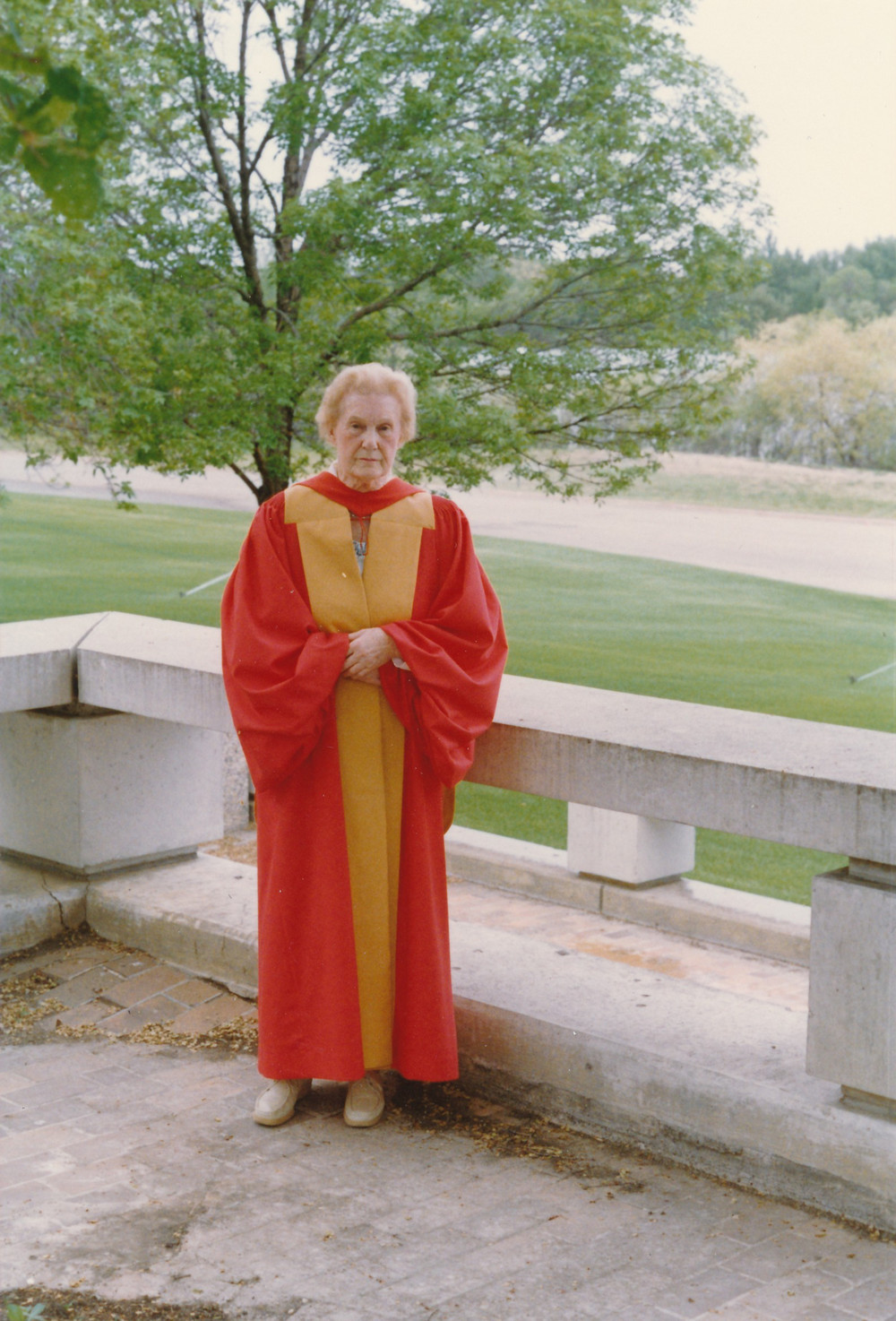
The Zooniverse volunteers were given preliminary transcripts created by a web-based handwriting-recognition tool that they could review and correct against the scans of the original documents. Over the course of the project this spring and summer, it drew the support of 750 volunteers from around the globe, who transcribed more than 1,800 pages. The transcriptions are now being paired with document images in the growing Gladys Arnold digital collection.
This will enable students and other researchers the ability to search for people, places, or subjects within the scanned materials, and examine the words in their original context. Access to these kinds of collections create new possibilities for classroom learning. Students can investigate questions using Arnold’s own accounts, compare evidence, and consider how her perspective shaped what she recorded, whether they are studying on campus or elsewhere.
For Reid, reading about Arnold’s experiences has brought her closer to the people who lived through the early stages of the war and made her grateful to the woman she has become so familiar with that she refers to her as “Glad”.
“I feel a profound sense of gratitude and admiration for Glad,” beams Reid. “Even though she was in a dangerous situation, she took her life in her own hands and took the time to record her experiences. It’s just a privilege every time I get to see her writing and know that she was a person doing this for the greater good of history and education.”
Banner image: Gladys Arnold in France in September 1938. Photo courtesy of Archives and Special Collections.
About the University of Regina
At the University of Regina, we believe the best way to learn is through access to world-class professors, research, and experiential learning. We are committed to the health and well-being of our more than 16,400 students and support a dynamic research community focused on evidence-based solutions to today’s most pressing challenges. Located on Treaties 4 and 6—the territories of the nêhiyawak, Anihšināpēk, Dakota, Lakota, and Nakoda peoples, and the homeland of the Michif/Métis nation —we honour our ongoing relationships with Indigenous communities and remain committed to the path of reconciliation. Our vibrant alumni community is over 97,000 strong and enriching communities in Saskatchewan and around the globe.
Let’s go far, together.
Related Posts
Research,
Teaching & Learning
With the First SMR Test Loop Set for 2027, U of R Builds Nuclear Capacity

Campus Life,
Community,
Teaching & Learning
Two Siblings, Two Chancellor’s Scholarships, One U of R Journey
Sustainability,
Research,
Teaching & Learning