Teaching & Learning,
Alumni,
Research
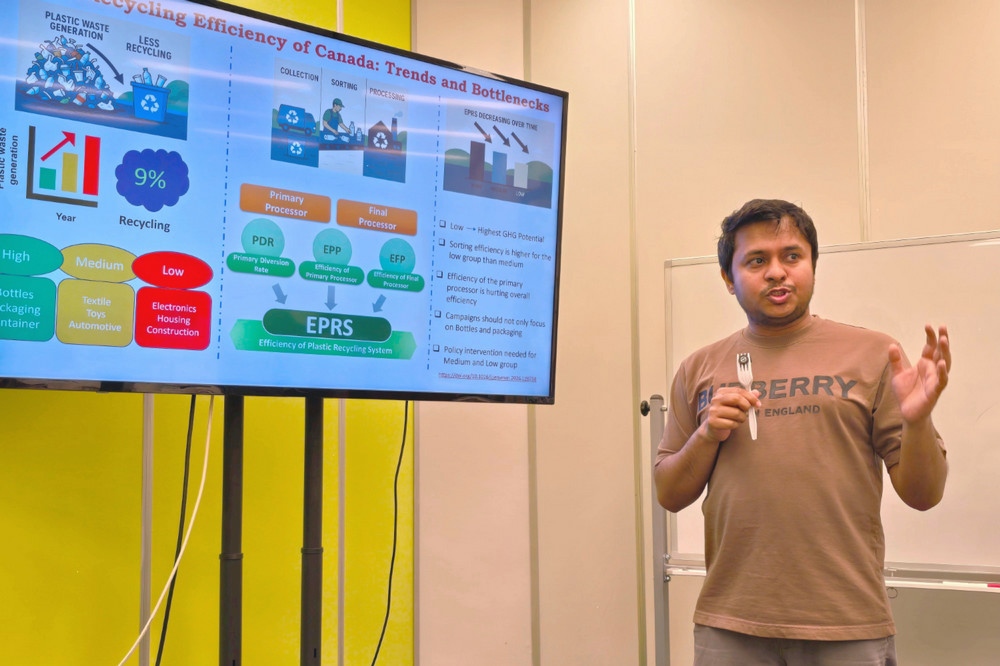
On a hot July day last summer, thirteen researchers gathered in a fourth-floor room in the University of Regina's Education Building, where a two-minute timer kept presentations moving. They were taking turns presenting a waste problem they hoped to address. When Md Shahreer Jamil, a research associate in the Waste Management System Design (WMSD) Lab, stepped to the front of the room, he began with a simple question: What do you do with a plastic bottle after you are finished with it?
"Sometimes when you throw a plastic bottle into a blue bin, you might feel accomplished," Jamil says. “But do you think about what happens after you walk away?”
Jamil wants to know where, along the bottle's journey, the recycling system loses efficiency. He and the WMSD Lab team are building analytical tools that read the existing numbers stage by stage so he can find out the processes that need improvement.
The government already has the data, but what I'm giving them is a framework to understand at which stage they need to work more — Md Shahreer Jamil, research associate, Waste Management System Design Lab, University of Regina
Uncovering the weak spot using existing waste data
Led by Dr. Kelvin Tsun Wai Ng, Canada Research Chair (Tier 1) in environmental sustainability in the Faculty of Engineering and Applied Science, the WMSD Lab focuses on waste management systems rather than types of waste. The researchers are looking to identify where inefficiencies are occurring in the system.
"If we're able to identify a system inefficiency, then we can take a deeper look, and find potential improvements to the current system," Ng says.
In his study, Jamil applies that approach to plastic recycling. Statistics Canada, the country's national statistics agency, already publishes data on the flow of plastic material and an overall recycling rate.
Jamil reviews the public data and analyzes it stage by stage: collection, sorting, and processing. He determined that the primary processor stage, where plastic is sorted and baled, performs the worst.
"The government already has the data, but what I'm giving them is a framework to understand at which stage they need to work more," Jamil says. "The whole goal is no more guessing. Just focus on the data and what the data is telling you."
Accurately measuring farm plastics and old tires
The headline waste recycling rate served up by Statistics Canada shows how much waste is recovered by a province. It does not show where the rest of the waste is getting lost in the system.
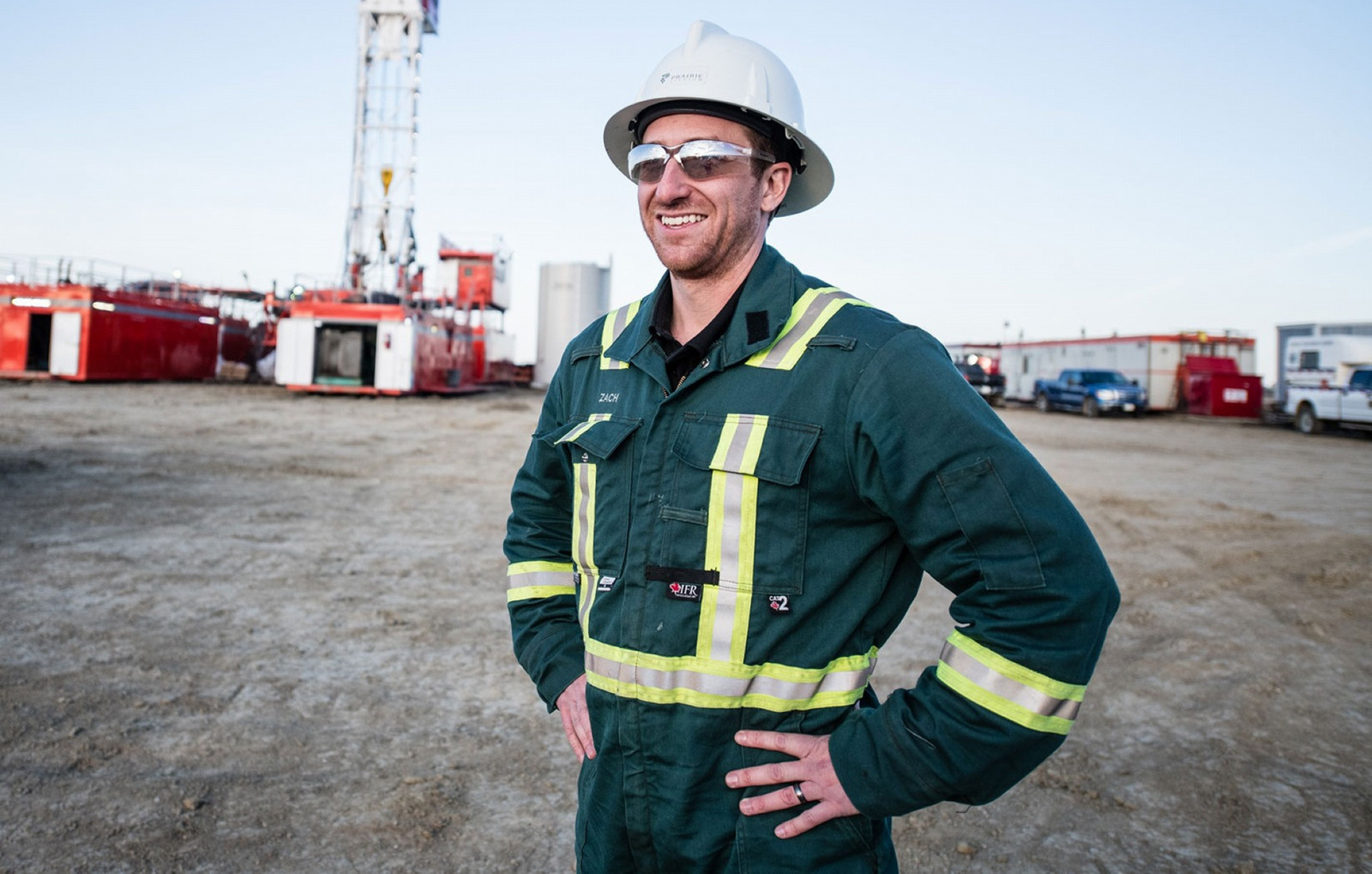
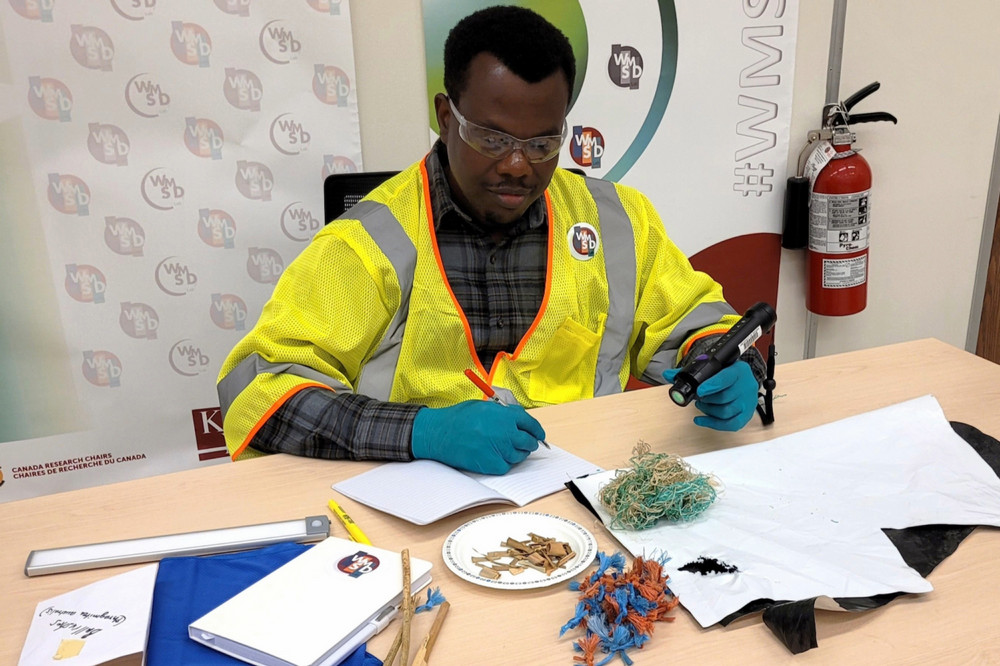
Chidiebere Udeorji, a PhD student in the WMSD Lab, focuses on agricultural plastics. He reviews data captured in reports from stewardship organizations to help uncover inefficiencies.
“They report that they are recovering waste. But is that enough?” Udeorji offers.
A provincial total cannot answer that question because provinces farm on different scales. A province that farms more has more plastic to recover in the first place.
“Some provinces have more agricultural activity, some have more land,” Udeorji explains.
Udeorji's research, which is supported by Ng's Natural Sciences and Engineering Research Council of Canada (NSERC) Discovery grant, divides the farm plastic a province recovers by its number of farm operators, so provinces with more farming activity can be compared fairly. Of the six provinces he compared, Saskatchewan recovered the most agricultural plastic for each farm operator.
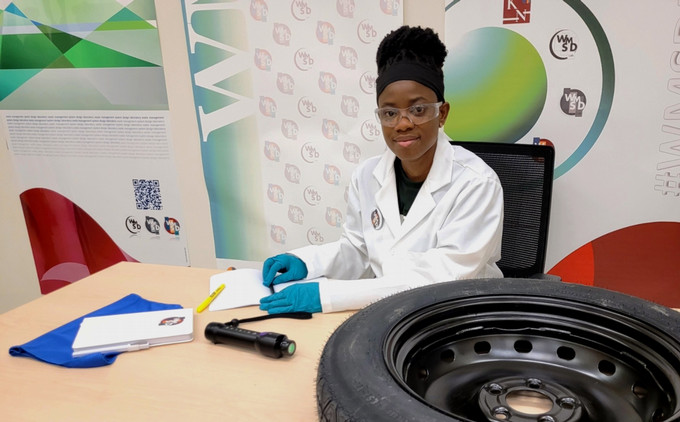
The same blind spot follows tire waste. Most car owners replace them without pondering what happens to their old ones once removed. Olayemi Omole, a PhD student in environmental systems engineering, thinks their journey is worth tracking.
"The problem is simple but serious," Omole suggests.
Just as Udeorji anchors farm plastic to the number of farm operators, Omole anchors tire waste to the number of registered vehicles. For her research, Omole evaluated tire waste across 67 counties in Florida using three measures that compare how many tires a county collects, how many it recycles, and how many vehicles its residents drive. Her motivation comes from home.
"Back in Africa, where I come from, we don't even collect tires. Some of them are burned, which releases toxic chemicals into the environment," she says. “And some are recycled in developed countries to make raw material, such as asphalt for road building.
"Using her research, Omole aims to design a decision-support tool that helps governments and industry choose a recycling pathway.
Saskatchewan tire waste: the next map
Omole is extending her research focus to her current home province.
"Saskatchewan faces a very specific challenge with the massive landmass, and hauling heavy agricultural or passenger tires from remote rural areas down to a single tire processing point, which creates high transportation costs and local backlogs," she explains.
Her next step is to use spatial tools to map where Saskatchewan's scrap tires travel and how long-distance hauling affects rural communities. The map is meant to show where the tire recycling system struggles, an idea that echoes Jamil's principle of no more guessing.
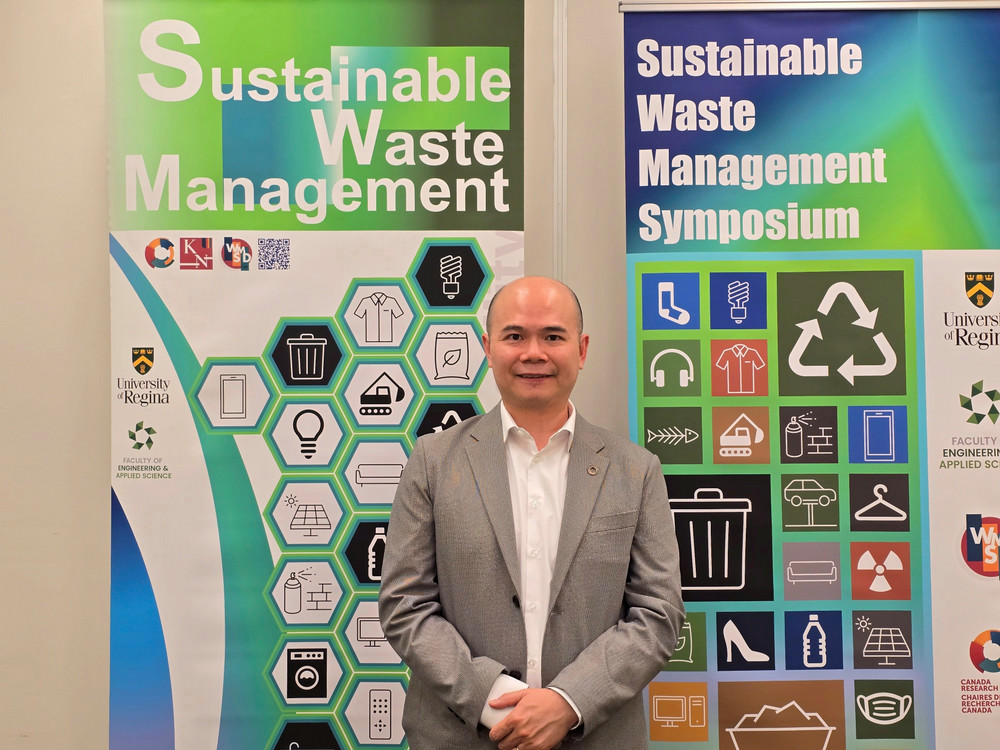
Ng sits on a provincial solid waste management advisory committee with the Ministry of Environment. When asked which laboratory projects are closest to changing how the province handles waste, Ng sees value in all of them.
"Currently, any type of waste management project will be beneficial for Saskatchewan, or at least in Canada," Ng says.
The lab's work supports the University of Regina's 2026–2035 strategic plan, Together, We Serve, by mobilizing research to help governments make decisions and paving the way for improvements to the province’s tire and plastic recycling.
Omole has her sights on completing the tire recycling pathway map for Saskatchewan then taking her tools beyond Canada, and perhaps even back to where she grew up.
"If my research recommendations are accepted and adopted by developing countries, not even developed countries, it would make me happy, because I know tire waste is now being considered and being recycled, and the environment is safer," she says.
What began as a question about the recycling journey of a single plastic bottle has evolved into a much larger hope.
Turn curiosity into impact. Explore research and degree programs in the Faculty of Engineering and Applied Science at the University of Regina.
Banner image: Following the tread. Olayemi Omole compares tire recycling across 67 Florida counties and plans to map where Saskatchewan's scrap tires travel. Photo Credit: Dr. Kelvin Tsun Wai Ng
About the University of Regina
At the University of Regina, we believe the best way to learn is through access to world-class professors, research, and experiential learning. We are committed to the health and well-being of our more than 16,600 students and support a dynamic research community focused on evidence-based solutions to today’s most pressing challenges. Located on Treaties 4 and 6—the territories of the nêhiyawak, Anihšināpēk, Dakota, Lakota, and Nakoda peoples, and the homeland of the Michif/Métis nation —we honour our ongoing relationships with Indigenous communities and remain committed to the path of reconciliation. Our vibrant alumni community is over 97,000 strong and enriching communities in Saskatchewan and around the globe.
Let’s go far, together.
Related Posts
Research
Measuring the Unmeasurable
Community,
Research,
Campus Life,
Teaching & Learning
Global spotlight helps advance U of R’s strategic research enterprise
Community,
Sustainability,
Research