Truth & Reconciliation,
Community,
Teaching & Learning
Back at the University of Regina last month, Zach Maurer, BSc'16 (Geology), reflected on a pivotal moment early in his career. A decade ago, with the oil and gas industry in a downturn and few career prospects, the newly graduated geologist opened a search engine and posted a simple question. "What resources are we going to need in the future, and why?"
Maurer grew up on a farm near Weyburn, where oil and gas was a way of life. With family working in the industry, he expected to follow the same path. After finishing high school, he applied for a process operations certificate and headed to Calgary. At the last minute, the school offered him a spot in a different program, a diploma in Information Exploration Technology, and he found himself drawn to geology.
The thing about understanding science is that it's not like a light switch, it's more like a dimmer switch. — Zach Maurer, Founder, Prairie Lithium, BSc'16, University of Regina
For Maurer, exploration meant testing ideas about underground resources against real-world evidence. He went looking for that evidence beyond the classroom, working on service rigs, oil field construction sites, and wireline crews.
Curiosity and innovation go hand-in-hand
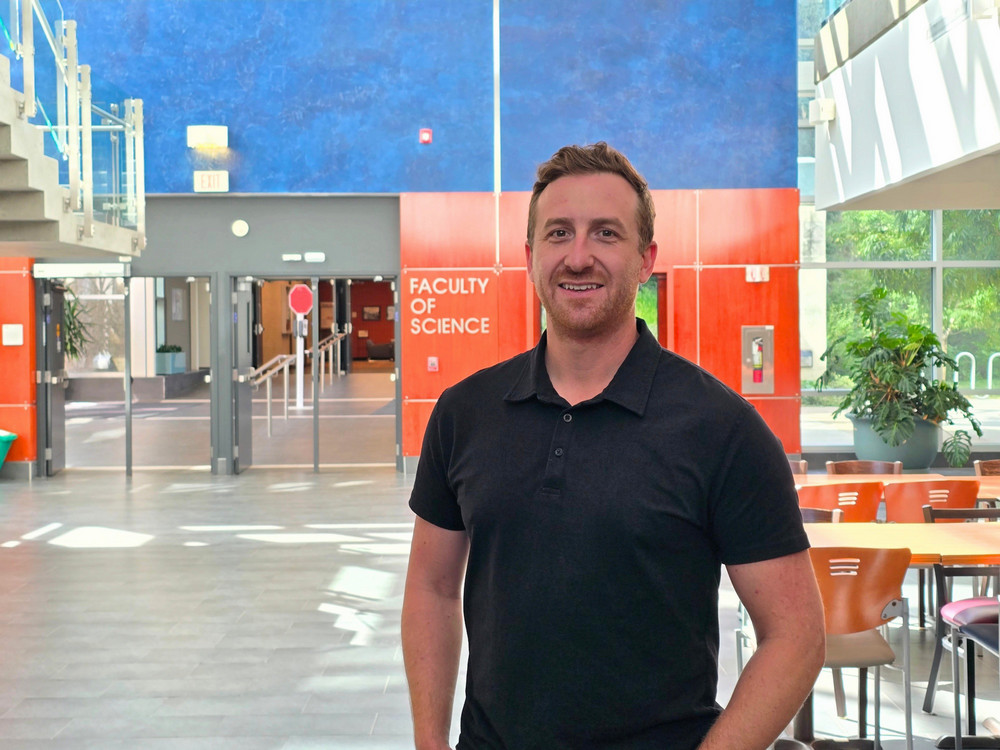
Geology alum Zach Maurer BSc'16 at the U of R's Research and Innovation Centre. His graduate research in the Faculty of Science laid the groundwork for Prairie Lithium, highlighting the University's commitment to discovery and innovation. Photo Credit: University Communications & Marketing
“I would bug any oilfield geologist that would let me come wash samples at the end of the day and just try and pick their brains a little bit more,” Maurer says.
After finishing his diploma in 2012, Maurer chose to pursue a degree in geology at U of R, in what is now the Department of Earth Sciences in the Faculty of Science. He graduated with his Bachelor of Science (BSc) in Geology in 2016.
Why not here?
Maurer's internet search 10 years ago turned up lithium, a critical mineral then largely sourced from South America and used in batteries for electric vehicles and other electronics.
Much of that lithium came from brine, underground water carrying naturally occurring salts.
That raised a question closer to home.
"Well, there's a pile of brine in Saskatchewan," Maurer says. "Has anybody ever sampled the brine in Saskatchewan for lithium?"
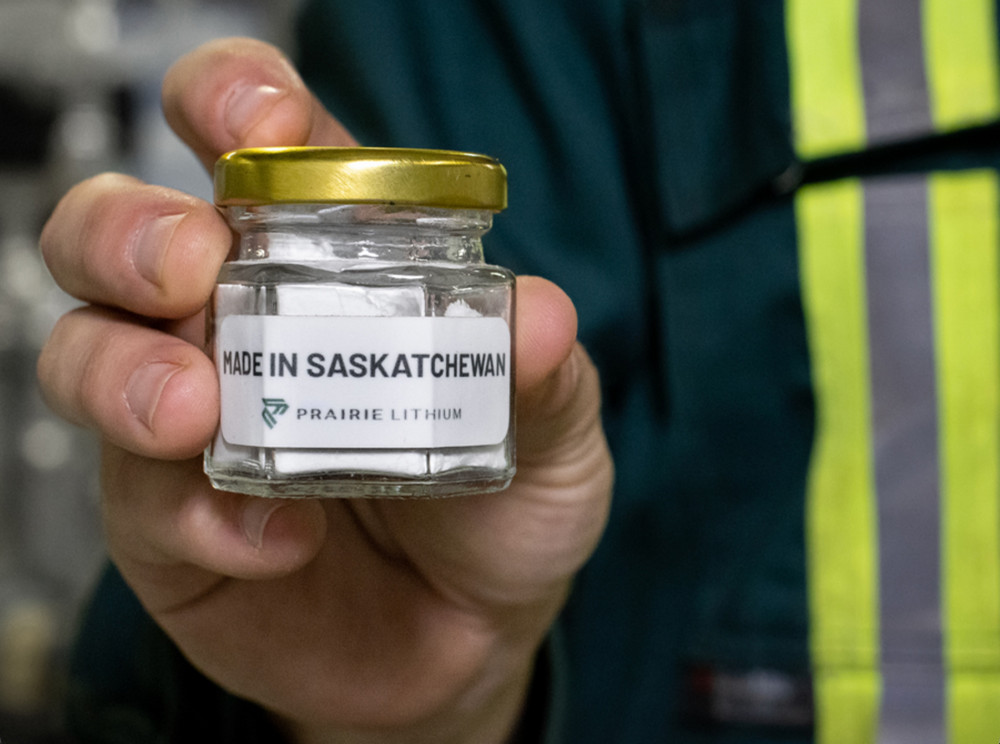
A sample of extracted lithium proudly labelled "Made in Saskatchewan" by Prairie Lithium. U of R Geology alum Zach Maurer leveraged his graduate research to crack the code on lithium extraction, driving innovation and resource development in the province. Photo courtesy of Zach Maurer.
Maurer reached out to a provincial geologist at the Saskatchewan Geological Survey who directed him to Dr. Ben Rostron, a researcher who had been collecting Saskatchewan brine samples since 1996. It almost seemed like destiny. Rostron, an adjunct professor in the department of Earth Sciences at the U of R and professor emeritus at the University of Alberta, became Maurer’s thesis co-supervisor.
Rostron steered him toward measurements not yet done in Saskatchewan. In September 2018, he took Maurer into the field and showed him how to properly sample a producing oil well. He also opened his lab's two decades of unpublished Williston Basin brine data to Maurer.
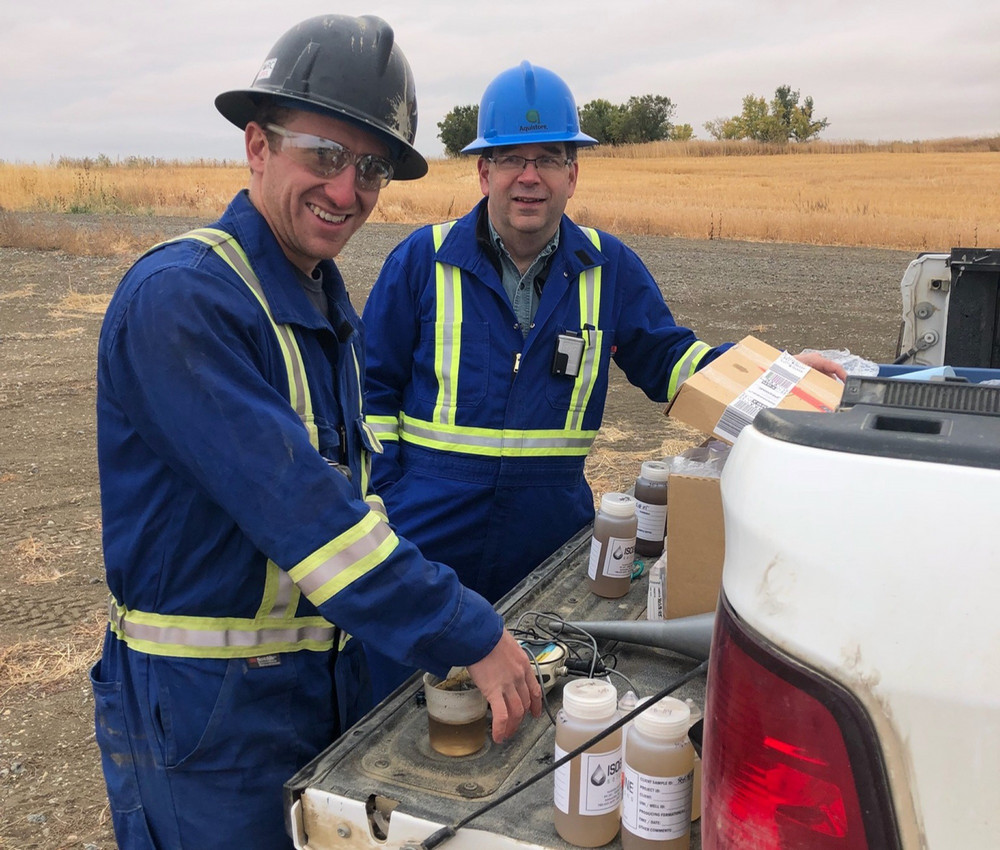
Zach Maurer, BSc'16, and his U of R thesis co-supervisor Dr. Ben Rostron during their first day of field sampling in 2018. This hands-on mentorship laid the foundation for Maurer's discovery of lithium concentrations in Saskatchewan brines, ultimately driving resource innovation and the creation of Prairie Lithium. Photo courtesy of Zach Maurer
Maurer poured himself into the research and took on a grueling schedule. While pursuing his graduate degree, he also worked full-time as an environmental consultant.
“I would be up at 5:00 a.m., drive out to the work site … spend all day working, get home at 6:00 or 7:00 p.m., and would spend a couple of hours working on my thesis … and that was life for about two years,” he says.
Patience and persistence lead to lithium breakthrough
"The thing about understanding science is that it's not like a light switch; it's more like a dimmer switch," Maurer says. "So, it's dark, and then it slowly gets more light over time."
He plotted lithium concentration against a chemical ratio using Rostron's lab data, showing why lithium concentrates in specific formations.
"When I finally came up with the cross-plot that ended up showing exactly why lithium is concentrated in certain formations in certain areas and not in others, it just jumped off the page," Maurer says.
Rostron had suspected the correlation for years but had never plotted it.
"I kind of suspected that correlation, but to be honest I had never made that cross-plot, so that was Zach's discovery," Rostron says.
Rostron explains that this knowledge gave them a massive competitive advantage.
Following the breakthrough, Maurer chose the commercial path and incorporated a company that would become Prairie Lithium.
Mentorship and support pave the way
Today, Prairie Lithium has amassed over 345,000 acres of mineral titles in southeast Saskatchewan and leads Canada as the only lithium brine project permitted for commercial production, with a signed deal to sell its lithium to South Korea.
As a student at the U of R, Maurer knew he needed a deeper grasp of hydrochemistry, and he credits the faculty with closing that gap.
"Having the professors in the department to go to, to utilize those tools and that network in a way that I could continue to learn and build on the skills that I specifically wanted to hone in on, is really what set the foundation for then cracking the code on the hydrogeology and hydrochemistry of lithium, and then building the company," Maurer said.
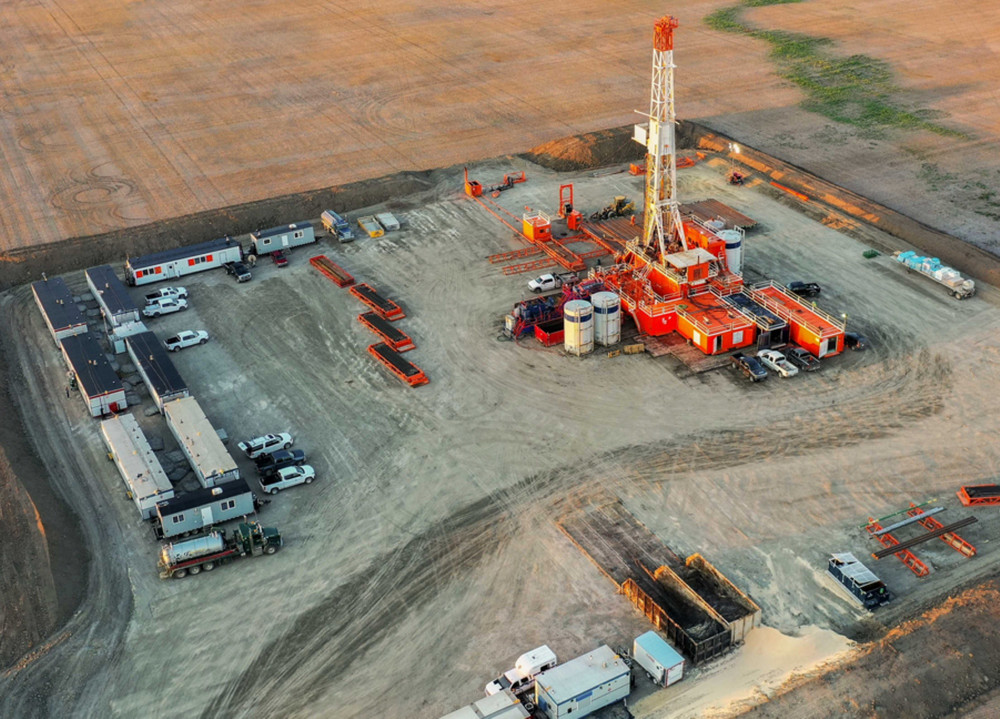
Prairie Lithium's commercial extraction infrastructure in southeast Saskatchewan. U of R Geology alum Zach Maurer used his graduate research to build the company, driving discovery and innovation in the province's resource sector. Photo courtesy of Zach Maurer.
Rostron notes that outcomes like this are rare, and rarer still when the company scales up and survives.
By investigating Saskatchewan's brines and applying the findings to resource development, Maurer's work supports discovery and innovation, two strategic priorities from the University of Regina's 2026–2035 strategic plan, Together, We Serve.
“The bigger goal is massive. I want to see a big lithium brine industry in southeast Saskatchewan,” Maurer says.
Explore geology and environmental geoscience in the Department of Earth Sciences at the University of Regina.
The mentorship that set him on this path remains intact. Asked if he still speaks with the professor who co-supervised his thesis, Maurer needs only six words.
"We're still in touch quite often," he says.
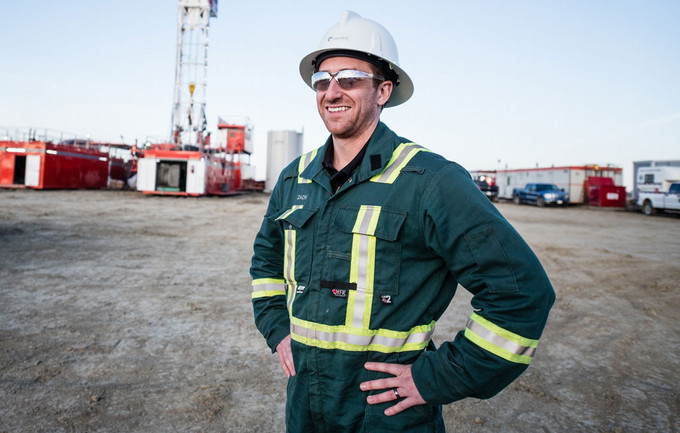
Banner image: Zach Maurer, BSc'16, at the Prairie Lithium site in southeast Saskatchewan. His graduate research at the University of Regina became the foundation for Prairie Lithium. Photo Credit: University Communications & Marketing
About the University of Regina
At the University of Regina, we believe the best way to learn is through access to world-class professors, research, and experiential learning. We are committed to the health and well-being of our more than 16,600 students and support a dynamic research community focused on evidence-based solutions to today’s most pressing challenges. Located on Treaties 4 and 6—the territories of the nêhiyawak, Anihšināpēk, Dakota, Lakota, and Nakoda peoples, and the homeland of the Michif/Métis nation —we honour our ongoing relationships with Indigenous communities and remain committed to the path of reconciliation. Our vibrant alumni community is over 97,000 strong and enriching communities in Saskatchewan and around the globe.
Let’s go far, together.
Related Posts

Community,
Teaching & Learning,
Campus Life
Make Music at the U of R
Campus Life,
Teaching & Learning,
Community
A New Chapter Begins for the U of R in Saskatoon
Community,
Research,
Campus Life,
Teaching & Learning