Campus Life,
Truth & Reconciliation,
Community
The room was quiet inside Oxford’s Ashmolean Museum.
In front of Sherry Farrell Racette lay a leather garment born in North America. It is believed to have be made more than 400 years earlier, long before Canada’s founding and European settlement. Removed temporarily from its display case, it offered Farrell Racette a rare opportunity to sit with it and, most importantly, look very closely at it.
She wasn’t looking at the quillwork or the artistry that captures most visitors’ attention.
She was looking at a seam.
As her eyes traced the tiny, perfectly even stitches joining two pieces of leather, something unexpected occurred to her.
“It was sewn exactly the way I had been taught,” she says. “I just got this incredible sense of continuity, from that woman’s needle to mine.”
For Farrell Racette, that moment wasn’t simply moving. It confirmed the work that has defined her career.
What we’re seeing now is extraordinary. We can make these things again. — Sherry Farrell Racette, Professor, Visual Arts, University of Regina
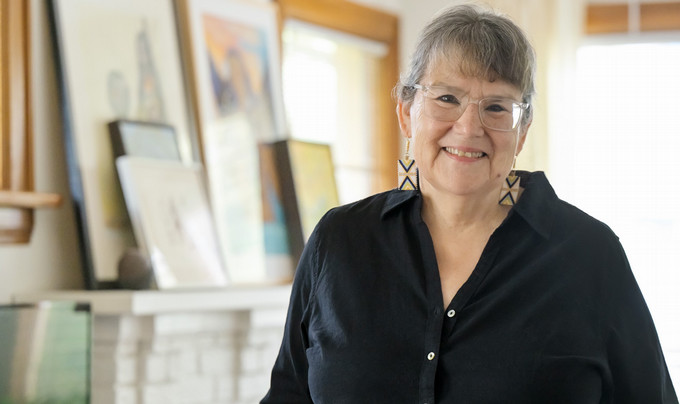
Farrell Racette is a member of the Timiskaming First Nation in Quebec, a professor in the University of Regina’s Faculty of Media, Art and Performance, an artist, and a cultural historian. She is one of Canada’s leading scholars of Indigenous historical art, a reputation recently recognized by her appointment as the inaugural Audain Fellow in Indigenous Historical Art at the National Gallery of Canada.
The three-year fellowship will support her research into historical Indigenous collections and culminate in a symposium and publication. But while the appointment is a significant national honour, Farrell Racette is quick to explain that her work has never been about museum objects alone.
It’s about the knowledge they still hold.
“When our ancestors gifted their belongings,” she says, “they weren’t thinking for one minute that this would be the last garment made in a particular style.”
They couldn’t have known how disease, displacement, and colonial policies would interrupt the passing of knowledge from one generation to the next.
For many scholars, museum collections preserve history.
For Farrell Racette, they preserve instruction.
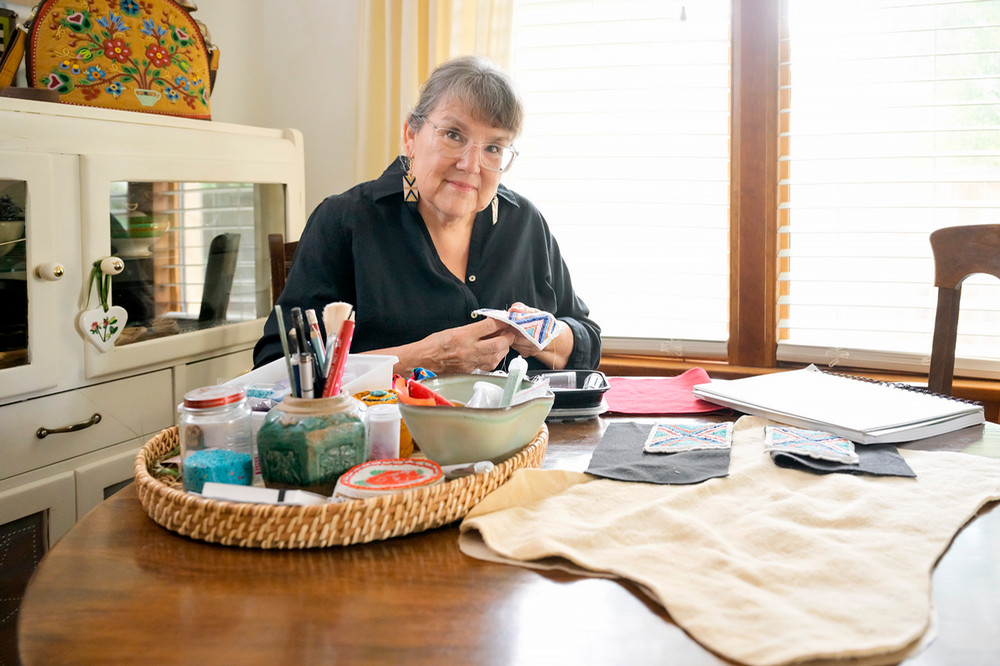
As both an artist and an art historian, she approaches every object with a maker’s eye.
Where was the first stitch? How was the hide prepared? What kind of sinew was used? How were the porcupine quills dyed?
Each question reveals another lesson hidden within the object itself.
In her world, historic garments, moccasins, and beadwork are instructors.
“They’re old teachers,” she explains. “The object is telling us what to do.”
That philosophy sits at the heart of the research project she will lead through her National Gallery residency.
While much public conversation has centred on the repatriation of Indigenous cultural belongings, Farrell Racette believes another kind of return is equally important.
Knowledge rematriation. Rather than focusing solely on bringing objects back, she wants to help communities recover the skills, techniques, and artistic practices embedded within them.
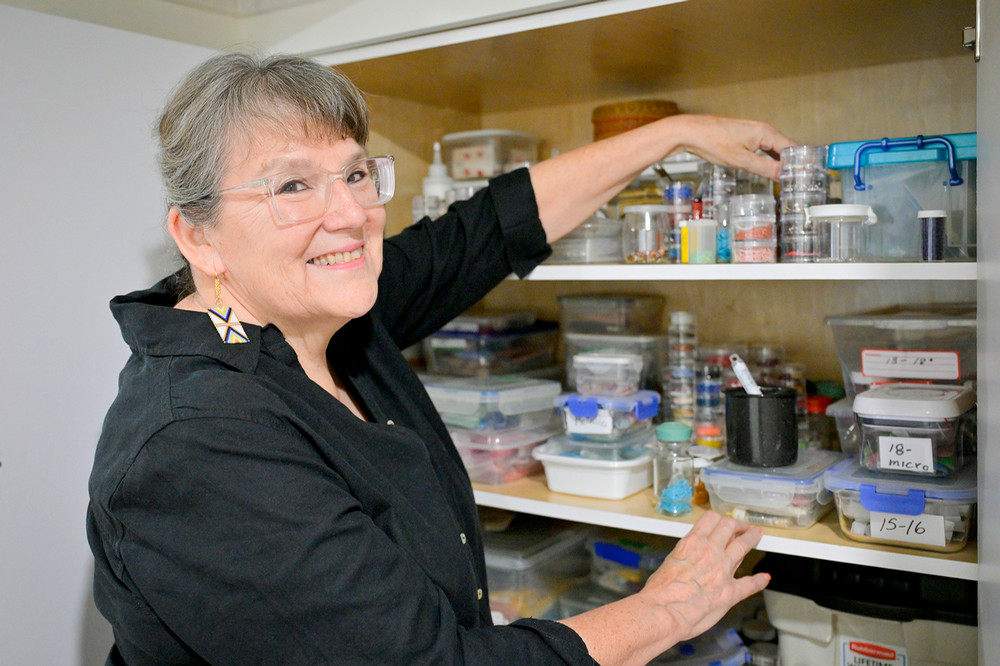
If artists can once again prepare the dyes, stitch the seams, and bead the patterns, then something much larger has been reclaimed.
“The knowledge comes home,” she emphasizes.
She believes that future lies much closer than many people realize.
Across the Prairies and beyond, she sees young Indigenous artists rediscovering traditional practices. Hide tanning camps, beadwork circles, and community workshops are growing. Artists are recreating the garments that museums are unable to lend because they are too fragile to travel.
“What we’re seeing now is extraordinary,” she says. “We can make these things again.”
That optimism is one reason the University of Regina’s new Art History and Curatorial Studies program excites her so much.
The program, which welcomed its first students last fall, reflects a growing need for graduates who understand not only exhibitions, but collections, conservation, community engagement, and the many responsibilities that come with caring for cultural belongings.
Farrell Racette believes students learn best by doing.
Her classes don’t simply study exhibitions, they create them.
Students patch walls, paint galleries, build displays, care for collections, and curate exhibitions from beginning to end. They learn that curation is far more than hanging artwork on walls.
“It’s about caring,” she says, noting that the word curator comes from the Latin meaning “to care.”
Caring for artwork, stories, communities, and audiences.
The National Gallery residency promises to enrich that learning even further.
As she works with one of Canada’s most significant art collections, she plans to bring those experiences directly back into the classroom. Students may find themselves joining classes streamed from museum collections or learning techniques inspired by historic objects that have rarely been studied so closely.
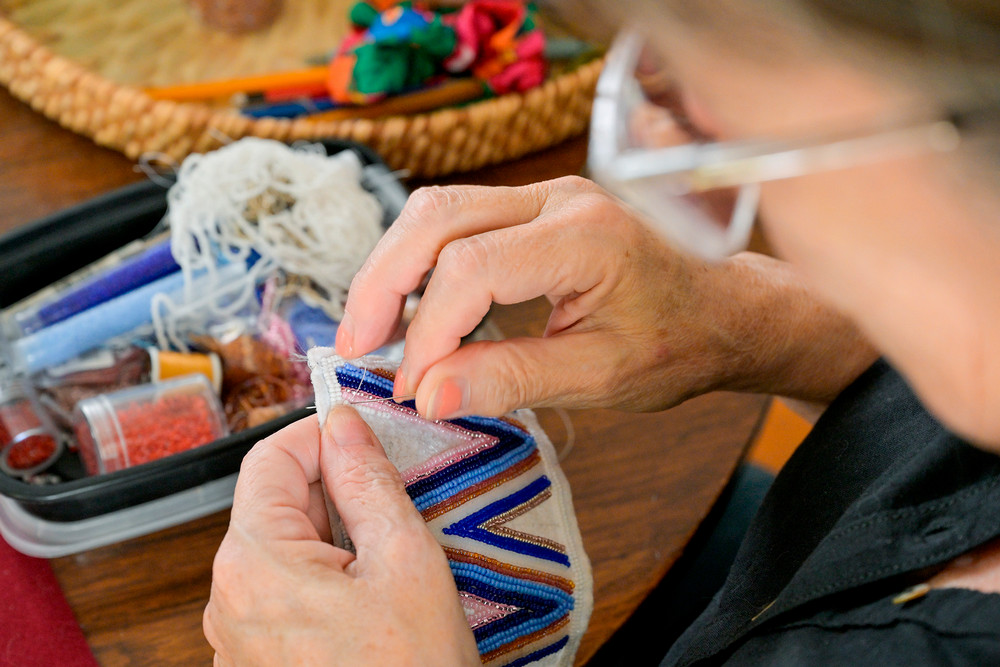
For her students, their professor’s appointment isn’t simply prestigious, it’s an invitation into work that is reshaping museums across Canada.
That journey began decades ago around kitchen tables.
Farrell Racette credits the late Kathleen Delaronde (The Pas) with teaching her traditional sewing and beadwork when she was still a teenager, later learning from the late elder Margaret McCauley (Cumberland House). Those lessons became the foundation for a lifetime of artistic practice, scholarly research, and illustration.
Today she is still creating.
In her studio, she is painstakingly creating a traditional Métis pad saddle covered in intricate beadwork inspired by historic examples she has encountered in museum collections around the world.
Standing before that ancient garment in Oxford, Farrell Racette understood that history isn’t silent.
It speaks through every stitch, seam, and technique passed from one generation to the next.
Her life’s work is to make sure those voices are heard again, not only in museums, but in classrooms, studios, and communities where the knowledge can once again be practiced.
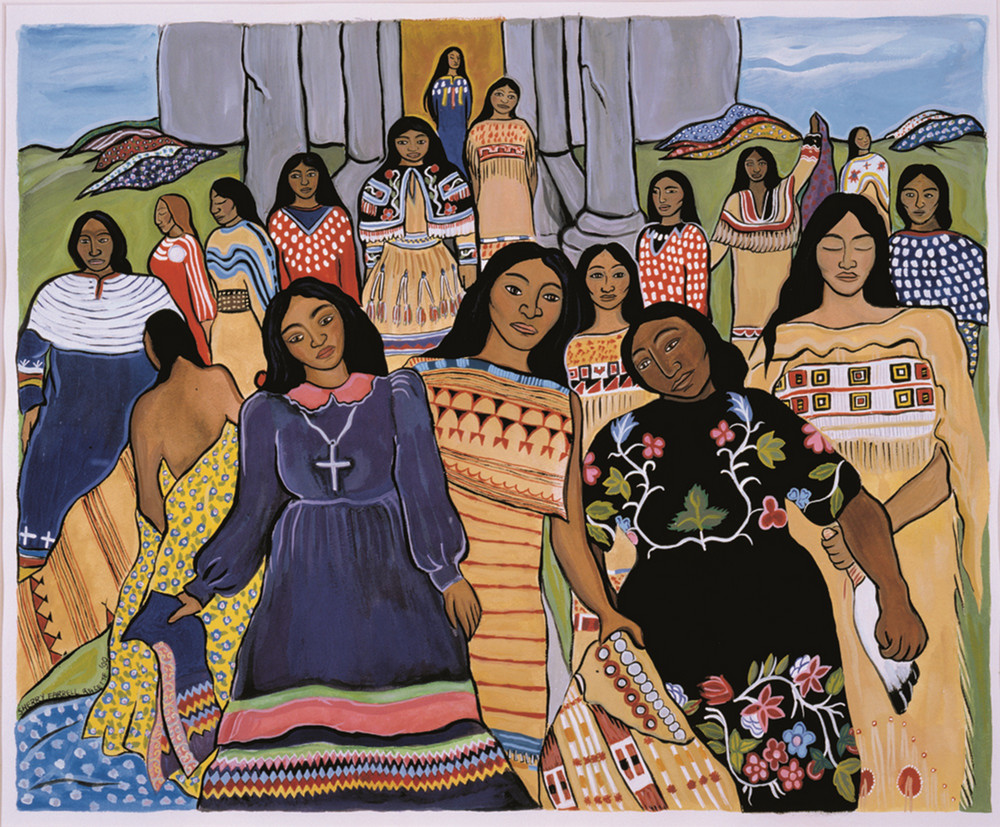
ARTIST SATEMENT (about the painting above): The first time I travelled to Europe to visit museum collections, I was overwhelmed by the sheer volume of cultural material from across the globe. I was looking for “our stuff” and I found it. When I got back, the first thing people would ask was, "Did you bring them back?" It was difficult to explain to older people in particular, why I couldn't do that. I couldn't explain it to myself. One day when I was feeling very frustrated, I thought, "The only way we're ever going to get that stuff back is if those women, the artists, just go there and get it." So these are my superheroes, and my imaginary vindication. Our female ancestors fly across the ocean, invade the museums and take back our possessions. The women have blasted the doors of the museum open, thrown their cotton print dresses away, and reclaimed their traditional dresses. Every dress in the painting is a real dress in a museum collection. I felt much better after I finished. By painting this I took something back. I brought them home.
Banner image: University of Regina professor, artist, and cultural historian Sherry Farrell Racette has spent decades studying Indigenous art and recovering the knowledge held within museum collections. Photo credit: University Communications and Marketing
About the University of Regina
At the University of Regina, we believe the best way to learn is through access to world-class professors, research, and experiential learning. We are committed to the health and well-being of our more than 16,600 students and support a dynamic research community focused on evidence-based solutions to today’s most pressing challenges. Located on Treaties 4 and 6—the territories of the nêhiyawak, Anihšināpēk, Dakota, Lakota, and Nakoda peoples, and the homeland of the Michif/Métis nation —we honour our ongoing relationships with Indigenous communities and remain committed to the path of reconciliation. Our vibrant alumni community is over 97,000 strong and enriching communities in Saskatchewan and around the globe.
Let’s go far, together.
Related Posts
Truth & Reconciliation,
Research
More Than a Research Trip

Truth & Reconciliation,
Research,
Teaching & Learning
AI, Indigenous Communities, and the Question: What Does the Future Hold for Humans?
Teaching & Learning,
Community,
Truth & Reconciliation,
Research,
Campus Life