Truth & Reconciliation,
Research
Truth and reconciliation are not destinations. They are responsibilities.
That idea lies at the heart of Together, We Put Things Right, one of the five priorities in the University of Regina's new strategic plan, Together, We Serve.
The priority recognizes that reconciliation is an ongoing commitment that shapes learning, research, governance, and campus life.
For Lori Campbell, Associate Vice-President (Indigenous Engagement), the language speaks to an important truth.
“When we say we're going to put things right, that shows we recognize that we haven't always done things right, even if it was unintentional,” Campbell says. “We want to right unintended harms.”
The title acknowledges that institutions must recognize the past while taking responsibility for the future.
Our work involves creating opportunities where relationships can flourish, and that's how we're going to move the bar over the next 10 years. — Lori Campbell, Associate Vice-President (Indigenous Engagement)
That sense of accountability is woven throughout the strategic priority, which calls for Indigenous knowledge, leadership, language, and ways of knowing to become more visible across the University.
Campbell says that commitment is already taking shape in many ways. She points to the University's support for the annual Neekaneewak Round Dance, the inclusion of Treaty and Métis flags at convocation ceremonies, work around Indigenous procurement, and efforts to increase Indigenous faculty representation and the exploration of an Indigenous-led research institute.
The strategic plan priority also builds on years of engagement and consultation. Because the University had already undertaken extensive consultation through its Indigenous Engagement Strategic Plan, Campbell says the development of Together, We Serve focused on ensuring those priorities remained visible and supported rather than repeating work that had already been done.
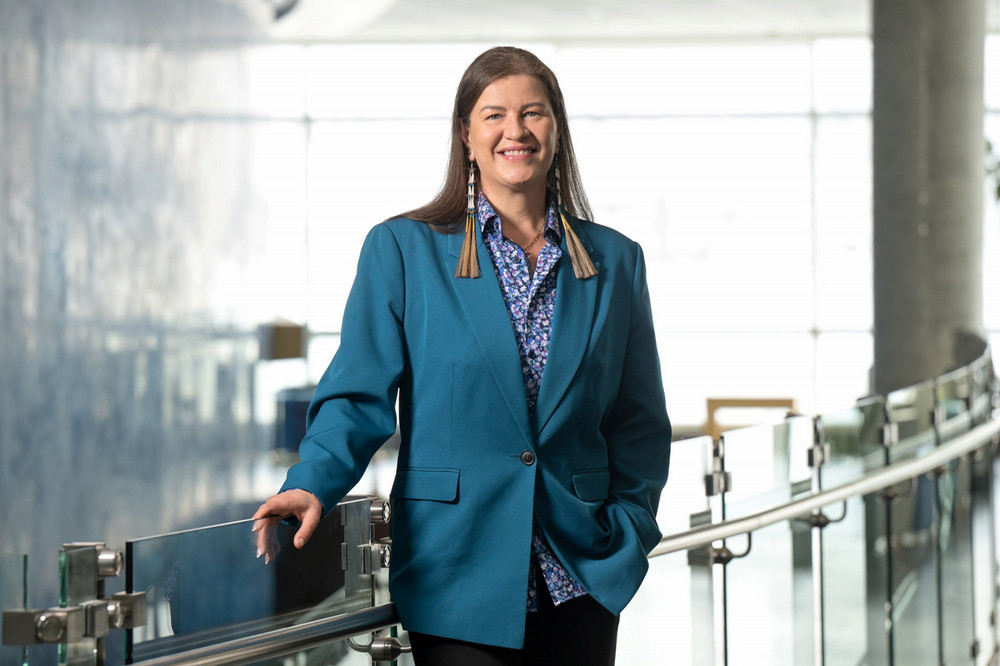
Lori Campbell, Associate Vice-President (Indigenous Engagement). Credit: University Communications and Marketing
Looking ahead, she envisions a future where Indigenous students, faculty, and staff are represented more fully across the institution, particularly in areas such as science and health.
“If we do our work well and create an environment where Indigenous students, staff, and faculty are present, thriving, and able to bring their full selves, experiences, and knowledges into the university, then non-Indigenous students, staff, and faculty will have opportunities to learn alongside them,” Campbell says. “Beautiful things can come from that.”
Empowering Indigenous Students
For students, many of those relationships are being built every day by the ta-tawâw Student Centre.
“The worldview of the centre is anchored in First Nations, Métis, and Inuit teachings,” says John Bird, manager of the ta-tawâw Student Centre. “We impact the campus by empowering Indigenous students to contribute to the culture of the U of R.”
The centre works to create a vibrant Indigenous community where students feel welcomed, supported, and connected. Programming is shaped by student feedback and designed to foster belonging and success.
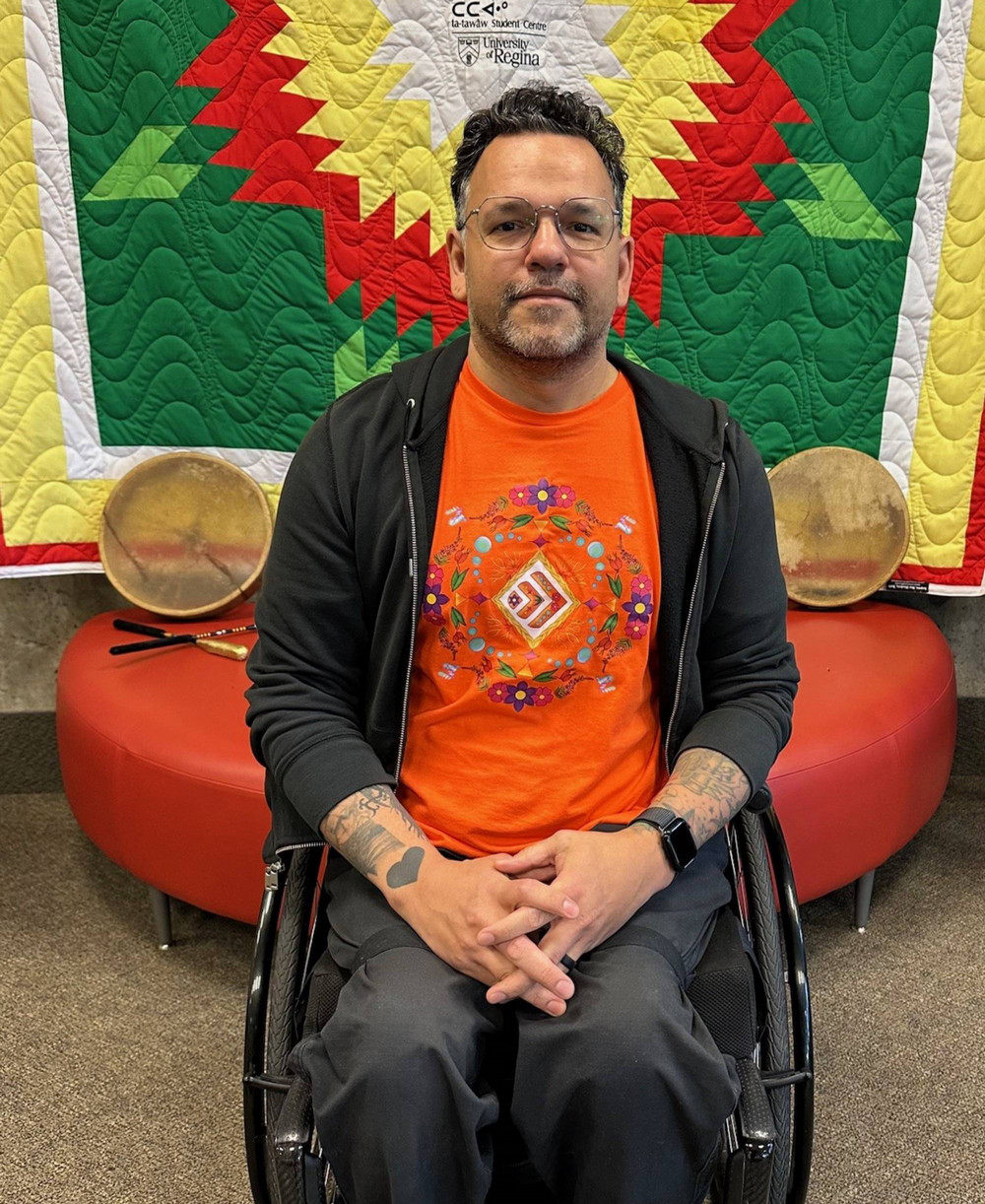
John Bird, manager of the ta-tawâw Student Centre. Credit: Photo courtesy of John Bird
Beyond supporting Indigenous learners, the centre also creates opportunities for Indigenous and non-Indigenous students to learn together. Cultural and ceremonial teachings, including medicine teachings, sweat lodge teachings, and cultural protocols, help fill gaps that students may not encounter elsewhere.
These experiences, Bird says, help students form connections to one another, to the University, and to Indigenous communities.
For many students, those relationships become deeply personal.
Paige Manns, a fourth-year student in the Saskatchewan Urban Native Teacher Education Program (SUNTEP), says the ta-tawâw Student Centre became her home away from home.
“Especially in my first two years when I was living on campus, the centre was where I came for community,” Manns says. “Here I found life-long friends, adults I could trust, and connections to my culture.”
Through the centre, she learned to bead, smudge, and round dance. She also became involved with the Two Spirit & Indigiqueer group and the Neekaneewak Student Leadership Council.
“This space and the people in it are absolutely the highlight of the University to me,” she says.
Neekaneewak Round Dance
One of the centre's signature events is the annual Neekaneewak Round Dance. Drawing between 1,000 and 1,500 participants, the event has become one of the University's most visible expressions of community and belonging.
Students from diverse backgrounds spend months preparing for the event, working alongside Knowledge Keepers and learning the protocols that guide the celebration.
“It is among the most culturally enriching experiences that our centre and the U of R can offer,” Bird says.
Manns has helped organize the annual round dance since her first year. Working alongside fellow students to create something that brings together the broader community has left a lasting impression.
“Working together as a student body to build something for our larger community has meant so much to me,” Manns says. “It helped me feel connected when I first felt so out of place and alone in the city.”
Seeing other Indigenous students and community members succeed, she says, has reinforced a powerful lesson.
“It has given me a whole group of people to look to and know that none of us are doing it alone.”
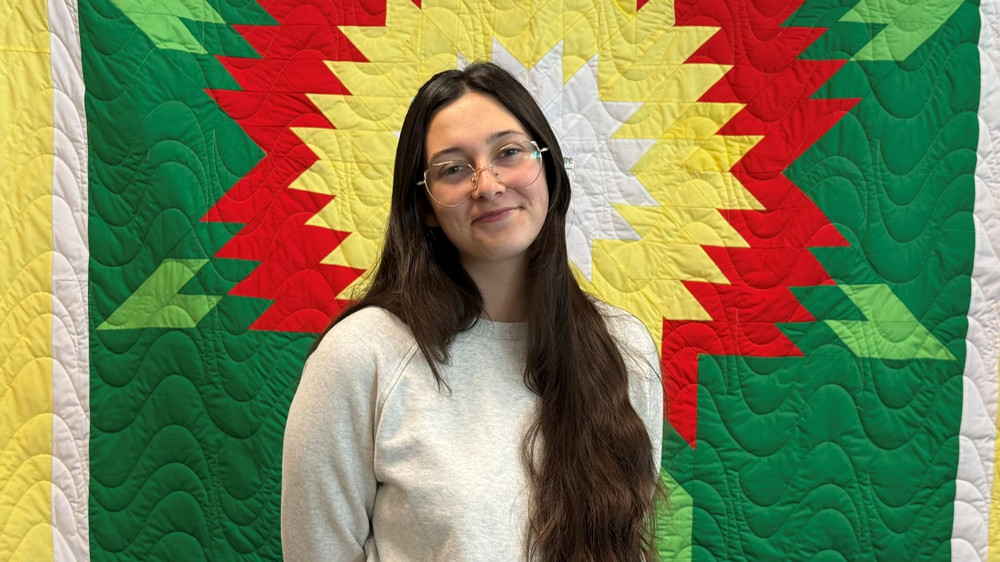
Paige Manns, a fourth-year student in the Saskatchewan Urban Native Teacher Education Program (SUNTEP) and student assistant at the ta-tawâw Student Centre. Credit: University Communications and Marketing
The impact of the centre extends beyond Indigenous students.
“For Indigenous students, it is the joy and ease of being with other students from their community that is noticeable,” Bird says. “For non-Indigenous students, it is their realization of Indigenous liveliness and togetherness that is noticeable.”
For both Campbell and Bird, reconciliation is rooted in relationships.
“This isn't a business transaction,” Campbell says. “Relationships are ongoing. Our work involves creating opportunities where relationships can flourish, and that's how we're going to move the bar over the next 10 years.”
Bird echoes that spirit in describing how non-Indigenous students can begin their own journey.
“The best place to start any journey is to show up and be friendly with one another,” he says. “You will learn as you go but be willing to listen. Don't be afraid to step into our centre and ask questions. We guide all students that want to learn.”
Learn more about the University’s commitment to truth and reconciliation in its new strategic plan priority area – Together, We Put Things Right!
Success, Campbell says, will not be measured by reaching a finish line.
“This will always be ongoing work,” she says. “It's not a checklist or a one-and-done exercise. It's an ongoing relationship that requires effort.”
As the University of Regina moves toward 2035, Together, We Put Things Right represents more than a strategic priority. It is a commitment to ensuring that future generations inherit an institution that understands its responsibilities and continues the work of putting things right.
About the University of Regina
At the University of Regina, we believe the best way to learn is through access to world-class professors, research, and experiential learning. We are committed to the health and well-being of our more than 16,600 students and support a dynamic research community focused on evidence-based solutions to today’s most pressing challenges. Located on Treaties 4 and 6—the territories of the nêhiyawak, Anihšināpēk, Dakota, Lakota, and Nakoda peoples, and the homeland of the Michif/Métis nation —we honour our ongoing relationships with Indigenous communities and remain committed to the path of reconciliation. Our vibrant alumni community is over 97,000 strong and enriching communities in Saskatchewan and around the globe.
Let’s go far, together.
Related Posts

Truth & Reconciliation,
Research,
Teaching & Learning
AI, Indigenous Communities, and the Question: What Does the Future Hold for Humans?
Teaching & Learning,
Community,
Truth & Reconciliation,
Research,
Campus Life
New Video Celebrates Vision of University of Regina’s New Strategic Plan
Truth & Reconciliation,
Community