

Teaching & Learning,
Community,
Truth & Reconciliation,
Research,
Campus Life
Most conversations about artificial intelligence (AI) focus on what to expect in the near future. Ross Pambrun is looking 150 years out.
Pambrun, who is often referred to as Ross “Memphis” Pambrun, is Métis and the CEO of The Memphis Group, a machine-learning company focused on environmental monitoring. He is also a professional fire captain with 25 years of service to the City of Calgary, a keynote speaker with the Speakers Bureau of Canada, and the Calgary Herald’s 2026 “Most Compelling Calgarian.” He was among the most anticipated voices at the University of Regina’s AI Futures conference, held this past March and organized by the Dr. John Archer Library & Archives.
If you don’t participate, AI will define you. — Ross “Memphis” Pambrun, CEO, The Memphis Group
This is the final installment of a three-part feature series. Part 1 explored the literacy foundation needed to think clearly about AI. Part 2 confronted the threats already unfolding. Part 3 asks the question: who gets to decide what purpose this technology serves?
Seven generations forward
In Indigenous communities, Pambrun explains, there is a concept called seven-generational thinking. It means looking 150 years ahead rather than chasing the next release cycle.
For AI, that changes the first question. What happens if the data is wrong? Who gets asked to validate it? Who benefits from the system, and who carries the cost if it fails?
“We need to consider what’s going to happen in the future,” Pambrun says.
His concern is that large language models can absorb historical inaccuracies at scale. If biased or incomplete information goes in, inaccurate answers can come out with confidence.
For communities whose histories have already been misrepresented, that is not a technical inconvenience. It is another version of being defined by someone else.
Relationship before adoption
Pambrun draws a sharp line between consultation and relationship.
Pambrun recalls a time when a large federal agency brought him in to advise on Indigenous engagement. The agency kept inviting Indigenous peoples to Ottawa, offering flights and hotel rooms.
His response was simple: “Have you ever thought about going to see them?”
The idea had not occurred to the agency.
“You can do things that are legal. You can do things that are regulatory. Or you can do things through the lens of a relationship," he says.
That distinction is important when dealing with data. Pambrun highlights frameworks like OCAP, meaning Ownership, Control, Access, and Possession, as well as OCAS, which stands for Ownership, Control, Access, and Sovereignty. In his view, these frameworks help communities clarify who owns the data, who controls it, who can access it, and who decides what gets shared.
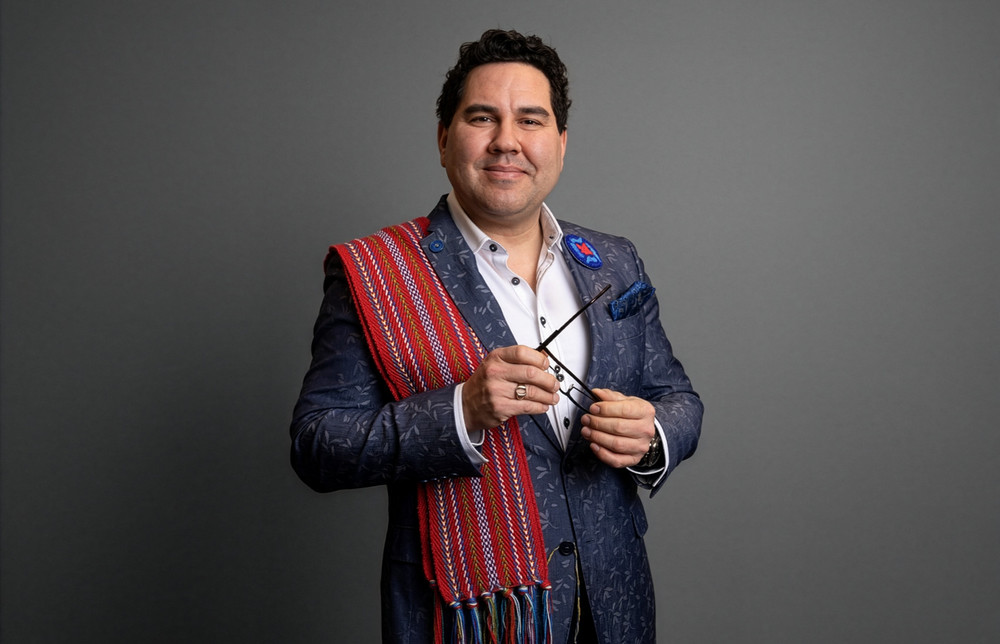
Ross “Memphis” Pambrun, CEO of The Memphis Group and keynote speaker with the Speakers Bureau of Canada, brought a 150-year lens to the U of R’s AI Futures conference: “We need to consider what’s going to happen in the future." Photo Credit: Laura Perron Photography
Belonging starts with access
Participation also requires access.
“Most people who might read this article probably have an iPhone, probably have a computer at home,” Pambrun says. “That isn’t necessarily available in all Indigenous communities.”
To address that access gap, Pambrun looks to the younger generation. He describes a model in which younger community members become technology hubs, creating safe spaces where elders can learn how online banking, communication tools, and data sovereignty work on their own terms.
When Pambrun was invited to open Calgary’s new cancer centre, he looked up and saw the word “WELCOME” in six languages, including five Indigenous languages. It stayed with him.
Pambrun says many mainstream translation tools still do not fully capture the strength of Indigenous languages, but AI translation tools are beginning to change that, creating new opportunities, if communities are involved in shaping how those tools are built and used.
“If you don’t participate, AI will define you,” Pambrun says.
The paradox of more and less
That urgency extends into the classroom. Mohammad Keyhani, an associate professor of entrepreneurship and innovation at the University of Calgary’s Haskayne School of Business, sees students caught between two truths.
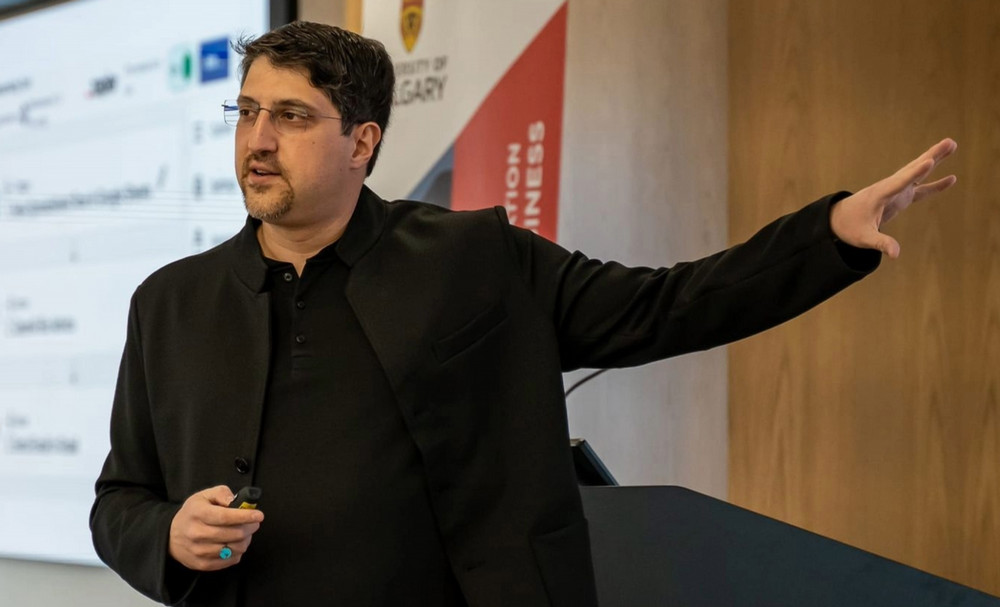
Dr. Mohammad Keyhani, an associate professor of entrepreneurship and innovation at the University of Calgary's Haskayne School of Business, warns that AI creates a paradox for students: use less to protect your thinking, or use more to develop new capabilities. The answer, he says, is both. Photo Credit: Dr. Mohammad Keyhani
“If you keep using AI for every little thing and outsource your thinking, you are going to become a zombie-like person,” Keyhani says. But the workplace now expects capabilities that were once out of reach. “You need to do something superhuman now,” he said. “If you are an undergraduate student, can you create a PhD-level dissertation? Push yourself to do it.” The bar has not dropped. AI now puts work once reserved for specialists within a student’s reach, and Keyhani’s challenge is to rise to it.
Vibe coding is one example of reaching beyond what used to be possible. The term, coined by OpenAI co-founder Andrej Karpathy, describes the use of AI tools to build software in plain language.
The gap between a working prototype and a deployed product has shrunk from months to weeks. Yet most people give up at the prototype stage. The antidote to cognitive atrophy, Keyhani argues, is to push beyond what was previously possible.
What graduates are walking into
Justin Longo, an associate professor at the Johnson Shoyama Graduate School of Public Policy at the U of R, is not softening his concern for the graduates about to enter the workforce.
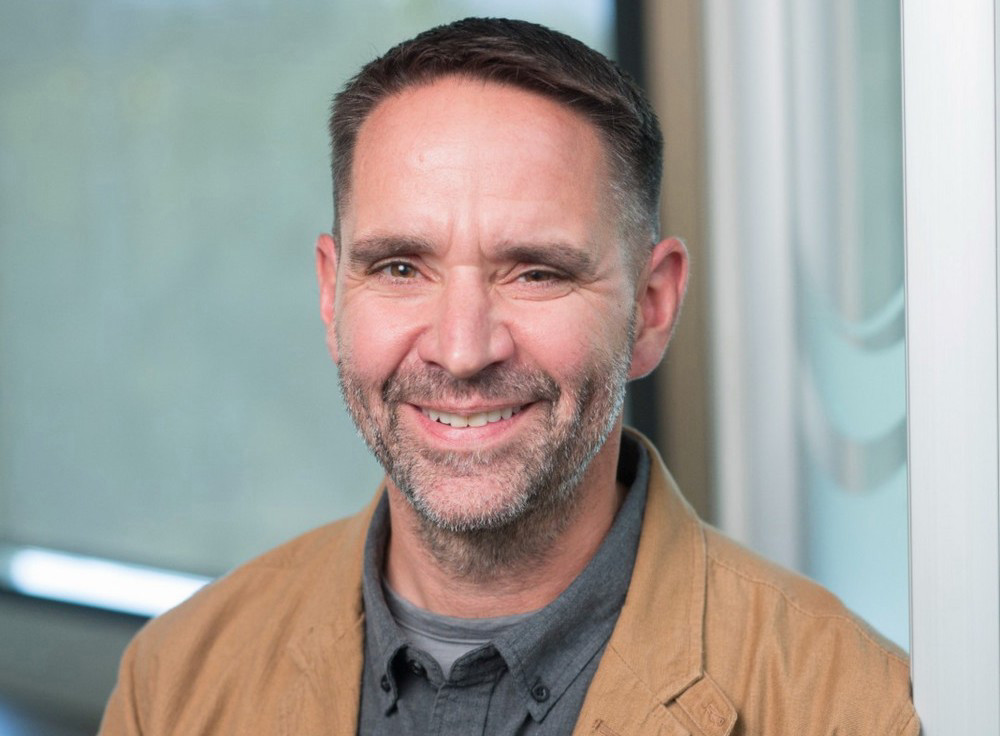
Dr. Justin Longo, an associate professor at the Johnson Shoyama Graduate School of Public Policy at the U of R, does not mince words about what AI means for the job market: "We could see massive amounts of white-collar unemployment. This is a bigger social question, which we're not prepared for." Photo Credit: Dr. Justin Longo
“If I were in your position, frankly, I’d be terrified right now,” he says, referring to anyone entering the job market. “Firms are making a calculation: hire a recent graduate, or use the tools? If what you’re bringing to the table as a recent graduate is the ability to summarize documents, well, I can use Claude or ChatGPT to do that.”
Longo has two sons navigating this reality. Both are resistant to AI because they believe it will change how they think and operate. He understands that instinct, but the ground is shifting. He notes that the head of policy at Anthropic, the company behind Claude, recently said they evaluate new hires primarily on AI immersion rather than traditional programming skills.
He sees three paths ahead for every department: focus on prompt engineering, focus on critical evaluation of outputs, or step back from the tools entirely. “We could see massive amounts of white-collar unemployment,” he adds. “This is a bigger social question, and we’re not prepared for it.”
The research is already accelerating
Piers Steel, a professor at the University of Calgary whose work spans meta-analysis and AI-accelerated research methods, presents evidence that the acceleration is already underway in his own field.
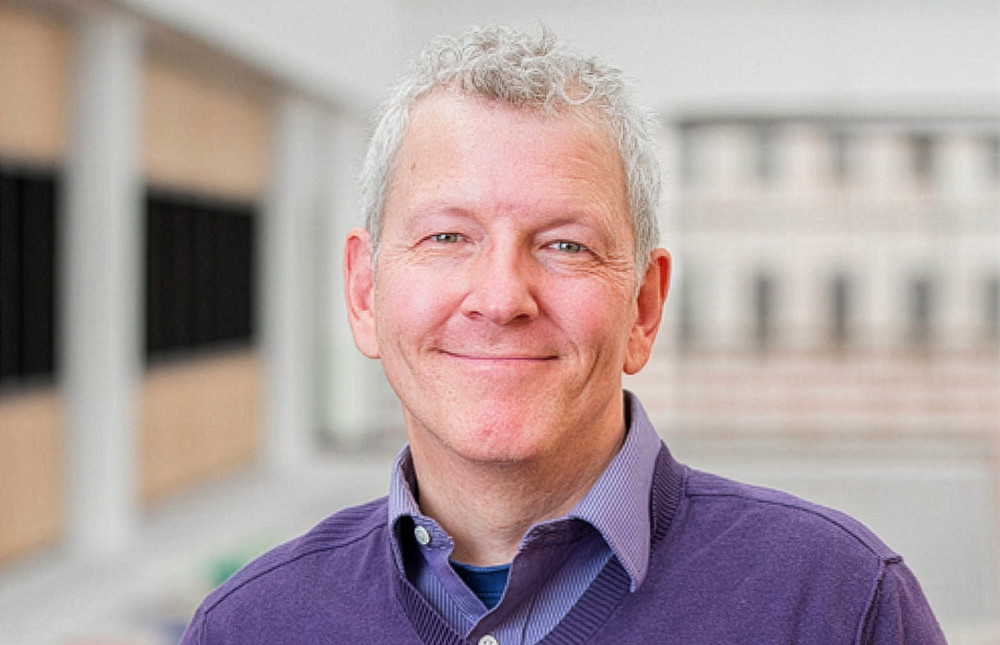
Dr. Piers Steel, a professor at the University of Calgary whose research spans meta-analysis and AI-accelerated methods, estimates AI could accelerate scientific article production fivefold, but warns the speed carries a risk: “If all you are doing is delegating your thinking, you are making yourself redundant.” Photo Credit: Dr. Piers Steel
In his own field, AI is transforming how systematic reviews are conducted, enabling larger, faster analyses and creating interactive databases that can be queried in plain language. Steel estimates that AI could accelerate the production of scientific articles fivefold, though he cautions that journals may struggle to keep pace.
This new speed carries a risk. “The danger right now is people who produce impressive-looking work with AI but lack a real understanding behind it,” Steel says. “I think of it like chess: at one point, the best results came from human-AI teams, not from AI alone. But that only worked if the human brings genuine expertise. If all you are doing is delegating your thinking, you are making yourself redundant.”
Learn more about the University of Regina's commitment to Indigenous engagement, Truth and Reconciliation, and the communities it serves on Treaty 4 Territory.
Across three installments and nine speakers, the AI Futures conference kept returning to the same point. The question was never whether artificial intelligence would change how we work, learn, and govern. It will. The question, 150 years from now, is who was in the room when those decisions were made.
Pambrun has a simpler way of putting what it takes to stay in that room. “Always be learning,” he says.
The Dr. John Archer Library & Archives, along with the Centre for Teaching and Learning and other campus partners, is excited to launch a series of AI Futures Special Edition events. The series will kick off with a back-to-school event focused on instruction in late August 2026. Stay tuned for event details and registration information in July.
Banner photo: The final instalment of the U of R’s AI Futures series asks who gets to shape what artificial intelligence serves, from Indigenous data sovereignty and student agency to research acceleration and the future of work. Photo Credit: Adobe Stock Image
About the University of Regina
At the University of Regina, we believe the best way to learn is through access to world-class professors, research, and experiential learning. We are committed to the health and well-being of our more than 16,600 students and support a dynamic research community focused on evidence-based solutions to today’s most pressing challenges. Located on Treaties 4 and 6—the territories of the nêhiyawak, Anihšināpēk, Dakota, Lakota, and Nakoda peoples, and the homeland of the Michif/Métis nation —we honour our ongoing relationships with Indigenous communities and remain committed to the path of reconciliation. Our vibrant alumni community is more than 95,000 strong and enriching communities in Saskatchewan and around the globe.
Let’s go far, together.
Related Posts
Truth & Reconciliation,
Community
RBC Neekaneewak Leadership Awards Celebrate Indigenous Excellence and Future Leaders
Research,
Campus Life,
Truth & Reconciliation,
Community,
Teaching & Learning
University of Regina Launches New Strategic Plan: Together, We Serve
Community,
Truth & Reconciliation,
Teaching & Learning