
Research,
Campus Life,
Truth & Reconciliation,
Community,
Teaching & Learning
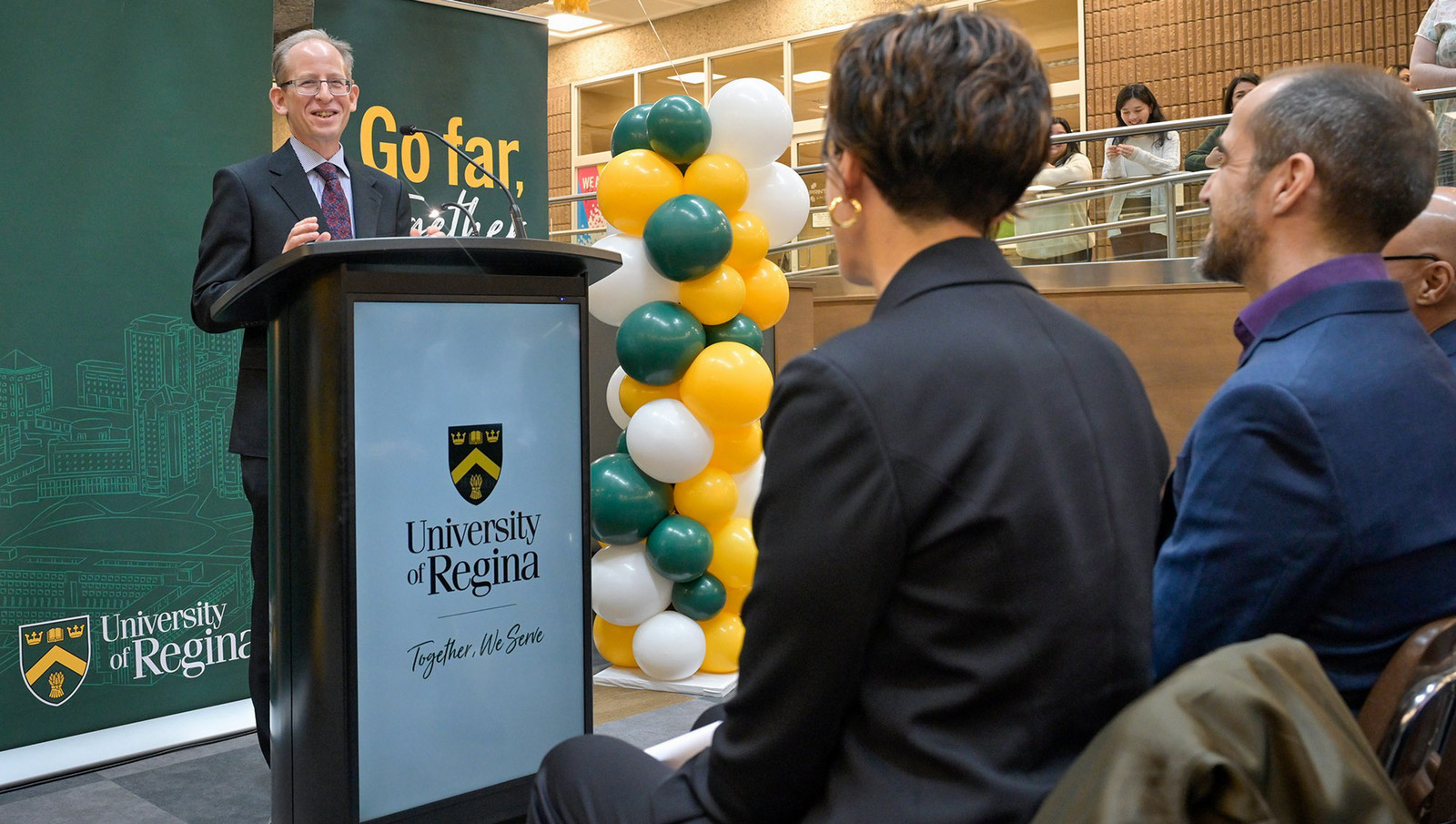
Last month, the Dr. John Archer Library at the University of Regina hosted AI Futures — a three-day conference that brought together leading researchers, educators, entrepreneurs, and community leaders. The central question was one that no university in Canada can afford to ignore: how do we navigate a world where intelligence is no longer scarce?
This is the first instalment of a three-part feature series. Part one begins with the essential literacy needed to understand this technological wave, while parts two and three discuss the societal stakes and the human responses being developed to address them.
Think about what the steam engine did for building and production. What happens with a steam engine for minds? — Mark Daley, Chief AI Officer, Western University
Mark Daley, Canada’s first chief AI officer, did not mince words. When asked what universities need to understand about artificial intelligence (AI) before any other conversation can begin, he offered three poignant sentences.
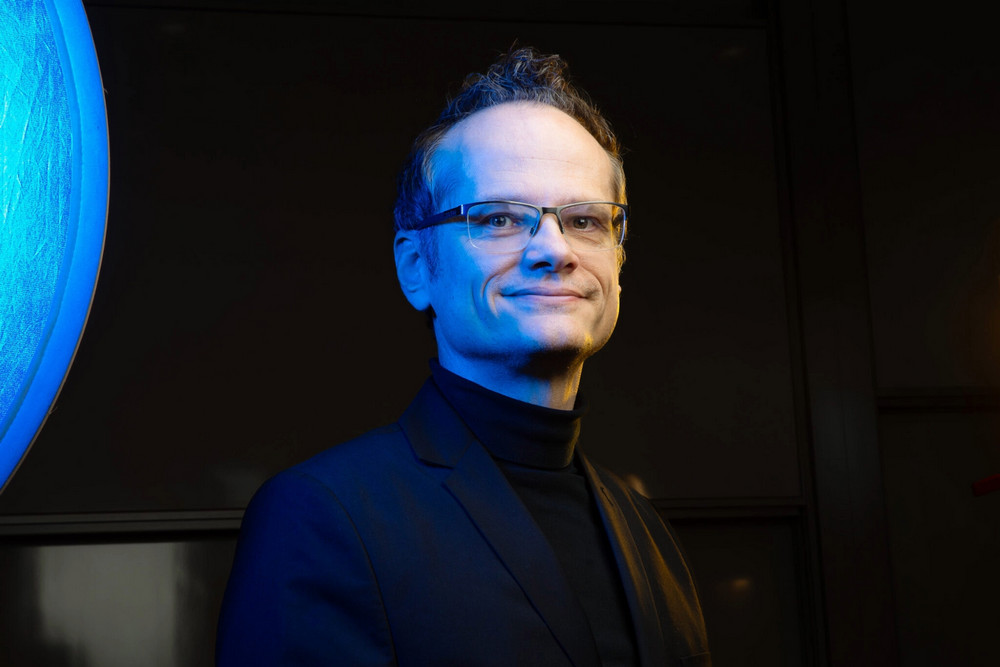
“We have commoditized intelligence,” Daley shared. “The current model of the university is predicated on the scarcity of intelligence. This will change many things.”
Daley, who holds cross-appointments in computer science, biology, epidemiology and engineering at Western University, was the opening keynote speaker for AI Futures.
It is easy to see generative AI as just the next item in a long list of campus technologies: learning management systems, plagiarism checkers, and virtual labs. However, Daley argued that perspective misses the point. In his view, AI is not simply another technology or tool. “It is the mechanization of something we once thought was special and unique to us,” he mentioned. “In a world of abundant intelligence, everything is affected.”
AI literacy starts before you open the tool
Dr. Soroush Sabbaghan emphasizes practical framing. As the inaugural generative AI educational leader at the University of Calgary and author of Navigating Generative AI in Higher Education, he spent two years helping faculty and students develop a functional relationship with these systems.
“One component of AI literacy is having the understanding to define a problem first, and then use AI not to solve the problem, but to better understand the problem so that you can solve it yourself," Sabbaghan said. "It is meant to support thinking, not to replace it.”
That distinction, between solving and understanding, runs through everything Sabbaghan teaches. In industry, he explained, a well-structured prompt yields a polished output. You put in very little and get a lot back. In a learning environment, the equation flips.
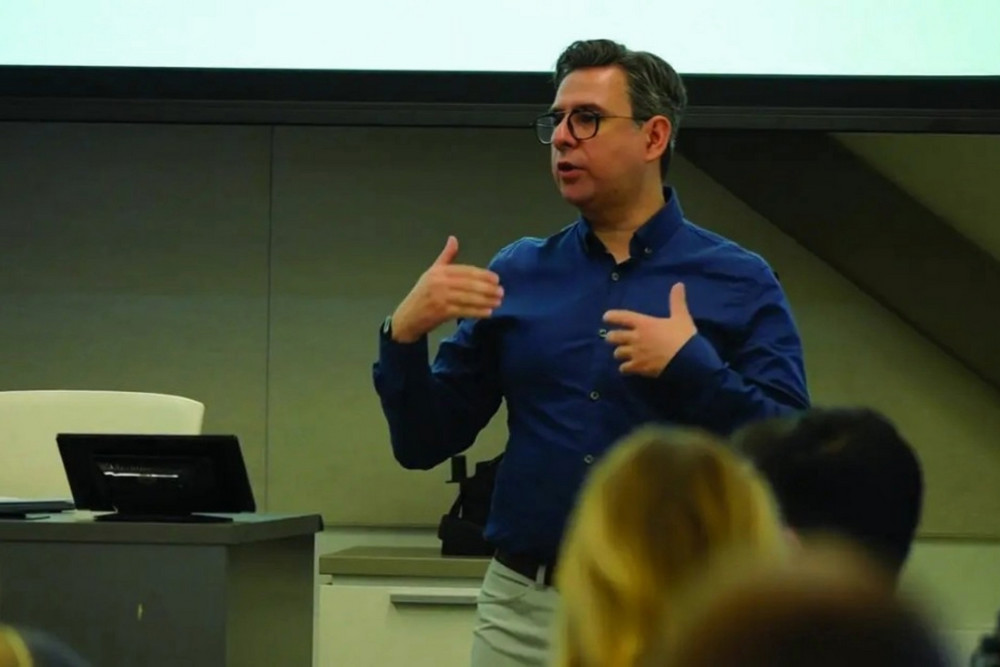
“You put in a lot, and you get very little back. The reason is that when you use generative AI, you should have a very specific purpose in mind, and you should only use it for that purpose.”
He calls this leading with purpose. Before opening a chat window, a student or professional should be able to articulate what specific gap they are trying to fill.
For Sabbaghan, the goal is not to prevent the use of AI. The goal is to develop responsible and effective judgement.
A condition, not a tool, and why this time is different
Dr. Alec Couros has been watching technology waves reshape education for more than two decades. A professor of educational technology and media in the U of R’s Faculty of Education, Couros has seen the internet, social media, and mobile computing each arrive with the promise that everything would change.
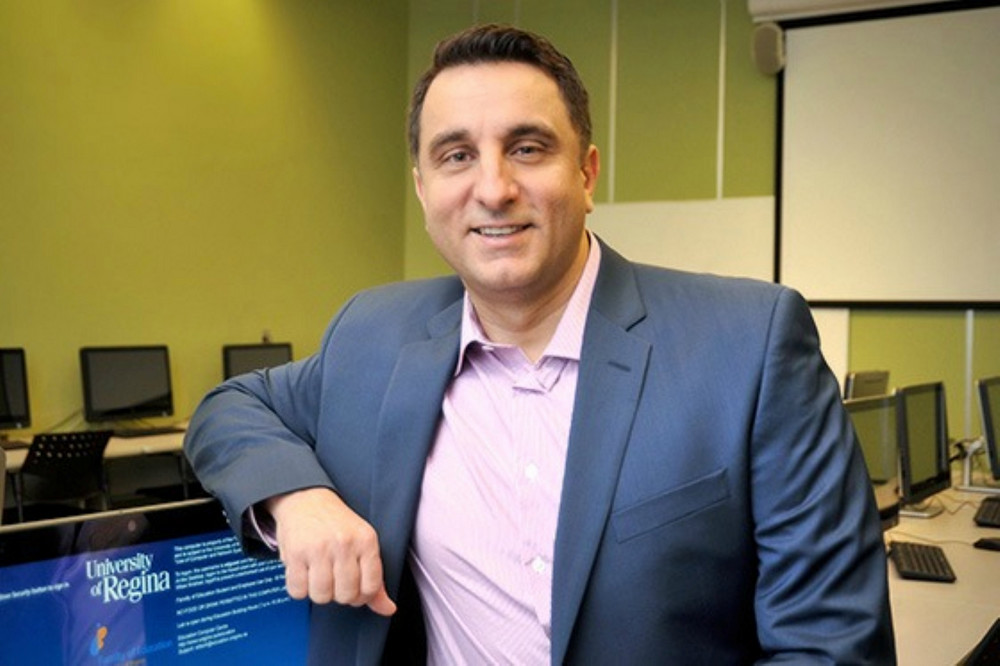
He thinks this time the promise is real, but not for the reasons most people assume. The difference is not speed or scale. It is what the technology does to the relationship between people and knowledge — and that, he argues, changes the stakes entirely.
“I think we have to stop thinking about AI as a tool and start thinking about it as a condition that we need to understand,” Couros said.
“Most of my career in ed tech, the conversation has been about integration. How do we use technology? How do we bring it into learning? But with generative AI, it is not just another tool in the kit. It changes the way knowledge production looks. It changes authorship. It changes what we mean by original work.”
The question for educators is no longer how to use these tools but how education itself can evolve in the machine-informed environment, explains Couros. It is how education itself can evolve.
The urgency underneath the conversation
Not everyone is patient with the debate over whether AI matters. Dr. Mohammad Keyhani, an associate professor of entrepreneurship and innovation at the University of Calgary’s Haskayne School of Business, offers a warning.
“I feel like there are still some people who are not taking this generative AI revolution seriously enough,” Keyhani said. “There are lots of people downplaying it, or talking about all the problems it has, all the hallucinations, bugs, easy problems that it sometimes gets wrong.”
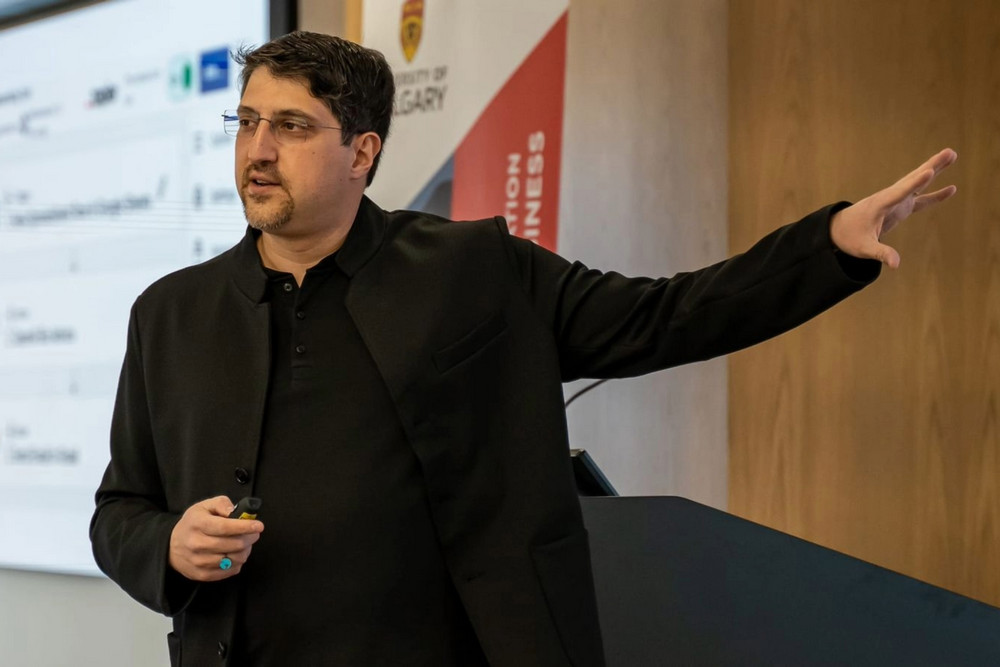
Keyhani sees a gap between the pace of the technology and the pace of institutional response.
“This one is a real, enormous technological advance,” he said. “On the scale of things like inventing fire, electricity, and the internet. That is the level of disruption it is going to bring to our society. It is going to change everything.”
Every month of delay compounds the distance between those who engage seriously and those who wait for the dust to settle. In his view, the dust is not settling.
Curiosity as the real operating system
Dr. Piers Steel, a professor at the University of Calgary whose research spans meta-analysis and AI-accelerated methods, brings the conversation back to the individual.
Steel has watched colleagues and students approach AI in two distinct ways. Some bring genuine curiosity and use AI as what he calls “patient partners” to help build expertise. Others use AI to fake competence in areas they have no real interest in.
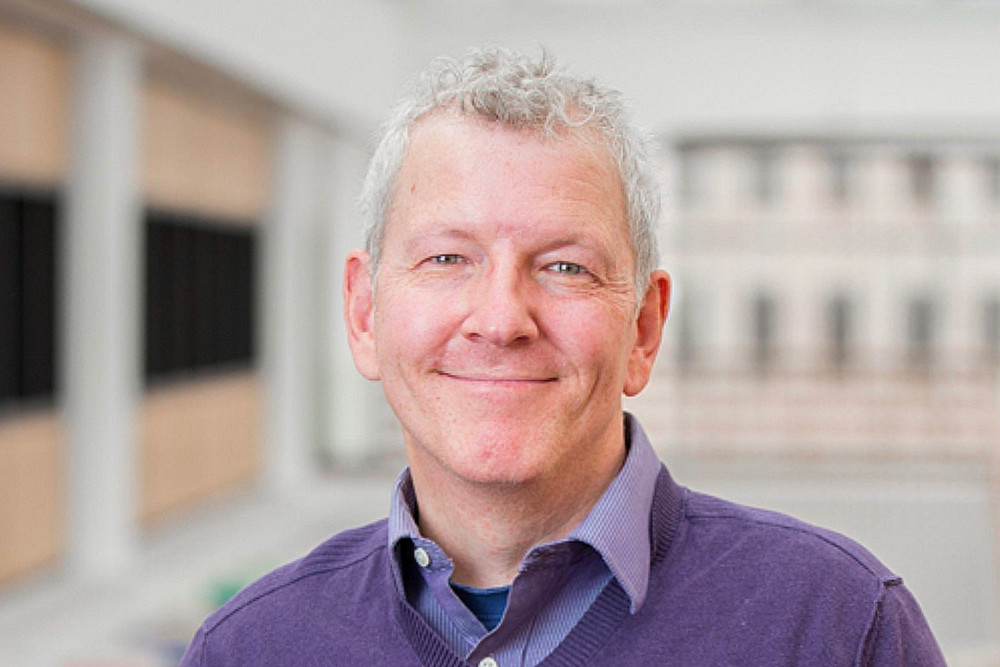
Dr. Piers Steel says curiosity is what separates people who grow with AI from those who use it to fake competence. “Without genuine interest, AI becomes a shortcut that produces the appearance of knowledge but none of the substance.” Photo Credit: Dr. Piers Steel
The second group, Steel observed, ends up worse off. Without genuine curiosity, AI becomes a shortcut that produces the appearance of knowledge but none of the substance.
Daley sees the same convergence from a different altitude. Every student, every researcher and every professional support staff member is no longer limited by the IQ that nature gave them.
"In the next five years, we will all have IQ 400 assistants on our mobile phones. Intelligence will be accessible to those who seek it,” he said. “Think about what the steam engine did for building and production. What happens when a steam engine powers minds?”
It is a question worth continuing to explore. The AI Futures conference deepened the conversation for the broader community and for educators at the U of R, who are now carrying it forward—one conversation at a time. The University’s newly launched Strategic Plan Vision 2035: Together, We Serve, signals that this work is not incidental—it is institutional. The plan commits the U of R to preparing graduates who can use emerging technologies critically, ethically, and creatively — rather than being shaped by them.
Watch for additional perspectives on AI to be shared in upcoming articles. This is Part 1 of a three-part series.
Curious about AI at the U of R? Discover programs in artificial intelligence, computer science, data science, and creative technologies.
Banner Photo: The University of Regina’s AI Futures conference asked one question no Canadian university can afford to ignore: in an era where intelligence is no longer scarce, what does it mean to think? Photo Credit: Adobe Stock Images
About the University of Regina
At the University of Regina, we believe the best way to learn is through access to world-class professors, research, and experiential learning. We are committed to the health and well-being of our more than 16,600 students and support a dynamic research community focused on evidence-based solutions to today’s most pressing challenges. Located on Treaties 4 and 6—the territories of the nêhiyawak, Anihšināpēk, Dakota, Lakota, and Nakoda peoples, and the homeland of the Michif/Métis nation —we honour our ongoing relationships with Indigenous communities and remain committed to the path of reconciliation. Our vibrant alumni community is more than 95,000 strong and enriching communities in Saskatchewan and around the globe.
Let’s go far, together.
Related Posts
Teaching & Learning
Discover Your Direction: Chief Payepot Students Experience a Day of Campus Life
Community,
Campus Life,
Teaching & Learning
Innovation Challenge 2026: U of R Students Pressure Test the Future of Downtown Regina

Teaching & Learning,
Community