Truth & Reconciliation,
Community,
Teaching & Learning
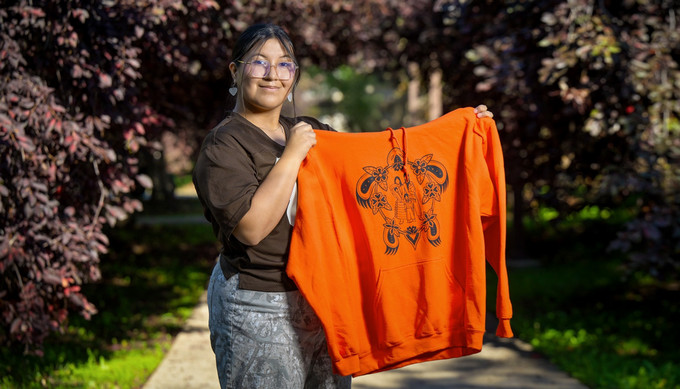
A third-year Indigenous Fine Arts student at First Nations University of Canada brings the University community a new design for this year’s Orange Shirt Day.
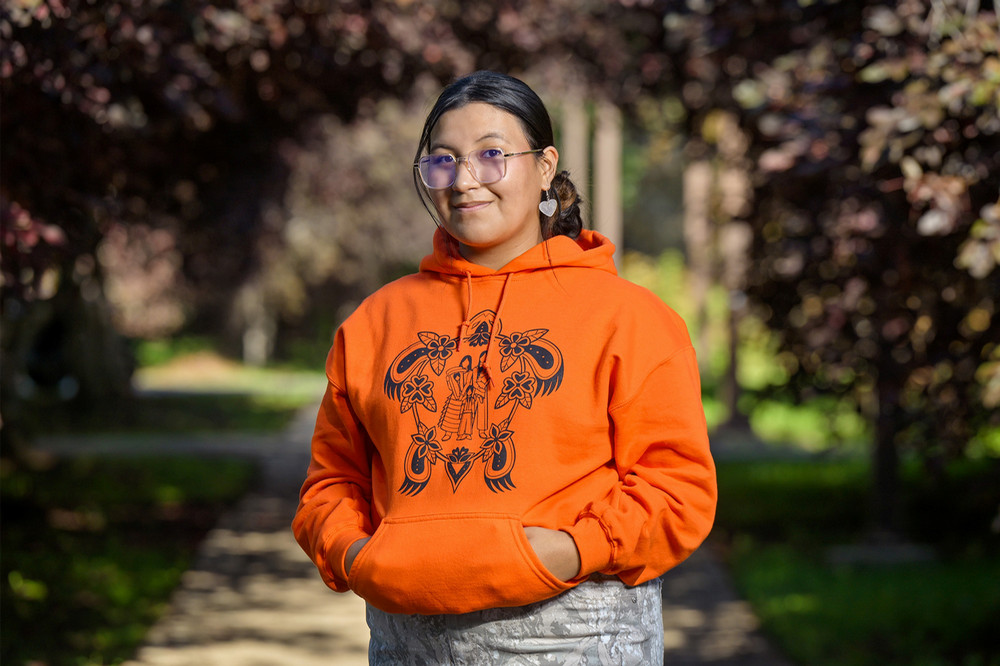
Chasity Starr, a multimedia artist from Starblanket Cree Nation, who currently resides on Standing Buffalo Dakota Nation, is the winner of this year’s Orange Shirt Design Contest, a partnership between the University of Regina’s ta-tawâw Student Centre and Faculty of Kinesiology & Health Studies (KHS).
“It feels very surreal that a design I created is being worn around campus. It is very meaningful to have such an important day be represented by my art and worn by the community. It brings me joy and delight to know people enjoy wearing my work,” she says.
The annual contest supports Orange Shirt Day and the National Day for Truth and Reconciliation on September 30, a day dedicated to raising awareness of the intergenerational impacts of residential schools and honouring Survivors, victims, families and communities. Funds raised through the contest support Indigenous student and youth programming year-round through KHS.
I believe that art, especially in terms of Indigenous art and Indigenous people, can play a great role in healing and reconnection — Chasity Starr, third-year Indigenous Fine Arts student, First Nations University of Canada
The design
Starr entered the contest as a creative challenge, to create something meaningful, and as an opportunity to step away from her academic work.
“When I found out I won, I was in disbelief and very excited. It also made me very happy that this design resonated with people,” she says.
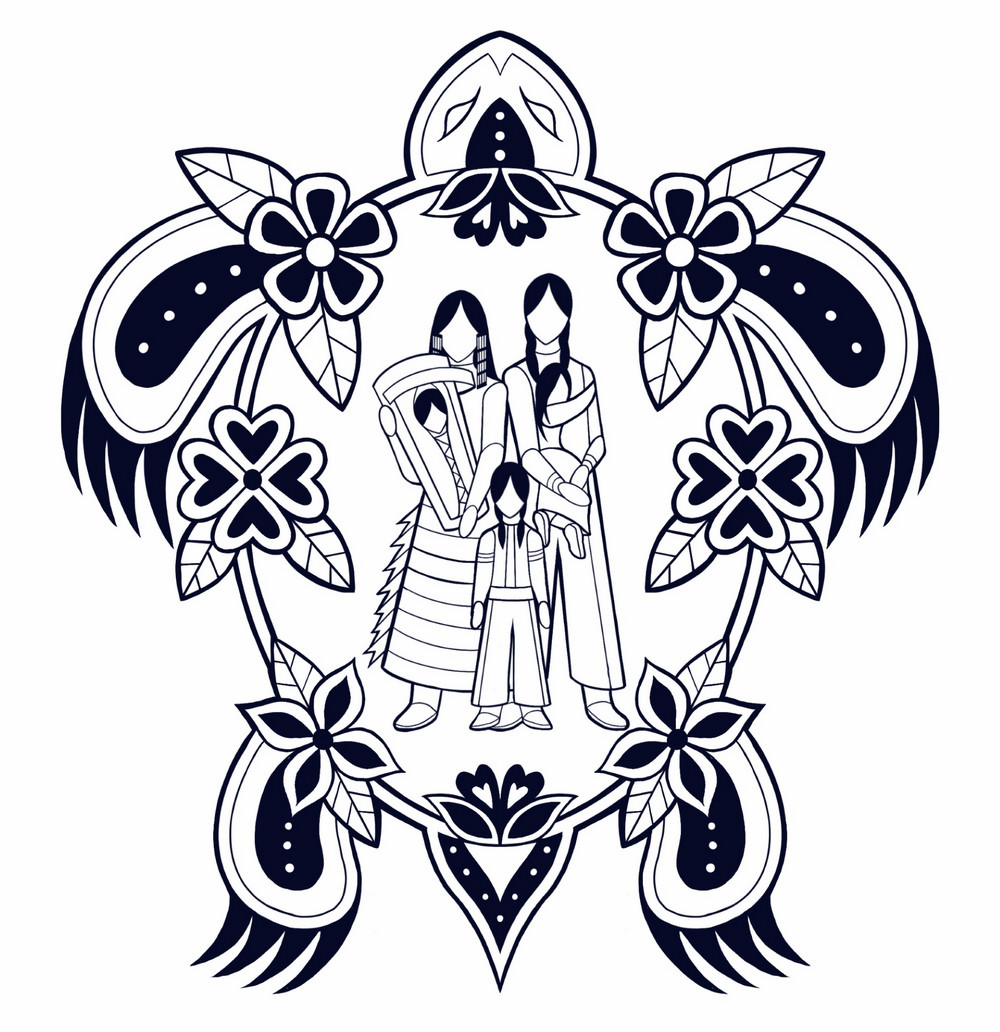
At the heart of Starr’s design is a family with three children. A baby, a toddler, and a child reflect the range of ages at which Indigenous children were historically taken from their families.
“The children in this design being held and surrounded by family is important and acts as a reminder to love and cherish the children in our lives today, as it was once an opportunity that was denied to many First Nations families,” she adds.
Encasing the design is a turtle carrying the family. The turtle represents a connection to the earth and the natural world, while also referencing Turtle Island and the land that continues to care for and connect us. Starr intersperses Cree florals, representing the blooming and regrowth of family, culture, and connection.
The healing power of art
Starr chose to focus her studies on art because it represents both her greatest talent and her deepest passion.
“My experience here at First Nations University has been extraordinary, both as a Cree woman and as an artist. This place has allowed me to connect with and learn more about heritage while exploring both Indigenous and non-Indigenous art forms.”
Working across painting, sculpture, drawing, sewing and digital art, Starr also incorporates Indigenous art forms, symbolism and techniques such as beading, quillwork, fur tufting, hide tanning and scraping into her practice.
“My goal here is to explore and gain an understanding for these diverse art forms, whether it is contemporary or traditional Indigenous practice, so I can share these methods with others, fostering understanding, passion, connection, and healing through art.”
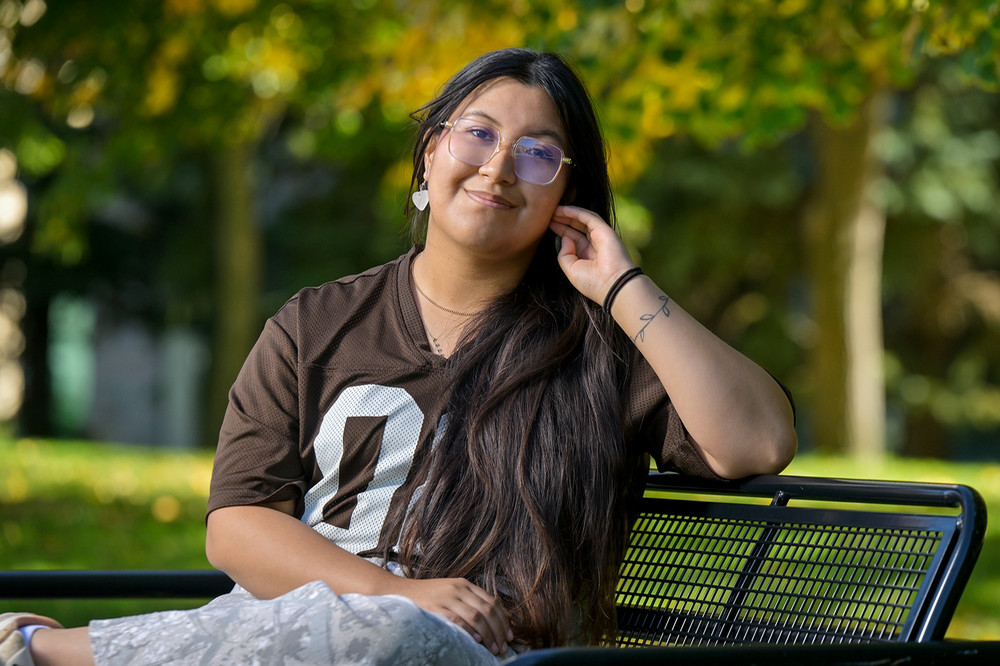
Regardless of the medium, Starr believes art has the ability to inspire, uplift, and provide a path toward healing.
“Finding a passion for art can completely transform a person's life, it certainly did for mine. Discovering Indigenous forms of art shifted my perspective and redefined my direction while offering personal healing,” she says.
Starr sees particular power in learning Indigenous art forms, including beading, quilling, birch bark biting, rawhide painting and hide tanning. “I believe that art, especially in terms of Indigenous art and Indigenous people, can play a great role in healing and reconnection,” she says.
Through experiencing these art forms, Starr has watched people gain understanding, joy and peace of mind. For her, that experience and the process of creation are ultimately more important than the finished artwork.
As Starr’s artwork makes its way across the University campus and into the community, she hopes it serves as both a reminder to learn about the history of Truth and Reconciliation, a reminder that Indigenous culture is not gone, and to recognize that Indigenous cultures and communities continue to thrive today.
Learn more about the Indigenous Arts program at First Nations University of Canada and discover opportunities to engage with Indigenous art and artists.
Banner image: Chasity Starr showcases her winning design for this year’s Orange Shirt Day Contest. Photo Credit: University Communications and Marketing
About the University of Regina
At the University of Regina, we believe the best way to learn is through access to world-class professors, research, and experiential learning. We are committed to the health and well-being of our more than 16,600 students and support a dynamic research community focused on evidence-based solutions to today’s most pressing challenges. Located on Treaties 4 and 6—the territories of the nêhiyawak, Anihšināpēk, Dakota, Lakota, and Nakoda peoples, and the homeland of the Michif/Métis nation —we honour our ongoing relationships with Indigenous communities and remain committed to the path of reconciliation. Our vibrant alumni community is over 97,000 strong and enriching communities in Saskatchewan and around the globe.
Let’s go far, together.
Related Posts
Campus Life,
Truth & Reconciliation,
Community
Strategic Plan Priority Reflects Ongoing Commitment to Putting Things Right
Truth & Reconciliation,
Research
More Than a Research Trip

Truth & Reconciliation,
Research,
Teaching & Learning