Campus Life,
Community,
Teaching & Learning
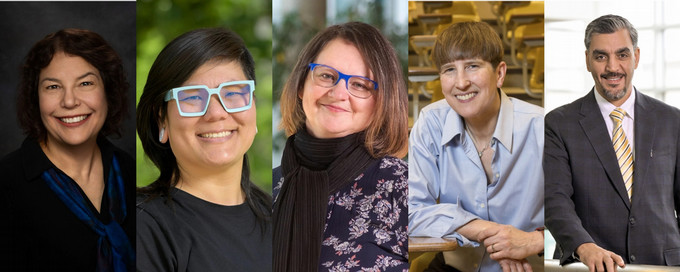
The University of Regina's Centre for Teaching and Learning (CTL) is recognizing five exceptional educators who are redefining what learning looks like.
From immersive historical role-playing and hands-on business consulting projects to community-engaged arts education and important conversations about complex social issues, each recipient creates learning opportunities that encourage curiosity, critical thinking, and deeper engagement with the world around them.
“These educators are reimagining what teaching and learning can look like through their commitment to creating learning experiences that challenge and empower students,” says Emily McNair, Director of the Centre for Teaching and Learning. “Their work demonstrates the profound impact educators can have when they connect learning to real-world issues and human experiences, inspiring students to engage more deeply with their education and equipping them for success at the University of Regina and beyond.”
Meet the 2026 recipients of the CTL's Teaching Awards and explore the unique approaches that have earned them recognition for teaching excellence.
Dr. Allison Fizzard
2026 Provost's Award for Innovation in Teaching
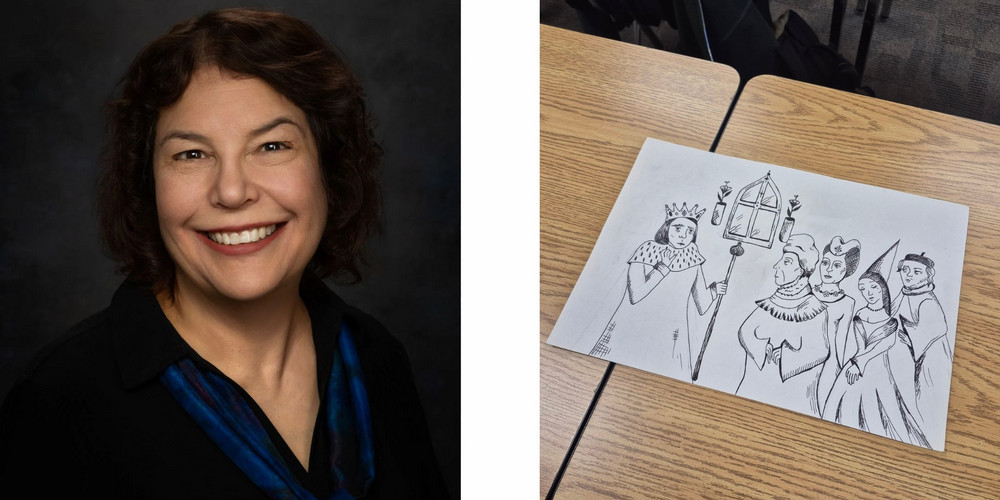
(Left) Dr. Allison Fizzard, Professor of History in the Faculty of Arts at Campion College. (Right) Student artwork created as part of Fizzard's historical role-playing class. Photos courtesy of (left) Andrea Norberg and (right) Campion College.
Dr. Allison Fizzard, Professor of History in the Faculty of Arts at Campion College, is transforming how students experience history in the classroom. Through immersive "Reacting to the Past" historical role-playing games, students step into the roles of historical figures and communities, challenging them to debate issues, form alliances, deliver speeches, and shape historical outcomes.
Dr. Fizzard independently pursued specialized professional development, attended conferences, and engaged deeply with research on role-playing pedagogy. By moving beyond traditional lectures, she helps students build confidence, communication and critical thinking skills, and lasting engagement with course material.
What makes role-playing such an effective tool to help students engage with the complexity of history and human decision-making in ways that traditional lectures often cannot?
Historical role-playing games are effective as a pedagogy because they tap into the desire of students to engage in play while interacting with other students. Many students play video games, tabletop board games, and live-action role-playing games in their spare time and are drawn to learning experiences which employ game-based learning. As well, during the pandemic, students experienced social isolation and often found it challenging to re-learn how to interact with classmates when they returned to in-person classes.
Historical role-playing games help them develop the “soft skills” of collaboration, negotiation, strategizing, and effective teamwork. Critical thinking and problem solving are also cultivated in the games. The desire to “win” the games by achieving individual and faction goals motivates students to engage with primary sources in order to develop an improved understanding of the historical context and gain a competitive advantage.
What kinds of skills or perspectives gained through historical role-playing continue to benefit students long after the course is over?
Students learn how to give speeches in public in ways that convey their points effectively. They also learn how to deal with fears of public speaking and gain confidence in delivering presentations. Peer-reviewed research has indicated that teaching with the Reacting to the Past game-playing pedagogy leads to an increase in empathy, an “increase in verbal and rhetorical skills,” an increase in self-esteem, and heightened levels of empathy for others.
Ms. Suzy Yim
2026 New Faculty Teaching Award of Recognition
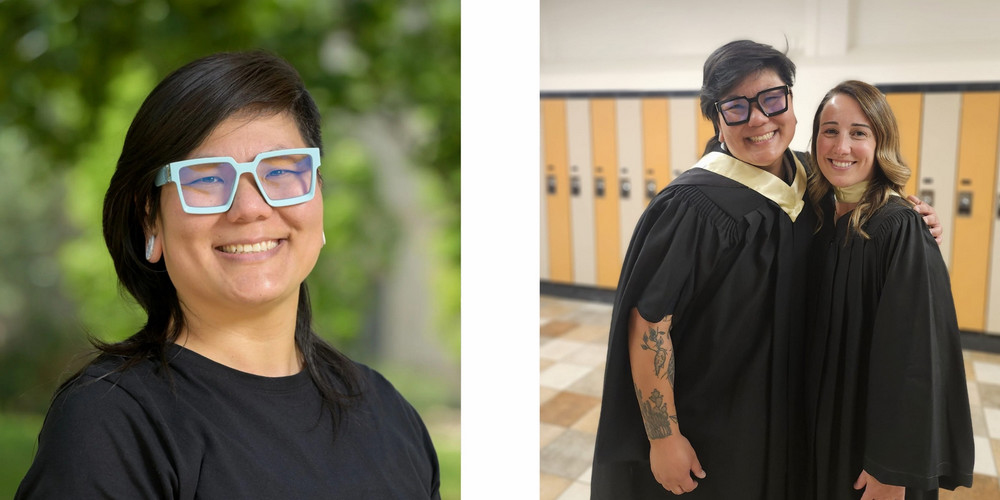
(Left) Ms. Suzy Yim, Lecturer in the Faculty of Social Work. (Right) Yim celebrates convocation with 2026 graduate Charlee Lee. Credit: (Left) University Communications and Marketing. (Right) Charlee Lee.
Ms. Suzy Yim, Lecturer in the Faculty of Social Work, believes exceptional teaching begins with relationships. Drawing on extensive experience in social work practice, Ms. Yim creates inclusive, experiential learning environments where students feel seen, supported, and challenged to grow. Through simulations, role-plays, reflective practice, and real-world case scenarios, students build the ethical judgment, self-awareness, and confidence needed to navigate complex practice situations.
Beyond the classroom, Ms. Yim has contributed to the redesign of three undergraduate courses, strengthening the integration of Indigenous perspectives, equity, and community-informed recommendations into social work education. Committed to students beyond graduation, Ms. Yim provides ongoing mentorship as they transition into professional practice. Ms. Yim also serves as Board President of the Saskatchewan Queer Mental Health Collective.
Your teaching philosophy emphasizes relational accountability, self-awareness, and ethical practice. Why do those qualities matter as much as technical knowledge when preparing students for a career in social work?
Technical knowledge alone does not make an ethical practitioner. Because social work is practiced in relationships with people, students also need self-awareness to recognize how their own expectations shape their decisions, and accountability to remember who they are responsible to. I try to model these qualities by inviting feedback, acknowledging when I miss the mark, and adjusting my approach when something isn’t working.
For students, the “aha” moment often comes when classroom behaviours are linked to practice ethics. If students challenge their grades, my response becomes a reflective class activity. Rather than defending the score, I appeal to what drew most of them to the degree: the desire to contribute to meaningful social change. I help students separate grade satisfaction from whether they agree with the feedback. This can open an honest conversation about the gap between where they are now and where they hope to be. As the semester unfolds, requests for grade bumps are often replaced with requests for targeted support. Technical knowledge tells students what to do; self-awareness and accountability keep them asking whether they are doing it ethically, and for whom.
How do meaningful relationships, both inside and outside the classroom, help shape students into compassionate and ethical professionals?
I view meaningful relationships as a foundation for growth and a source of support that keeps us healthy and ethically grounded. The first step in social work practice is establishing rapport. In the classroom, this includes getting to know my students and intentionally creating opportunities for them to build relationships with one another. Rapport strengthens trust, trust strengthens respect, respect strengthens collaboration, and collaboration can transform interactions into meaningful, supportive relationships.
These relationships don’t require loosening professional boundaries, nor do they require the absence of disagreement or difficulty. In fact, when students feel seen and supported by their instructor and classmates, they are more willing to embrace the risks, feedback, and difficult tasks that learning requires. As one student wrote, “… comfort zone is a beautiful place, but nothing grows there.” In social work, reassessment is ongoing, so I begin each class with a check-in. But reassessing requires more than asking; it requires empathy and a willingness to respond to what we hear. What students share in check-ins can reshape that day’s lesson plan.
Dr. Tatiana Levit
2026 Award of Excellence in Experiential Learning
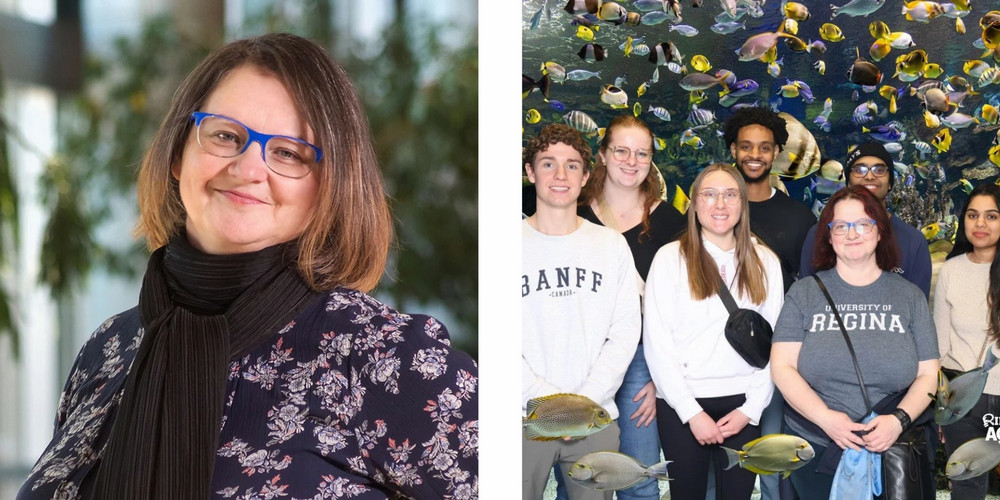
(Right) Levit and members of the Accounting, Marketing and Debate teams during a stop in Toronto while travelling to a case competition at Queen's University in Kingston, ON. Credit: (Left) University Communications and Marketing. (Right) Dr. Tatiana Levit
Dr. Tatiana Levit, Assistant Professor (Marketing) at the Hill Levene School of Business, creates learning experiences that connect students directly with real organizations and business challenges. In her International Marketing courses, students partnered with Saskatchewan organizations such as Boreal Heartland, an Indigenous-owned enterprise in Air Ronge, to develop international marketing strategies and present their recommendations to business leaders and industry experts. Through projects like these, her students tackle authentic challenges, work directly with organizations, and gain hands-on experience that helps them build professional confidence and prepare for careers after graduation.
What changes when learning moves beyond theory, and students are asked to solve problems that matter outside the classroom?
Something shifts when students have the opportunity to apply what they learn in class to real-world challenges. They begin to see the impact and value of their knowledge rather than simply acquiring it and storing it away for “later.” For example, international marketing students can learn the mechanics of conducting a country attractiveness analysis in a classroom. But when they meet Jeff Thackeray, Senior Director of Market Intelligence at the Saskatchewan Trade and Export Partnership and hear how this very tool helps Saskatchewan companies identify promising new export markets for their products, the concept takes on an entirely different meaning.
Suddenly, it is no longer just an analytical framework in a textbook; it is a practical tool that businesses use to make real decisions and create real opportunities. And students get to use it while working on their projects. This makes learning more tangible, relevant, and valuable, and fundamentally changes how students engage with it.
What skills or perspectives do students develop through hands-on learning experiences that they might not gain in a traditional classroom setting?
Hands-on learning experiences are often complex and sometimes messy. They can lack a familiar structure, be unpredictable, and even uncomfortable. Not all students initially appreciate the uncertainty or discomfort that comes with these experiences. But that is precisely where some of the most meaningful learning happens. Students learn to adapt, navigate ambiguity, and become resilient. As they work through challenges, they also develop confidence, self-trust, and a stronger sense of self-respect.
There is also a different kind of pride that comes from seeing their learning move beyond the private space of the classroom or the instructor-student relationship. Their ideas, efforts, and even struggles become visible to others. They learn to put their work out into the world, receive feedback, and become comfortable with being seen and evaluated beyond the classroom. Ultimately, these experiences help students develop a stronger sense of who they are, what they are capable of, and what they have to offer the world.
Dr. Kathryn Ricketts
2026 Award of Excellence in Public Education and Outreach
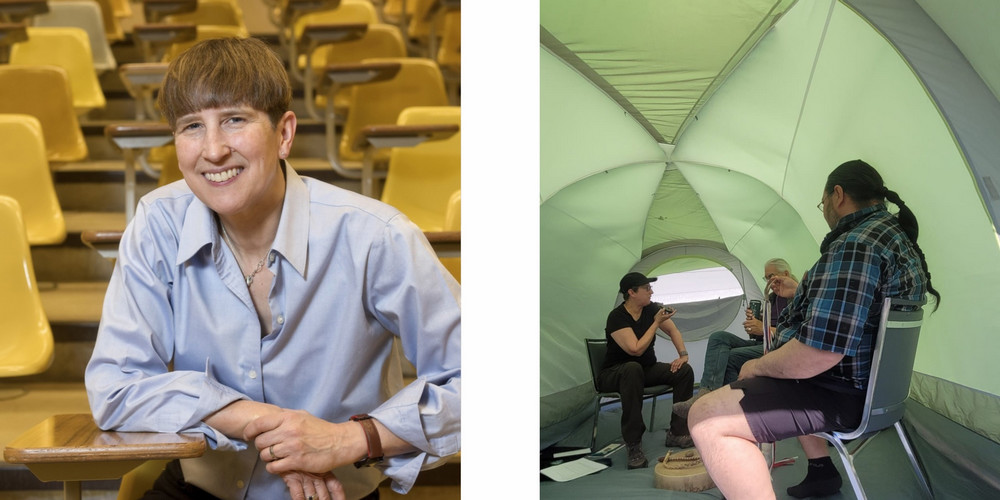
(Left) Dr. Kathryn Ricketts, Professor in Arts Education and Dance Education in the Faculty of Education. (Right) Ricketts facilitates a Tent Talk, bringing people together to explore identity, place, belonging and well-being. Photos courtesy of Dr. Kathryn Ricketts
Dr. Kathryn Ricketts, Professor in Arts Education and Dance Education in the Faculty of Education, extends learning far beyond the classroom by creating opportunities for people of all ages and backgrounds to connect through art, storytelling, movement, and dialogue.
Through initiatives such as Tent Talks, community-based projects in Val Marie and Grasslands National Park, and arts-focused programs for seniors, she brings people together to explore identity, place, belonging, and well-being. Her creative and collaborative approach helps individuals find their voice, strengthen community connections, and see education as a powerful tool for empathy and social change.
Many of your teaching and community projects use movement, storytelling, and creative expression as pathways to learning. What can those approaches unlock that traditional forms of teaching sometimes cannot?
If it was up to me, I would get rid of all the desks in the classroom. (see photo attached) we need to move education beyond the walls of the classroom and stop restricting our students to rows of uncomfortable and restricting furniture. We need to be experiential, sensorial, radical, and student driven. We need to be thinking holistically and stop imagining our work as transactional but rather transformative. Circles not grids. Collective not in isolation. We need to encourage collaboration, celebrating unique strengths and differences within our learning communities, and far beyond.
How do creative projects help build connections and understanding within communities?
Our work in the classroom needs to be porous with the community these students are embedded in with the society they will contribute to. This means that our teachings need to be relevant and carry meaning for our students. In this way, teaching and learning become blurred as the students construct their paths of knowledge exchange through experience interconnected with others and not just those that are in the classroom.
Dr. Amin Asfari
2026 Award of Excellence in Public Education and Outreach
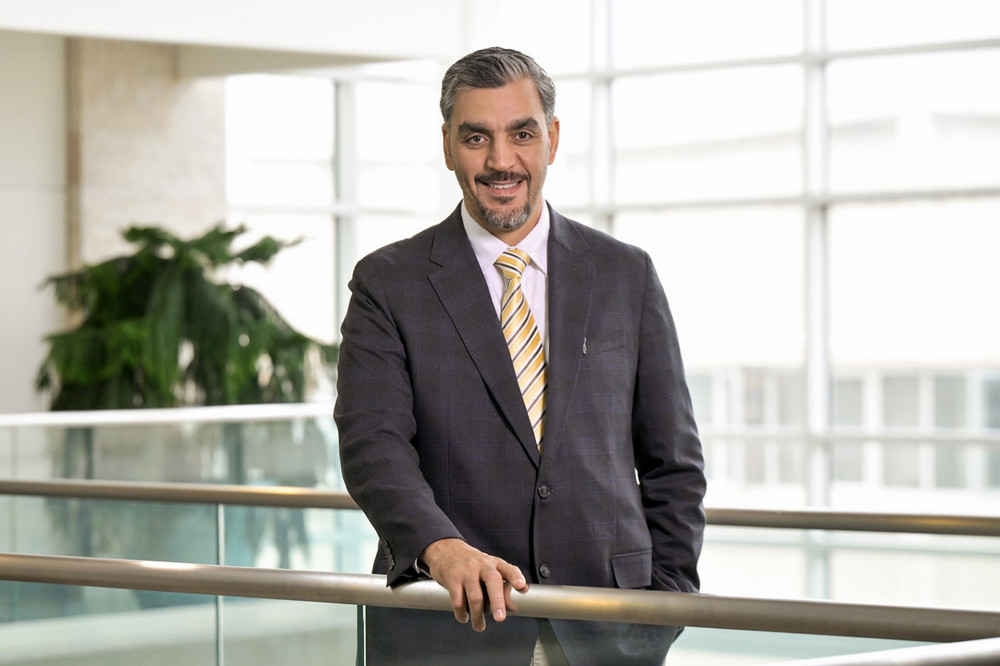
Dr. Amin Asfari, Associate Professor and LFS Chair in Police Studies in the Department of Criminology within the Faculty of Arts. Photo credit: University Communications and Marketing.
Dr. Amin Asfari, Associate Professor and LFS Chair in Police Studies in the Department of Criminology within the Faculty of Arts, brings research into public conversations on some of society's most complex and challenging issues. Through public lectures, media commentary, community partnerships, and youth mentorship, he helps people engage critically with topics such as Islamophobia and its relationship to hate crime, policing, and the collateral consequences of social exclusion.
By translating rigorous scholarship into accessible dialogue, and by applying a decidedly critical lens, Dr. Asfari creates opportunities for students, community members, and decisionmakers to better understand difficult issues, challenge assumptions, and contribute to more informed and inclusive communities.
You ask audiences to confront difficult realities rather than avoid them. Why is discomfort an important part of learning, and how do you create space for people to engage with challenging topics productively?
Discomfort is inherently unsettling, but it can also serve as an important catalyst for critical self-reflection. Rather than retreating from what unsettles us, we might consider examining the sources of that discomfort, as doing so can reveal as much about our own assumptions, values, and uncritically held beliefs as it does about the subject that provoked the response. Conversations that merely reaffirm established norms, values, and social conventions, however, rarely produce this kind of introspection. Indeed, it is often through encounters that challenge our taken-for-granted assumptions that we begin to uncover what we might otherwise prefer to leave unexamined.
One of my mentors used to paraphrase the American Journalist Finley Peter Dunne by invoking the phrase, “I do not comfort the afflicted; I afflict the comfortable.” This sentiment has become something of a guiding principle in how I approach audiences and engage them in conversation.
Your philosophy of public education and outreach emphasizes that meaningful outreach is built through relationships, not one-time events. How do you build trust with communities, and what role does that trust play in creating honest dialogue?
Honest dialogue rarely happens between strangers. Indeed, when interacting with strangers, we often wear masks, consciously or otherwise, as Erving Goffman so eloquently demonstrated in The Presentation of Self in Everyday Life. We perform, manage impressions, and carefully negotiate what we reveal and withhold. Meaningful dialogue, particularly around difficult subjects, requires something beyond the mere exchange of words. It requires a relationship in which people feel comfortable enough to speak candidly. After all, hard conversations are not necessarily comforting ones, nor should they always be.
For me, my cultural, religious, and racial background can provide an initial point of connection and familiarity grounded in shared experiences. These identity markers may allow me to enter spaces and establish common ground in ways that might otherwise be difficult. However, I am careful not to conflate familiarity with trust. Shared identity may open doors, but it does not necessarily earn someone's confidence.
Trust is cultivated over time through consistency, honesty about one’s intentions, and a willingness to listen without presuming that I already understand the experiences of those with whom I am engaging. It requires humility and a willingness to be challenged, including when perspectives may be uncomfortable or critical of my own (a difficult task for any of us). Ultimately, trust is established when people recognize that my intentions are sincere and that my engagement is grounded in good faith. It means being prepared not simply to speak to a community, but to walk alongside it. That, to me, is the foundation of honest dialogue and a trust well-earned.
Teaching, Research, and Service Excellence Awards
These educators will be honoured at the University of Regina's Teaching, Research, and Service Excellence Awards on November 18, 2026, at Darke Hall.
The event celebrates outstanding contributions across the University community. In addition to the CTL's Teaching Excellence Awards, the following individuals will be recognized for their outstanding contributions to research, teaching, and service:
Advancing Indigenization Award (Academic) – Doug Farenick, Mel Hart and Karin Rustad
Creative Initiative Award – Charity Marsh
Safety Leadership Award (Academic) – Brian Sterenberg
Team Innovation Award – Food Services Transition Team
University Spirit Award – Kayla Stefan
Service Excellence Award – Iryna Khovrenkov
Award for Outstanding Graduate Supervision – Kaila Bruer
Graduate Teaching Assistant Award – Khai Le
Graduate Student Excellence Award (Innovation and Research) – Elizabeth Hayes
Graduate Student Community Engagement Award – Adhika Ezra
Distinguished Professor Emeritus – Mark Brigham
Distinguished Professor Emerita – Bonnie Jeffery
Distinguished Professor Emeritus – Blair Stonechild
Learn more about the Centre for Teaching and Learning, its teaching excellence awards, and its commitment to supporting exceptional teaching across campus.
About the University of Regina
At the University of Regina, we believe the best way to learn is through access to world-class professors, research, and experiential learning. We are committed to the health and well-being of our more than 16,400 students and support a dynamic research community focused on evidence-based solutions to today’s most pressing challenges. Located on Treaties 4 and 6—the territories of the nêhiyawak, Anihšināpēk, Dakota, Lakota, and Nakoda peoples, and the homeland of the Michif/Métis nation —we honour our ongoing relationships with Indigenous communities and remain committed to the path of reconciliation. Our vibrant alumni community is over 98,000 strong and enriching communities in Saskatchewan and around the globe.
Let’s go far, together.
Related Posts
Community,
Campus Life,
Teaching & Learning
Pam Klein and Ruth Smillie Receive University of Regina Honorary Degrees
Community,
Teaching & Learning,
Research
From the Prairies to Paris – Archives Rediscovers Gladys Arnold’s Incredible Story
Research,
Teaching & Learning