No Poverty
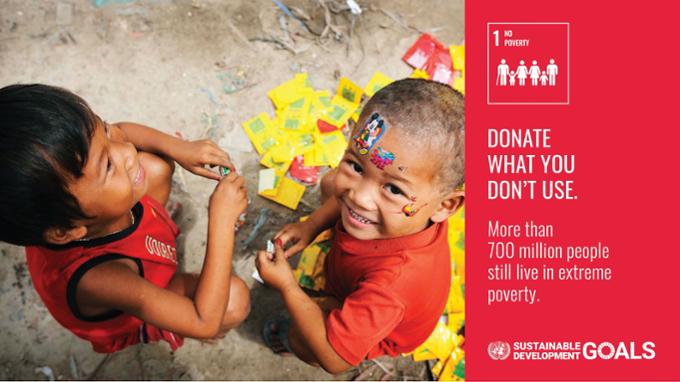
As human beings, our well-being is linked to each other. Growing inequality is detrimental to economic growth and undermines social cohesion, increasing political and social tensions and, in some circumstances, driving instability and conflicts.
In 2022, the University provided 4,198 students with financial aid. A variety of supports are available (e.g. food, housing, transportation, legal services) to enable students to complete their studies. We also support the wider community through workshops, training and other resources found on the Centre for Experiential and Service Learning website.
Our Research and Outreach
Economic and Social Impact Study
Related Courses
ADMN 225 - First Nations Economic Development
This course is designed to evaluate the strengths and weaknesses of various approaches to band entrepreneurial development undertaken by government agencies, research and planning groups, band organizations, band councils and individual band entrepreneurs. Problem areas and alternative approaches will be investigated in relation to the physical and social environments, external factors, and the socio-cultural environment.
***Prerequisite: ADMN 100 (or BUS 100) and INDG 100. Concurrent enrolment is allowed in INDG 100.***
ADMN 328 - Nation Building for Indigenous Communities
The objective of the course is to present the fundamentals behind nation building, and rebuilding, for Indigenous communities. This course is designed to increase understanding of important nation building ideas in the cultural, administrative, political and economic realms. The course will explore the major Indigenous topics of governance, cultural match and legitimacy, colonial effects, constitutions, judicial systems, administration, economic development, funding dynamics, entrepreneurship, leadership, and inter-governmental relationships.
*** Prerequisite: ADMN 228 ***
ADMN 432AL - Indigenous Community Planning and Community Economic Development
The objective of this directed reading is to introduce students to the theories, concepts, best practices, issues and trends in Indigenous Planning and Community Economic Development.
ADMN 436AL - Indigenous Community Economic Development
This course provides an overview of the theory and practice of community economic development in both Indigenous and non-Indigenous communities. It explores the essential role of community economic development in fostering healthy communities and enhancing self-determination. This course focuses on appreciative and Indigenous ways of doing business and developing communities.
ADMN 441 - Public Policies for Northern Development
This course examines many of the problems encountered in the development of northern areas. Special emphasis is placed on the difficulties inherent in the pursuit of economic advancement within a framework of cultural, environmental, and distribution constraints.
*** Prerequisite: ADMN 340 or BUS 340 ***
BUS 355 - Issues in Labour Relations
This course concerns the employment relationship and the practice of labour relations. Issues related to the "gig" economy, collective bargaining, labour legislation, power, conflict resolution, gender inequity, Indigenous employment, race, technological innovation, migrant labour, negotiations, strikes, unions and unionization are explored in this course.
***Prerequisite: BUS 250 or ADMN 250.***
*Note: Students may not receive credit for both BUS 355 and ADMN 355.*
EC&I 890DR - Theory and Practice of Global Citizenship Education
Global Citizenship Education is a response to the interconnected challenges of global inequality, poverty and human rights abuses, seeking to connect students with more global understandings of how and what they might do to live as global citizens. This course will explore both theoretical articulations of global citizenship education.
ECON 100 - Introduction to Economic Issues
An introduction to the economic way of thinking. Basic economic concepts are used to explore current economic issues such as unemployment, inflation, economic growth, taxation, competition, pollution reduction, health care, and more.
*Note: Students who have received credit for either ECON 201 or 202, or any ECON course numbered 300 or higher may not take ECON 100 for credit.*
ECON 211 - Development Economics
Problems and challenges facing developing countries in their attempts to improve living standards.
*** Prerequisite: 15 credit hours or ECON 100 ***
ECON 281 - Wages & Employment in Canada
How are wages determined? What are the causes of unemployment? What policies are best suited for dealing with industrial injuries, part-time work, employee health, and retirement?
***Prerequisite: 15 credit hours or ECON 100.***
ECON 311 - Economics of Developing Countries
Comparative case studies of attempts by Third World countries to improve their living standards. Introduction to theories of how economies develop.
***Prerequisite: ECON 202 or ECON 211***
ECON 354 - Economics of Cities
Applies economic analysis to important questions regarding urban areas: Why do they exist? What determines their location? What is their role in the Canadian economy? Other issues considered are: zoning policies, local government spending and taxation, urban economic development policy, and urban transportation policy.
***Prerequisite: ECON 201***
ECON 364 - Economics of Corruption
A study of incentives and deterrents of corrupt behavior using economic models. A study of causes and consequences of corruption, with a particular focus on post-communist and developing countries. It analyzes corruption from an institutional and transaction economics approach, and how it sustains other illicit activities such as tax evasion, and the underground economy.
***Prerequisite: 45 credit hours or 3 Econ courses.***
EDL 823 - Labour Relations and Labour Law in Education
This course provides school leaders with an understanding of theoretical and legislative issues related to labour relations in public ally funded education. Students explore the differences in dealing with teaching and non-teaching employees, and their representative groups; understand employee relations; and develop negotiation, conflict resolution, and collective agreement skills.
EFDN 309 - Social Issues in Education
A critical look at schooling and its relation to diversity, student achievement, societal intervention and education change. This course examines current issues in educational practice including, poverty, sexuality, gender, religion, racism, tracking, and school reform.
***Prerequisite: Completion of 15 credit hours. SOC 100 is recommended.***
GBUS 844 - Labour Relations and Collective Bargaining
This course examines the history of union development in Canada, and business reaction to this development. Current structures in the labour movement are assessed, as well as the impact of legislation on the nature of collective bargaining. The course focuses on the character and procedures of arbitration, fact-finding, mediation, and conciliation.
GBUS 846AG - Global Perspectives on Labour Relations
This course focuses on the global dimension of work, employment conditions, and labour relations in a comparative context. It examines the development of foreign labour markets and the institutional conditions of employee-employer relations through the lens of migration, corporate social responsibility, trade agreements, globalization, and legal frameworks from select countries.
GES 222 - Global Economies, Local Lives
An introduction to economic geography, tracing the processes of economic globalization and localization. Emphasis on the development of the global economy as it plays out in local places with particular histories and cultures. Focus on the crisis of Fordism and the restructuring of resource industries, manufacturing, services and finance.
***Prerequisite: GES 100 or GEOG 120 or permission of the Department Head.***
*Note: Students may only receive credit for one of GES 222, GEOG 222, or GEOG 322.*
GES 246 - Urban Geography
The course examines cities as systems viewed at global, national, and local levels. Economic and social patterns and linkages are stressed. Special emphasis is placed on the Canadian urban system and the urban geography of Regina.
***Prerequisite: GES 100 or GES 120 or permission of the Department Head.***
*Note: Students may receive credit for only one of GES 246, GEOG 246, or GEOG 324.*
GES 316 - Geography of the Third World
The so-called "Third World" is examined from a spatial perspective. Topics of investigation include imperialism, population growth, political boundaries, and economic transition.
***Prerequisite: 30 credit hours including one of GES 100 or GES 120, or permission of the Department Head.***
*Note: Students may receive credit for only one of GES 316 and GEOG 316.*
HIST 272 - Gender and the Body in Early Modern Europe
This course examines the social history of Europe from the 15th to the 18th centuries through a focus on issues related to gender, sexuality and the body. It includes topics such as: gender definitions, marriage and family, sexuality and morality, and clothing and fashion.
*** Prerequisite: One 100-level HIST course or completion of 15 credit hours ***
HIST 277 - Europe, 1648-1815: Absolutism and Revolution
This course surveys the varieties of absolutism under the old regime, the eighteenth-century Enlightenment, the French Revolution and the Napoleonic Empire. It also considers the rise of the public sphere, the beginnings of industrial revolution and changing attitudes toward crime and poverty.
*** Prerequisite: One 100 level HIST or completion of 15 credit hours ***
* Note: Formerly numbered HIST 274 and HIST 275. Students may not receive credit for both HIST 277 and either of HIST 274 and HIST 275. *
HIST 890AO - Theory and Practice of Social Welfare in Canada, 1867-1939
The course examines social welfare in Canada from 1867 to 1939. In particular, it analyses poor relief systems from a variety of theoretical perspectives: the inter-relationship between the private and public sectors; professionalization and bureaucratization of social work; and the role of gender, race and class in policy formation.
HIST 890AX - Social History in Nineteenth-Century Britain
Examines the Industrial Revolution and its consequences, rural unemployment and poverty, the New Poor Law of 1834, labour disputes and early trade unionism, efforts to reorganize and reform urban space and hygiene, the role of religion in the lives of ordinary people, the beginnings of the women¿s movement.
INDG 201 - Introduction to Contemporary Indigenous Issues
This course is a survey of contemporary Indigenous issues, covering topics including self-government, political organizations, the land claims process, social and economic conditions, and Aboriginal identity.
***Prerequisite: INDG 100, or permission of the Program Coordinator.***
INDG 222AC - Northern Saskatchewan
This course examines the region known as Northern Saskatchewan: the history of the people who have shaped the region; government policies that have altered the political and social landscape, with emphasis on natural resource development and; the economic and social programs provided to the primarily Aboriginal population.
***Prerequisite: INDG 100, or permission of the Program Coordinator.***
INDG 222AH - Achievements and Contributions of First Nations Peoples
This course will examine the achievements of First Nations communities and individuals in areas of government, leadership, economic development, plant domestication, agricultural techniques, medicine development, holistic healing practices, sports, gaming, and design..
***Prerequisite: INDG 100, or permission of the Program Coordinator.***
INDG 236 - Indigenous Economic, Environmental, and Geographic Systems
This course will examine the interrelationships of Indigenous economies, environments, and geographies. The holism of Indigenous perspectives will be demonstrated.
***Prerequisite: INDG 100, or permission of the Department Head.***
INDG 305 - Urbanization and the Indigenous Peoples
This course examines the increasing migration of Canadian Indigenous peoples to urban centres and their changing socio-economic conditions. Includes examination of government policy affecting off-reserve Indians, and urban Indian agents for change.
***Prerequisite: Any 200-level INDG course, or permission of the Program Coordinator.***
INDG 440 - Strategies for Indigenous Economic Development
This course examines key issues and strategies in Indigenous economic development.
***Prerequisite: INDG 340 or permission of the Department Head.***
IS 220 - International Development and Poverty
This is an introduction to international development. Mainstream development is geared to 'attacking poverty' through various models of development: modernization, industrialization and urbanization, globalization, and good governance. Alternative models of development argue that these actually spread inequality and impoverishment. Can development be done right? Does development have a future?
*** Prerequisites: IS 100 ***
IS 290AA - Local Lives in a Global Political Economy
An introduction to economic and political geography, emphasizing the development of the global economy as it plays out in local places with particular politics, histories and cultures. The course will focus on the crisis of Fordism and the restructuring of different sectors of the economy (eg resources, services and finance).
IS 420 - Advanced Topics in International Development
This seminar course examines critical perspectives of international development. Topics include, among others, strategies to alleviate poverty, population growth and scarcity, urbanization, land rights, microfinance, displacement and development refugees, environmental sustainability, and the role of civil society in development.
***Prerequisite: IS 220 and 60 credit hours, or permission of the department head***
*Note: Formerly numbered DEVS 400. Students may receive credit for one of DEVS 400 or IS 420*
JSGS 802 - Public Finance
Provides a survey of Canadian public finance. Examines rationales for government intervention in a market economy, the assessment of public policy, how government decisions are made and the impact of government expenditures and taxation on the economy and the well-being of Canadians, in terms of economic efficiency and interpersonal equity.
JSGS 835AL - Foreign Aid Policy
The course will examine the reasons for the acute and widespread poverty that still exists in many countries despite the vast amounts of money spent on foreign aid during the last 50 years. Policies enhancing the effectiveness of aid are examined, along with institutions such as the IMF and other governmental responses.
JSGS 835AW - Indigenous Nation Building in Canada
This course will explore critical nation-building issues confronting Indigenous peoples and will examine multi-dimensional settings that confront Indigenous peoples in their pursuit of social, cultural, political, education and economic development.
KHS 867BD - Critical Issues in Health and Disease
This is a reading intensive course investigating emerging issues in health and disease. Readings illustrating the role of gender, race, sexual orientation, and the gap between poverty and wealth among others will be considered in relation to a number of health issues including, HIV/AIDS, tuberculosis, multiple sclerosis and others.
PAST 390AF - Global Spirituality & Justice
This course will explore the issue of poverty and globalization using social analysis and drawing on Ignatian spirituality.
**Permission of the Program Director is required to register.**
PSCI 336 - Canadian Political Economy: Capitalism, Politics and the State
Examines both the evolution of the Canadian economy and the development of Canadian political economy as a field of study. Particular attention is paid to the role of capital, labour and the state in the creation of contemporary Canadian capitalism and how they shaped past and present political debates.
***Prerequisite: Any 200-level PSCI course or the completion of 30 credit hours.***
PSCI 344 - Political Economy of Development and Underdevelopment
This course applies political economy perspectives to issues in global development. Topics may include: theories of global capitalism and economic development, global poverty, crises (such as famine, debt, climate, and conflict emergencies), as well as the role of bodies such as the International Monetary Fund, the World Bank, aid agencies, and NGOs. Major regions covered will include Latin America, Africa, and Asia.
***Prerequisite: Any 200-level PSCI course or the completion of 30 credit hours.***
PSCI 490BJ - Political Theories of Labour and Work
This course examines both canonical theories (eg. Smith, Locke, Marx, Weber) and critical scholarship on the politics of work and labour (eg. Arendt, Marcuse, Federici, Graeber, Weeks). Themes include the relationship between labour and property, waged labour, work as a vocation, gendered and racialized work, and labour migration.
***Prerequisite: Two PSCI courses at the 200 or 300 level or completion of 60 credit hours.***
PSCI 845 - Pol Healthcare Labour Relation
This course covers the evolution of Saskatchwan's legislative framework for healthcare labour relations in the post World War II period. It will describe the emergence of various employee, employer, and professional associations and assess their relationships to both the government and one another.
PSCI 890AQ - Advanced Feminism, Women and Development
This course will be an examination of the conditions of women's lives in a global context. Engaging feminist theoretics within postcolonialism, anti-racism and civil rights and examine issues that impact women's lives such as poverty, environment, labour, power and subsequent feminist responses.
PSCI 890BW - Advanced Topics in International Development
This seminar course examines critical perspectives of international development. Topics include, among others, strategies to alleviate poverty, population growth and scarcity, urbanization, land rights, microfinance, displacement and development refugees, environmental sustainability, and the role of civil society in development.
SOC 214 - Sociology of Indigenous People in Canada
This course introduces students to the experience of Indigenous peoples in Canada from a sociological perspective. Employing historical and contemporary examples, students are introduced to policies and legislation shaping relationships between Indigenous peoples and other Canadians. Specific topics might include the neglect of Indigenous issues in Canadian sociological studies, applying social theory to the study of Indigenous issues, identity, Aboriginal and treaty rights, self-government, assimilation, land claims, health, education and justice.
***Prerequisite: Completion of 12 credit hours or SOC 100 or permission of the Department Head***
*Note: SOC 100 is required for all majors in Sociology*
SOC 314 - Sociology of Development
This course introduces students to sociological theories of international economic, social and political development. It examines the global division between the West and the rest, and looks at the problems which poor countries face as they attempt to develop, including the role of Western corporations and organizations such as the International Monetary Fund.
***Prerequisite: Completion of 30 credit hours, including completion of one 200 level SOC course, or permission of the Department Head.***
SOC 880AK - Mental & Concurrent Disorders, & Homelessness & Housing
This course explores the convergence of concurrent mental disorders and substance use with homelessness and housing. The student will be asked to develop an annotated bibliography and prepare an exploratory research paper. Key elements will include: best practices, psycho-social & housing first models and socio-economic realities.
SOST 890BE - Worker's Rights and Social Justice
This directed readings course focuses on historical and contemporary issues related to worker rights, such as, social unionism, campaigns for a living wage and better working conditions (e.g., protection for so-called gig workers), occupational health and safety, and the promise and limits of legal protections for worker rights. Materials will be historical and contemporary and global in focus. Topics include political economy, leadership for movement building, theory and practice of unions, work and workers in a global world, and law and policies.
SW 202 - Critical Issues/Critical Thought
This course examines the foundations of critical thinking with application to social work issues in such areas as oppression, poverty, health, child welfare and violence.
***Prerequisite: SW 100.***
SW 410 - Work, Economic Security and Social Justice
This course explores the impact of globalization and the relationship between legislation, unemployment, labour market issues, social welfare policy and social work. A range of social, economic and political theories are discussed with a focus on how human service workers assist individuals and families.
SW 415 - Poverty
This course will examine poverty in Canada: its history, measurement, theoretical explanations, demographics, and impact on specific groups of people. It critically assesses income security programs and services, and explores the role of social workers in reducing poverty through practice methods, policy development and community action.
WGST 300 - Missing Women: Decolonization, Third Wave Feminisms and Indigenous Peoples
Why are Indigenous women throughout the world more likely to "go missing"? This class will examine systems that intersect and perpetuate racism and colonialism, sexism and poverty, and the effects of globalization on the breakdown of family structures. Expertise and voices from community activists will be integral to this class.
***Prerequisite: Completion of 24 credit hours or a 200-level WGST course.***
*Note: Students may receive credit for one of WGST 300 or WGST 390AF.*
WGST 421 - Feminism, Women, and Globalization
An examination of the conditions of women's lives in a global context. Engaging feminist theoretics within postcolonialism, anti-racism and civil rights locations, this course examines women's issues such as poverty, environmental degradation, labour, power, and so forth and subsequent feminist responses generated from a variety of geo-political locations.
***Prerequisite: Completion of 60 credit hours. WGST 100 is recommended.***
WGST 490AB - Advanced Missing Women: Decolonization, Third Wave Feminisms and Indigenous Peoples
Why are indigenous women throughout the world more likely to "go missing"? This class will examine systems that intersect and perpetuate racism and colonialism, sexism and poverty, and the effects of globalization on the breakdown of family structures. Upper level research required.
***Prerequisite: Completion of 60 credit hours. WGST 100 is recommended.***
WGST 803 - Gender: Theories and Practices
This graduate level course is a comparative investigation of gender/sex ideology. Our endeavor is to isolate and examine gender/sex as a category of analysis and then analyze its deployment through sign-symbol, myth and ritual in varying geographical, historical and cultural location, e.g., modern Eurowest, ancient Greece and Rome, and Africa.