Campus Life,
Truth & Reconciliation,
Community
For more than 50 years, the University of Regina's motto has reflected a belief that education is about more than knowledge; it is about contributing to something larger than oneself. That sentiment is one that deeply resonates with Dr. Ellyn Lyle, the University's new Provost and Vice-President (Academic).
What excites me most is the commitment to community. Everybody seems to be united in being proud of the University of Regina, contributing to the community, and building meaningful relationships. — Dr. Ellyn Lyle, Provost and Vice-President (Academic)
Long before she learned of the University's motto or its recently launched strategic plan, Together, We Serve, service had already become the guiding principle of her career.
"I've gotten to a point in my career where I'm not trying to build anything on my own CV anymore," Lyle says. "I have arrived at the very privileged place where I just want to be of service."
That perspective helped draw Lyle to the University of Regina from Cape Breton University, where she served as Dean of Education and Health. She began her five-year appointment on July 1, bringing with her decades of academic leadership, teaching, and research as well as a leadership style grounded in relationships.
“Dr. Lyle’s commitment to academic excellence and student success – along with her proven track record in these areas – will be an invaluable asset to educators and students alike at the University of Regina,” says Dr. Jeff Keshen, President and Vice-Chancellor. “I am certain that Dr. Lyle will provide visionary leadership in support of the University's academic mission, and make equally strong and inspiring contributions to the University’s leadership team.”
For Lyle, the decision to move across the country wasn't one she made lightly. An ocean lover who has lived much of her life in proximity to salt water, she admits she needed time to reflect before committing to a move to the Prairies.
When she was first approached about the position, she focused less on the job description and more on the University's culture.
"I asked really pointed questions," she says. "What is the culture of the institution? What is the commitment to community? What keeps people up at night? What are they passionate about?"
The answers, and the responsiveness of everyone involved in the search, stood out.
"I'm a question beast," she laughs. "Every question I had was answered almost immediately."
That responsiveness signaled something important.
"It showed me the institution’s commitment to relationships," she says. "Building relationships has always been integral to who I am."
The interview itself ultimately convinced her she had found the right fit.
From accommodating her schedule while she was teaching in Italy to the thoughtful conversations she had with faculty and staff, Lyle was struck by the genuine interest people took in getting to know not just her professional accomplishments but who she is as a person.
"It felt like home," she says.
That emphasis on relationships continues to shape how she approaches her new role as the University's chief academic officer.
"I'd like to think relationality will be a trademark of how I govern," she says. "I'm eager to listen. I'm solution-driven by nature, and I’m eager to learn with and through my new colleagues."
She encourages colleagues not only to identify challenges but to think collaboratively about solutions.
"How can we think things together?" she says. "That's how I want us to engage with each other."
Although she now serves in one of the University's most senior leadership positions, Lyle has intentionally remained active as both a researcher and educator throughout her career.
"I think it's really important that I still have a toehold in what makes academia vital," she says. "If I'm still doing research, supervising students, and engaged in teaching and learning, it creates both currency and credibility."
Her current Social Sciences and Humanities Research Council (SSHRC)-funded research examines the experiences of international students in Canadian post-secondary education, but it reflects a broader scholarly interest she describes as the "rehumanization of education."
She studies how institutions can create learning environments grounded in equity, reciprocity, and authentic human relationships.
"I want to make sure that when we engage in teaching and learning, we do so for the inherent humanness of good relational exchange," she says.
Those values extend beyond the classroom.
Lyle believes universities have a responsibility to build communities where students, faculty, and staff feel they belong and where academic excellence and human connection reinforce one another.
Since arriving on campus, she has already noticed that spirit.
"What excites me most is the commitment to community," she says. "Everybody seems to be united in being proud of the University of Regina, contributing to the community, and building meaningful relationships.”
She describes the institution as a diverse family where individual faculties and units have their own identities but are connected by a shared sense of purpose.
That shared purpose, she believes, will help the University navigate both opportunities and challenges.
"If you have those deep identity pieces born of being relational and community-minded, and are driven by civic responsibility and service, those things can get us through both wonderful times and challenging times."
Lyle's understanding of service has roots that stretch back much further than her academic career.
Raised on a potato farm on Prince Edward Island and later living in rural Alberta, she says growing up on the land taught her lessons about stewardship and reciprocity that continue to influence her leadership today.
"When you grow up in relationship with the land, you learn reciprocity," she says. "The land sustains you, but you also have a responsibility to care for it so it can sustain future generations."
That philosophy naturally informs how she approaches leadership.
"When I move to a new place, I ask myself: can I be a good steward of this place, and can this place hold me?"
Only a few days into her new role, Lyle says she has already experienced that sense of welcome.
She points to the thoughtful transition process, detailed briefing materials from academic units, and the generosity of colleagues across campus as evidence of a community eager to work together.
"I'm just very grateful," she says. "I'm grateful for the care that people exercised, not only in bringing me here, but in welcoming me here and preparing me to contribute."
As the University continues advancing the goals of Together, We Serve, Lyle sees her role as helping strengthen the relationships that make the strategic plan’s aspirations possible.
For Lyle, who measures success not by titles earned, but by lives impacted, the University's long-standing motto is more than a phrase.
It is, she believes, a way of leading.
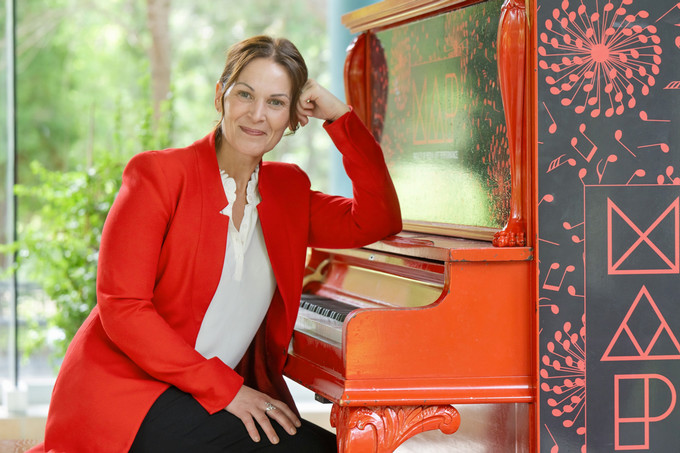
Banner Image: Dr. Ellyn Lyle is the University’s new Provost and Vice-President (Academic). Credit: University Communications and Marketing
About the University of Regina
At the University of Regina, we believe the best way to learn is through access to world-class professors, research, and experiential learning. We are committed to the health and well-being of our more than 16,600 students and support a dynamic research community focused on evidence-based solutions to today’s most pressing challenges. Located on Treaties 4 and 6—the territories of the nêhiyawak, Anihšināpēk, Dakota, Lakota, and Nakoda peoples, and the homeland of the Michif/Métis nation —we honour our ongoing relationships with Indigenous communities and remain committed to the path of reconciliation. Our vibrant alumni community is over 97,000 strong and enriching communities in Saskatchewan and around the globe.
Let’s go far, together.
Related Posts
Teaching & Learning,
Campus Life,
Community
2026 Spring Convocation - Celebration of Achievement, Community, and Lifelong Connections
Teaching & Learning,
Community,
Campus Life
Leaders, Builders, and Changemakers to Receive Honorary Degrees at Spring Convocation
Campus Life,
Community