Teaching & Learning,
Community
Classrooms are full of students who learn, communicate, and express themselves in different ways. Preparing teachers for that reality means thinking beyond a single approach to learning.
In the Faculty of Education, second-year arts education students Abigail Lynn and Juliana-Beatrice Jalbuena are learning how creativity can be a powerful tool used across every subject area to support diverse learners and build stronger classroom communities.
Creativity isn’t treated as an “extra,” but as a tool that strengthens how students learn and communicate. — Abigail Lynn, second year arts education student, Faculty of Education, University of Regina
Why arts education?
Lynn always knew she wanted to teach. When she switched from the regular education program into arts education, everything clicked.
“There were no doubts,” says Lynn. “This is my passion. This is where I want to be.”
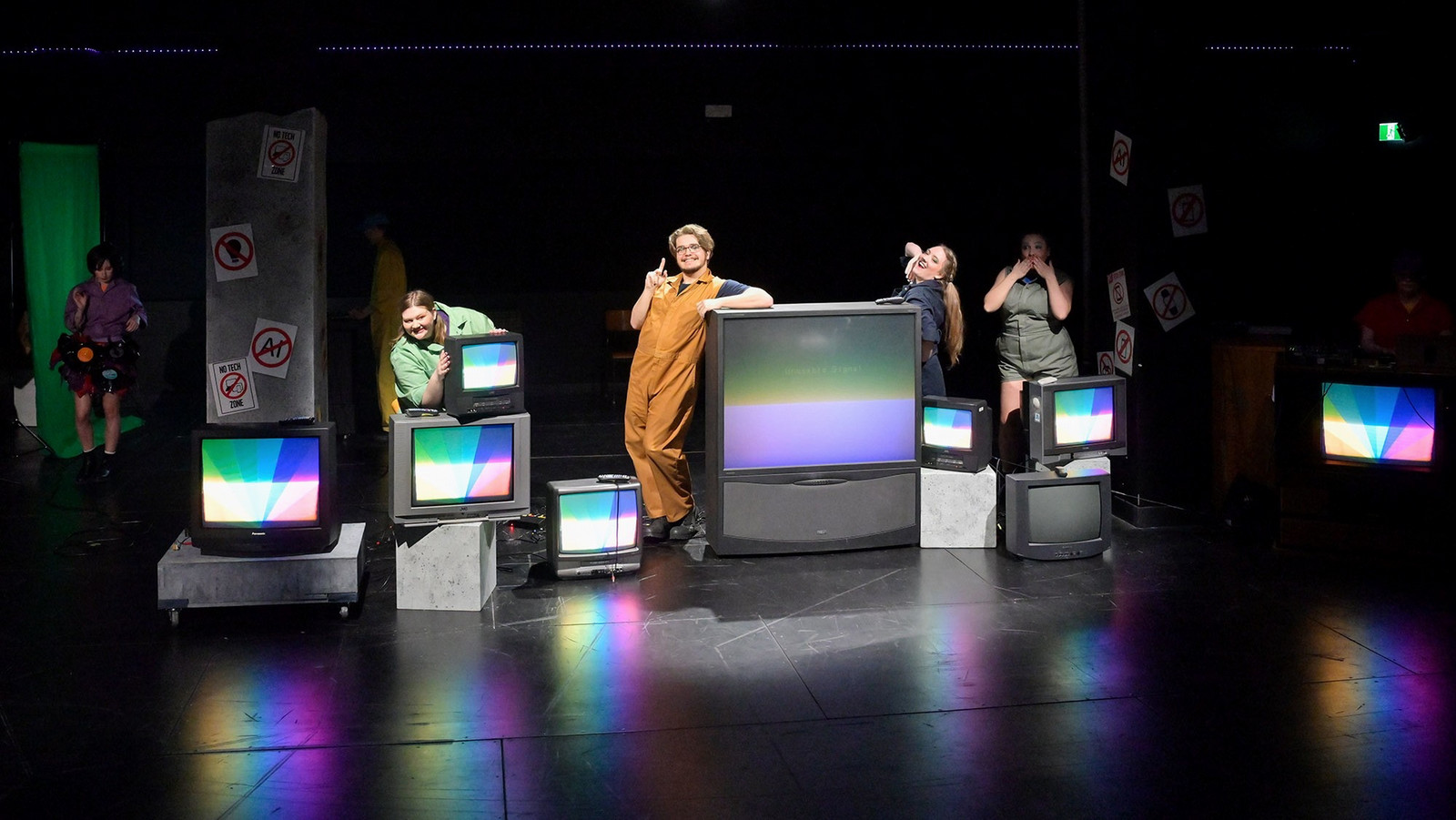
An actor, musician, painter, and improviser, Lynn’s life has always orbited the arts. At the U of R, she performs with the improv team, UR Improv II and serves as events coordinator and one of the vice-presidents. Last semester she also stepped into a new role, teaching improv at the Glen Cairn Community Centre for kids ages 10 to 14. Lynn helps young students think on their feet and find their voice, skills she plans to carry straight into her future classroom.
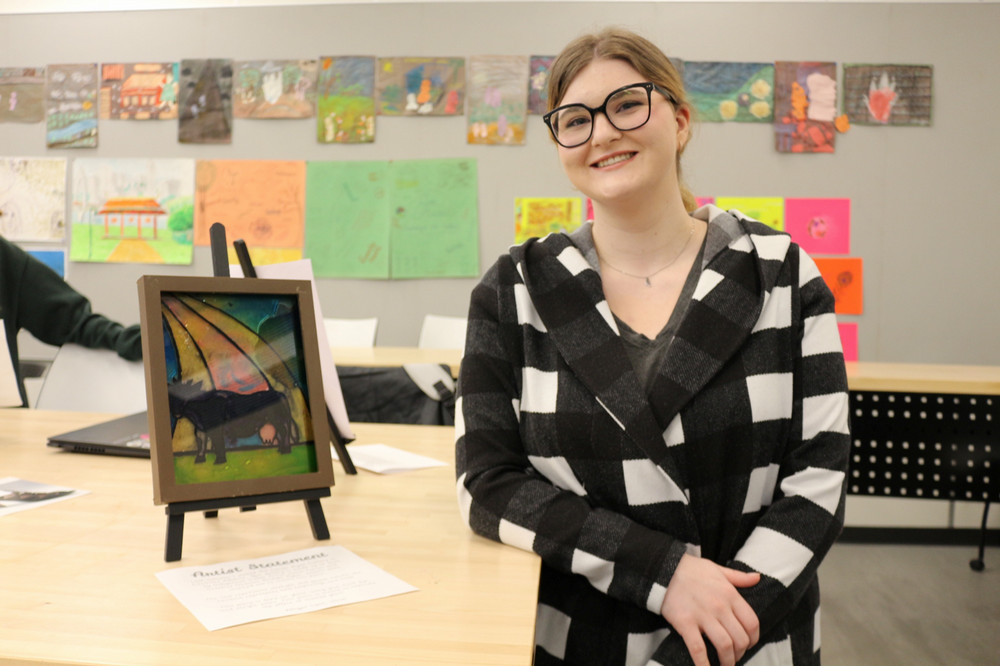
Jalbuena, a musician and visual artist, moved to Canada from New Zealand in 2017. Before she found arts education, she explored architectural technologies at Saskatchewan Polytechnic and later software engineering at the U of R, but something was missing.
“I was sitting in front of a computer eight hours a day, and I knew it wasn’t my passion,” says Jalbuena.
What did feel right, she realized, was teaching, something that had been quietly tugging at her all along. She credits her grandmother, a teacher who worked with students with disabilities and used sign language to support those who struggled to communicate. From teaching out of her home in the Philippines to later becoming a school principal, her grandmother was a big influence in her decision to pursue education.
“It was always more than just teaching. It was the connection. She was always reaching deeper, to help and touch the lives of other people,” says Jalbuena.
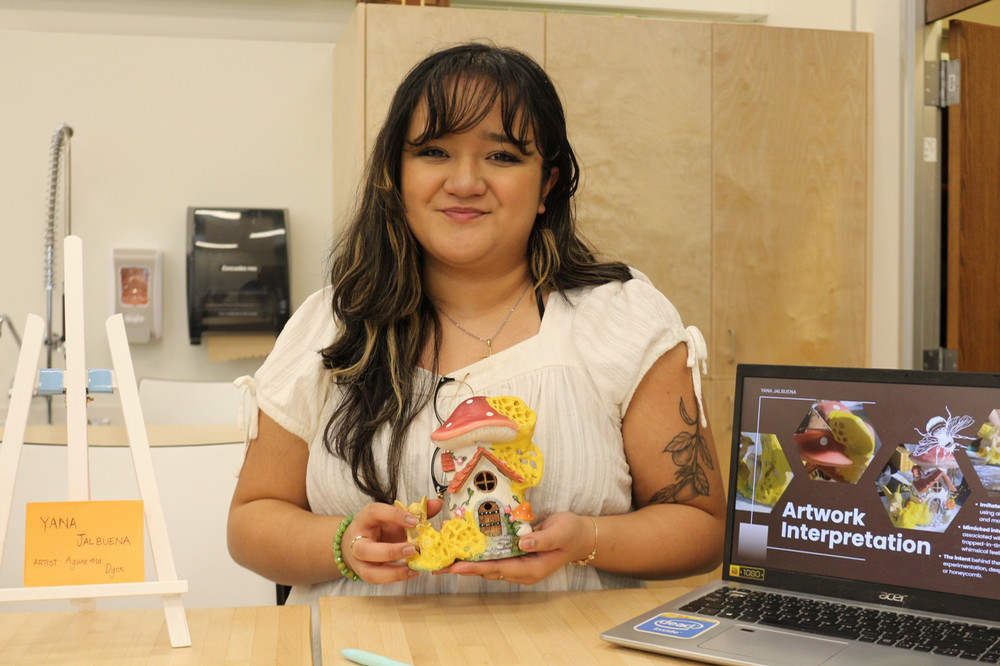
What does arts education look like in the classroom?
What surprised Lynn was realizing how naturally arts education fits into every part of the classroom. Rather than focusing solely on teaching drama or dance, students learn how creativity can be woven into subjects like math and health.
“Creativity isn’t treated as an “extra,” but as a tool that strengthens how students learn and communicate,” says Lynn.
In practice, this can look like using a song as a brain break or introducing a puzzle piece activity that invites students to share something about themselves. For Lynn, music is the clearest example of how the arts can help create healthy classroom communities. She recalls a kindergarten teacher who brought the class together by singing throughout the day.
“Music incorporates so many things, so it's hard to do alone. You have to have rhythm, instruments, and vocals. When you work with your students to put all of that together, it helps make your classroom stronger,” says Lynn.
A similar approach shaped Jalbuena’s early learning experiences in New Zealand, where the Māori language was taught through song and dance. Music not only supported learning but also built a deep respect for culture.
Why do the arts matter?
“Arts is another pathway of communication that isn’t limited by language. It is universal, no matter what country you're coming from or how much distance is travelled,” she says. “It’s the language of connection and a way for students to express themselves when words aren’t enough.”
The arts also encourage creative thinking and adaptability. Lynn has seen this firsthand through teaching improv, an art form that asks participants to think on their feet, respond in the moment, and collaborate with others, skills that directly translate into the classroom and the real world.
“I think the arts are often put on the back burner,” says Lynn, “but they’re incredibly important to incorporate into education, they boost so many skills.”
The educators who inspire them
When asked about a highlight of the arts education program, Lynn and Jalbuena point to its educators.
“Something I strongly believe is that the professor makes or breaks the class and whether you enjoy it or not,” says Lynn.
For both students, classes with Denise Morstad, chair of music education and the arts education program in the Faculty of Education, left a lasting impression.
“The moment I went into Denise’s class, I was amazed by how passionately she teaches,” says Jalbuena. “She showed me that it’s about more than teaching the music itself. There are going to be experiences that challenge you, but going through them with your students and being present makes it all worthwhile. I've been so inspired by that ever since.”
They also mention Donna Nikiforuk, sessional instructor, whose teaching blends practical strategies with lived classroom experience. Jalbuena says it is often the stories Nikiforuk shares from her years as a teacher that makes the realities of the profession feel exciting rather than intimidating.
Considering arts education?
For students who love the arts but aren’t sure where it can lead or whether it’s the right fit, Lynn offers encouragement.
“I think sometimes people hear ‘arts’ and assume it’s limiting, but it’s not. You’re earning an education degree with a specialization,” says Lynn.
She adds that the program offers more than technical training. It builds leadership, adaptability, and communication skills that extend beyond the classroom. With internships beginning early in the program, guest speakers, field experiences, and strong mentorship from instructors, students gain both creative practice and real-world preparation.
“If you love working with people and you want to make a difference, this program gives you so many ways to do that,” says Lynn. “There’s more than one way to be a teacher.”
Curious about where arts education can take you? Learn more about the Faculty of Education’s Arts Education program and discover how creativity can shape your future.
Banner Photo: Arts Education shaping stronger classrooms and empowering student voices. Photo Credit: University Communications and Marketing
About the University of Regina
At the University of Regina, we believe the best way to learn is through access to world-class professors, research, and experiential learning. We are committed to the health and well-being of our more than 16,600 students and support a dynamic research community focused on evidence-based solutions to today’s most pressing challenges. Located on Treaties 4 and 6—the territories of the nêhiyawak, Anihšināpēk, Dakota, Lakota, and Nakoda peoples, and the homeland of the Michif/Métis nation —we honour our ongoing relationships with Indigenous communities and remain committed to the path of reconciliation. Our vibrant alumni community is more than 95,000 strong and enriching communities in Saskatchewan and around the globe.
Let’s go far, together.
Related Posts
Teaching & Learning,
Community
Voices of Resilience: U of R Afghan Students Share Their Ambitions for a Brighter Future

Teaching & Learning,
Sustainability,
Research
U of R Engineers Engineer a Greener, Smarter Future

Teaching & Learning