Research,
Teaching & Learning
Where can an Arts degree lead? It is a practical question, and for students approaching graduation, a personal one.
The University of Regina’s Arts Work Experience Internship, known as AWEI, gives eligible Faculty of Arts undergraduates the opportunity to explore possible answers before they graduate. Coordinated through the Faculty’s Community Engagement and Research Centre, the program matches students with community organizations and research labs based on their interests, academic program, and availability. Students work up to eight hours a week for one 13-week semester, pay regular tuition, and earn three credit hours.
More than 200 students have completed AWEI. The program averages 15 internships per semester and is supporting 21 internships during the current Spring/Summer 2026 semester.
I was able to connect to the real world — not just learn from a textbook, but from real-life experience. — Avery Horvath, a fourth-year Psychology student, Faculty of Arts, University of Regina
Three Psychology students illustrate the range of opportunities available through AWEI. Avery Horvath worked directly with the client, the Canadian Mental Health Association (CMHA). Shantelle Loke contributed remotely from Moose Jaw to an anti-racism manual for the Multicultural Council of Saskatchewan (MCoS). Gavin Gilhooly translated research into public-facing resources at the University of Regina’s Child Trauma Research Centre (CTRC).
Their responsibilities differed, but each placement showed a different way students can turn classroom knowledge into meaningful work before graduation.
Psychology beyond the textbook
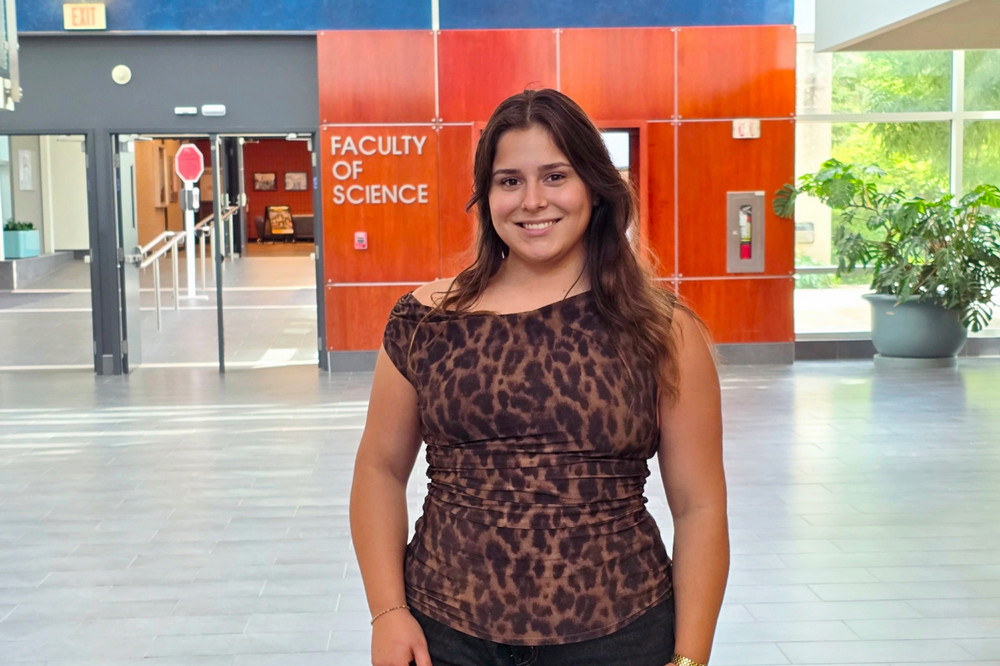
Avery Horvath's Winter 2026 placement with the Canadian Mental Health Association (CMHA) looked nothing like a desk job. Twice a week, she led crafts and activities and, in the quiet moments between, played cribbage, crokinole, and pool with members living with mental health and substance use challenges. She even built a personalized Jeopardy! game for the group.
That same semester, Horvath was taking a psychopathology course, studying many of the conditions members trusted her enough to discuss. “I was able to connect to the real world, not just learn from a textbook, but from real-life experience,” she says.
What stayed with her, however, were the smaller moments.
"Even just playing a game with them, listening to someone, and having a conversation can really brighten someone's day. And I like to think that I did that every time I was there."
The experience confirmed Horvath’s interest in psychology and people-focused work. Horvath is now completing a second AWEI placement at the CTRC.
"I think it's given me more knowledge and helped me understand both aspects of psychology — the clinical and research sides," she says
Research with community purpose
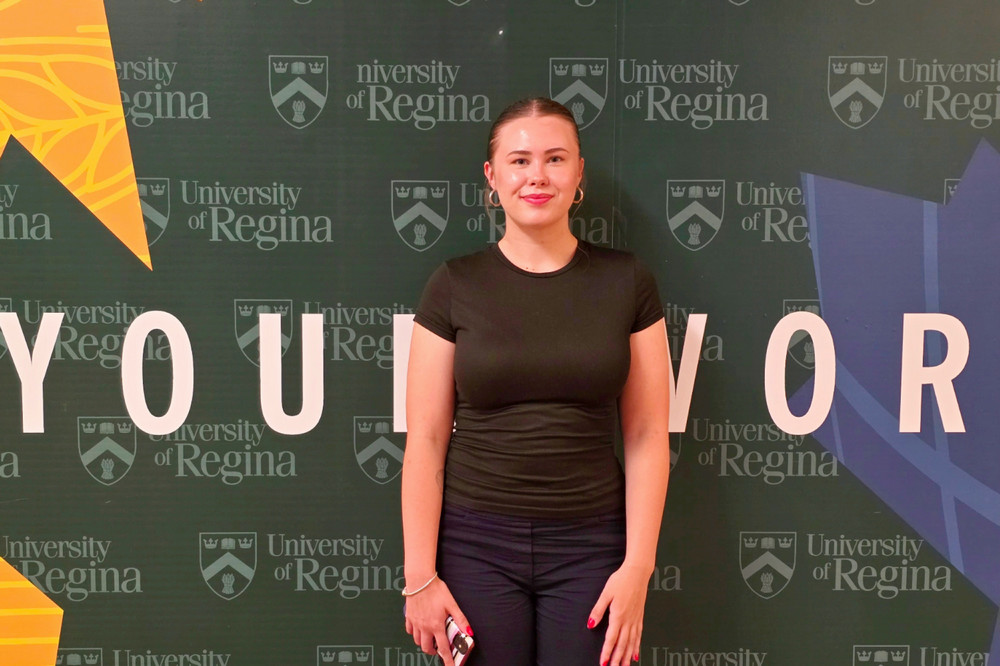
Shantelle Loke, a fourth-year Psychology student with a minor in Justice Studies (Criminology), completed her placement with the Multicultural Council of Saskatchewan. Her placement came with an unexpected gift: she did not have to leave home.
“I expected to be coming to Regina, but it kind of worked out that I got to stay in Moose Jaw,” she says of the fully remote arrangement. Her main project involved reviewing the Council’s anti-racism manual.
"I was basically just going through the manual, finding links to resources that taught about racism from multiple perspectives," she says, verifying every source and compiling it all in APA format.
The skills she developed quickly paid off back in the classroom.
“When I’m writing all my research papers for class now, I don’t have to go to another platform to look up how to do APA, it’s just in my brain now,” Loke says.
Working remotely also meant working independently. Loke discovered she preferred it that way. “It was on me to make sure I got everything done. I set my own goals and made sure I met them,” she says. The placement did more than sharpen her research skills. It named her direction. Loke now plans to pursue research and, eventually, a PhD in forensic psychology.
"It made me realize what I want to do,” she says. “This is my passion.”
The work behind accessible evidence
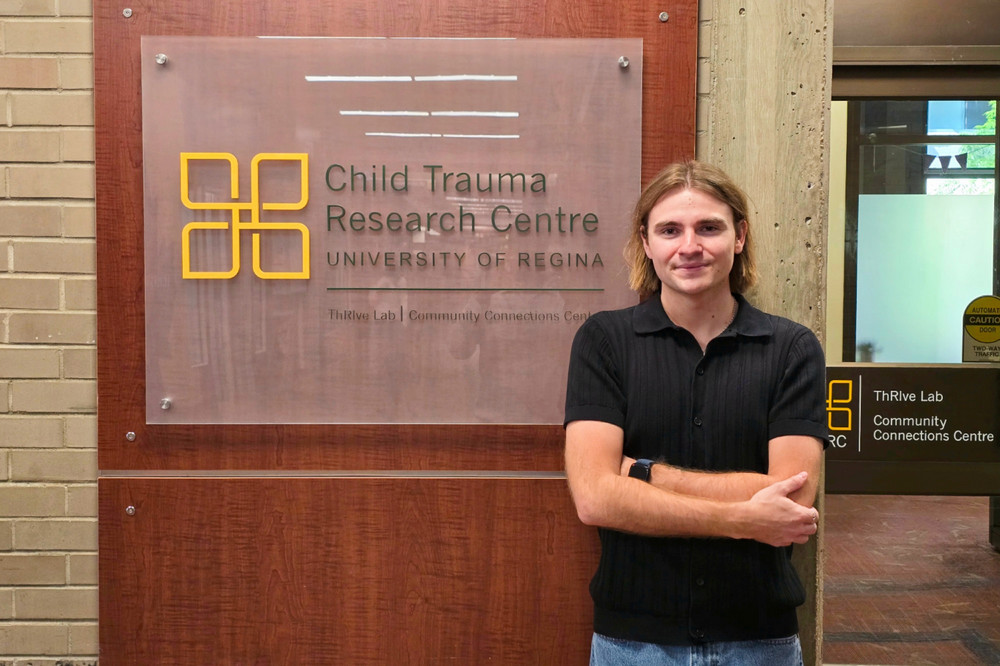
Gavin Gilhooly a fourth-year Psychology student, almost did not apply for an AWEI placement. Unsure how competitive the process might be, he wondered whether he would be selected. He applied anyway and was matched with the CTRC.
Gilhooly was looking for one type of experience he had not yet gained: research. At the CTRC, his placement focused on knowledge mobilization—the process of turning research into accessible resources for children, educators, and the public. His main project was a Tips For series of visual information sheets, along with an ABCs of Mental Health booklet that paired each letter of the alphabet with a mental health concept and corresponding coping strategies.
The finished resources were uncluttered and easy to understand. The work behind them was anything but.
Producing a two-page information sheet could require reviewing 30 or 40 research articles before distilling the information into roughly 300 words for a public audience. A single sheet could take 16 to 18 hours to complete.
That experience gave Gilhooly a new appreciation for the care required to make research both accurate and accessible. Working with the CTRC director Dr. Nathalie Reid, research staff, and graduate students also connected him with mentors who helped him understand research pathways and the honours application process.
Gilhooly hopes to attend medical school, and the placement showed how research skills can support that goal.
Serious skills, put to the test
Tom McIntosh, Associate Dean (Research) in the Faculty of Arts, understands the anxiety some students feel when considering where an Arts degree might lead.
"We always say that Arts training doesn't prepare you for a particular job, but it gives you serious skills that can be used in a wide range of jobs," he says. "But AWEI actually puts this to the test by exposing students to jobs they might not have thought of as right for them and giving them an opportunity to apply their skills in the workplace."
The benefits flow both ways. In the past year or two, 33 different community organizations and research labs have welcomed AWEI students, gaining the support of skilled, motivated interns while providing students with mentorship, professional networks, and confidence.
That reciprocity reflects the mission of the Faculty of Arts' Community Engagement and Research Centre, which connects teaching, research, and community engagement. The program also supports the University’s 2026–2035 strategic plan, Together, We Serve—advancing work-integrated learning through Together, We Learn, and strengthening reciprocal community partnerships through Together, We Build.
Apply anyway
Ask all three students what they would tell someone hesitating to apply, and their advice is similar: take the chance.
“So, my biggest advice would be to always apply. Don’t miss out on those opportunities, because they’re there for students,” says Gilhooly.
“I think if you’re considering it, 100% you should do it,” says Horvath.
And Loke puts it even more simply: “Honestly, go for it. Don’t let anything hold you back.”
Explore the Arts Work Experience Internship and other opportunities on the Arts Student Opportunities page. Applications for the Winter 2027 term open in September 2026 and close on October 2, 2026.
Banner Image: Where can an Arts degree lead? The U of R’s Arts Work Experience Internship (AWEI) helps students turn classroom learning into real-world career skills before they even graduate. Credit: University Communications and Marketing
About the University of Regina
At the University of Regina, we believe the best way to learn is through access to world-class professors, research, and experiential learning. We are committed to the health and well-being of our more than 16,600 students and support a dynamic research community focused on evidence-based solutions to today’s most pressing challenges. Located on Treaties 4 and 6—the territories of the nêhiyawak, Anihšināpēk, Dakota, Lakota, and Nakoda peoples, and the homeland of the Michif/Métis nation —we honour our ongoing relationships with Indigenous communities and remain committed to the path of reconciliation. Our vibrant alumni community is over 97,000 strong and enriching communities in Saskatchewan and around the globe.
Let’s go far, together.
Related Posts

Campus Life,
Community,
Teaching & Learning
Two Siblings, Two Chancellor’s Scholarships, One U of R Journey
Sustainability,
Research,
Teaching & Learning
Where the Waste Goes: Research by U of R Engineers Reveals Recycling Blind Spots
Teaching & Learning,
Alumni,
Research