
Research
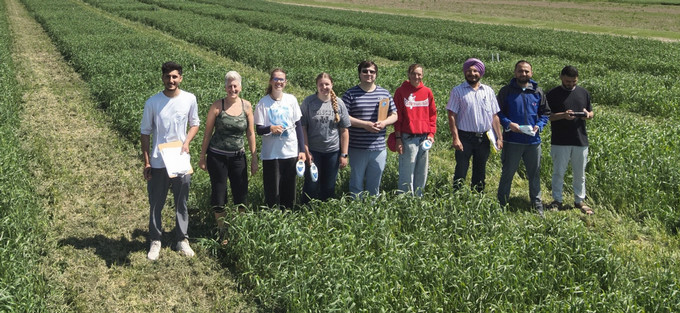
For about three weeks every summer, roughly 15 people walk the wheat Fusarium Head Blight (FHB) nursery plots at the Agriculture and Agri-Food Canada research farms in Saskatchewan. Five or six are scientists. They are assessing FHB, a fungal disease that is common in Saskatchewan and damaging to wheat, plot by plot and spike by spike, assigning a severity percentage as they go.
Then they come back the next morning and do it again. It is a critical time-bound activity, as visual symptoms quickly disappear so rating in a timely manner is vital. Today, a new alternative is taking shape in the sky above those same fields. A drone or uncrewed aerial vehicle (UAV) collects images of the wheat lines grown in the field; the images then travel to a lab at the University of Regina, where a trained artificial intelligence model processes the data, and the same answers emerge in a fraction of the time.
So, what the AI provides is the scale of things. If it takes a person two years, the AI model, once it’s trained, can do it in a fraction of a second. — Dr. Abdul Bais, professor and program chair of Electronic Systems Engineering, Faculty of Engineering and Applied Science, University of Regina
Closing the distance between those two mornings is the work of Dr. Abdul Bais, professor and program chair of Electronic Systems Engineering in the Faculty of Engineering and Applied Science.
What AI for agriculture changes for wheat breeding and Saskatchewan
To develop new crop varieties, wheat breeding researchers plant thousands of different wheat lines and measure every aspect of their growth and environmental performance. They look for specific survival traits to ensure future crops can withstand harsh prairie conditions.
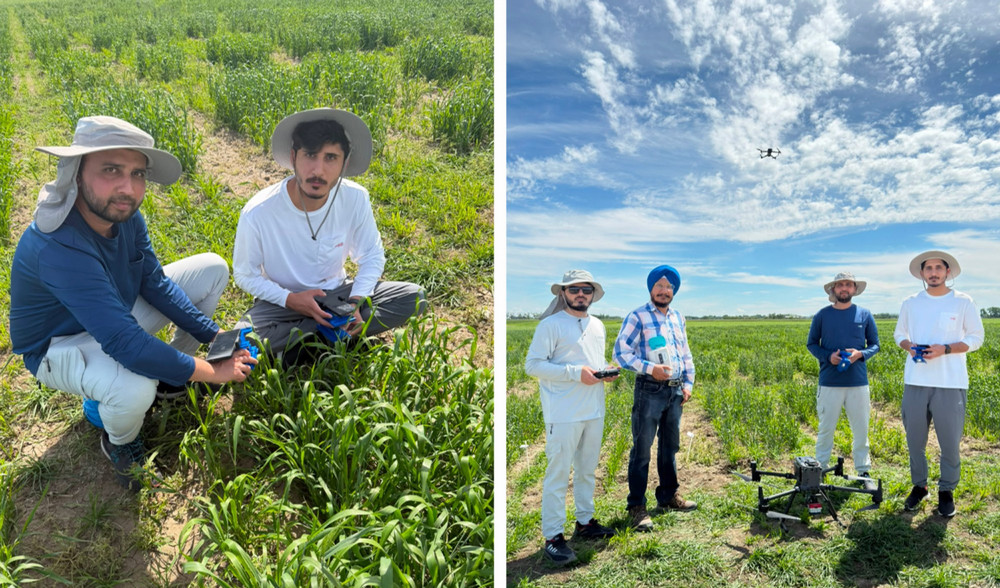
"When wheat breeding researchers want to look for new lines, they're asking: which one has better disease resistance? Which one is more drought-tolerant? Which one is more resistant to heat? So, they have to grow hundreds and thousands of different lines,” Bais says.
The process of identifying a resilient, high-yielding crop variety takes about nine years or more before the seed reaches the market. Much of that time is spent on extensive manual measurements and laboratory evaluation of the disease and quality parameters.
Scientists also assess crop height and yield, count spikes (the seed heads at the top of each plant), kernels per spike, and other features of the grain, and check resistance to lodging, the bending of wheat stems that leaves the crop flat on the ground after heavy wind or rain.
“It’s a very labour-intensive process that also requires precision. What we are doing is automating that process with AI and drones. That is the bottom line,” Bais says.
The stakes are deeply tied to the regional geography. Prairie farming is mostly rain-fed, meaning producers don’t have the luxury of irrigation to water their fields during the growing season.
"So, if we have a crop variety that’s more drought-tolerant, and there’s little or limited rainfall during the season, which we often experience here in the Prairies, and maybe during hot and dry years such as this year, which is also one of the hottest years, we can still grow wheat,” Bais says.
Drone research drives summer data collection
The research cycle splits the year into two distinct phases. Nisar Ali, a PhD candidate in Electronic Systems Engineering who joined the U of R in September 2022, manages the workflow.
To generate agricultural insights, the research team must first collect high-resolution aerial images. This requires flying specialized drone equipment, which is subject to strict regulatory requirements. Ali holds the required advanced operations certificate, and flights near airfields require precise coordination and permission from NAV Canada.
With flight clearances secured, the summer fieldwork begins.
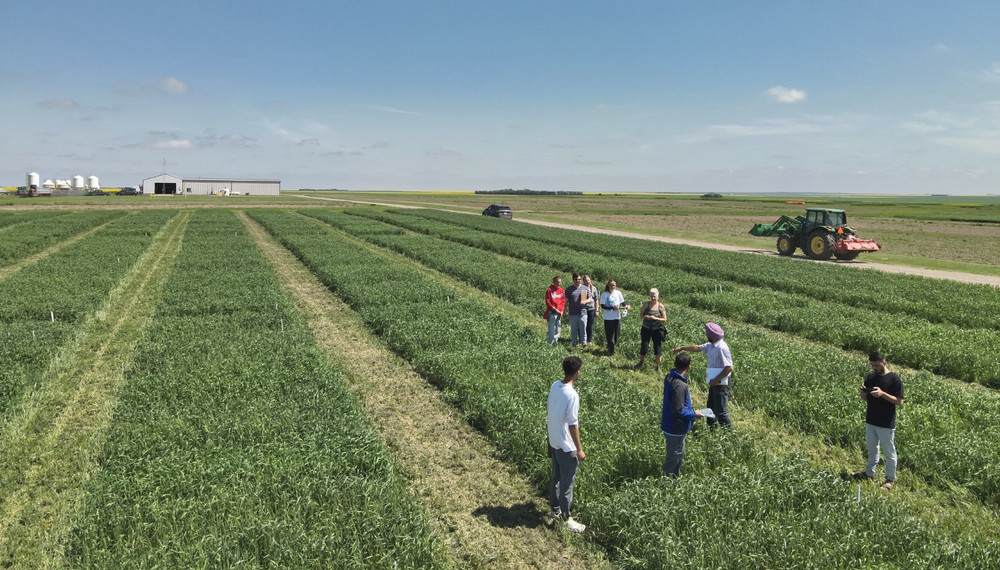
University of Regina researchers and federal agricultural scientists walk the research plots to collect crop data in Saskatchewan. The collaborative team includes Jatinder Sangha, research scientist at Agriculture and Agri-Food Canada, research technicians Angela Doane and Andre Duarte, co-op students Justine Howe, Nyla Schmidt, and Jordyn Frolich, and U of R engineering students Mohammad Shamsher, Muhammad Shabbir Hasan, and Nisar Ali. Photo Credit: Nisar Ali.
“In the summer, we go to the fields; one is the Indian Head Research Farm, and one is the Swift Current Research and Development Centre,” Ali says. “We collect data regarding disease detection and assessment, wheat lodging, yield estimation, harvest index estimation, spikes and spikelet counting, those kinds of things. The data collection is done in summer, which results in a lot of images.”
The engineering lab partners with Agriculture and Agri-Food Canada to access these research locations. The federal sites are not commercial farms; rather, they are small, highly controlled research plots where scientists intentionally introduce diseases to study how different wheat varieties and new lines respond and resist infection.
The engineering team relies on its federal partners to understand the scientific details of crops. The federal researchers establish which levels of disease are serious and similar thresholds, and the engineering team then creates computational programs to pinpoint where those levels occur.
"We are not experts in agriculture, but we know what data collection and AI processing are. We do that part," Bais says.
Agricultural AI scales up winter analysis
Once the summer fieldwork concludes, the long winter phase begins. Over the following eight to nine months, the team preprocesses their vast collection of images. They run them through customized AI models, which are trained to identify disease and evaluate crop health. The resulting volume of data fundamentally changes how crop analysis is done.
"So, the AI provides the scale of things. If it takes a person two years, the AI model, once it's trained, can do it in a fraction of a second," Bais says.
The current four-year project began in April 2026 with $421,000 in funding. The support is split evenly between the Sustainable Canadian Agriculture Partnership’s Agriculture Development Fund and the Saskatchewan Wheat Development Commission. The commission is primarily funded by a producer levy, meaning farmers themselves directly fund the research.
Where machine learning is heading and who it is training
Looking ahead, Bais wants to see more automation and production-ready systems. Once the technology matures further and current line-of-sight restrictions evolve, he notes that multiple drones could be sent to cover a field simultaneously, allowing the AI to process the data and report the situation instantly.
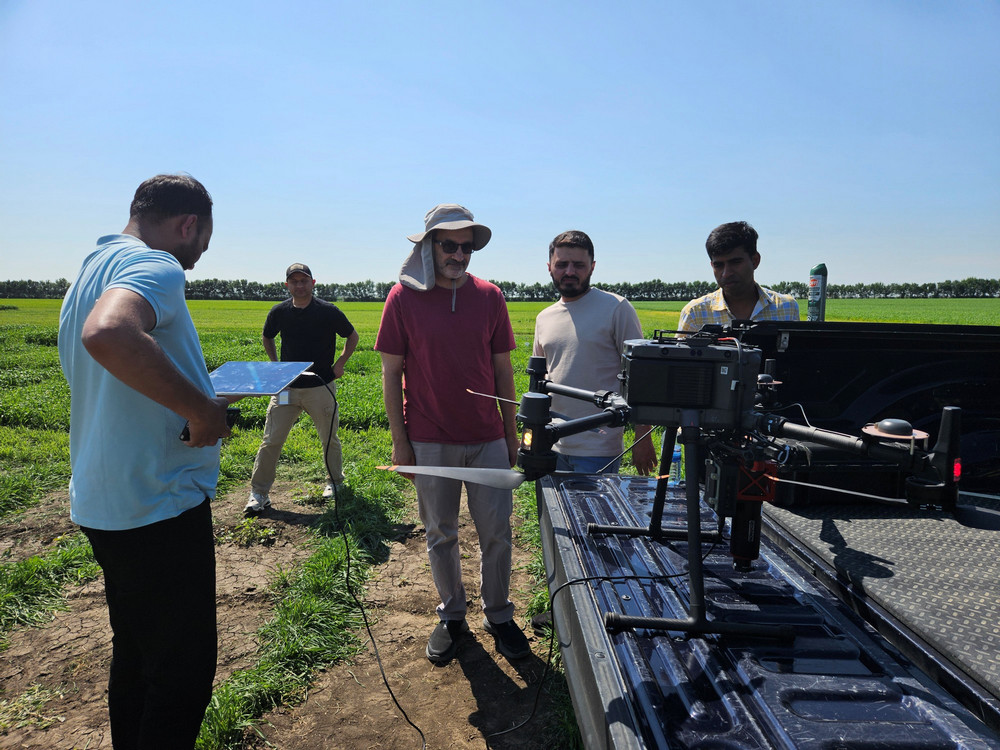
Field season. Drone and sensor setup at an Agriculture and Agri-Food Canada research site, where summer image collection feeds roughly eight to nine months of model work over the following winter. From left to right: University of Regina PhD student Muhammad Shabbir Hasan, Shankar Pahari from Agriculture and Agri-Food Canada, Abdul Bais, professor and program chair of Electronic Systems Engineering, PhD candidate Nisar Ali, and Hema Duddu, research biologist at Agriculture and Agri-Food Canada. Photo Credit: Raju Soolanayakanahally, research scientist, Agriculture and Agri-Food Canada.
For Ali, the project provides an educational experience rarely found in a traditional laboratory, proving that engineering solutions require human relationships, curiosity, and fieldwork.
"Working with outside scientists and collaborators, I think that's the best part of this whole experience. It adds a new perspective. And it opens up new opportunities," Ali says.
The work also supports discovery and innovation, two strategic priorities from the University of Regina’s 2026–2035 strategic plan, Together, We Serve, by addressing research questions that matter to the Prairies and applying artificial intelligence in ways that keep expert judgment at the centre.
Learn more about Engineering programs at the U of R and discover how you can solve real-world problems.
“The main thing is that the type of work we do here is relevant, and it has a real, visible impact. I have the option to work on anything, but agriculture is our priority,” Bais says.
As another summer closes in Saskatchewan, researchers and technicians will soon finish their daily walks through the nursery plots. Meanwhile, the engineering lab is just starting its winter season, turning thousands of field images into actionable data.
Banner photo: The University of Regina engineering team collaborates directly with federal scientists at agricultural research farms to align their artificial intelligence tools with real-world agronomic needs. The team includes Agriculture and Agri-Food Canada research scientist Jatinder Sangha, research technicians Angela Doane and Andre Duarte, co-op students Justine Howe, Nyla Schmidt, and Jordyn Frolich, and U of R engineering students Mohammad Shamsher, Muhammad Shabbir Hasan, and Nisar Ali. Photo Credit: Nisar Ali.
About the University of Regina
At the University of Regina, we believe the best way to learn is through access to world-class professors, research, and experiential learning. We are committed to the health and well-being of our more than 16,600 students and support a dynamic research community focused on evidence-based solutions to today’s most pressing challenges. Located on Treaties 4 and 6—the territories of the nêhiyawak, Anihšināpēk, Dakota, Lakota, and Nakoda peoples, and the homeland of the Michif/Métis nation —we honour our ongoing relationships with Indigenous communities and remain committed to the path of reconciliation. Our vibrant alumni community is over 97,000 strong and enriching communities in Saskatchewan and around the globe.
Let’s go far, together.
Related Posts
Truth & Reconciliation,
Research
More Than a Research Trip

Truth & Reconciliation,
Research,
Teaching & Learning