Community,
Teaching & Learning,
Research
Challenges facing farmers and ranchers reach far beyond the fields — crop yields and herd health can have impacts on the global food system. At the University of Regina, researchers are exploring solutions to farming challenges in Saskatchewan and around the world.
Read about three U of R students whose research has the potential to enhance agricultural practices, both in the province and beyond.
Jessica Smith
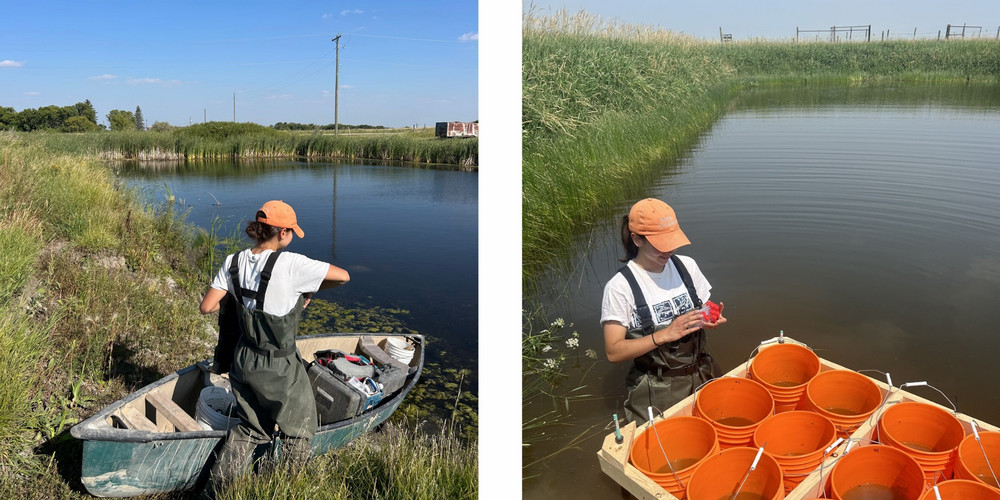
Jessica Smith is a master's student in Biology studying freshwater ecosystems and water quality in agricultural ponds. Her research looks at harmful algal blooms that can produce microcystin, a toxin that can harm livestock. She is investigating what conditions cause these toxins to develop and the effectiveness of hydrogen-peroxide-based treatments as a safer alternative, as current treatment options can have adverse effects on freshwater ecosystems.
Q: What inspired you to pursue this area of research, and why is this work important?
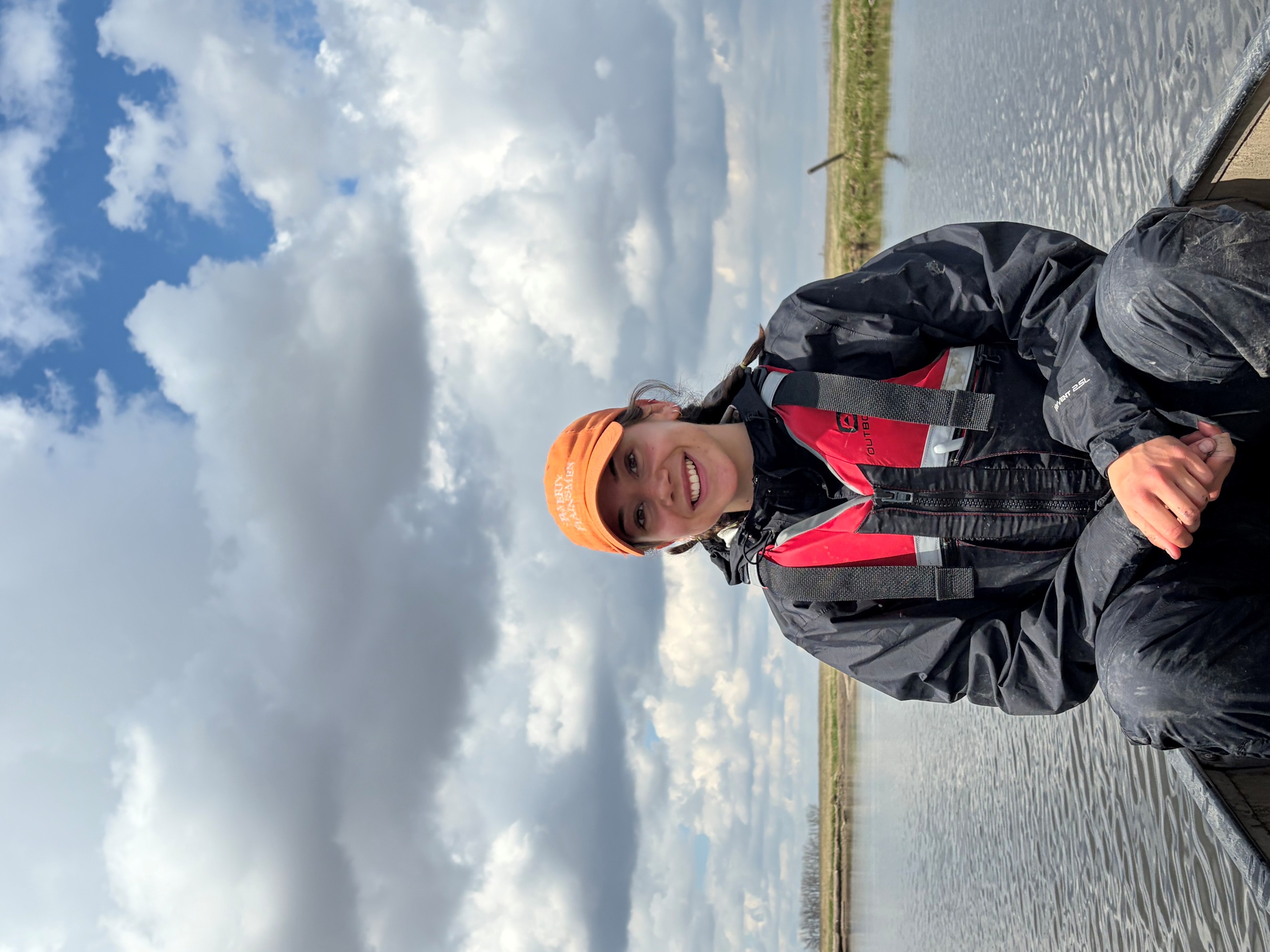
Jessica Smith, a master's student in Biology at the U of R, conducts fieldwork as part of her research into harmful algal blooms and water quality in Saskatchewan. Photo courtesy of Jessica Smith.
Before starting my masters, I worked with my supervisor, Dr. Kerri Finlay, on water quality research and became interested in understanding harmful algal blooms in agricultural ponds. Previous water quality monitoring showed that many agricultural ponds experienced algal blooms, but only a few had high levels of microcystin, a toxin that can harm livestock. My research explores why some blooms produce toxins while others do not.
This work is important because livestock producers in Saskatchewan need reliable water sources for their animals and are concerned about the health and safety risks of watering their livestock with potentially toxic water. Laboratory testing is currently the only way to determine whether algae in a pond is producing toxins, and results can take several days. During that time, producers may need to restrict access to the water, which can be difficult if alternative sources are unavailable.
We are also studying hydrogen peroxide as a treatment option for harmful algal blooms. Hydrogen peroxide has been shown to break down without leaving behind toxic heavy metals. This may be a promising approach for landowners to use to treat algal blooms in agricultural ponds without many of the adverse effects from copper-based treatments.
Q: Have you seen the positive real-world impacts of your research? If so, what did that look like?
I’m still in the early stages of my research. However, the hydrogen-peroxide-based treatment options that we are trialing do seem quite promising for treating harmful algal blooms. During my first field season this past summer, I spoke with many landowners and cattle producers and came to realize how important this work is to them. They shared enthusiasm for this research because it can be difficult for them to know what to do when algal blooms appear since they can’t know if the blooms are producing toxins without lab tests.
I hope that this research can help inform landowners about the prevalence of microcystin production and harmful algal blooms in agricultural ponds and provide alternative, more environmentally friendly options to deal with toxic blooms.
Q: Canadian Western Agribition is just around the corner. Are you planning to attend? What are you most looking forward to?
Yes! Our F.A.S.T Lab will have a table with other University of Regina labs conducting agriculture-related research.
Over this past summer, I spoke with many landowners whose water I was sampling and I always left the conversations with more questions to think about and delve into, so I am excited to engage with livestock producers about my research and learn more about their experiences with algal blooms in the ponds they use to water their livestock, and how they deal with them. I am also looking forward to checking out other booths at the Tradeshow that are sharing their research or resources, as well as the handcrafted items being sold at the vendor booths.
Nisar Ali
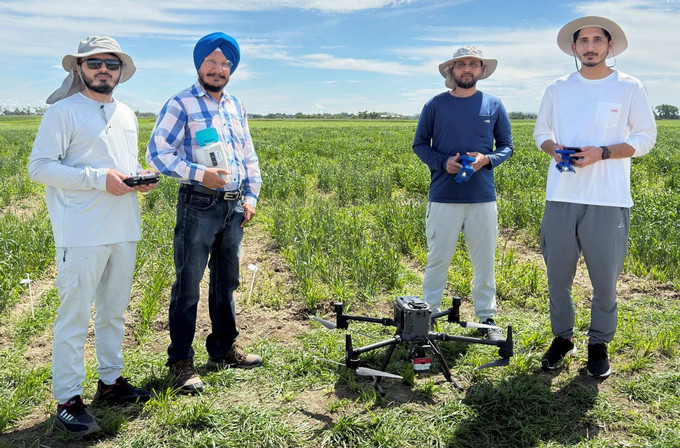
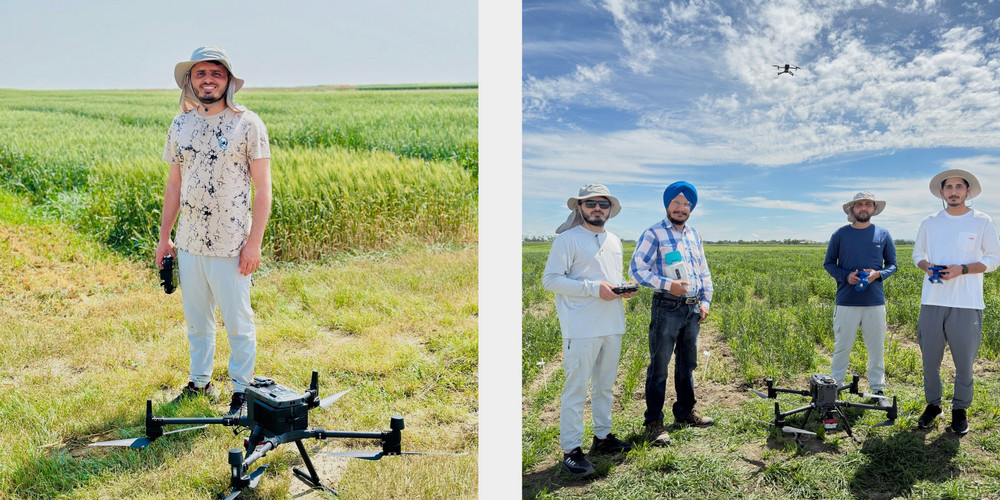
Nisar Ali recently completed his PhD in Electronic Systems Engineering under the supervision of Dr. Abdul Bais. Working with U of R researchers and Agriculture and Agri-Food Canada scientists, with support from the Agriculture Development Fund and the Saskatchewan Wheat Development Commission, he developed AI-powered crop monitoring tools that analyze aerial images of wheat fields to detect Fusarium head blight (a disease that can destroy yields and quality in cereal fields), estimate yields, measure crop traits such as lodging and harvest index, and automate field assessments.
His work helps researchers evaluate wheat varieties more quickly and accurately, supporting the development of higher yielding and the development of more resilient varieties for Prairie farmers. Nisar now works as an AI Algorithm Engineer at SuperGeoAI, where he continues to apply computer vision and deep learning to agriculture.
Q: What inspired you to pursue this area of research, and why is this work important?
Wheat breeding depends on collecting large amounts of field data. Assessing one disease nursery takes multiple people more than three weeks every summer and developing a new wheat variety can take nine years or more. That looked like a problem a drone and a well-trained machine learning model could take on.
I approached this research with a background in artificial intelligence and image analysis. Agriculture turned out to be one of the hardest places to apply my expertise because plants don’t sit still. The light keeps changing and the heads overlap. What kept me going is that this is engineering you can see working. The technology has to perform under real-world conditions to be useful.
Q: Have you seen the positive real-world impacts of your research? If so, what did that look like?
Yes. The clearest sign is that the work is being carried forward. A new four-year project funded by the Agriculture Development Fund and Sask Wheat began in April 2026 to take this research further. The models are trained and ready, so Agriculture and Agri-food Canada programs collecting the same kind of drone imagery can use them directly. In the field, one drone flight now covers a nursery that takes a crew weeks to assess by hand.
Nazanin Kiamarsi
Nazanin Kiamarsi is a Master of Science student in Physics who is working with Dr. Marcella Berg. Her research uses computer simulations to better understand lignin found within wheat straw. Lignin is a naturally occurring component of plants that is made up of many interconnected chemical building blocks.
Lignin is one of the main components of plant cell walls, providing mechanical support that helps them stand upright. However, lignin's dynamic behavior can change depending on factors such as temperature and the surrounding liquid environment. Kiamarsi’s research looks at how lignin’s structure and movement change under these different conditions. The goal is to gain insight into better ways to process and use it in the future.
What inspired you to pursue this area of research, and why is this work important?
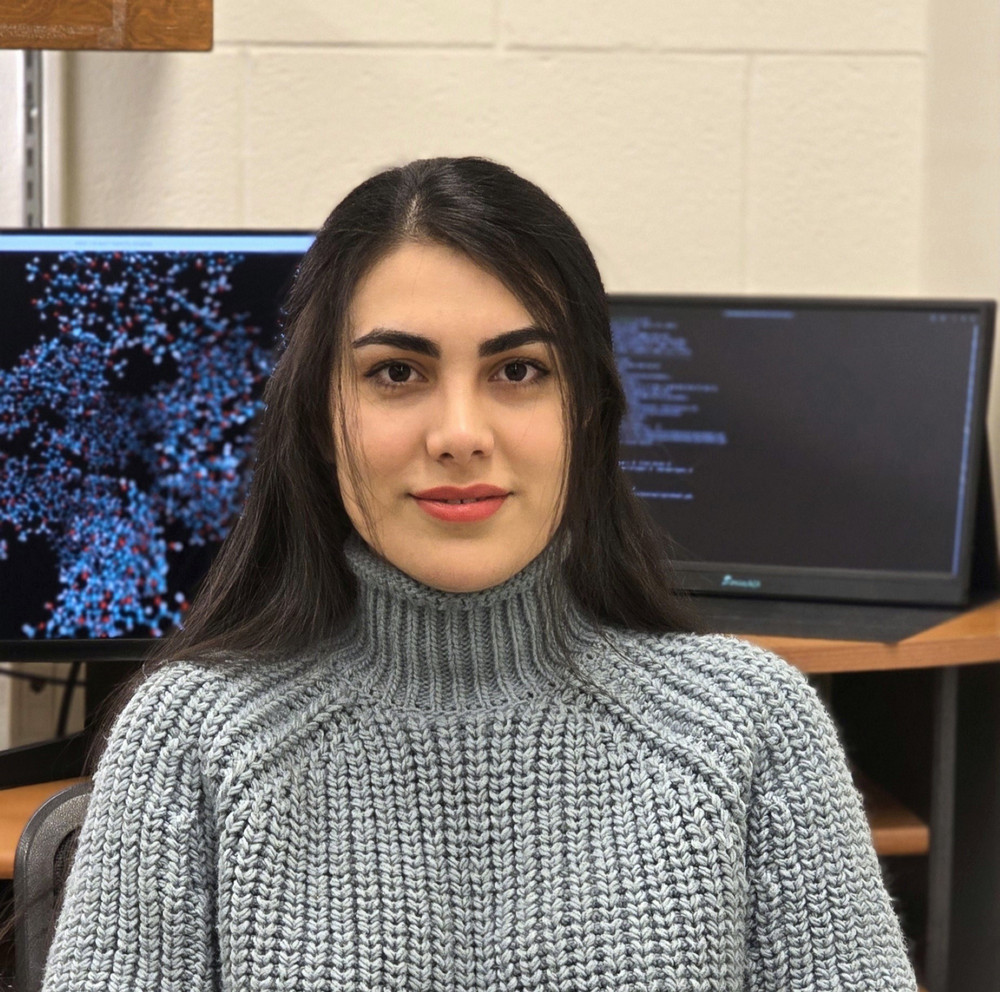
Nazanin Kiamarsi, a master’s student in the physics department, uses computer simulations to explore how lignin in wheat straw behaves, research that could help turn agricultural waste into renewable materials and alternatives to conventional plastics. Photo courtesy of Nazanin Kiamarsi.
What inspired me to pursue this research is the growing concern about plastic pollution and the environmental impact of conventional petroleum-based plastics. At the same time, large amounts of agricultural waste, such as wheat straw, are produced every year, particularly in Canada. Saskatchewan, Alberta, and Manitoba are three major wheat-producing provinces, which means there is a significant amount of wheat straw available as a potential renewable resource.
My research is important because it may help reduce our dependence on fossil-based plastics. Ultimately, my research could contribute to finding better ways to use lignin from agricultural waste, such as wheat straw, to develop valuable and sustainable materials. This could help create more value from resources that might otherwise go to waste, supporting the transition toward a more sustainable, circular economy.
Q: Have you seen the positive real-world impacts of your research? If so, what did that look like?
My research is still at the simulation stage, so has not yet had direct, real-world impact. However, there is a Swedish company called Lignin Industries that has demonstrated the potential of using lignin from forestry byproducts to create renewable materials that can replace some traditional plastics.
Their products are designed for applications such as in-store retail bags, e-commerce bags, garbage and waste bags, and timber-wrapping. Their lignin-based materials can also be used in household appliances, building and construction, consumer electronics, and industrial equipment.
My research explores a different lignin source, wheat straw, which has abundant agricultural residue, particularly in Canada. I find this company very interesting because they have shown that lignin has real potential to be transformed into valuable materials with practical applications.
Q: Canadian Western Agribition is just around the corner. Are you planning to attend? What are you most looking forward to?
Yes, I am planning to attend this year! I have not had the opportunity to attend before, so I am very excited to experience it for the first time. I am especially looking forward to meeting companies such as Titan Clean Energy Projects and learning more about their work in biomass utilization, sustainable materials, and bioplastics.
Explore new and ongoing research by U of R faculty, staff, and students.
About the University of Regina
At the University of Regina, we believe the best way to learn is through access to world-class professors, research, and experiential learning. We are committed to the health and well-being of our more than 16,400 students and support a dynamic research community focused on evidence-based solutions to today’s most pressing challenges. Located on Treaties 4 and 6—the territories of the nêhiyawak, Anihšināpēk, Dakota, Lakota, and Nakoda peoples, and the homeland of the Michif/Métis nation —we honour our ongoing relationships with Indigenous communities and remain committed to the path of reconciliation. Our vibrant alumni community is over 98,000 strong and enriching communities in Saskatchewan and around the globe.
Let’s go far, together.
Related Posts
Research,
Teaching & Learning
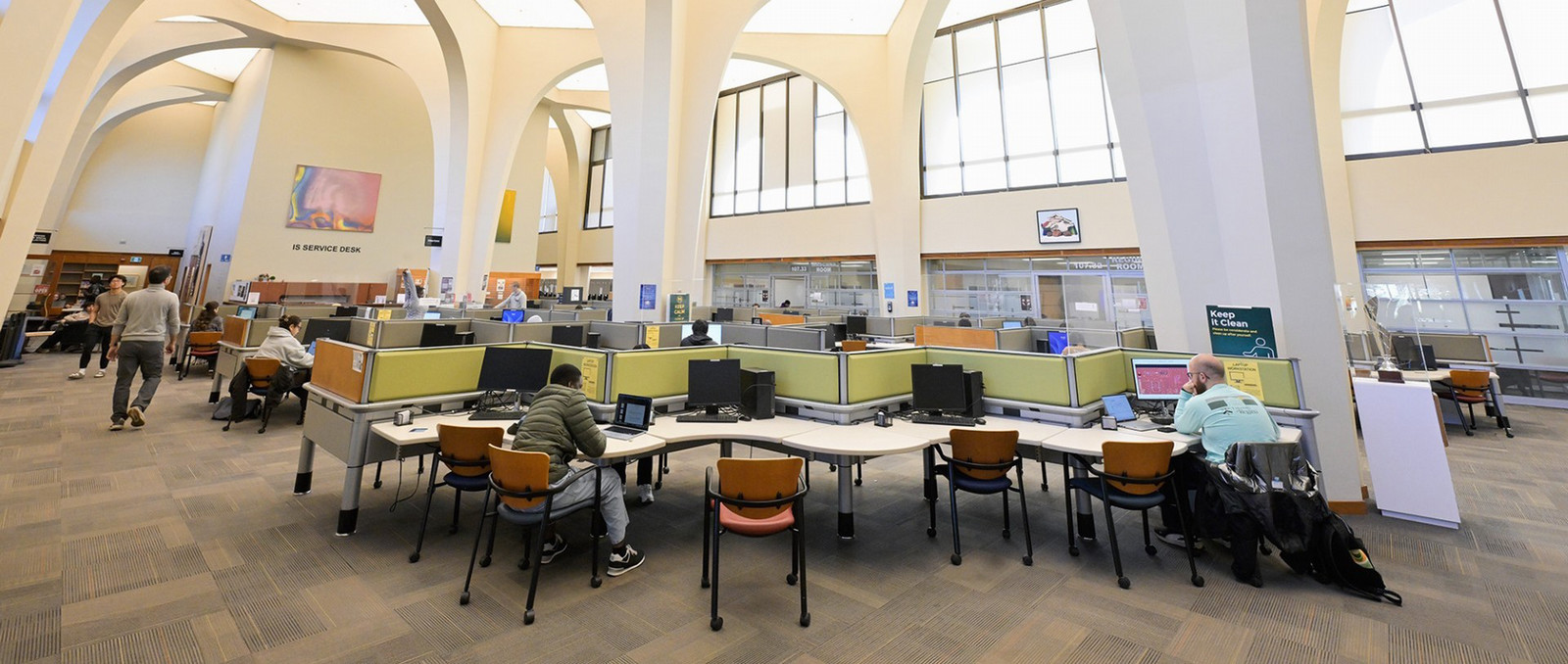
Beyond Books: How the Dr. John Archer Library and Archives set up students for success in the digital age
Research,
Teaching & Learning